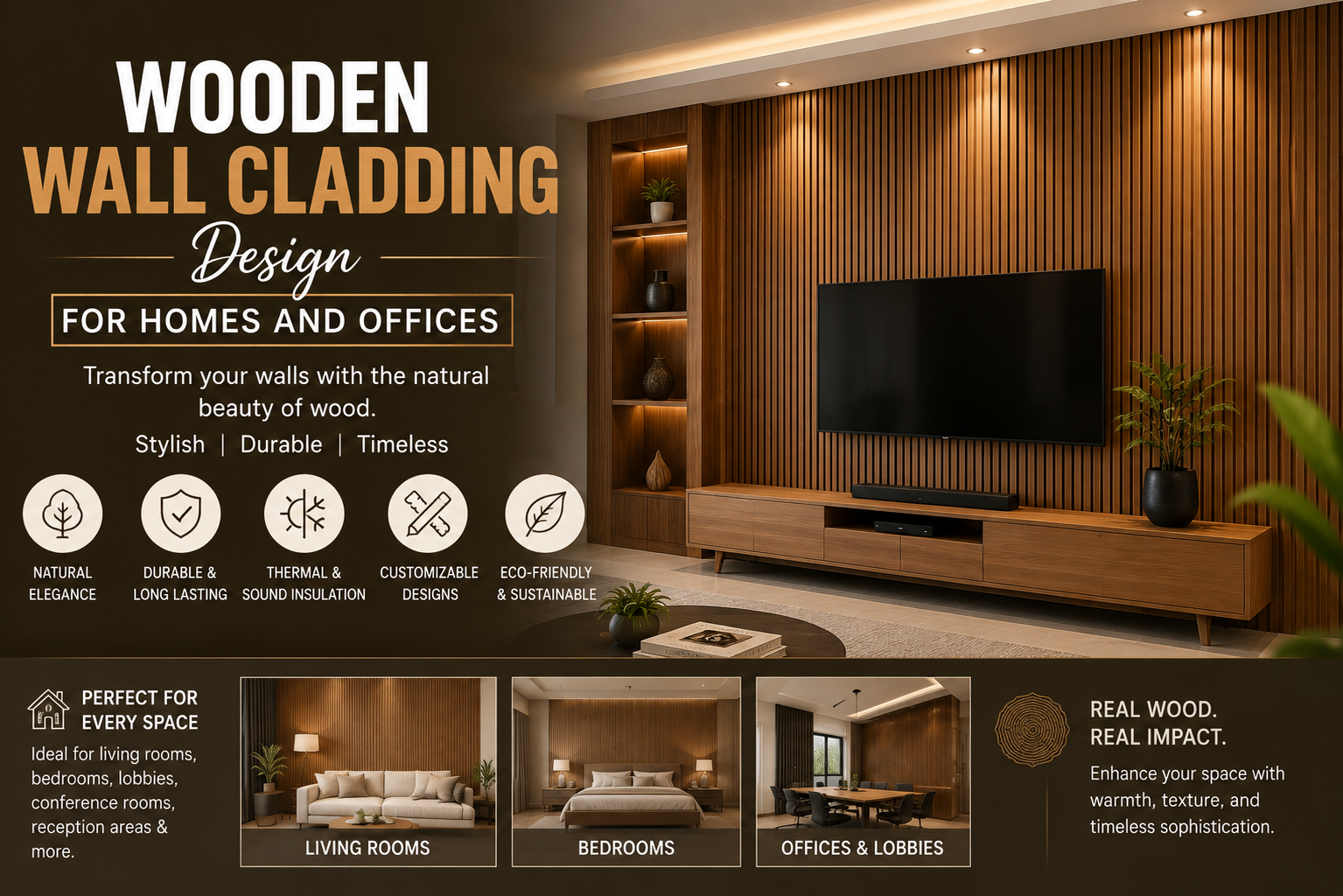
Wooden Wall Cladding Design for Homes and Offices: Modern Ideas, Benefits, Materials, and Trends
Interior spaces are increasingly designed around a combination of functionality, comfort, and visual appeal. Wooden Wall Cladding Design for Homes and Offices has become a popular way to give plain walls a refined and distinctive appearance while adding warmth and texture to modern interiors. At mkfunriture, we share furniture collections, wooden interior ideas, and design inspiration on Instagram to help homeowners and businesses discover practical ways to improve their spaces. You can explore customized wooden furniture, wall solutions, and interior products from MK Furniture.
Wooden wall cladding can completely change the character of a room without requiring major structural modifications. Instead of relying only on paint, wallpaper, or conventional wall finishes, designers can use wooden panels, slats, fluted surfaces, decorative boards, and customized patterns to create an attractive architectural feature.
The versatility of wooden wall panels makes them suitable for different environments. A warm wooden wall can make a living room feel more welcoming, create a sophisticated bedroom backdrop, provide a professional appearance in an office, or strengthen the visual identity of a commercial space.
The increasing interest in Wooden Wall Cladding Design for Homes and Offices is closely connected with the growing preference for natural-looking interiors that combine modern aesthetics with practical functionality.
What Is Wooden Wall Cladding?
Wooden wall cladding is an interior finishing technique in which wooden or wood-based panels are installed over a wall surface to create a decorative, textured, or protective layer.
Depending on the project, Wooden Wall Cladding Design for Homes and Offices can be produced using:
- MDF
- Plywood
- Engineered wood
- Natural wood
- Veneered boards
- Decorative laminates
- Fluted wooden panels
- Wooden slats
The material, thickness, pattern, finish, and installation method can be selected according to the room and its intended purpose. A properly designed cladding system can conceal minor wall imperfections while introducing texture and visual depth.
Why Wooden Wall Cladding Is Popular
Wood has always been valued in interior design because of its natural appearance and versatility. Modern manufacturing has expanded the possibilities of wooden interiors by allowing designers to create highly precise patterns and customized panel arrangements. This is exactly why Wooden Wall Cladding Design for Homes and Offices has become a top choice for contemporary renovations.
Some of the main reasons for choosing wooden wall cladding include:
- Natural warmth
- Premium appearance
- Design flexibility
- Easy coordination with furniture
- Multiple finish options
- Long-lasting visual appeal
- Better use of blank wall space
- Customized installation possibilities
Wooden wall treatments can work with minimalist, contemporary, luxury, industrial, and traditional interior styles.
Benefits of Wooden Wall Cladding for Homes
Residential interiors require materials that look attractive while remaining practical for everyday use. Wooden cladding can be used to create focal points in:
- Living rooms
- Bedrooms
- Dining rooms
- Home offices
- Entertainment rooms
- Entrance areas
- Staircases
A feature wall behind a television, sofa, or bed can become the central visual element of a room. For homeowners, Wooden Wall Cladding Design for Homes and Offices offers the flexibility to create a coordinated appearance across multiple rooms while allowing each space to have its own personality.
Living Room Wall Cladding Ideas
The living room is one of the most suitable spaces for Wooden Wall Cladding Design for Homes and Offices. A wooden wall can be installed behind a television unit, sofa, display cabinet, or decorative console. The design can remain simple or incorporate patterns and lighting for a stronger visual effect.
Popular living room options include:
- Vertical wooden slats
- Fluted panels
- Horizontal panels
- Geometric arrangements
- Natural wood textures
- Backlit panels
- Floating shelves
- Decorative wooden screens
A television wall can combine wooden panels with storage cabinets and concealed wiring to create an organized entertainment area.
Bedroom Wooden Wall Designs
Bedrooms benefit from materials that create a warm and comfortable atmosphere. Wooden panels behind the bed can replace a conventional headboard while providing a more integrated appearance.
Popular bedroom concepts include:
- Full-width headboard walls
- Vertical slat panels
- Fluted wooden surfaces
- Walnut finishes
- Light oak finishes
- Decorative grooves
- Integrated bedside storage
- Concealed lighting
The selected finish should coordinate with wardrobes, beds, flooring, curtains, and other bedroom furniture.
Dining Room Applications
A dining area can be enhanced with a wooden wall behind the dining table or crockery unit. Wooden panels provide a warm background while helping the dining area feel visually connected to the rest of the home. Useful additions include display shelves, crockery cabinets, decorative niches, LED lighting, wooden artwork, and fluted panels.
Home Office Wall Cladding
The growth of home-based work has increased interest in professional-looking home offices. A wooden wall behind an office desk provides a polished background for video meetings while adding character to the workspace. It can also incorporate bookshelves, floating cabinets, display niches, cable management, and company branding.
Wooden Wall Cladding for Offices
When planning Wooden Wall Cladding Design for Homes and Offices, commercial offices have different requirements from residential spaces. The design needs to communicate professionalism while creating an environment that employees and visitors can comfortably use.
Wooden wall panels can be installed in:
- Reception areas
- Executive cabins
- Meeting rooms
- Conference rooms
- Waiting areas
- Workspaces
- Boardrooms
- Corridors
Executive Office Interiors
Executive cabins often use premium materials to create a sophisticated environment. Wooden wall cladding can be combined with executive desks, storage cabinets, bookshelves, leather seating, glass partitions, and accent lighting.
Conference Room Applications
Conference rooms require professional surroundings that support meetings and presentations. Wooden wall panels can provide an attractive background while helping the room feel warmer than a completely plain office environment.
Reception Area Wall Designs
A customized wooden wall can make a reception area appear professional, warm, premium, modern, and organized. Company logos can be integrated into wooden panels using CNC cutting, laser cutting, engraving, or contrasting materials.
Materials Used for Wooden Wall Cladding
The choice of material for Wooden Wall Cladding Design for Homes and Offices depends on the design, location, budget, and desired finish.
- MDF: Widely used for decorative interior panels because it provides a smooth surface and supports detailed cutting and finishing.
- Plywood: Provides structural strength and can be used for various interior applications where durability is important.
- Veneered Boards: Provide the appearance of natural wood while offering a consistent surface.
- Engineered Wood: Can provide predictable dimensions and a range of finish options suitable for modern interiors.
- Natural Wood: Offers authentic grain patterns and a premium appearance, although material selection and maintenance requirements should be considered carefully.
Panel Styles
- Fluted Wooden Wall Panels: Repeated vertical grooves create texture while maintaining a simple visual language.
- Wooden Slat Walls: Narrow strips installed with consistent spacing. They can be used as decorative feature walls, room dividers, or TV backgrounds.
- Decorative and Laser-Cut Panels: Laser-cut technology allows intricate patterns (geometric, floral, abstract) to be incorporated into wooden panels.
Combining Wood with Other Materials
Modern interiors frequently combine multiple materials to create visual contrast. Wooden wall cladding can be paired with marble, stone, glass, metal, mirrors, fabric, or decorative laminates.
Technical & Planning Considerations
Choosing the Right Wood Finish
The finish has a major influence on the final appearance. Common options include natural oak, walnut, teak, ash, matte finishes, gloss finishes, rustic textures, and various light and dark wood tones.
Role of Lighting
Lighting can dramatically improve the appearance of wooden wall panels. Popular lighting techniques include warm LED strips, concealed lighting, spotlights, wall washers, cove lighting, and backlighting.
Space Planning
The size and arrangement of the wall should be considered before finalizing your Wooden Wall Cladding Design for Homes and Offices. Important factors include:
- Wall width and ceiling height
- Furniture dimensions
- Door and window locations
- Electrical points
- Lighting and viewing angles
- Storage requirements
Durability and Maintenance
Basic maintenance generally includes regular dusting, gentle cleaning, avoiding excessive moisture, protecting surfaces from harsh chemicals, and checking fittings periodically.
Planning a Wooden Wall Cladding Project
Before starting a project, homeowners and businesses should define the purpose of the wall. Ask:
- Is the wall primarily decorative?
- Does it need storage or to conceal wiring?
- Is lighting required, or does it need privacy?
- What maintenance level is acceptable?
With customized planning, Wooden Wall Cladding Design for Homes and Offices can become a long-term interior feature that supports both aesthetics and everyday functionality.
Part 2: Wooden Wall Cladding Design for Homes and Offices – Practical Considerations, Trends, and Long-Term Value
Modern Design Ideas for Residential Interiors
Wooden wall cladding can be adapted to almost any residential interior style. The key is to choose a pattern, material, and finish that complements the architecture instead of competing with it. Minimalist homes often benefit from simple vertical slats or narrow fluted panels, while larger luxury homes can accommodate broader panels and mixed materials.
The flexibility of Wooden Wall Cladding Design for Homes and Offices makes it possible to create different visual experiences without changing the basic architectural structure of a room.
Entrance, Staircase, and Foyer Wall Cladding
- Entrance/Foyer: A wooden feature wall in the foyer can be combined with console tables, mirrors, and decorative lighting.
- Staircases: Wooden panels can turn this unused surface into a decorative architectural feature using vertical slats or geometric panels.
- Home Theatre: A professionally planned entertainment wall can conceal cables and equipment while keeping the room visually organized.
Commercial Interiors
- Retail and Showrooms: Provides a neutral but sophisticated background for product displays and brand walls.
- Restaurants and Cafés: Installed behind dining tables, service counters, and bar areas to create warmth.
- Hotels: Consistent wood finishes across lobby feature walls and guest room headboards strengthen the property’s visual identity.
Cost Considerations and Future Trends
The cost varies depending on material, wall dimensions, design complexity, finish, customization, lighting, storage integration, and installation requirements. Future trends in interior design are likely to include modular wall systems, smart lighting integration, sustainable materials, acoustic wall solutions, and hidden storage.
Final Buying Checklist
Before starting a project, review these points:
- Measure the wall accurately.
- Define the purpose of the wall.
- Select a suitable material and desired finish.
- Decide on the panel pattern.
- Plan lighting and storage requirements.
- Coordinate furniture placement and electrical points.
- Plan professional installation and understand maintenance.
A well-planned wooden wall can completely change the appearance and atmosphere of an interior. It can provide warmth in a home, professionalism in an office, sophistication in a hotel, or a distinctive identity in a commercial space.
Wooden Wall Cladding Design for Homes and Offices is therefore best approached as a complete interior solution rather than simply a decorative surface. With customized planning and quality craftsmanship, wooden wall cladding can remain an attractive and functional part of an interior for many years.