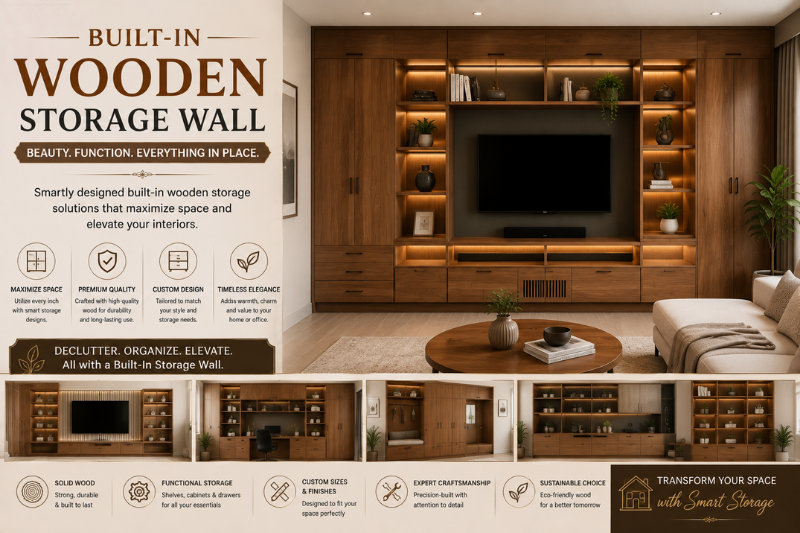
Built-In Wooden Storage Wall: A Smart and Stylish Solution for Modern Interiors
Modern homes and offices need storage that keeps everyday items organized without making interiors feel crowded. A Built-In Wooden Storage Wall offers a practical way to use vertical wall space while creating a clean, coordinated appearance. At mkfunriture, we share modern furniture collections, storage ideas, and interior inspiration on Instagram to help homeowners and businesses create functional spaces. You can also explore customized wooden furniture and interior solutions at mkfurniture.in, where practical storage meets contemporary design.
Unlike standalone cabinets that occupy valuable floor space, built-in storage can be planned around the dimensions of a room. It can extend from floor to ceiling, fit around windows or doors, accommodate specific belongings, and coordinate with existing furniture. This makes it particularly useful for apartments, compact homes, offices, and modern commercial interiors.
A well-planned storage wall does more than provide shelves and cabinets. It can become an architectural feature that contributes to the character of the room. Open shelves can display books and décor, closed cabinets can hide clutter, drawers can organize smaller items, and dedicated sections can accommodate electronics or work equipment.
What Is a Built-In Wooden Storage Wall?
A built-in wooden storage wall is a customized storage system designed to occupy a specific wall or section of a room. It generally combines cabinets, drawers, shelves, niches, and other storage elements into one integrated structure.
Unlike ready-made furniture, the dimensions and internal arrangement can be designed around the available space and the user’s storage requirements.
Typical components include:
- Closed storage cabinets
- Open display shelves
- Drawers
- Tall cupboards
- Adjustable shelving
- Decorative niches
- TV compartments
- Bookshelves
- File storage
- Hidden compartments
The final design can be minimalist or highly detailed depending on the interior style and functional requirements.
Why Built-In Storage Is Becoming Popular
Modern interiors often need to accommodate more belongings while maintaining a clean appearance. Standalone furniture can leave unused gaps between cabinets, walls, and ceilings.
Built-in storage addresses this issue by using the available wall more efficiently.
Key benefits include:
- Better use of vertical space
- Customized dimensions
- Integrated appearance
- Greater storage capacity
- Reduced visual clutter
- Flexible internal layouts
- Coordination with existing furniture
The result is a storage system that feels like part of the architecture rather than an additional piece of furniture.
Advantages for Small Homes
Space is often limited in apartments and compact homes. Floor-standing cabinets can make a small room feel even more crowded.
A wall-mounted or integrated storage system can help preserve floor space while providing substantial storage.
Useful solutions include:
- Full-height cabinets
- Floating shelves
- Narrow vertical cupboards
- Built-in drawers
- Overhead compartments
- Fold-away work areas
Using the wall from floor to ceiling can significantly increase storage capacity without requiring additional floor area.
Living Room Storage Wall Ideas
The living room is one of the most suitable areas for an integrated wooden storage system.
A customized arrangement can combine entertainment, display, and storage functions in a single wall.
Popular elements include:
- TV console
- Display shelves
- Closed cabinets
- Bookshelves
- Decorative niches
- Floating drawers
- Media storage
- Concealed cable management
For example, the centre of the wall can accommodate a television while surrounding cabinets provide hidden storage. Open shelves can then be used for books, artwork, plants, or decorative objects.
This approach creates a visually balanced entertainment wall while keeping everyday items organized.
TV and Entertainment Storage
Modern entertainment systems often involve televisions, speakers, gaming consoles, routers, streaming devices, and other equipment.
A customized storage wall can provide dedicated spaces for these items.
Important considerations include:
- Cable routing
- Ventilation
- Equipment dimensions
- Power outlets
- Screen height
- Storage requirements
Closed cabinets can conceal cables and accessories, while ventilated compartments can accommodate electronic equipment where required.
The design should ensure easy access to devices without compromising the clean appearance of the wall.
Bookshelf Integration
Bookshelves can be incorporated into a larger storage wall instead of being installed as separate furniture.
This creates a continuous visual structure and allows books to be organized alongside decorative objects and closed storage.
Possible arrangements include:
- Full-height bookcases
- Asymmetrical open shelves
- Floating shelves
- Shelves surrounding a TV
- Dedicated reading sections
Different shelf widths can add visual interest while providing storage for books of varying sizes.
Bedroom Storage Walls
Bedrooms require efficient storage for clothing, accessories, books, personal belongings, and everyday items.
A built-in wall can combine multiple storage functions into one coordinated system.
Possible components include:
- Wardrobe sections
- Open shelves
- Drawers
- Dressing areas
- Bedside storage
- Overhead cabinets
- Display niches
Integrating these functions into a single wall can create a more organized bedroom while reducing the need for multiple standalone cabinets.
Storage Behind the Bed
A storage wall can also be designed around the bed.
Instead of using a conventional headboard alone, the wall can combine:
- Headboard panel
- Bedside shelves
- Small drawers
- Decorative niches
- Overhead storage
Careful planning is important because storage near the bed should remain convenient and visually comfortable.
Open sections can display books or décor, while closed cabinets can keep personal belongings out of sight.
Home Office Storage Walls
Home offices need storage for documents, stationery, books, technology, and other work materials.
An integrated wooden storage wall can combine a desk with vertical storage.
Useful features include:
- Work desk
- File cabinets
- Open bookshelves
- Closed cupboards
- Printer compartments
- Display shelves
- Cable management
This creates a dedicated workstation while reducing the amount of furniture required in the room.
Office Storage Solutions
Commercial offices can also benefit from customized wall storage.
Applications include:
- File storage
- Document cabinets
- Employee storage
- Display shelving
- Equipment cupboards
- Meeting room storage
- Executive office cabinets
The design can be coordinated with desks, workstations, partitions, and other office furniture.
For professional environments, closed storage is particularly useful for keeping documents and supplies organized while maintaining a clean appearance.
Choosing the Right Material
The material used for a storage wall affects its appearance, strength, maintenance, and cost.
Common options include:
MDF
MDF provides a smooth surface and works well for painted or laminated furniture applications. It is particularly suitable for detailed cabinetry and customized panel designs.
Plywood
Plywood provides good structural strength and can be suitable for storage systems requiring durable construction.
Engineered Wood
Engineered wood offers consistent dimensions and can be finished in various colors and textures.
Veneered Panels
Veneered panels provide a natural wood appearance while offering a more consistent surface.
Solid Wood
Solid wood provides authentic grain and a premium appearance. Material selection should consider the intended application, environment, and budget.
Selecting the Right Finish
The finish determines how the storage wall interacts with the rest of the interior.
Popular choices include:
- Natural wood
- Walnut
- Teak
- Oak
- Matte finishes
- Gloss finishes
- Textured laminates
- Dual-tone combinations
Light finishes can help smaller rooms appear brighter, while darker wood tones can create a richer and more dramatic appearance.
The finish should ideally coordinate with flooring, doors, windows, furniture, and wall colors.
Open Shelves vs Closed Cabinets
A balanced storage wall often combines both open and closed storage.
Open Shelves
Open shelving works well for:
- Books
- Plants
- Artwork
- Collectibles
- Decorative objects
Closed Cabinets
Closed storage is useful for:
- Documents
- Electronics
- Household items
- Clothing
- Office supplies
- Everyday clutter
Combining both types provides functionality while maintaining visual balance.
Planning Storage According to Usage
Storage should be designed around the items that will actually be stored.
Frequently used objects should be positioned at easily accessible heights.
Less frequently used items can be placed in:
- Upper cabinets
- Overhead compartments
- Deeper storage sections
This approach makes the storage system easier to use and reduces unnecessary movement around the room.
Custom Dimensions
One of the biggest advantages of built-in storage is the ability to customize dimensions.
The system can be designed around:
- Wall width
- Ceiling height
- Door positions
- Windows
- Electrical outlets
- Furniture
- Architectural columns
This helps minimize unused gaps and creates a more integrated appearance.
Why Choose MK Furniture?
At mkfunriture, we focus on customized wooden furniture and practical interior solutions designed around real spaces and everyday requirements. Storage walls can be planned according to room dimensions, preferred finishes, storage needs, and existing furniture.
You can explore our furniture and interior solutions through mkfurniture.in, while our Instagram presence provides additional inspiration for modern wooden furniture and interior design ideas.
A well-planned storage wall can transform an unused wall into an organized and visually attractive part of an interior. By combining cabinets, shelves, drawers, niches, and display areas, homeowners and businesses can achieve substantial storage without relying on numerous separate furniture pieces.
The best results come from careful planning, appropriate materials, suitable finishes, and a layout based on how the space will actually be used. A customized approach allows storage to become part of the room’s overall design rather than simply a place to keep belongings.
Built-In Wooden Storage Wall – Design Ideas, Planning, Maintenance, and Long-Term Benefits
Storage That Works With Modern Lifestyles
Modern interiors need furniture that adapts to changing lifestyles. A storage system may need to accommodate books today, work equipment tomorrow, and additional household belongings in the future.
A customized storage wall can be designed with flexible sections that make it easier to reorganize the space when requirements change.
Adjustable shelves, modular cabinets, removable compartments, and multi-purpose storage areas can make the furniture more useful over the long term.
Instead of treating storage as a separate element, homeowners can make it an integrated part of their interior design.
Floor-to-Ceiling Storage
Floor-to-ceiling storage is particularly useful when maximum capacity is required.
The upper sections can be used for items that are not needed frequently, while the middle and lower sections can hold everyday belongings.
This arrangement can include:
- Tall cabinets
- Open display shelves
- Overhead storage
- Drawers
- Closed cupboards
- Decorative niches
Using the entire height of a wall also creates a strong architectural appearance.
Storage for Entryways
Entryways often become cluttered with shoes, bags, keys, documents, and other everyday items.
A customized storage system can combine:
- Shoe storage
- Key drawers
- Open shelves
- Closed cabinets
- Seating
- Mirror panels
- Decorative displays
This creates a more organized entrance while reducing visible clutter.
Dining Room Storage
Dining areas can benefit from integrated storage for crockery, serving accessories, tableware, and decorative objects.
A coordinated wall can include:
- Crockery cabinets
- Glass display sections
- Closed cupboards
- Open shelves
- Display niches
- Serving storage
Combining these functions into one unit creates a cleaner appearance than using several unrelated cabinets.
Storage Walls for Kids’ Rooms
Children’s rooms require flexible storage because their needs change as they grow.
A storage wall can accommodate:
- Books
- Toys
- School supplies
- Clothing
- Display items
- Study materials
Open shelves can make frequently used items easy to access, while closed cabinets can keep less frequently used belongings organized.
Safety should always be considered during installation, particularly with tall furniture. Appropriate wall anchoring and professional installation can help reduce tipping risks.
Multi-Functional Furniture
One of the strongest advantages of customized storage is the ability to combine several functions.
For example, one wall can incorporate:
- Storage
- Study desk
- Display shelves
- Television unit
- Bookshelf
- Decorative panels
This approach is particularly valuable in compact homes where every square metre needs to serve a purpose.
Integrating Lighting
Lighting can improve both functionality and appearance.
Useful lighting options include:
- Under-shelf LED strips
- Cabinet lighting
- Backlit niches
- Reading lights
- Display spotlights
Display lighting helps highlight decorative objects, while task lighting can make desks and reading areas more practical.
Electrical planning should be completed before installation so wiring can be safely concealed.
Cable Management
Modern homes and offices contain numerous electronic devices.
A well-designed storage system can provide dedicated routes for:
- Television cables
- Internet equipment
- Speakers
- Chargers
- Computers
- Printers
- Gaming devices
Concealed cable management creates a cleaner appearance and makes the room easier to maintain.
Ventilation should also be considered around electronic equipment to prevent unnecessary heat accumulation.
Minimalist Storage Design
Minimalist interiors benefit from simple storage fronts, limited decorative detailing, and consistent finishes.
Features may include:
- Handleless cabinet doors
- Push-to-open mechanisms
- Flat panels
- Neutral colors
- Hidden compartments
- Uniform cabinet proportions
A minimalist storage system can make a room appear calmer and more spacious.
Luxury Storage Concepts
Luxury interiors often combine storage functionality with premium materials and decorative details.
Possible features include:
- Veneered panels
- Glass doors
- Brass or metal accents
- Integrated lighting
- Decorative wood patterns
- Premium hardware
- Custom display sections
The objective is to make storage look like an intentional architectural feature rather than a collection of cabinets.
Choosing Hardware
Hardware affects the usability and lifespan of storage furniture.
Important components include:
- Hinges
- Drawer runners
- Handles
- Push-to-open mechanisms
- Shelf supports
- Cabinet fittings
Soft-close hardware can provide smoother operation, while appropriate load-rated fittings help ensure reliable performance.
Hardware should be selected according to cabinet size, expected usage, and weight requirements.
Professional Measurement and Installation
Accurate measurement is essential for customized storage.
Before production, the wall should be checked for:
- Width
- Height
- Uneven surfaces
- Electrical points
- Plumbing
- Doors
- Windows
- Skirting
- Ceiling conditions
Installation also requires careful alignment so that cabinet doors, shelves, and panels appear consistent.
Professional installation can reduce fitting problems and produce a cleaner final result.
Maintenance
Proper maintenance helps preserve the appearance of wooden storage furniture.
Recommended practices include:
- Dust surfaces regularly.
- Use a soft microfiber cloth.
- Clean spills promptly.
- Avoid excessive moisture.
- Use appropriate cleaning products.
- Do not overload shelves.
- Check hardware periodically.
The exact maintenance method depends on the material and finish, so manufacturer recommendations should be followed.
Common Planning Mistakes
A storage wall can become inconvenient if it is designed without considering actual usage.
Common mistakes include:
- Insufficient closed storage
- Too many open shelves
- Poor shelf heights
- Inadequate cable management
- Ignoring electrical points
- Choosing unsuitable materials
- Overloading cabinets
- Forgetting future storage needs
A practical design should balance appearance with everyday usability.
How to Plan the Interior Layout
Before starting a project, divide belongings into categories.
For example:
Daily-Use Items
Place these in easily accessible drawers, shelves, or cabinets.
Decorative Items
Use open shelves and display niches.
Documents and Files
Use closed cabinets or dedicated office storage.
Seasonal Items
Place them in higher or less accessible compartments.
Electronics
Create dedicated sections with suitable cable management and ventilation.
This approach ensures every section of the storage wall has a clear purpose.
Built-In Storage for Commercial Spaces
Offices and businesses can use customized storage walls for more than ordinary storage.
They can support:
- Document management
- Product displays
- Brand presentation
- Equipment storage
- Employee organization
- Reception storage
- Meeting room supplies
A coordinated storage system can also make a workplace look more professional.
Why Customized Storage Offers Long-Term Value
Ready-made furniture may provide immediate storage, but customized solutions can make better use of unusual wall dimensions and specific requirements.
Long-term advantages include:
- Better space utilization
- Coordinated appearance
- Flexible storage
- Reduced visual clutter
- Personalized functionality
- Easier interior coordination
A well-designed storage system can remain useful even when furniture or décor elsewhere in the room changes.
Current Storage Design Trends
Modern storage furniture is increasingly moving toward clean, integrated solutions.
Popular trends include:
- Floor-to-ceiling cabinetry
- Handleless fronts
- Fluted wooden panels
- Open and closed storage combinations
- Hidden workstations
- Integrated LED lighting
- Floating cabinets
- Multi-functional wall systems
- Natural wood finishes
- Minimalist designs
These trends focus on creating interiors that look organized while providing substantial storage.
Why Choose MK Furniture?
At mkfunriture, customized furniture solutions are planned around the practical requirements of each space. A storage system can be coordinated with existing wardrobes, TV units, desks, beds, tables, and other furniture to create a consistent interior.
You can explore furniture and customized wooden solutions at mkfurniture.in. MK Furniture also shares furniture ideas and interior inspiration through Instagram for customers looking for modern storage and furniture concepts.
Buying Checklist
Before ordering customized wooden storage, consider:
- Wall measurements
- Storage capacity
- Material selection
- Finish
- Shelf requirements
- Drawer requirements
- Cabinet configuration
- Lighting
- Cable management
- Hardware
- Installation
- Future storage needs
A clear plan helps prevent expensive changes later.
A thoughtfully planned Built-In Wooden Storage Wall can turn unused vertical space into a practical and attractive part of a modern interior. By combining cabinets, shelves, drawers, display areas, workspaces, and entertainment functions, homeowners and businesses can create storage that fits naturally into the architecture.
The most effective solution is not necessarily the largest one. It is the design that provides the right storage in the right places while maintaining a balanced appearance. Material quality, accurate measurements, suitable hardware, professional installation, and thoughtful internal organization all contribute to long-term performance.
For homes, built-in storage can reduce clutter and make rooms easier to organize. For offices, it can support documents, equipment, displays, and everyday workplace requirements. In both environments, customized wooden furniture provides an opportunity to combine storage with the overall interior design.
With careful planning and quality craftsmanship, integrated wooden storage can remain useful and visually appealing for many years, making it a practical investment for modern residential and commercial spaces.
Making Better Use of Vertical Space
Modern interiors often have more usable wall space than floor space. Instead of filling a room with separate cabinets, shelves, and cupboards, a customized storage system can combine multiple functions within one coordinated structure.
Vertical storage is especially useful in apartments and compact offices where floor space is limited. A floor-to-ceiling arrangement can provide substantial capacity while keeping the centre of the room open.
This approach can incorporate:
- Tall cabinets
- Open shelving
- Drawers
- Display niches
- Closed cupboards
- Workstations
- Media compartments
Using vertical space effectively can make an interior feel more organized without sacrificing its visual character.
Living Room Entertainment Storage
A living room storage system can combine entertainment, display, and organization.
A typical arrangement may include a television in the centre, closed cabinets below, open shelves on either side, and decorative niches above.
Additional features can include:
- Floating TV consoles
- Hidden cable channels
- Gaming equipment storage
- Speaker compartments
- Book shelves
- Decorative displays
- Integrated lighting
This creates a unified entertainment wall instead of several independent furniture pieces.
Display and Storage Combination
Not everything needs to be hidden. Open shelving provides an opportunity to display objects that contribute to the personality of a room.
Suitable display items include:
- Books
- Artwork
- Plants
- Photographs
- Collectibles
- Decorative accessories
- Awards
Closed cabinets can then be used for less attractive or less frequently used belongings.
A carefully balanced combination of open and closed sections prevents the wall from looking either too busy or too empty.
Bedroom Organization
Bedrooms often require storage for clothing, accessories, books, documents, and personal belongings.
A customized wall can combine a wardrobe, dressing area, shelves, and drawers within one coordinated arrangement.
Possible features include:
- Full-height cupboards
- Dressing mirror
- Accessory drawers
- Open display shelves
- Bedside niches
- Overhead storage
- Hidden compartments
This can reduce the need for multiple standalone storage units and create a more cohesive bedroom interior.
Integrated Dressing Area
A storage wall can be designed around a dressing mirror and dressing table.
The surrounding sections can accommodate:
- Cosmetics
- Accessories
- Clothing
- Personal items
- Small appliances
Drawers should be sized according to their intended contents. Frequently used items should remain within easy reach, while seasonal belongings can be placed in upper cabinets.
Study and Workstation Integration
A wall storage system can also incorporate a dedicated study desk.
This is particularly useful for:
- Children’s rooms
- Home offices
- Compact apartments
- Guest bedrooms
- Flexible workspaces
The arrangement can include a desk, overhead cabinets, bookshelves, drawers, and display sections.
When the desk is not being used, some designs can conceal or visually minimize the workstation, helping the room maintain a clean appearance.
Storage for Children’s Rooms
Children’s storage requirements change as they grow.
A flexible system can provide dedicated areas for:
- Toys
- Books
- School supplies
- Clothing
- Sports equipment
- Display items
Lower shelves should be accessible to children, while higher cabinets can store items that require adult supervision.
Secure installation is particularly important for tall storage furniture in children’s rooms.
Entryway Storage
The entrance is often where everyday clutter begins.
A customized storage arrangement can provide dedicated locations for:
- Shoes
- Bags
- Keys
- Helmets
- Accessories
- Documents
A bench can be integrated into the lower section to make putting on footwear more convenient.
A mirror above or beside the storage can also make the entrance more functional.
Dining Room Storage
Dining rooms can benefit from integrated storage for crockery, serving pieces, table linens, and decorative items.
A wall system may include:
- Crockery cabinets
- Glass-front display sections
- Closed storage
- Open shelves
- Serving compartments
- Decorative niches
The finish can be coordinated with the dining table, chairs, flooring, and lighting to create a consistent interior.
Home Office Organization
A home office should provide easy access to documents and equipment without creating unnecessary visual clutter.
An integrated storage system can include:
- File drawers
- Document cabinets
- Bookshelves
- Printer compartments
- Stationery storage
- Open display areas
- Cable management
Frequently used items should remain close to the workstation, while archived documents can be stored in less accessible areas.
Corporate Office Applications
Businesses can use customized wooden storage for practical and presentation purposes.
Applications include:
- Executive office storage
- Conference room cabinets
- Reception storage
- Document management
- Product displays
- Equipment storage
- Employee storage
In professional environments, consistent finishes can help coordinate storage with desks, workstations, partitions, and reception furniture.
Reception and Brand Display
Storage walls can also become branding features.
A reception wall may combine storage with:
- Company logo
- Brand lettering
- Display niches
- Backlighting
- Decorative wooden panels
This creates a functional feature while reinforcing the company’s visual identity.
The storage should remain secondary to the branding and reception experience, ensuring the area does not feel like a conventional cupboard wall.
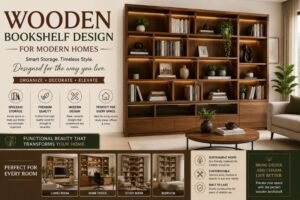
Bookshelves and Library Walls
For homes and offices with large book collections, an integrated bookshelf can be an efficient solution.
Different shelf heights can accommodate:
- Standard books
- Large-format books
- Files
- Magazines
- Decorative objects
Closed sections can protect important documents or belongings from dust.
For heavier books, shelf construction and load capacity should be considered during the design stage.
Hidden Storage Concepts
Modern interiors increasingly favor concealed storage.
Hidden compartments can be incorporated behind:
- Flush cabinet doors
- Decorative panels
- Sliding sections
- Handleless fronts
This creates a cleaner appearance while keeping belongings easily accessible.
Hidden storage is especially useful for items that are needed regularly but do not contribute to the room’s decorative appearance.
Floating Storage
Floating cabinets and shelves create a lighter visual appearance because they leave some floor area visible underneath.
They can be used for:
- TV consoles
- Bookshelves
- Display cabinets
- Home office storage
- Bedside storage
Floating furniture should be installed using appropriate fixing systems designed for the expected load and wall construction.
Natural Wood Aesthetics
Natural wood textures can introduce warmth into contemporary interiors.
Popular finishes include:
- Oak
- Walnut
- Teak
- Ash
- Natural veneer
The choice should depend on the surrounding interior rather than following a trend blindly.
Natural textures can work particularly well with neutral walls, stone surfaces, metal accents, and soft furnishings.
Minimalist Storage Walls
Minimalist designs typically use simple cabinet fronts, consistent proportions, and limited decorative detailing.
Popular features include:
- Handleless doors
- Flat panels
- Neutral finishes
- Hidden storage
- Clean lines
- Integrated lighting
The objective is to make the storage appear visually integrated with the architecture.
Combining Different Materials
Wood can be combined with other materials to create contrast.
Common combinations include:
- Wood and glass
- Wood and metal
- Wood and stone
- Wood and mirrors
- Wood and fabric
For example, glass-front cabinets can display decorative objects while solid wooden cabinets conceal everyday items.
Lighting and Ambience
Integrated lighting can make a storage wall more functional and visually attractive.
Useful lighting options include:
- Under-shelf LEDs
- Cabinet lights
- Backlit niches
- Spotlights
- Reading lights
Lighting should be planned before installation so wiring can be safely routed and concealed.
Why Choose MK Furniture?
At mkfunriture, customized wooden furniture is designed around the dimensions, functionality, and visual requirements of each space. Storage systems can be coordinated with existing furniture such as wardrobes, beds, TV units, desks, tables, and cabinets.
Explore customized furniture and interior solutions at mkfurniture.in, and follow MK Furniture on Instagram for additional furniture and interior inspiration.
Practical Planning Before Production
Before manufacturing begins, it is important to finalize:
- Overall dimensions
- Internal storage requirements
- Material
- Finish
- Hardware
- Lighting
- Electrical points
- Shelving positions
- Cabinet configuration
- Installation method
Clear planning reduces modifications during installation and ensures the finished furniture performs as intended.
A carefully planned Built-In Wooden Storage Wall can serve several purposes simultaneously. It can provide storage, display space, a television unit, a workstation, a bookshelf, or even a decorative feature without requiring multiple separate pieces of furniture.
The most successful designs are based on how people actually use their spaces. By combining accessible storage with concealed compartments, open displays with closed cabinets, and practical functions with attractive finishes, a wall can become an important part of the overall interior.
For both homes and offices, customized wooden storage provides an opportunity to make better use of available space while maintaining a clean and coordinated appearance. With appropriate materials, reliable hardware, accurate measurements, and professional installation, the resulting furniture can provide useful storage and visual value for many years.
Maintenance for Long-Lasting Storage
Proper maintenance helps wooden storage furniture retain its appearance and functionality for many years. Regular dusting with a soft microfiber cloth is usually sufficient for everyday care. Spills should be cleaned promptly, particularly on unfinished or moisture-sensitive surfaces.
Avoid excessive water, abrasive cleaners, and harsh chemicals unless the material manufacturer specifically recommends them. Different finishes can have different care requirements, so the appropriate cleaning method should always match the selected material.
Regularly checking hinges, drawer runners, handles, and other hardware can also help identify small issues before they become larger problems.
Organizing Storage Efficiently
The usefulness of a storage wall depends not only on its appearance but also on how effectively its internal sections are organized.
A practical arrangement can divide belongings according to frequency of use.
Everyday Items
Keep frequently used objects in easily accessible drawers, shelves, or cabinets.
Decorative Items
Use open shelving and display niches for books, artwork, plants, photographs, and collectibles.
Seasonal Belongings
Upper cabinets are suitable for items that are used only occasionally.
Documents and Files
Dedicated closed cabinets can keep important papers protected and organized.
Electronics
Televisions, routers, speakers, gaming equipment, and other devices should have appropriately sized compartments with suitable cable management and ventilation.
This approach ensures that every section serves a clear purpose.
Designing Around Existing Architecture
A customized storage system should work with the architecture rather than attempting to hide every feature.
Columns, beams, windows, doors, and wall recesses can sometimes be incorporated into the design.
For example, a narrow wall section beside a door can become a tall cabinet, while a recessed area can become open shelving.
This approach makes better use of difficult spaces while creating a more integrated appearance.
Storage Around Windows
Windows can create challenges when planning full-wall furniture, but they can also become part of the design.
Storage can be positioned:
- Below windows
- Beside windows
- Above windows
- Around window frames
The design must maintain access to the window and avoid interfering with ventilation, curtains, or natural light.
Storage Around Doors
Door openings should be measured carefully before designing cabinetry.
Narrow vertical cabinets can sometimes be installed beside doors, while overhead storage can use otherwise unused wall space.
However, sufficient clearance must be maintained so doors can open and close comfortably.
Modern Handleless Designs
Handleless cabinets are popular in contemporary interiors because they create a smooth and uninterrupted appearance.
Common mechanisms include:
- Push-to-open fittings
- Recessed handles
- Integrated profiles
- Minimal pull handles
Handleless designs work particularly well with full-height cabinetry and minimalist interiors.
Glass-Front Storage
Glass doors can introduce variety into a large storage wall.
They are useful for displaying:
- Decorative objects
- Books
- Crockery
- Collectibles
- Awards
- Artwork
Clear, tinted, or textured glass can be selected depending on the desired appearance.
Glass sections should be balanced with solid cabinets so the wall does not become visually cluttered.
Fluted and Textured Panels
Textured wooden surfaces can add depth to otherwise simple cabinetry.
Fluted panels, grooves, and slatted surfaces can be incorporated into selected sections rather than covering the entire wall.
This creates contrast while maintaining a clean overall appearance.
Such detailing can be particularly effective on:
- TV backdrops
- Cabinet fronts
- Entryway walls
- Bedroom storage
- Reception areas
Integrating a Work Desk
For smaller homes, combining storage and a work desk can be an efficient solution.
A wall can include:
- Desk surface
- Overhead cabinets
- Bookshelves
- Drawers
- Display shelves
- Cable management
This eliminates the need for a separate desk and storage cabinet while creating a dedicated workspace.
The desk height, chair clearance, electrical points, and lighting should be considered during planning.
Hidden Home Office
A storage system can also conceal a workstation when it is not in use.
Cabinet doors or folding panels can visually hide the desk area, helping a living room or bedroom maintain a clean appearance outside working hours.
This type of multifunctional furniture can be especially useful in apartments where one room needs to serve several purposes.
Storage for Apartments
Apartments often have limited storage and unusual wall dimensions.
Customized cabinetry can take advantage of:
- Narrow walls
- Empty corners
- High ceilings
- Wall recesses
- Spaces around doors
- Areas below windows
This can provide significantly more useful storage without filling the entire room with standalone furniture.
Storage for Luxury Homes
Larger homes provide opportunities for more elaborate storage systems.
A luxury storage wall may combine premium finishes with:
- Glass display cabinets
- Decorative lighting
- Veneered panels
- Designer hardware
- Integrated seating
- Entertainment systems
- Hidden storage
The design should still maintain proportion and avoid excessive decoration.
Office Storage Planning
Office storage should prioritize accessibility and organization.
Before designing an office storage wall, determine:
- Number of employees using it
- Document requirements
- Equipment dimensions
- Frequency of access
- Security requirements
- Display needs
Frequently accessed documents should be positioned within easy reach, while archives can occupy less accessible sections.
Storage and Branding
Businesses can incorporate their identity into customized furniture.
Branding options may include:
- Logo panels
- Engraved lettering
- Contrasting finishes
- Backlit logos
- Decorative brand colors
Brand elements should remain consistent with the company’s visual identity and should not compromise the functionality of the storage.
Cost Factors
The cost of customized storage depends on several variables rather than a single fixed rate.
Important factors include:
- Overall dimensions
- Material
- Finish
- Number of cabinets
- Drawer quantity
- Hardware
- Decorative detailing
- Lighting
- Glass sections
- Installation complexity
A simple storage wall with standard finishes will generally require less detailing than a highly customized system with premium materials, lighting, and integrated furniture.
A clear design brief helps establish realistic expectations before production begins.
Why Professional Design Matters
Professional planning can prevent common problems such as insufficient storage, poor proportions, difficult access, and conflicts with electrical points.
A well-designed system considers both the appearance of the wall and how people will use it every day.
This is particularly important for large installations because changing a completed cabinet system can be expensive and inconvenient.
Why Choose MK Furniture?
At mkfunriture, customized wooden furniture is developed around the practical and aesthetic requirements of each project. Storage solutions can be coordinated with other furniture and interior elements to create a consistent appearance throughout a room.
You can explore customized wooden furniture and interior solutions through mkfurniture.in. MK Furniture also shares furniture collections and interior inspiration on Instagram for homeowners and businesses looking for modern storage ideas.
Choosing the Right Storage Configuration
There is no single layout that works for every room.
A useful configuration depends on:
- What needs to be stored
- Who will use it
- How frequently items are accessed
- Available wall dimensions
- Room function
- Existing furniture
- Preferred visual style
For a living room, entertainment and display may be the priorities. For an office, documents and equipment may be more important. A bedroom may require clothing and personal storage.
The best design starts with these practical requirements.
Future-Proofing the Furniture
Storage requirements can change over time.
A flexible system can accommodate future changes by using:
- Adjustable shelves
- Modular sections
- Multipurpose cabinets
- Removable dividers
- Extra cable routes
Planning for future needs can make the furniture useful for longer and reduce the need for replacement.
Safety Considerations
Tall and heavy furniture should be securely anchored according to the wall construction and manufacturer’s recommendations.
Important considerations include:
- Proper wall fixing
- Appropriate hardware
- Shelf load limits
- Safe cabinet placement
- Child safety where applicable
Electrical equipment should also be installed with appropriate ventilation and safe cable routing.
A thoughtfully planned Built-In Wooden Storage Wall can transform an unused wall into a highly functional and visually integrated part of a home or office. Instead of relying on multiple standalone cabinets, homeowners and businesses can combine storage, display, entertainment, work, and decorative functions within one coordinated system.
The strongest designs balance appearance with everyday practicality. Material quality, accurate measurements, suitable hardware, effective internal organization, appropriate lighting, and professional installation all contribute to the final result.
For compact homes, integrated storage can help preserve valuable floor space. For larger residences, it can provide a sophisticated architectural feature. In offices, it can organize documents, equipment, displays, and supplies while maintaining a professional environment.
With careful planning and quality craftsmanship, customized wooden storage can remain functional and attractive for many years. MK Furniture provides customized wooden furniture and interior solutions for customers looking to make better use of their available space while maintaining a modern and coordinated interior.
The goal is not simply to add more cabinets. The goal is to create storage that fits the space, supports the way it is used, and becomes a natural part of the overall interior design.