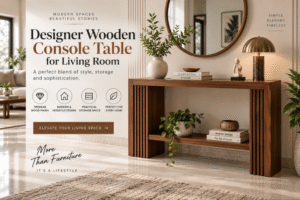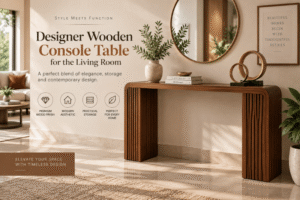
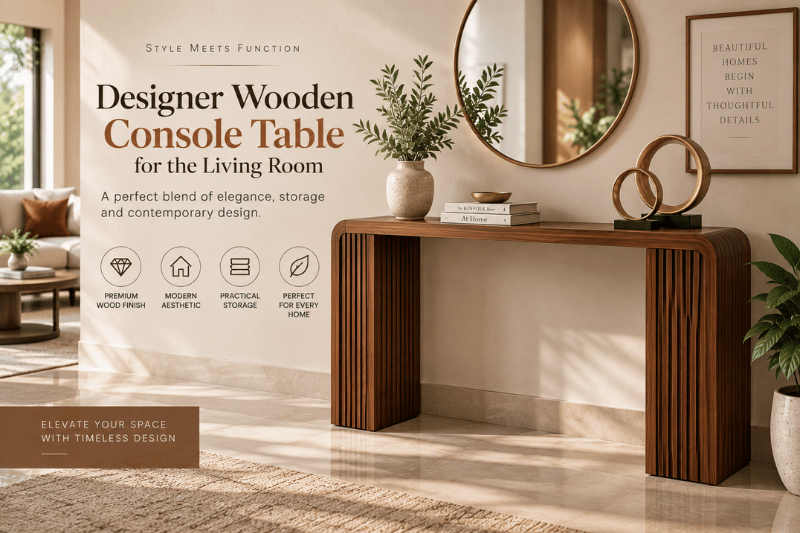
Designer Wooden Console Table for Living Room: Stylish Ideas for Modern Homes
A Designer Wooden Console Table for Living Room can add character, organization, and practical functionality to a modern interior without making the space feel crowded. Today, homeowners are looking for furniture that looks elegant while also serving a useful purpose, whether it is used for displaying décor, organizing everyday items, or creating a refined focal point. For design inspiration, homeowners can also explore furniture ideas on Instagram and discover contemporary solutions from mkfurniture. With thoughtful proportions, quality materials, and a suitable finish, a wooden console can complement everything from minimalist apartments to spacious family homes. mkfunriture focuses on practical wooden furniture concepts that combine everyday usability with attractive design. You can explore more furniture solutions through mkfurniture.
What Is a Wooden Console Table?
A console table is a relatively narrow furniture piece designed to fit against a wall, behind a sofa, near an entrance, or along an open passage. Traditionally, console tables were used primarily for decoration, but modern furniture designs have expanded their purpose. A contemporary wooden console can provide display space, drawers, cabinets, shelves, and even concealed storage.
The slim profile is one of the biggest advantages of this furniture. Unlike a large cabinet or sideboard, a console table generally occupies less floor area while still giving a room an organized and finished appearance.
Wood makes the furniture particularly versatile. Natural grain patterns, engineered wood surfaces, veneers, laminates, and different stains can create dramatically different appearances. A simple wooden console may look warm and traditional, while the same basic structure with a darker finish, clean lines, and metal hardware can appear contemporary and sophisticated.
For modern homes, the Designer Wooden Console Table for Living Room should balance three elements: appearance, proportion, and function.
Why Choose a Wooden Console for the Living Room?
The living room is usually one of the most visible areas of a home. Furniture placed here needs to work with the existing sofa, television unit, coffee table, flooring, curtains, wall décor, and lighting.
A wooden console provides an opportunity to connect these elements visually.
One important advantage is versatility. The table can be used as a decorative surface for artwork, lamps, books, vases, plants, sculptures, or family photographs. If the design includes drawers or cabinets, it can also hide remote controls, documents, chargers, keys, accessories, and other small household items.
Another advantage is visual warmth. Wood introduces a natural material into the room and can soften interiors that contain glass, metal, stone, or other hard surfaces.
A well-designed console can also help fill an otherwise empty wall. Instead of leaving a large blank area, homeowners can create a structured arrangement using a narrow table, artwork, mirror, wall lights, and carefully selected accessories.
Selecting the Right Size
Size should be one of the first considerations when selecting living room furniture. A console that is too large can make a room feel congested, while a very small piece may appear disconnected from the surrounding furniture.
Start by measuring the available wall or floor area. Consider the width of the furniture as well as its depth. A narrow console is particularly useful in apartments, corridors, compact living rooms, and areas where walking space is limited.
Height also matters. The table should relate comfortably to nearby furniture and architectural features. If it is placed behind a sofa, its proportions should work with the sofa back. If positioned below artwork or a mirror, the combined arrangement should have enough visual balance.
Before purchasing or ordering furniture, measure:
- Available wall width
- Available floor depth
- Ceiling height
- Sofa height
- Walking clearance
- Door and window positions
- Electrical outlet locations
- Existing furniture dimensions
These measurements make it easier to create a cohesive furniture layout.
Console Tables for Small Living Rooms
Small living rooms require furniture that provides useful functionality without consuming excessive space. A Designer Wooden Console Table for Living Room can be particularly effective because it offers a practical surface while maintaining a relatively compact footprint.
For a smaller room, consider a design with straight lines and limited ornamentation. Excessive decorative details can make the furniture visually heavier.
Wall-mounted or floating consoles can reduce the visual weight even further. Since the furniture is lifted from the floor, the area underneath remains visible, which can make the room feel more open.
Another useful option is a narrow console with drawers. Instead of adding a separate storage cabinet, homeowners can use the console for everyday organizational needs.
A small living room can also benefit from a light or medium wood finish. However, the best finish depends on the existing flooring, wall colors, sofa upholstery, and other furniture.
Minimalist Wooden Console Design
Minimalism does not mean that furniture has to be plain or uninteresting. It focuses on purposeful design, clean proportions, restrained decoration, and functional details.
A minimalist wooden console may feature:
- Straight horizontal lines
- Simple rectangular forms
- Minimal hardware
- Smooth surfaces
- Neutral finishes
- Integrated storage
- Clean edges
- Open space underneath
This type of Designer Wooden Console Table for Living Room works well with modern interiors because it does not compete with other decorative elements.
For example, a simple console placed beneath a large round mirror can become an attractive focal point without requiring numerous accessories. A table lamp, a small plant, and one decorative object may be enough to complete the arrangement.
Using a Console Behind the Sofa
Placing a console behind the sofa is one of the most effective ways to use an open area in a living room.
When the sofa is positioned away from the wall, the space behind it can sometimes look unfinished. A narrow console fills that gap and creates an intentional furniture arrangement.
The surface can be used for lamps, books, decorative accessories, or plants. If electrical outlets are nearby, table lamps can also provide soft ambient lighting.
When selecting a table for this position, pay attention to height and depth. The furniture should not interfere with seating or movement. Sharp corners may also be unsuitable in areas with heavy household traffic, particularly when children are present.
A custom-built Designer Wooden Console Table for Living Room can be designed around the exact sofa dimensions, which can produce a more integrated appearance.
Wall-Mounted Console Furniture
Floating furniture has become increasingly popular in contemporary interiors. A wall-mounted console does not sit directly on the floor, creating a visible gap underneath.
This design approach offers several benefits.
First, the open floor area can make the room appear visually lighter. Second, cleaning underneath the furniture can be easier. Third, floating furniture can create a modern architectural appearance.
A wall-mounted Designer Wooden Console Table for Living Room can be particularly useful below wall décor or in combination with a television setup. It can also work as a compact storage solution where floor space is limited.
However, wall-mounted furniture requires appropriate installation. The wall structure, fixing method, furniture weight, and intended load should be considered before installation.
Adding Storage to a Console Table
Modern homeowners often expect furniture to perform multiple functions. A console can therefore include different types of storage depending on the room’s needs.
Drawers
Drawers are useful for smaller objects that need to remain accessible but out of sight. They can store keys, stationery, remotes, chargers, documents, and household accessories.
Cabinets
Cabinet compartments provide more enclosed storage. They can be useful when homeowners want to keep larger items hidden.
Open Shelves
Open shelves are suitable for books, decorative baskets, plants, and display objects. They also create visual variety by breaking up a large solid cabinet structure.
Combination Storage
A combination of drawers, cabinets, and open shelves can make the furniture more versatile. The exact arrangement should depend on what the homeowner expects to store.
Storage should not be added simply for appearance. Every compartment should have a practical purpose.
Choosing Wood and Furniture Materials
Material selection influences the appearance, durability, maintenance requirements, and overall construction of a console.
Natural wood can provide a distinctive grain pattern and a warm appearance. Engineered wood can offer design flexibility and consistent surfaces. Veneered surfaces can provide a wood-like appearance while allowing different construction approaches.
The choice depends on the furniture design, intended usage, budget, and desired finish.
Homeowners should ask about the material used for the frame, panels, shelves, drawer components, and back sections. Construction quality matters because the visible surface is only one part of the furniture.
A good furniture design should also account for how the piece will be used over time. A decorative console that only holds lightweight accessories has different requirements from a storage unit carrying books and household items.
Choosing the Right Finish
The finish can dramatically change the character of wooden furniture.
Light wood tones can make a room feel bright and natural. Medium brown finishes can create warmth, while darker finishes can produce a more dramatic and sophisticated appearance.
Neutral finishes can work well in contemporary spaces because they can complement a wide range of upholstery and wall colors.
Popular design directions include:
- Natural wood appearance
- Light oak-inspired tones
- Warm walnut-style finishes
- Dark brown finishes
- Matte surfaces
- Textured finishes
- Two-tone combinations
- Wood with contrasting neutral panels
The correct choice should be based on the overall interior rather than the furniture piece alone.
For example, a dark console may work beautifully against a light wall, while a light wood console can complement darker flooring or upholstery.
Matching the Console With Existing Furniture
Furniture should look like part of the same interior rather than an isolated object.
This does not mean that every item needs to have exactly the same color. Instead, look for visual connections.
A Designer Wooden Console Table for Living Room can coordinate with:
- TV units
- Coffee tables
- Bookshelves
- Side tables
- Dining furniture
- Wooden flooring
- Door finishes
- Wall panels
Matching materials is one approach, but repeating shapes, tones, or hardware can also create consistency.
For example, if the living room contains a walnut-colored television unit, a console with a related warm wood tone can help establish continuity.
Alternatively, a contrasting console can be used intentionally. A light wood table against a darker interior can create a focal point without requiring excessive decoration.
Styling the Console Tabletop
The tabletop of a Designer Wooden Console Table for Living Room is an important part of the visual presentation.
A common mistake is to place too many objects on the surface. A crowded console can quickly lose its elegance and make the living room appear disorganized.
Instead, consider creating different visual heights.
A simple arrangement might include a table lamp on one side, a medium-height vase in the center, and a stack of books or a small decorative object on the other side.
Another option is to place artwork or a mirror above the console and use a few carefully selected objects below it.
Useful accessories include:
- Decorative vases
- Table lamps
- Books
- Indoor plants
- Sculptures
- Photo frames
- Decorative bowls
- Candles
- Small artwork
- Ceramic objects
The goal is not to fill every available area. Negative space is also an important part of interior styling.
Using Mirrors Above a Wooden Console
A mirror can make a console arrangement more visually prominent.
Round mirrors create a softer contrast against rectangular furniture, while rectangular mirrors can reinforce the linear character of a modern interior.
The size of the mirror should relate to the console. A very small mirror above a wide console may appear disconnected, while an oversized mirror can dominate the entire arrangement.
The wall behind the console also affects the final appearance. A textured wall, neutral paint, decorative panel, or subtle wallpaper can create a different atmosphere.
Lighting Ideas for Console Furniture
Lighting can transform the appearance of furniture, particularly during the evening.
A table lamp placed on a console provides both function and decoration. Wall lights can create a more architectural arrangement. Accent lighting can also highlight artwork or decorative objects.
If the console includes a mirror, lighting should be positioned carefully to avoid uncomfortable glare.
LED lighting can be incorporated into some furniture designs, particularly when the console includes open shelves or display niches. However, electrical components should be planned during the furniture design stage rather than added carelessly after installation.
Cable management is another important consideration. Concealed cable openings can help keep the area neat when the furniture is used near electronic devices.
Console Furniture for Contemporary Interiors
Modern interiors often combine simplicity with subtle visual detail. A Designer Wooden Console Table for Living Room can fit naturally into this approach when its proportions and finish are carefully selected.
Contemporary designs may combine wood with glass, metal, stone-inspired surfaces, or neutral panels. The result can be elegant without relying on excessive ornamentation.
For a warm modern interior, natural-looking wood paired with soft neutral colors can create a comfortable appearance.
For a more sophisticated setting, darker wood with understated metal hardware may create a stronger visual statement.
The important principle is balance. The furniture should complement the architecture and other furnishings instead of becoming visually overwhelming.
Traditional Details in Modern Wooden Furniture
Modern furniture does not have to completely eliminate traditional design elements.
Indian homes often combine contemporary layouts with cultural and traditional decorative details. A wooden console can reflect this combination through subtle carving, patterned panels, decorative legs, brass-inspired hardware, or traditional wood detailing.
The key is moderation.
A contemporary console with one traditional detail may feel more refined than a piece covered with elaborate decoration.
For example, a simple geometric carved panel can introduce craftsmanship while maintaining a modern silhouette. Similarly, traditional-looking handles can add character to a cabinet without changing the overall shape.
Two-Tone Console Table Ideas
Two-tone furniture can add visual interest without requiring complicated construction.
One common approach is to combine a natural wood tone with white, beige, grey, or another neutral shade. Another approach is to combine two related wood tones.
Two-tone designs are especially useful when the living room already contains several different furniture colors.
For example, a wood-and-neutral console can connect warm wooden flooring with light-colored walls and upholstery.
The distribution of the two finishes should be carefully planned. A large solid block of contrasting color may dominate the room, while smaller accent sections can create a more subtle appearance.
Why Customization Can Matter
Ready-made furniture is convenient, but customization can be useful when a room has unusual dimensions or specific storage requirements.
A customized console can be designed according to:
- Exact wall width
- Required height
- Available depth
- Storage requirements
- Existing furniture
- Preferred finish
- Hardware style
- Decorative details
- Cable management needs
Customization is particularly useful for apartments and homes where standard furniture dimensions do not fit the available space.
The design process should begin with measurements and functional requirements. Decorative details can then be selected after the basic structure has been established.
Planning Before You Buy
Before selecting a console, identify how you want to use it.
If the primary purpose is decoration, an open and lightweight design may be appropriate. If storage is important, drawers and cabinets should receive greater attention.
If the furniture will sit behind a sofa, prioritize dimensions and clearance. If it will be positioned against a feature wall, consider how it will work with artwork, mirrors, lighting, or wall panels.
It is also helpful to think about future requirements. A console purchased only for decoration today may later become a storage surface for electronics, documents, or household accessories.
Planning ahead can make the furniture more useful for a longer period.
Common Design Mistakes to Avoid
Several small mistakes can affect the appearance and usability of a console.
Choosing the Wrong Depth
A console that extends too far into the room can restrict movement.
Ignoring Proportions
Furniture should relate to the wall, sofa, and other nearby objects.
Overloading the Surface
Too many accessories can make the arrangement look cluttered.
Ignoring Storage Needs
If the household requires storage, choosing a purely decorative table may lead to another furniture purchase later.
Poor Cable Planning
If electronics or lamps will be used, cable management should be considered before installation.
Selecting a Finish Without Considering the Room
A beautiful finish may still look unsuitable if it clashes with the flooring, walls, or existing furniture.
Focusing Only on Appearance
Construction, hardware, material quality, and usability are just as important as visual design.
Creating a Balanced Living Room
A console table should contribute to the overall balance of the room.
Think of the living room as a complete composition. The sofa may form the central seating area, the coffee table occupies the middle, and the television unit or feature wall creates another focal point. A console can support this arrangement by filling an unused wall or creating a transition between different areas.
The furniture should provide visual rhythm without making the room feel crowded.
Natural materials, thoughtful spacing, suitable lighting, and controlled decoration can make even a simple console appear sophisticated.
Working With a Furniture Maker
Choosing a furniture maker is important when ordering customized wooden furniture.
Ask about the material, construction method, finish options, dimensions, hardware, installation, and expected maintenance. Clear communication at the beginning can prevent misunderstandings later.
A professional furniture maker should be able to understand the room dimensions and translate functional requirements into a practical design.
For homeowners exploring customized wooden furniture, mkfunriture can be considered as part of the furniture planning process, particularly when the goal is to combine practical storage with contemporary wooden design.
A carefully selected wooden console can bring together decoration, storage, and furniture styling in one compact piece. In contemporary homes, furniture is increasingly expected to perform more than one function, and a console can become a practical part of the overall living room layout. From slim designs for apartments to larger storage-focused units for spacious homes, the right console can be adapted to different interior requirements. The most successful designs usually combine suitable proportions, useful storage, durable construction, and a finish that complements the rest of the room.
Contemporary Console Table Design Trends
Contemporary furniture trends are moving toward clean silhouettes, practical storage, natural-looking materials, and flexible designs. Instead of heavily decorated furniture, many homeowners prefer pieces that have a simple structure with carefully selected details.
A modern wooden console may include a flat top, streamlined drawers, open shelves, concealed cabinets, or a combination of these features. Some designs use a completely symmetrical arrangement, while others create visual interest through asymmetrical compartments.
Popular contemporary approaches include:
- Floating console designs
- Handleless drawers
- Matte finishes
- Natural wood textures
- Slim profiles
- Open shelving
- Concealed storage
- Mixed-material construction
- Rounded corners
- Two-tone finishes
These trends can be adapted rather than followed exactly. Furniture should reflect the home’s personality and practical requirements instead of being selected solely because a particular design is currently popular.
Luxury Wooden Console Ideas
Luxury does not necessarily mean excessive decoration. A sophisticated console can achieve a premium appearance through proportion, material selection, craftsmanship, detailing, and finish quality.
A luxury wooden console may feature carefully matched wood grain, premium-looking hardware, decorative panels, subtle carving, fluted surfaces, or a combination of contrasting finishes.
The surrounding interior also contributes significantly to the perception of luxury. A beautifully constructed console can lose its visual impact if the tabletop is overcrowded or the surrounding area is poorly organized.
For a refined appearance, consider pairing the furniture with:
- A large decorative mirror
- Sculptural lighting
- Premium-looking accessories
- Indoor plants
- Artwork
- Decorative books
- Neutral wall colors
- Coordinated flooring
The objective is to create a balanced arrangement where each element has enough visual space.
Compact Apartment Solutions
Apartments often require furniture that maximizes utility while occupying minimal floor space. A narrow Designer Wooden Console Table for Living Room can provide a useful surface without interfering with circulation.
For particularly compact interiors, a floating unit can be considered. Removing bulky legs can create a more open visual effect. Another option is a console with a shallow depth and vertically arranged storage.
If the furniture is positioned close to an entrance or walkway, rounded corners may improve practicality. In homes where space is limited, every additional feature should have a purpose.
For example, instead of choosing separate furniture for display and storage, homeowners can select a console containing both open shelves and closed compartments.
Console Tables as Storage Furniture
Although a console is often associated with decoration, storage can significantly increase its usefulness.
Closed cabinets are ideal for items that homeowners do not want visible. Drawers are useful for frequently accessed smaller belongings, while open shelves can display decorative objects or books.
A storage-focused console should be designed according to the items it will hold.
For example:
Small items: drawers can hold keys, stationery, remotes, and chargers.
Books: open or adjustable shelves provide convenient access.
Household accessories: closed cabinets keep less attractive objects hidden.
Decorative items: open shelves provide dedicated display areas.
Good storage design prevents the tabletop from becoming overloaded.
Console With Drawers
Drawers are one of the most practical additions to a console. They create organized compartments while keeping the overall furniture profile relatively slim.
Drawer sizes can be customized according to the intended purpose. Shallow drawers may be suitable for documents or accessories, while deeper drawers can accommodate larger household items.
Hardware also influences the appearance.
Traditional handles can create a classic look. Slim metal handles can provide a contemporary appearance, while handleless drawer fronts offer a minimalist aesthetic.
Drawer movement should also be considered. Quality hardware can improve everyday usability and reduce unnecessary friction during repeated opening and closing.
Console With Cabinets
Cabinet-style consoles provide more concealed storage than open furniture.
A cabinet can hide electronics, books, documents, decorative supplies, or other household objects. Internal shelves can be adjustable when different storage heights may be required.
Door design can also become an important visual feature. Plain doors maintain a minimalist appearance, while fluted, grooved, carved, or framed fronts can introduce additional texture.
For a modern home, concealed handles or push-to-open mechanisms can create a cleaner façade.
Open Shelf Console Designs
Open shelves are useful when display is a major purpose.
A shelf can hold books, baskets, plants, photographs, decorative objects, or collectibles. However, open storage requires more organization because everything remains visible.
A practical approach is to combine open shelves with closed storage. This creates visual variety while giving homeowners a place to hide items that do not need to remain on display.
The number of shelves should also be considered carefully. Too many compartments can make the furniture appear busy, while too few may reduce its functionality.
Using a Console as a Room Divider
In open-plan homes, a Designer Wooden Console Table for Living Room can help define separate functional areas without constructing a permanent wall.
A wider console can be placed between a living room and another area, depending on the layout. The back of the furniture should be finished appropriately because it may be visible from both sides.
Open shelving can make the divider feel lighter. Closed cabinets provide stronger visual separation and additional storage.
Room-divider furniture should never obstruct important pathways. The design should maintain comfortable circulation around seating, doors, windows, and other furniture.
Living Room Console With a TV Setup
Some homes use a console as part of a larger entertainment arrangement. Depending on the design, the unit can sit beneath a television, beside an entertainment wall, or on an adjacent wall.
Cable management becomes particularly important in this situation.
Cable openings can be incorporated into the design so wires remain organized and less visible. Devices can be placed in ventilated compartments where appropriate, while remote controls and accessories can be stored in drawers.
The console should not be overloaded with electronic equipment. Adequate ventilation and accessible connections are important when furniture is used around electrical devices.
Combining Wood With Other Materials
A Designer Wooden Console Table for Living Room does not have to use wood alone.
Contemporary furniture may combine wooden surfaces with glass, metal, stone-inspired panels, mirrors, or neutral laminates.
A wood-and-glass design can create a lighter appearance. Metal accents can introduce a more industrial character. A stone-look top can create contrast while retaining wooden cabinetry underneath.
Mixed materials should be used thoughtfully. Too many finishes can make a furniture piece look visually fragmented.
A simple combination of two complementary materials is often enough to create a distinctive appearance.
Fluted and Textured Wooden Designs
Fluted surfaces have become a popular way to introduce texture into contemporary furniture.
Vertical grooves can make a console appear taller and create a strong visual rhythm. Horizontal textures can emphasize the furniture’s width.
Textured panels can be used on drawer fronts, cabinet doors, or selected sections rather than covering every surface.
Another option is a combination of smooth wood surfaces and one textured panel. This creates contrast while maintaining a clean overall appearance.
Texture should always be considered in relation to lighting because shadows can emphasize grooves and create additional depth.
Rounded Console Table Designs
Straight lines are common in modern furniture, but rounded details can soften an interior.
A console with curved corners may work particularly well in homes that already use rounded mirrors, circular coffee tables, curved sofas, or arched architectural elements.
Rounded edges can also be practical in high-traffic areas because they reduce sharp corners.
However, curved construction may require more specialized manufacturing. If customization is involved, discuss the desired radius, edge treatment, material, and finish before production.
Choosing Hardware
Hardware may seem like a small detail, but it can strongly influence the furniture’s character.
Common options include:
- Metal handles
- Wooden handles
- Recessed pulls
- Edge pulls
- Push-to-open mechanisms
- Concealed hinges
- Soft-close drawer systems
Hardware should be selected according to both appearance and use.
For a minimalist console, concealed or integrated hardware can maintain a clean surface. For a traditional design, visible handles may add decorative character.
Durability is particularly important for drawers and cabinet doors that will be opened frequently.
Customizing Dimensions
Standard furniture dimensions may not always suit every living room. Custom sizing can be useful when the console needs to fit precisely into a particular location.
A customized piece can account for:
- Wall length
- Available depth
- Sofa height
- Window position
- Door clearance
- Electrical outlets
- Existing furniture
- Required storage
- Decorative arrangements
This is especially useful when the console is being installed between architectural elements or alongside other built-in furniture.
The best customization process begins with accurate measurements rather than starting with decorative details.
Selecting a Furniture Maker
The quality of the final furniture depends not only on the design but also on how it is constructed.
When discussing a wooden console with a furniture maker, ask about materials, internal construction, finish, hardware, installation, and customization options.
A furniture maker should also understand the intended use of the furniture. A console used primarily for decoration has different requirements from one designed to carry books, electronic devices, and household storage.
mkfunriture can be part of the furniture planning process for homeowners looking for wooden furniture solutions that combine design and practical functionality.
Budget Considerations
The price of a console can vary considerably depending on dimensions, materials, construction, finish, storage features, hardware, and customization.
A simple open console will generally require fewer components than a large cabinet-style unit with multiple drawers and specialized hardware.
When comparing furniture options, do not compare price alone. Consider what is included.
Important factors may include:
- Material
- Construction
- Finish
- Hardware
- Number of compartments
- Custom dimensions
- Delivery
- Installation
- Warranty or service terms
A lower initial price may not always represent the same specifications as a more detailed quotation. Comparing the complete design and construction details provides a clearer picture.
Planning the Console Around Your Lifestyle
Furniture should support the way a home is actually used.
If the living room is frequently used by children, a durable surface and practical storage may be more important than delicate decorative details.
If the room is primarily used for entertaining guests, display space and visual presentation may receive greater attention.
If the console is used every day for keys, electronics, documents, or household accessories, drawers and concealed compartments can be especially useful.
Lifestyle should therefore influence the design before aesthetic details are finalized.
Maintenance of Wooden Console Furniture
Regular maintenance can help preserve the appearance of wooden furniture.
Dust should be removed with a soft, clean cloth. Spills should be addressed promptly rather than being allowed to remain on the surface for extended periods.
Avoid placing extremely hot objects directly on the furniture unless the surface has been specifically designed to tolerate them.
Direct and prolonged exposure to strong sunlight can affect some finishes over time. Where possible, furniture should be positioned with consideration for sunlight and indoor environmental conditions.
Cleaning products should be compatible with the particular finish. Using an unsuitable chemical cleaner may damage the surface.
For detailed maintenance requirements, follow the furniture maker’s recommendations.
Common Buying Mistakes
A beautiful furniture design may still be unsuitable if basic planning is overlooked.
Mistake 1: Choosing Without Measuring
Always measure the intended location before selecting furniture.
Mistake 2: Ignoring Walking Space
The console should not create an obstruction in frequently used pathways.
Mistake 3: Selecting Too Much Storage
Storage is useful, but excessive cabinetry can make a small room appear heavy.
Mistake 4: Overdecorating the Table
The tabletop should retain enough open space to look organized.
Mistake 5: Ignoring Existing Furniture
The console should coordinate with the room’s current colors, materials, and proportions.
Mistake 6: Forgetting Cable Management
Electronics and lamps require a practical plan for wiring.
Mistake 7: Choosing Appearance Over Construction
Material quality, hardware, joints, and installation should receive attention alongside visual design.
How to Create a Balanced Console Arrangement
A successful console arrangement usually contains a combination of height, texture, shape, and negative space.
For example, a tall lamp can provide vertical height. A medium-sized vase can occupy the center. Smaller books or decorative objects can fill another section.
A mirror or artwork above the console can complete the vertical composition.
Symmetry can create a formal appearance, while asymmetrical arrangements often feel more relaxed and contemporary.
There is no requirement to fill every section of the tabletop. Empty space allows individual objects to stand out.
Choosing Between Ready-Made and Custom Furniture
Ready-made furniture can be convenient when standard dimensions suit the room. It may also provide faster availability.
Custom furniture offers greater flexibility when homeowners need specific dimensions, storage arrangements, materials, or finishes.
The decision should depend on the room rather than on the idea that one option is universally better.
For an unusual wall, compact apartment, integrated furniture arrangement, or specialized storage requirement, customization may provide additional flexibility.
Creating a Timeless Interior
Trends can provide inspiration, but timeless furniture is usually based on simple proportions and practical functionality.
A clean wooden structure with a versatile finish can remain relevant even when decorative trends change.
If you want furniture that remains adaptable, avoid relying too heavily on temporary design features. Instead, use accessories, artwork, rugs, cushions, and lighting to introduce changing trends.
The console itself can remain relatively simple while the surrounding décor evolves.
Designer Console Furniture for Indian Homes
Indian homes often combine multiple design influences. Contemporary architecture may exist alongside traditional décor, religious spaces, handcrafted accessories, colorful textiles, and family heirlooms.
Wooden furniture can bridge these different elements.
A modern console can have a simple silhouette while incorporating subtle Indian-inspired details such as patterned panels, traditional finishes, decorative hardware, or handcrafted accents.
This approach creates a furniture piece that feels contemporary without losing a connection with traditional design preferences.
Using the Console Near the Entrance
Although the living room is a common location, a console can also work near an entrance when the layout permits.
A narrow table near the entrance can provide a convenient place for keys, wallets, mail, decorative objects, or a small lamp.
If the entry area connects directly with the living room, choosing related materials and finishes can create continuity between the two spaces.
A mirror above the console can also provide a functional final-check area before leaving the home.
Using Plants and Natural Décor
Wood and greenery naturally complement one another.
A small indoor plant can add freshness to the tabletop, while a larger plant can be placed beside the furniture if sufficient floor space exists.
Natural baskets, ceramic objects, stone-inspired accessories, and neutral textiles can also complement wooden surfaces.
The important consideration is scale. A large decorative plant may overwhelm a narrow console, while a tiny object may disappear on a large tabletop.
Frequently Asked Questions
What is a console table used for?
A console table can be used for decoration, storage, display, lighting, organization, or as a supporting furniture piece behind a sofa or against a wall.
Is wooden furniture suitable for modern interiors?
Yes. Wooden furniture can work with modern interiors through clean lines, simple forms, contemporary finishes, and practical storage features.
How deep should a living room console be?
The appropriate depth depends on the available space and intended use. A narrow design is generally useful where walking clearance is limited, while a deeper design can provide additional storage.
Can a console table have storage?
Yes. Modern designs can include drawers, cabinets, open shelves, or combinations of all three.
Can the dimensions be customized?
Yes. Custom furniture can be designed around available wall space, required storage, existing furniture, and preferred dimensions.
What should I place above a console?
Common choices include mirrors, artwork, wall lights, decorative panels, photographs, and other wall décor.
How do I style a console without making it look cluttered?
Use a limited number of accessories with different heights and leave some open space. A balanced arrangement usually looks more refined than a heavily decorated surface.
Is a floating console useful for small homes?
A floating design can help create a visually lighter appearance because the floor remains visible beneath the furniture. Its suitability depends on wall construction and installation requirements.
Should the console match the TV unit?
It does not need to match exactly. Coordinating wood tones, finishes, shapes, or hardware can create visual consistency without making every furniture piece identical.
Why consider custom wooden furniture?
Customization can help when standard furniture does not fit the room or when specific dimensions, storage requirements, finishes, or design details are needed.
Final Buying Checklist
Before purchasing or commissioning a wooden console, review the following points:
- Measure the available space.
- Confirm the required furniture depth.
- Check walking clearance.
- Decide whether storage is necessary.
- Choose between open, closed, or mixed storage.
- Select an appropriate material.
- Choose a finish that complements the room.
- Consider drawer and cabinet hardware.
- Plan cable management if required.
- Check installation requirements.
- Consider the height of nearby furniture.
- Decide how the tabletop will be styled.
- Consider future storage requirements.
- Ask about maintenance.
- Compare complete specifications rather than price alone.
This checklist can help homeowners move from inspiration to a practical furniture decision.
Why Thoughtful Design Matters
The most effective Designer Wooden Console Table for Living Room does not simply occupy space. It solves a problem while contributing to the appearance of the home.
A well-designed console can transform an empty wall into a purposeful area. It can organize everyday belongings, display meaningful objects, support lighting, and connect different pieces of furniture.
The design should therefore begin with the question: How will this furniture be used?
Once the functional requirements are established, materials, colors, textures, hardware, and decorative details can be selected around them.
Conclusion
A Designer Wooden Console Table for Living Room can serve as an attractive and practical addition to a contemporary home. Its slim profile makes it suitable for many layouts, while drawers, cabinets, and shelves can introduce valuable storage without requiring a large piece of furniture.
The most important considerations are size, proportion, construction, material, finish, storage requirements, and relationship with existing furniture. Small homes may benefit from floating or narrow designs, while larger interiors can accommodate wider storage consoles or room-divider arrangements.
Styling also plays an important role. Mirrors, artwork, lamps, plants, books, and decorative objects can turn a simple console into a visual focal point. However, maintaining negative space helps prevent the arrangement from becoming cluttered.
Customization can provide additional flexibility when standard furniture dimensions do not suit the room. Working with an experienced furniture maker can also help homeowners address construction, finish, storage, and installation requirements before the furniture is produced.
Ultimately, a console should be selected as part of the complete living room rather than as an isolated furniture item. When its dimensions, materials, storage, and styling work together, it can remain useful and visually relevant for years.
For homeowners exploring contemporary wooden furniture, mkfunriture can provide a starting point for considering designs that combine practical requirements with modern aesthetics. More furniture ideas and solutions are available through mkfurniture.
A thoughtfully planned wooden console is not simply a decorative surface. It can become a functional part of the home—organizing belongings, supporting décor, improving visual balance, and giving the living room a more complete and intentional appearance.Designer Wooden Console Table for Living Room: Stylish Ideas for Modern Homes
A Designer Wooden Console Table for Living Room can add character, organization, and practical functionality to a modern interior without making the space feel crowded. Today, homeowners are looking for furniture that looks elegant while also serving a useful purpose, whether it is used for displaying décor, organizing everyday items, or creating a refined focal point. For design inspiration, homeowners can also explore furniture ideas on Instagram and discover contemporary solutions from mkfurniture. With thoughtful proportions, quality materials, and a suitable finish, a wooden console can complement everything from minimalist apartments to spacious family homes. mkfunriture focuses on practical wooden furniture concepts that combine everyday usability with attractive design. You can explore more furniture solutions through mkfurniture.
What Is a Wooden Console Table?
A console table is a relatively narrow furniture piece designed to fit against a wall, behind a sofa, near an entrance, or along an open passage. Traditionally, console tables were used primarily for decoration, but modern furniture designs have expanded their purpose. A contemporary wooden console can provide display space, drawers, cabinets, shelves, and even concealed storage.
The slim profile is one of the biggest advantages of this furniture. Unlike a large cabinet or sideboard, a console table generally occupies less floor area while still giving a room an organized and finished appearance.
Wood makes the furniture particularly versatile. Natural grain patterns, engineered wood surfaces, veneers, laminates, and different stains can create dramatically different appearances. A simple wooden console may look warm and traditional, while the same basic structure with a darker finish, clean lines, and metal hardware can appear contemporary and sophisticated.
For modern homes, the Designer Wooden Console Table for Living Room should balance three elements: appearance, proportion, and function.
Why Choose a Wooden Console for the Living Room?
The living room is usually one of the most visible areas of a home. Furniture placed here needs to work with the existing sofa, television unit, coffee table, flooring, curtains, wall décor, and lighting.
A wooden console provides an opportunity to connect these elements visually.
One important advantage is versatility. The table can be used as a decorative surface for artwork, lamps, books, vases, plants, sculptures, or family photographs. If the design includes drawers or cabinets, it can also hide remote controls, documents, chargers, keys, accessories, and other small household items.
Another advantage is visual warmth. Wood introduces a natural material into the room and can soften interiors that contain glass, metal, stone, or other hard surfaces.
A well-designed console can also help fill an otherwise empty wall. Instead of leaving a large blank area, homeowners can create a structured arrangement using a narrow table, artwork, mirror, wall lights, and carefully selected accessories.
Selecting the Right Size
Size should be one of the first considerations when selecting living room furniture. A console that is too large can make a room feel congested, while a very small piece may appear disconnected from the surrounding furniture.
Start by measuring the available wall or floor area. Consider the width of the furniture as well as its depth. A narrow console is particularly useful in apartments, corridors, compact living rooms, and areas where walking space is limited.
Height also matters. The table should relate comfortably to nearby furniture and architectural features. If it is placed behind a sofa, its proportions should work with the sofa back. If positioned below artwork or a mirror, the combined arrangement should have enough visual balance.
Before purchasing or ordering furniture, measure:
- Available wall width
- Available floor depth
- Ceiling height
- Sofa height
- Walking clearance
- Door and window positions
- Electrical outlet locations
- Existing furniture dimensions
These measurements make it easier to create a cohesive furniture layout.
Console Tables for Small Living Rooms
Small living rooms require furniture that provides useful functionality without consuming excessive space. A Designer Wooden Console Table for Living Room can be particularly effective because it offers a practical surface while maintaining a relatively compact footprint.
For a smaller room, consider a design with straight lines and limited ornamentation. Excessive decorative details can make the furniture visually heavier.
Wall-mounted or floating consoles can reduce the visual weight even further. Since the furniture is lifted from the floor, the area underneath remains visible, which can make the room feel more open.
Another useful option is a narrow console with drawers. Instead of adding a separate storage cabinet, homeowners can use the console for everyday organizational needs.
A small living room can also benefit from a light or medium wood finish. However, the best finish depends on the existing flooring, wall colors, sofa upholstery, and other furniture.
Minimalist Wooden Console Design
Minimalism does not mean that furniture has to be plain or uninteresting. It focuses on purposeful design, clean proportions, restrained decoration, and functional details.
A minimalist wooden console may feature:
- Straight horizontal lines
- Simple rectangular forms
- Minimal hardware
- Smooth surfaces
- Neutral finishes
- Integrated storage
- Clean edges
- Open space underneath
This type of Designer Wooden Console Table for Living Room works well with modern interiors because it does not compete with other decorative elements.
For example, a simple console placed beneath a large round mirror can become an attractive focal point without requiring numerous accessories. A table lamp, a small plant, and one decorative object may be enough to complete the arrangement.
Using a Console Behind the Sofa
Placing a console behind the sofa is one of the most effective ways to use an open area in a living room.
When the sofa is positioned away from the wall, the space behind it can sometimes look unfinished. A narrow console fills that gap and creates an intentional furniture arrangement.
The surface can be used for lamps, books, decorative accessories, or plants. If electrical outlets are nearby, table lamps can also provide soft ambient lighting.
When selecting a table for this position, pay attention to height and depth. The furniture should not interfere with seating or movement. Sharp corners may also be unsuitable in areas with heavy household traffic, particularly when children are present.
A custom-built Designer Wooden Console Table for Living Room can be designed around the exact sofa dimensions, which can produce a more integrated appearance.
Wall-Mounted Console Furniture
Floating furniture has become increasingly popular in contemporary interiors. A wall-mounted console does not sit directly on the floor, creating a visible gap underneath.
This design approach offers several benefits.
First, the open floor area can make the room appear visually lighter. Second, cleaning underneath the furniture can be easier. Third, floating furniture can create a modern architectural appearance.
A wall-mounted Designer Wooden Console Table for Living Room can be particularly useful below wall décor or in combination with a television setup. It can also work as a compact storage solution where floor space is limited.
However, wall-mounted furniture requires appropriate installation. The wall structure, fixing method, furniture weight, and intended load should be considered before installation.
Adding Storage to a Console Table
Modern homeowners often expect furniture to perform multiple functions. A console can therefore include different types of storage depending on the room’s needs.
Drawers
Drawers are useful for smaller objects that need to remain accessible but out of sight. They can store keys, stationery, remotes, chargers, documents, and household accessories.
Cabinets
Cabinet compartments provide more enclosed storage. They can be useful when homeowners want to keep larger items hidden.
Open Shelves
Open shelves are suitable for books, decorative baskets, plants, and display objects. They also create visual variety by breaking up a large solid cabinet structure.
Combination Storage
A combination of drawers, cabinets, and open shelves can make the furniture more versatile. The exact arrangement should depend on what the homeowner expects to store.
Storage should not be added simply for appearance. Every compartment should have a practical purpose.
Choosing Wood and Furniture Materials
Material selection influences the appearance, durability, maintenance requirements, and overall construction of a console.
Natural wood can provide a distinctive grain pattern and a warm appearance. Engineered wood can offer design flexibility and consistent surfaces. Veneered surfaces can provide a wood-like appearance while allowing different construction approaches.
The choice depends on the furniture design, intended usage, budget, and desired finish.
Homeowners should ask about the material used for the frame, panels, shelves, drawer components, and back sections. Construction quality matters because the visible surface is only one part of the furniture.
A good furniture design should also account for how the piece will be used over time. A decorative console that only holds lightweight accessories has different requirements from a storage unit carrying books and household items.
Choosing the Right Finish
The finish can dramatically change the character of wooden furniture.
Light wood tones can make a room feel bright and natural. Medium brown finishes can create warmth, while darker finishes can produce a more dramatic and sophisticated appearance.
Neutral finishes can work well in contemporary spaces because they can complement a wide range of upholstery and wall colors.
Popular design directions include:
- Natural wood appearance
- Light oak-inspired tones
- Warm walnut-style finishes
- Dark brown finishes
- Matte surfaces
- Textured finishes
- Two-tone combinations
- Wood with contrasting neutral panels
The correct choice should be based on the overall interior rather than the furniture piece alone.
For example, a dark console may work beautifully against a light wall, while a light wood console can complement darker flooring or upholstery.
Matching the Console With Existing Furniture
Furniture should look like part of the same interior rather than an isolated object.
This does not mean that every item needs to have exactly the same color. Instead, look for visual connections.
A Designer Wooden Console Table for Living Room can coordinate with:
- TV units
- Coffee tables
- Bookshelves
- Side tables
- Dining furniture
- Wooden flooring
- Door finishes
- Wall panels
Matching materials is one approach, but repeating shapes, tones, or hardware can also create consistency.
For example, if the living room contains a walnut-colored television unit, a console with a related warm wood tone can help establish continuity.
Alternatively, a contrasting console can be used intentionally. A light wood table against a darker interior can create a focal point without requiring excessive decoration.
Styling the Console Tabletop
The tabletop of a Designer Wooden Console Table for Living Room is an important part of the visual presentation.
A common mistake is to place too many objects on the surface. A crowded console can quickly lose its elegance and make the living room appear disorganized.
Instead, consider creating different visual heights.
A simple arrangement might include a table lamp on one side, a medium-height vase in the center, and a stack of books or a small decorative object on the other side.
Another option is to place artwork or a mirror above the console and use a few carefully selected objects below it.
Useful accessories include:
- Decorative vases
- Table lamps
- Books
- Indoor plants
- Sculptures
- Photo frames
- Decorative bowls
- Candles
- Small artwork
- Ceramic objects
The goal is not to fill every available area. Negative space is also an important part of interior styling.
Using Mirrors Above a Wooden Console
A mirror can make a console arrangement more visually prominent.
Round mirrors create a softer contrast against rectangular furniture, while rectangular mirrors can reinforce the linear character of a modern interior.
The size of the mirror should relate to the console. A very small mirror above a wide console may appear disconnected, while an oversized mirror can dominate the entire arrangement.
The wall behind the console also affects the final appearance. A textured wall, neutral paint, decorative panel, or subtle wallpaper can create a different atmosphere.
Lighting Ideas for Console Furniture
Lighting can transform the appearance of furniture, particularly during the evening.
A table lamp placed on a console provides both function and decoration. Wall lights can create a more architectural arrangement. Accent lighting can also highlight artwork or decorative objects.
If the console includes a mirror, lighting should be positioned carefully to avoid uncomfortable glare.
LED lighting can be incorporated into some furniture designs, particularly when the console includes open shelves or display niches. However, electrical components should be planned during the furniture design stage rather than added carelessly after installation.
Cable management is another important consideration. Concealed cable openings can help keep the area neat when the furniture is used near electronic devices.
Console Furniture for Contemporary Interiors
Modern interiors often combine simplicity with subtle visual detail. A Designer Wooden Console Table for Living Room can fit naturally into this approach when its proportions and finish are carefully selected.
Contemporary designs may combine wood with glass, metal, stone-inspired surfaces, or neutral panels. The result can be elegant without relying on excessive ornamentation.
For a warm modern interior, natural-looking wood paired with soft neutral colors can create a comfortable appearance.
For a more sophisticated setting, darker wood with understated metal hardware may create a stronger visual statement.
The important principle is balance. The furniture should complement the architecture and other furnishings instead of becoming visually overwhelming.
Traditional Details in Modern Wooden Furniture
Modern furniture does not have to completely eliminate traditional design elements.
Indian homes often combine contemporary layouts with cultural and traditional decorative details. A wooden console can reflect this combination through subtle carving, patterned panels, decorative legs, brass-inspired hardware, or traditional wood detailing.
The key is moderation.
A contemporary console with one traditional detail may feel more refined than a piece covered with elaborate decoration.
For example, a simple geometric carved panel can introduce craftsmanship while maintaining a modern silhouette. Similarly, traditional-looking handles can add character to a cabinet without changing the overall shape.
Two-Tone Console Table Ideas
Two-tone furniture can add visual interest without requiring complicated construction.
One common approach is to combine a natural wood tone with white, beige, grey, or another neutral shade. Another approach is to combine two related wood tones.
Two-tone designs are especially useful when the living room already contains several different furniture colors.
For example, a wood-and-neutral console can connect warm wooden flooring with light-colored walls and upholstery.
The distribution of the two finishes should be carefully planned. A large solid block of contrasting color may dominate the room, while smaller accent sections can create a more subtle appearance.
Why Customization Can Matter
Ready-made furniture is convenient, but customization can be useful when a room has unusual dimensions or specific storage requirements.
A customized console can be designed according to:
- Exact wall width
- Required height
- Available depth
- Storage requirements
- Existing furniture
- Preferred finish
- Hardware style
- Decorative details
- Cable management needs
Customization is particularly useful for apartments and homes where standard furniture dimensions do not fit the available space.
The design process should begin with measurements and functional requirements. Decorative details can then be selected after the basic structure has been established.
Planning Before You Buy
Before selecting a console, identify how you want to use it.
If the primary purpose is decoration, an open and lightweight design may be appropriate. If storage is important, drawers and cabinets should receive greater attention.
If the furniture will sit behind a sofa, prioritize dimensions and clearance. If it will be positioned against a feature wall, consider how it will work with artwork, mirrors, lighting, or wall panels.
It is also helpful to think about future requirements. A console purchased only for decoration today may later become a storage surface for electronics, documents, or household accessories.
Planning ahead can make the furniture more useful for a longer period.
Common Design Mistakes to Avoid
Several small mistakes can affect the appearance and usability of a console.
Choosing the Wrong Depth
A console that extends too far into the room can restrict movement.
Ignoring Proportions
Furniture should relate to the wall, sofa, and other nearby objects.
Overloading the Surface
Too many accessories can make the arrangement look cluttered.
Ignoring Storage Needs
If the household requires storage, choosing a purely decorative table may lead to another furniture purchase later.
Poor Cable Planning
If electronics or lamps will be used, cable management should be considered before installation.
Selecting a Finish Without Considering the Room
A beautiful finish may still look unsuitable if it clashes with the flooring, walls, or existing furniture.
Focusing Only on Appearance
Construction, hardware, material quality, and usability are just as important as visual design.
Creating a Balanced Living Room
A console table should contribute to the overall balance of the room.
Think of the living room as a complete composition. The sofa may form the central seating area, the coffee table occupies the middle, and the television unit or feature wall creates another focal point. A console can support this arrangement by filling an unused wall or creating a transition between different areas.
The furniture should provide visual rhythm without making the room feel crowded.
Natural materials, thoughtful spacing, suitable lighting, and controlled decoration can make even a simple console appear sophisticated.
Working With a Furniture Maker
Choosing a furniture maker is important when ordering customized wooden furniture.
Ask about the material, construction method, finish options, dimensions, hardware, installation, and expected maintenance. Clear communication at the beginning can prevent misunderstandings later.
A professional furniture maker should be able to understand the room dimensions and translate functional requirements into a practical design.
For homeowners exploring customized wooden furniture, mkfunriture can be considered as part of the furniture planning process, particularly when the goal is to combine practical storage with contemporary wooden design.
A carefully selected wooden console can bring together decoration, storage, and furniture styling in one compact piece. In contemporary homes, furniture is increasingly expected to perform more than one function, and a console can become a practical part of the overall living room layout. From slim designs for apartments to larger storage-focused units for spacious homes, the right console can be adapted to different interior requirements. The most successful designs usually combine suitable proportions, useful storage, durable construction, and a finish that complements the rest of the room.
Contemporary Console Table Design Trends
Contemporary furniture trends are moving toward clean silhouettes, practical storage, natural-looking materials, and flexible designs. Instead of heavily decorated furniture, many homeowners prefer pieces that have a simple structure with carefully selected details.
A modern wooden console may include a flat top, streamlined drawers, open shelves, concealed cabinets, or a combination of these features. Some designs use a completely symmetrical arrangement, while others create visual interest through asymmetrical compartments.
Popular contemporary approaches include:
- Floating console designs
- Handleless drawers
- Matte finishes
- Natural wood textures
- Slim profiles
- Open shelving
- Concealed storage
- Mixed-material construction
- Rounded corners
- Two-tone finishes
These trends can be adapted rather than followed exactly. Furniture should reflect the home’s personality and practical requirements instead of being selected solely because a particular design is currently popular.
Luxury Wooden Console Ideas
Luxury does not necessarily mean excessive decoration. A sophisticated console can achieve a premium appearance through proportion, material selection, craftsmanship, detailing, and finish quality.
A luxury wooden console may feature carefully matched wood grain, premium-looking hardware, decorative panels, subtle carving, fluted surfaces, or a combination of contrasting finishes.
The surrounding interior also contributes significantly to the perception of luxury. A beautifully constructed console can lose its visual impact if the tabletop is overcrowded or the surrounding area is poorly organized.
For a refined appearance, consider pairing the furniture with:
- A large decorative mirror
- Sculptural lighting
- Premium-looking accessories
- Indoor plants
- Artwork
- Decorative books
- Neutral wall colors
- Coordinated flooring
The objective is to create a balanced arrangement where each element has enough visual space.
Compact Apartment Solutions
Apartments often require furniture that maximizes utility while occupying minimal floor space. A narrow Designer Wooden Console Table for Living Room can provide a useful surface without interfering with circulation.
For particularly compact interiors, a floating unit can be considered. Removing bulky legs can create a more open visual effect. Another option is a console with a shallow depth and vertically arranged storage.
If the furniture is positioned close to an entrance or walkway, rounded corners may improve practicality. In homes where space is limited, every additional feature should have a purpose.
For example, instead of choosing separate furniture for display and storage, homeowners can select a console containing both open shelves and closed compartments.
Console Tables as Storage Furniture
Although a console is often associated with decoration, storage can significantly increase its usefulness.
Closed cabinets are ideal for items that homeowners do not want visible. Drawers are useful for frequently accessed smaller belongings, while open shelves can display decorative objects or books.
A storage-focused console should be designed according to the items it will hold.
For example:
Small items: drawers can hold keys, stationery, remotes, and chargers.
Books: open or adjustable shelves provide convenient access.
Household accessories: closed cabinets keep less attractive objects hidden.
Decorative items: open shelves provide dedicated display areas.
Good storage design prevents the tabletop from becoming overloaded.
Console With Drawers
Drawers are one of the most practical additions to a console. They create organized compartments while keeping the overall furniture profile relatively slim.
Drawer sizes can be customized according to the intended purpose. Shallow drawers may be suitable for documents or accessories, while deeper drawers can accommodate larger household items.
Hardware also influences the appearance.
Traditional handles can create a classic look. Slim metal handles can provide a contemporary appearance, while handleless drawer fronts offer a minimalist aesthetic.
Drawer movement should also be considered. Quality hardware can improve everyday usability and reduce unnecessary friction during repeated opening and closing.
Console With Cabinets
Cabinet-style consoles provide more concealed storage than open furniture.
A cabinet can hide electronics, books, documents, decorative supplies, or other household objects. Internal shelves can be adjustable when different storage heights may be required.
Door design can also become an important visual feature. Plain doors maintain a minimalist appearance, while fluted, grooved, carved, or framed fronts can introduce additional texture.
For a modern home, concealed handles or push-to-open mechanisms can create a cleaner façade.
Open Shelf Console Designs
Open shelves are useful when display is a major purpose.
A shelf can hold books, baskets, plants, photographs, decorative objects, or collectibles. However, open storage requires more organization because everything remains visible.
A practical approach is to combine open shelves with closed storage. This creates visual variety while giving homeowners a place to hide items that do not need to remain on display.
The number of shelves should also be considered carefully. Too many compartments can make the furniture appear busy, while too few may reduce its functionality.
Using a Console as a Room Divider
In open-plan homes, a Designer Wooden Console Table for Living Room can help define separate functional areas without constructing a permanent wall.
A wider console can be placed between a living room and another area, depending on the layout. The back of the furniture should be finished appropriately because it may be visible from both sides.
Open shelving can make the divider feel lighter. Closed cabinets provide stronger visual separation and additional storage.
Room-divider furniture should never obstruct important pathways. The design should maintain comfortable circulation around seating, doors, windows, and other furniture.
Living Room Console With a TV Setup
Some homes use a console as part of a larger entertainment arrangement. Depending on the design, the unit can sit beneath a television, beside an entertainment wall, or on an adjacent wall.
Cable management becomes particularly important in this situation.
Cable openings can be incorporated into the design so wires remain organized and less visible. Devices can be placed in ventilated compartments where appropriate, while remote controls and accessories can be stored in drawers.
The console should not be overloaded with electronic equipment. Adequate ventilation and accessible connections are important when furniture is used around electrical devices.
Combining Wood With Other Materials
A Designer Wooden Console Table for Living Room does not have to use wood alone.
Contemporary furniture may combine wooden surfaces with glass, metal, stone-inspired panels, mirrors, or neutral laminates.
A wood-and-glass design can create a lighter appearance. Metal accents can introduce a more industrial character. A stone-look top can create contrast while retaining wooden cabinetry underneath.
Mixed materials should be used thoughtfully. Too many finishes can make a furniture piece look visually fragmented.
A simple combination of two complementary materials is often enough to create a distinctive appearance.
Fluted and Textured Wooden Designs
Fluted surfaces have become a popular way to introduce texture into contemporary furniture.
Vertical grooves can make a console appear taller and create a strong visual rhythm. Horizontal textures can emphasize the furniture’s width.
Textured panels can be used on drawer fronts, cabinet doors, or selected sections rather than covering every surface.
Another option is a combination of smooth wood surfaces and one textured panel. This creates contrast while maintaining a clean overall appearance.
Texture should always be considered in relation to lighting because shadows can emphasize grooves and create additional depth.
Rounded Console Table Designs
Straight lines are common in modern furniture, but rounded details can soften an interior.
A console with curved corners may work particularly well in homes that already use rounded mirrors, circular coffee tables, curved sofas, or arched architectural elements.
Rounded edges can also be practical in high-traffic areas because they reduce sharp corners.
However, curved construction may require more specialized manufacturing. If customization is involved, discuss the desired radius, edge treatment, material, and finish before production.
Choosing Hardware
Hardware may seem like a small detail, but it can strongly influence the furniture’s character.
Common options include:
- Metal handles
- Wooden handles
- Recessed pulls
- Edge pulls
- Push-to-open mechanisms
- Concealed hinges
- Soft-close drawer systems
Hardware should be selected according to both appearance and use.
For a minimalist console, concealed or integrated hardware can maintain a clean surface. For a traditional design, visible handles may add decorative character.
Durability is particularly important for drawers and cabinet doors that will be opened frequently.
Customizing Dimensions
Standard furniture dimensions may not always suit every living room. Custom sizing can be useful when the console needs to fit precisely into a particular location.
A customized piece can account for:
- Wall length
- Available depth
- Sofa height
- Window position
- Door clearance
- Electrical outlets
- Existing furniture
- Required storage
- Decorative arrangements
This is especially useful when the console is being installed between architectural elements or alongside other built-in furniture.
The best customization process begins with accurate measurements rather than starting with decorative details.
Selecting a Furniture Maker
The quality of the final furniture depends not only on the design but also on how it is constructed.
When discussing a wooden console with a furniture maker, ask about materials, internal construction, finish, hardware, installation, and customization options.
A furniture maker should also understand the intended use of the furniture. A console used primarily for decoration has different requirements from one designed to carry books, electronic devices, and household storage.
mkfunriture can be part of the furniture planning process for homeowners looking for wooden furniture solutions that combine design and practical functionality.
Budget Considerations
The price of a console can vary considerably depending on dimensions, materials, construction, finish, storage features, hardware, and customization.
A simple open console will generally require fewer components than a large cabinet-style unit with multiple drawers and specialized hardware.
When comparing furniture options, do not compare price alone. Consider what is included.
Important factors may include:
- Material
- Construction
- Finish
- Hardware
- Number of compartments
- Custom dimensions
- Delivery
- Installation
- Warranty or service terms
A lower initial price may not always represent the same specifications as a more detailed quotation. Comparing the complete design and construction details provides a clearer picture.
Planning the Console Around Your Lifestyle
Furniture should support the way a home is actually used.
If the living room is frequently used by children, a durable surface and practical storage may be more important than delicate decorative details.
If the room is primarily used for entertaining guests, display space and visual presentation may receive greater attention.
If the console is used every day for keys, electronics, documents, or household accessories, drawers and concealed compartments can be especially useful.
Lifestyle should therefore influence the design before aesthetic details are finalized.
Maintenance of Wooden Console Furniture
Regular maintenance can help preserve the appearance of wooden furniture.
Dust should be removed with a soft, clean cloth. Spills should be addressed promptly rather than being allowed to remain on the surface for extended periods.
Avoid placing extremely hot objects directly on the furniture unless the surface has been specifically designed to tolerate them.
Direct and prolonged exposure to strong sunlight can affect some finishes over time. Where possible, furniture should be positioned with consideration for sunlight and indoor environmental conditions.
Cleaning products should be compatible with the particular finish. Using an unsuitable chemical cleaner may damage the surface.
For detailed maintenance requirements, follow the furniture maker’s recommendations.
Common Buying Mistakes
A beautiful furniture design may still be unsuitable if basic planning is overlooked.
Mistake 1: Choosing Without Measuring
Always measure the intended location before selecting furniture.
Mistake 2: Ignoring Walking Space
The console should not create an obstruction in frequently used pathways.
Mistake 3: Selecting Too Much Storage
Storage is useful, but excessive cabinetry can make a small room appear heavy.
Mistake 4: Overdecorating the Table
The tabletop should retain enough open space to look organized.
Mistake 5: Ignoring Existing Furniture
The console should coordinate with the room’s current colors, materials, and proportions.
Mistake 6: Forgetting Cable Management
Electronics and lamps require a practical plan for wiring.
Mistake 7: Choosing Appearance Over Construction
Material quality, hardware, joints, and installation should receive attention alongside visual design.
How to Create a Balanced Console Arrangement
A successful console arrangement usually contains a combination of height, texture, shape, and negative space.
For example, a tall lamp can provide vertical height. A medium-sized vase can occupy the center. Smaller books or decorative objects can fill another section.
A mirror or artwork above the console can complete the vertical composition.
Symmetry can create a formal appearance, while asymmetrical arrangements often feel more relaxed and contemporary.
There is no requirement to fill every section of the tabletop. Empty space allows individual objects to stand out.
Choosing Between Ready-Made and Custom Furniture
Ready-made furniture can be convenient when standard dimensions suit the room. It may also provide faster availability.
Custom furniture offers greater flexibility when homeowners need specific dimensions, storage arrangements, materials, or finishes.
The decision should depend on the room rather than on the idea that one option is universally better.
For an unusual wall, compact apartment, integrated furniture arrangement, or specialized storage requirement, customization may provide additional flexibility.
Creating a Timeless Interior
Trends can provide inspiration, but timeless furniture is usually based on simple proportions and practical functionality.
A clean wooden structure with a versatile finish can remain relevant even when decorative trends change.
If you want furniture that remains adaptable, avoid relying too heavily on temporary design features. Instead, use accessories, artwork, rugs, cushions, and lighting to introduce changing trends.
The console itself can remain relatively simple while the surrounding décor evolves.
Designer Console Furniture for Indian Homes
Indian homes often combine multiple design influences. Contemporary architecture may exist alongside traditional décor, religious spaces, handcrafted accessories, colorful textiles, and family heirlooms.
Wooden furniture can bridge these different elements.
A modern console can have a simple silhouette while incorporating subtle Indian-inspired details such as patterned panels, traditional finishes, decorative hardware, or handcrafted accents.
This approach creates a furniture piece that feels contemporary without losing a connection with traditional design preferences.
Using the Console Near the Entrance
Although the living room is a common location, a console can also work near an entrance when the layout permits.
A narrow table near the entrance can provide a convenient place for keys, wallets, mail, decorative objects, or a small lamp.
If the entry area connects directly with the living room, choosing related materials and finishes can create continuity between the two spaces.
A mirror above the console can also provide a functional final-check area before leaving the home.
Using Plants and Natural Décor
Wood and greenery naturally complement one another.
A small indoor plant can add freshness to the tabletop, while a larger plant can be placed beside the furniture if sufficient floor space exists.
Natural baskets, ceramic objects, stone-inspired accessories, and neutral textiles can also complement wooden surfaces.
The important consideration is scale. A large decorative plant may overwhelm a narrow console, while a tiny object may disappear on a large tabletop.
Frequently Asked Questions
What is a console table used for?
A console table can be used for decoration, storage, display, lighting, organization, or as a supporting furniture piece behind a sofa or against a wall.
Is wooden furniture suitable for modern interiors?
Yes. Wooden furniture can work with modern interiors through clean lines, simple forms, contemporary finishes, and practical storage features.
How deep should a living room console be?
The appropriate depth depends on the available space and intended use. A narrow design is generally useful where walking clearance is limited, while a deeper design can provide additional storage.
Can a console table have storage?
Yes. Modern designs can include drawers, cabinets, open shelves, or combinations of all three.
Can the dimensions be customized?
Yes. Custom furniture can be designed around available wall space, required storage, existing furniture, and preferred dimensions.
What should I place above a console?
Common choices include mirrors, artwork, wall lights, decorative panels, photographs, and other wall décor.
How do I style a console without making it look cluttered?
Use a limited number of accessories with different heights and leave some open space. A balanced arrangement usually looks more refined than a heavily decorated surface.
Is a floating console useful for small homes?
A floating design can help create a visually lighter appearance because the floor remains visible beneath the furniture. Its suitability depends on wall construction and installation requirements.
Should the console match the TV unit?
It does not need to match exactly. Coordinating wood tones, finishes, shapes, or hardware can create visual consistency without making every furniture piece identical.
Why consider custom wooden furniture?
Customization can help when standard furniture does not fit the room or when specific dimensions, storage requirements, finishes, or design details are needed.
Final Buying Checklist
Before purchasing or commissioning a wooden console, review the following points:
- Measure the available space.
- Confirm the required furniture depth.
- Check walking clearance.
- Decide whether storage is necessary.
- Choose between open, closed, or mixed storage.
- Select an appropriate material.
- Choose a finish that complements the room.
- Consider drawer and cabinet hardware.
- Plan cable management if required.
- Check installation requirements.
- Consider the height of nearby furniture.
- Decide how the tabletop will be styled.
- Consider future storage requirements.
- Ask about maintenance.
- Compare complete specifications rather than price alone.
This checklist can help homeowners move from inspiration to a practical furniture decision.
Why Thoughtful Design Matters
The most effective Designer Wooden Console Table for Living Room does not simply occupy space. It solves a problem while contributing to the appearance of the home.
A well-designed console can transform an empty wall into a purposeful area. It can organize everyday belongings, display meaningful objects, support lighting, and connect different pieces of furniture.
The design should therefore begin with the question: How will this furniture be used?
Once the functional requirements are established, materials, colors, textures, hardware, and decorative details can be selected around them.
Conclusion
A Designer Wooden Console Table for Living Room can serve as an attractive and practical addition to a contemporary home. Its slim profile makes it suitable for many layouts, while drawers, cabinets, and shelves can introduce valuable storage without requiring a large piece of furniture.
The most important considerations are size, proportion, construction, material, finish, storage requirements, and relationship with existing furniture. Small homes may benefit from floating or narrow designs, while larger interiors can accommodate wider storage consoles or room-divider arrangements.
Styling also plays an important role. Mirrors, artwork, lamps, plants, books, and decorative objects can turn a simple console into a visual focal point. However, maintaining negative space helps prevent the arrangement from becoming cluttered.
Customization can provide additional flexibility when standard furniture dimensions do not suit the room. Working with an experienced furniture maker can also help homeowners address construction, finish, storage, and installation requirements before the furniture is produced.
Ultimately, a console should be selected as part of the complete living room rather than as an isolated furniture item. When its dimensions, materials, storage, and styling work together, it can remain useful and visually relevant for years.
For homeowners exploring contemporary wooden furniture, mkfunriture can provide a starting point for considering designs that combine practical requirements with modern aesthetics. More furniture ideas and solutions are available through mkfurniture.
A thoughtfully planned wooden console is not simply a decorative surface. It can become a functional part of the home—organizing belongings, supporting décor, improving visual balance, and giving the living room a more complete and intentional appearance.