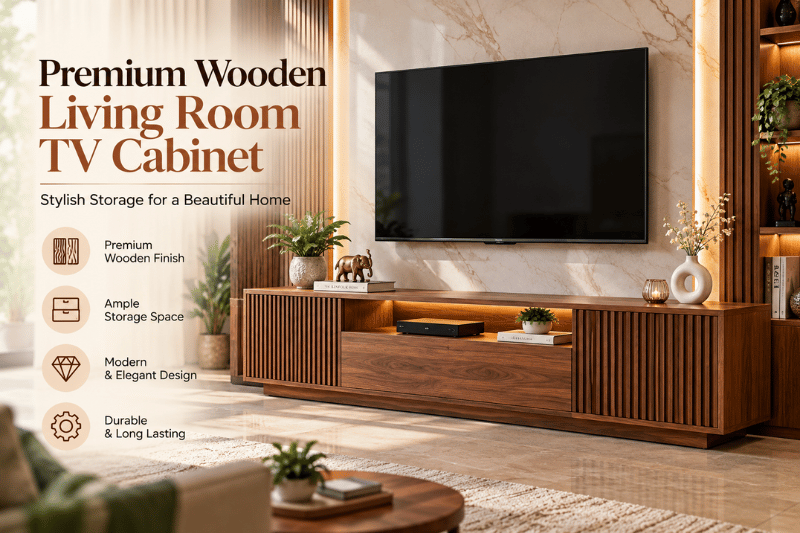
Premium Wooden Living Room TV Cabinet: Stylish Storage Ideas for Modern Homes
When planning a stylish and organized living room, furniture needs to combine appearance, storage, and everyday practicality. A Premium Wooden Living Room TV Cabinet can become the central furniture piece around the television while providing space for media equipment, books, décor, remotes, gaming accessories, and other household items. On Instagram, modern living room furniture ideas are increasingly focused on clean designs, practical storage, and customized interiors, and mkfurniture regularly works around these requirements. At mkfunriture, the goal is to create furniture that combines useful functionality with attractive wooden design. Homeowners looking for customized furniture ideas can explore mkfurniture for additional inspiration and furniture solutions.
What Is a Wooden Living Room TV Cabinet?
A wooden TV cabinet is a furniture unit designed to support or accommodate a television while providing additional storage around it. Depending on the design, it may include drawers, shelves, cabinets, open compartments, display sections, or a combination of several storage features.
Modern TV furniture is no longer limited to a simple table underneath a television. It can become an integrated part of the living room design, helping organize entertainment equipment while creating a visually balanced focal point.
A well-designed TV cabinet can accommodate:
- Television equipment
- Set-top boxes
- Streaming devices
- Gaming consoles
- Speakers
- Remote controls
- Books
- Decorative objects
- DVDs or media collections
- Cables and chargers
- Household accessories
The most suitable configuration depends on the room size, television dimensions, storage requirements, and overall interior style.
Why TV Furniture Matters in a Modern Living Room
The television is often positioned where people naturally focus when sitting in the living room. Because of this, the furniture surrounding it has an important influence on the appearance of the entire space.
An empty wall with exposed wires and scattered electronic devices can make an otherwise attractive room feel unfinished. A properly planned TV cabinet can organize these elements into one cohesive furniture arrangement.
The right unit can also provide a transition between the television area and the rest of the living room.
For example, a cabinet can visually connect:
- The TV wall
- Sofa arrangement
- Coffee table
- Bookshelves
- Display furniture
- Lighting
- Wall décor
This makes the television area feel like a deliberate part of the interior rather than an isolated electronic installation.
Benefits of Choosing Wooden TV Furniture
Wood remains a popular furniture material because it can adapt to a wide range of interior styles.
A wooden TV unit can provide warmth and visual texture while still supporting contemporary designs. Depending on the finish and construction, it can work in minimalist, modern, traditional, transitional, or luxury-inspired interiors.
Some key advantages include durability, design flexibility, storage possibilities, and the ability to coordinate the unit with other wooden furniture.
Wooden furniture can also be customized in terms of dimensions, storage arrangement, finishes, colors, handles, and decorative details.
This flexibility is particularly useful when a living room has unusual wall dimensions or when homeowners want their furniture to match existing interiors.
Choosing the Right TV Cabinet Size
One of the first decisions should be the size of the furniture.
The cabinet should be proportionate to the television and the wall. A very small unit beneath a large television can look visually unbalanced, while an oversized cabinet can make a compact room feel crowded.
Before selecting the furniture, measure:
- TV width
- TV height
- Wall width
- Available floor space
- Viewing distance
- Nearby furniture
- Electrical outlet positions
- Door and window locations
Also consider future requirements. If you expect to replace the television with a larger model later, planning some additional capacity can make the furniture more adaptable.
TV Cabinet Width and Proportion
The width of the cabinet has a major impact on visual balance.
Many homeowners prefer a unit that extends beyond the width of the television because it creates a more stable visual composition. However, the exact proportion depends on the room and design.
A long low cabinet can work particularly well in contemporary living rooms. It creates horizontal visual lines and can make a wall appear wider.
A taller furniture arrangement can be useful when additional storage is required. Vertical cabinets, shelves, and display sections can use wall height efficiently without requiring a large floor footprint.
Low TV Cabinets for Modern Interiors
Low-profile TV cabinets are popular in contemporary interiors because they provide storage without making the room feel visually heavy.
A long, low unit can include drawers and closed cabinets while keeping the television as the main focal point.
This approach is especially useful when the living room already contains substantial furniture such as a large sofa, coffee table, or display cabinet.
A low unit can also make the room feel more open because more wall area remains visible above the furniture.
Wall-Mounted TV Cabinet Designs
Wall-mounted furniture can create a clean and modern appearance.
A floating TV cabinet is attached to the wall rather than resting directly on the floor. This leaves visible floor space beneath the unit, which can make a room feel lighter.
Wall-mounted designs can also simplify cleaning because there is less furniture touching the floor.
However, wall-mounted furniture requires careful installation and appropriate wall support. The mounting system should be selected according to the cabinet’s weight and the wall construction.
Floor-Standing TV Cabinet Designs
Floor-standing furniture remains a practical choice for many homes.
It can provide greater storage capacity and does not require the same type of wall mounting as a floating unit.
Floor-standing cabinets can include larger drawers, closed cupboards, open shelves, and side storage sections.
They are particularly useful when homeowners need the television area to function as a substantial storage zone rather than simply a display surface.
TV Cabinet With Drawers
Drawers are useful for storing smaller objects that can otherwise create visual clutter.
A living room TV cabinet with drawers can accommodate:
- Remote controls
- Charging cables
- Game controllers
- Batteries
- Small electronics
- Stationery
- Documents
- Accessories
Drawers can also provide a convenient location for items that need to remain accessible but should not be visible.
The number and depth of drawers should depend on the user’s storage habits. Too many small drawers can make the furniture unnecessarily complicated, while a combination of drawer sizes may provide greater flexibility.
Closed Storage for a Clean Appearance
Closed cabinets are particularly useful when the goal is to keep the living room visually organized.
Objects such as extra cables, manuals, gaming accessories, electrical equipment, and household items do not always need to remain on display.
Behind closed doors, these items can remain accessible without affecting the appearance of the room.
Handleless doors can provide an even cleaner modern appearance. Alternatively, slim handles can add a subtle decorative element.
Open Shelves for Display
Open shelving creates opportunities to introduce decoration around the television.
Books, plants, artwork, photographs, collectibles, and decorative objects can be displayed on open shelves.
However, open shelves work best when they are not overcrowded. Too many objects can make the TV area appear busy.
A balanced approach is to combine open shelves with closed cabinets. Display areas provide personality, while closed storage handles everyday clutter.
Combining Open and Closed Storage
A mixed-storage design is often one of the most practical solutions.
For example, the lower section can contain closed cabinets and drawers, while the upper or side sections can provide open shelving.
This arrangement creates visual variety while keeping frequently unwanted items hidden.
The exact combination can be customized according to the homeowner’s needs.
Someone who owns gaming equipment may require more closed storage, while someone who enjoys books and decorative objects may prefer additional open shelving.
TV Cabinet With Display Shelves
Display shelves can turn the television wall into a decorative feature.
Instead of leaving the television surrounded by empty wall space, shelving can frame it with carefully selected objects.
A few books, indoor plants, small sculptures, framed photographs, or decorative accessories can make the area feel more personal.
The shelves should not compete with the screen. Keeping the television visually dominant helps maintain a balanced appearance.
Storage for Entertainment Equipment
Modern households often have several devices connected to the television.
These may include:
- Streaming boxes
- Set-top boxes
- Gaming consoles
- Sound systems
- Wi-Fi equipment
- Blu-ray players
- Media accessories
The cabinet should provide appropriate ventilation and cable access for electronic equipment.
Devices that generate heat should not be placed inside completely sealed compartments without suitable ventilation.
A thoughtful design can hide most equipment while maintaining easy access for maintenance.
Cable Management in TV Furniture
Cable management is one of the most important practical features of modern entertainment furniture.
Television cables, power cords, HDMI cables, speaker wires, and internet connections can quickly create a messy appearance.
A properly designed cabinet can include:
- Rear cable holes
- Concealed channels
- Equipment compartments
- Power-strip storage
- Access openings
- Separate routes for cables
Cable management should be planned before the furniture is constructed.
This is another area where customized furniture can be useful because the cable requirements can be incorporated into the design rather than added later.
Choosing the Right Wood Finish
The finish influences both the style and visual weight of the furniture.
Light wood finishes can create a bright and relaxed atmosphere. Medium tones can offer versatility, while darker finishes can provide a more formal and luxurious appearance.
The best finish should coordinate with:
- Flooring
- Wall color
- Sofa
- Coffee table
- Curtains
- Existing cabinets
- Lighting
- Decorative elements
A TV cabinet does not necessarily need to use exactly the same finish as every other piece of furniture. However, complementary tones can create a more cohesive interior.
Natural Wood Appearance
A natural-looking finish can highlight the texture and character of the material.
This style works particularly well in interiors that use neutral walls, natural fabrics, plants, and understated decoration.
The visual texture of wood can add warmth to a room that otherwise contains many hard surfaces such as glass, metal, stone, or electronics.
Two-Tone TV Cabinet Designs
Two-tone furniture can introduce contrast without making the design overly complicated.
For example, a wooden body can be paired with a contrasting drawer front or cabinet section.
Two-tone combinations can also help visually separate different parts of the furniture.
A lighter body with darker accents may create a contemporary look, while similar wood tones can produce a more subtle effect.
Fluted and Textured Wooden Details
Fluted surfaces have become a popular design feature in contemporary furniture.
Vertical grooves can be incorporated into cabinet doors, side panels, or decorative sections around the television.
The texture adds depth while maintaining a relatively simple overall form.
For homeowners who want a modern TV wall without excessive decoration, subtle wood detailing can provide visual interest.
Handleless TV Cabinet Design
Handleless furniture can create a streamlined appearance.
Instead of visible hardware, doors and drawers can use recessed grips, push-to-open systems, or integrated profiles.
This style works particularly well with minimalist interiors.
A handleless design can also make a long TV cabinet appear visually cleaner because the front surface has fewer interruptions.
TV Cabinet for Small Living Rooms
Small living rooms require careful furniture planning.
A large entertainment unit can reduce movement space and make the room feel crowded. In these situations, a compact cabinet with carefully selected storage features can provide better results.
Wall-mounted furniture can be particularly useful because it keeps some floor area visible.
Other useful strategies include:
- Using vertical storage
- Choosing a slim-depth cabinet
- Combining drawers and cabinets
- Avoiding excessive open shelving
- Keeping the TV wall visually simple
- Using furniture with multifunctional storage
The objective is to provide enough storage without overwhelming the room.
TV Furniture for Large Living Rooms
Larger rooms provide more flexibility.
A wide TV cabinet can create a stronger focal wall and provide substantial storage.
Side cabinets, bookshelves, display units, or tall storage towers can be incorporated around the central television.
In a large room, the TV furniture should still relate to the size of the sofa and other major furniture pieces.
A tiny cabinet can disappear visually in a large room, while an oversized structure can dominate the entire interior.
TV Cabinet for Apartment Interiors
Apartment living rooms often require furniture that makes efficient use of limited space.
A compact entertainment cabinet can provide several functions within one piece.
Instead of separate storage units for media devices, books, décor, and small household items, a carefully planned cabinet can combine these requirements.
This can help reduce the number of separate furniture pieces and create a more organized room.
TV Cabinet for Family Living Rooms
Family living rooms often need storage that is easy for everyone to use.
Closed cabinets can hide objects that are not used every day, while drawers can store smaller accessories.
Open shelves can display family photographs, books, plants, and personal objects.
When designing furniture for a family, durability and easy maintenance should be considered alongside appearance.
Integrating the TV Cabinet With the Wall
A TV cabinet can be designed as part of a larger feature wall.
The complete arrangement may include:
- Television
- Low cabinet
- Wall panels
- Open shelves
- Decorative lighting
- Tall storage
- Display niches
The objective is to create a coordinated composition rather than simply placing a cabinet beneath a television.
The wall treatment and furniture should work together in terms of proportions, materials, and colors.
TV Cabinet With Wall Paneling
Wall paneling can create a stronger visual background for the television.
Wooden panels, textured surfaces, or contrasting finishes can frame the screen and make the entertainment area feel more intentional.
However, paneling should not make the wall unnecessarily heavy.
For a balanced design, the panel can be limited to the central TV area while surrounding sections remain visually simple.
Built-In TV Storage
Built-in furniture can make excellent use of specific wall dimensions.
A built-in design can incorporate the television, storage cabinets, shelves, and display areas into one coordinated structure.
This approach is particularly helpful when the living room has unusual wall dimensions, columns, corners, or architectural features.
It can also create a highly integrated appearance.
Customized TV Furniture
Customization becomes valuable when standard furniture does not fully satisfy the room’s requirements.
A customized unit can be planned around:
- Exact wall measurements
- Television dimensions
- Storage needs
- Electrical points
- Cable routes
- Existing furniture
- Desired finish
- Available floor space
At mkfunriture, customized furniture can be approached around the practical requirements of the room rather than relying only on standard dimensions.
For homeowners seeking a furniture solution that fits a particular wall or interior concept, customization can provide greater flexibility.
Choosing Furniture According to Lifestyle
The ideal TV cabinet depends on how the living room is actually used.
A family that regularly watches movies may need space for speakers and media equipment.
A gaming enthusiast may require larger compartments for consoles and accessories.
Someone who primarily uses streaming services may need only a small equipment area and more general storage.
A homeowner who wants a decorative living room may prioritize display shelves and concealed storage.
Furniture should therefore be selected according to real habits rather than appearance alone.
Matching the TV Cabinet With the Sofa
The sofa is usually one of the largest pieces of furniture in a living room, so the TV cabinet should visually complement it.
This does not mean both pieces need to have identical colors.
Instead, consider overall balance.
For example, a neutral sofa can work with warm wood furniture, while a darker sofa can be paired with lighter wooden cabinetry for contrast.
The combination should create a comfortable visual relationship rather than making every piece look identical.
Matching the TV Cabinet With a Coffee Table
A coffee table can also influence the appearance of the entertainment area.
Matching wood tones can create continuity, while contrasting finishes can introduce depth.
If the coffee table has strong decorative details, a simpler TV cabinet may create better balance.
Similarly, if the rest of the living room is minimalist, the television furniture can include subtle texture without becoming visually excessive.
Creating a Balanced TV Wall
Balance does not always mean symmetry.
A television can be centered above a long cabinet while asymmetrical shelves are placed on one side. Alternatively, tall storage can frame one side while the other remains open.
The correct arrangement depends on the room architecture.
The important principle is to consider the visual weight of each element.
Large cabinets, dark finishes, decorative objects, and tall shelves all carry visual weight. Combining them carefully helps prevent one side of the room from feeling heavier than the other.
Lighting Around the TV Cabinet
Lighting can enhance the appearance of the television wall.
Soft lighting can be incorporated into display shelves or cabinet sections.
However, direct bright light should not create reflections on the television screen.
Warm ambient lighting can make wooden furniture appear more inviting, particularly during evening hours.
Lighting should be treated as part of the furniture composition rather than an afterthought.
A living room TV cabinet has evolved into much more than a simple platform for a television. It can provide storage, organize technology, hide cables, display décor, and help define the visual identity of the entire living room.
The most successful designs balance three major elements: functionality, proportion, and appearance.
Whether the room is compact or spacious, the furniture should be selected according to available dimensions and actual storage requirements. Features such as drawers, closed cabinets, open shelves, cable management, wall mounting, and customized dimensions can make the entertainment area significantly more practical.
In the second part, the article will cover TV cabinet styling, storage organization, materials, maintenance, modern design trends, customization, buying mistakes, small-space solutions, and frequently asked questions, helping homeowners make a more informed furniture decision.
Premium Wooden Living Room TV Cabinet: Styling, Storage, Maintenance and Buying Guide
How to Style a Modern TV Cabinet
Styling the television area should enhance the living room without making the entertainment wall feel crowded. A simple arrangement of carefully selected accessories can make the furniture look intentional and polished.
Start by identifying the items that genuinely belong in the area. Books, small plants, photographs, artwork, sculptures, and selected decorative objects can be placed on open shelves or the top surface of the cabinet.
Avoid filling every available space. Empty areas are also important because they give the design room to breathe.
A practical styling approach is to combine different heights. A short decorative object can be placed beside a taller plant or a stack of books. This creates visual variation without requiring excessive decoration.
Organizing Storage Inside a TV Cabinet
Storage becomes more useful when each compartment has a specific purpose.
Instead of placing everything randomly inside the cabinet, divide storage according to frequency of use.
Frequently accessed items such as remotes, controllers, and charging accessories can be stored in drawers. Electronic equipment can be placed in ventilated compartments, while less frequently used household items can be kept behind closed doors.
Open shelves should generally be reserved for objects that contribute positively to the room’s appearance.
This simple division helps the TV area remain organized over time.
Where to Store Remote Controls
Remote controls are small objects that can quickly create visual clutter.
A drawer or small dedicated compartment can provide an easy storage location. If multiple devices are used, keeping their remotes together in one location can make them easier to find.
A small organizer inside a drawer can further separate different remotes, batteries, and accessories.
This is a minor feature, but it can make everyday use of the entertainment area more convenient.
Storing Gaming Equipment
Gaming setups often require additional storage.
A console may need a ventilated compartment, while controllers, games, headphones, charging cables, and accessories require separate storage.
A customized TV furniture arrangement can provide appropriately sized compartments for these items.
Avoid placing heat-generating equipment in tightly enclosed spaces without suitable airflow. Electronic devices should have adequate ventilation according to their requirements.
TV Cabinet for Soundbars
Soundbars are increasingly common in modern living rooms.
If a soundbar is positioned beneath the television, the cabinet should provide sufficient space for it without obstructing the television screen or affecting sound.
Some furniture designs include an open shelf specifically for audio equipment.
The height of the cabinet and the placement of the television should also be considered together so that the entire arrangement remains comfortable for viewing.
TV Cabinet With Bookshelves
Combining a television cabinet with bookshelves can transform the entertainment wall into a multifunctional storage area.
Books can occupy open shelves while electronic equipment remains closer to the television.
This arrangement works particularly well for homeowners who want their living room to include both entertainment and reading areas.
Bookshelves can also be used to display plants, photographs, and decorative objects, giving the furniture a more personal character.
Displaying Family Photographs
The television area can also be used to display family memories.
Photographs can be placed on open shelves or in selected display sections. However, too many frames can make the wall feel visually busy.
A small collection of coordinated frames can create a more refined appearance.
The display should complement the furniture rather than compete with the television.
Adding Indoor Plants
Plants can soften the appearance of a television wall by introducing natural shapes and color.
Small plants can be placed on shelves, while larger plants can occupy an adjacent corner.
Avoid placing plants where watering could expose wooden furniture to repeated moisture.
Artificial greenery can also be considered when natural light or maintenance is a concern.
Choosing Decorative Accessories
Decorative accessories should be selected according to the size and style of the furniture.
Useful options include:
- Ceramic objects
- Small sculptures
- Books
- Picture frames
- Decorative boxes
- Indoor plants
- Vases
- Candles
- Travel souvenirs
Use a limited number of pieces rather than filling every shelf.
A carefully edited display usually looks more sophisticated than a crowded collection.
Modern TV Cabinet Design Trends
Contemporary furniture trends increasingly emphasize clean geometry, concealed storage, texture, and multifunctionality.
Popular directions include:
- Floating cabinets
- Handleless storage
- Fluted wooden panels
- Two-tone finishes
- Integrated shelving
- Minimalist forms
- Hidden cable management
- Built-in display niches
- Warm wood finishes
- Combination storage systems
These trends can be adapted rather than copied exactly.
The most useful design is the one that works with the dimensions and requirements of the individual room.
Floating TV Cabinet With Open Floor Space
Floating furniture can make the living room feel visually lighter.
Because the cabinet is mounted above the floor, the area beneath remains visible. This can create an impression of additional floor space.
Floating furniture can be particularly effective in smaller rooms where visual openness is important.
However, the wall must be capable of safely supporting the furniture, and installation should be carried out appropriately.
Handleless Storage Trends
Handleless furniture is popular in minimalist interiors because it creates uninterrupted cabinet surfaces.
This style can make a long TV cabinet appear more streamlined.
Push-to-open doors, recessed profiles, and integrated grips can all be used to achieve a handleless appearance.
The mechanism should still be practical for everyday use, especially on frequently opened compartments.
Fluted TV Wall Design
Fluted wooden details can create depth around the television.
Vertical grooves can be used on a wall panel or cabinet fronts. The repetitive texture catches light differently throughout the day and creates subtle visual movement.
Fluted detailing is especially effective when the remaining furniture is relatively simple.
Too many competing textures can make the room feel busy, so the feature should be balanced with simpler surfaces elsewhere.
Two-Tone Entertainment Furniture
Two-tone furniture allows homeowners to combine contrasting or complementary finishes.
A natural wood finish can be paired with a darker tone, neutral color, or another wood shade.
The contrast can be limited to selected drawers, side cabinets, or shelving.
This approach provides visual interest without requiring complicated shapes.
Minimalist TV Cabinet Design
Minimalism focuses on reducing unnecessary visual elements.
A minimalist unit may feature:
- Straight lines
- Flat cabinet fronts
- Limited handles
- Concealed storage
- Simple wood finishes
- Integrated cable management
The goal is not to remove functionality but to hide unnecessary visual complexity.
A minimalist cabinet can therefore contain substantial storage while maintaining a simple exterior appearance.
Luxury-Inspired TV Furniture
A luxury appearance does not necessarily require excessive decoration.
Premium-looking furniture can be created through proportion, material selection, craftsmanship, lighting, texture, and carefully selected finishes.
For example, a long wooden cabinet with subtle fluted detailing, concealed handles, and integrated lighting can create an elegant entertainment wall without becoming visually excessive.
The quality of construction and finishing also contributes strongly to the final appearance.
TV Cabinet for Compact Apartments
Apartment interiors often require multifunctional furniture.
A compact entertainment cabinet can combine television support, storage, display space, and equipment organization within one structure.
Wall-mounted designs can reduce the visual footprint, while vertical shelves can use available wall height.
For very small living rooms, a slim-depth cabinet may be more suitable than a large traditional unit.
Corner TV Cabinet Solutions
Some living rooms have layouts where the television needs to be positioned near a corner.
A corner-oriented design can make use of space that might otherwise remain unused.
However, the viewing angle should be considered carefully. The television should remain comfortable to watch from the main seating arrangement.
Storage can be arranged around the corner using shelves or cabinets designed specifically for the available geometry.
TV Furniture for Open-Plan Homes
In open-plan interiors, the TV unit can help visually define the living room.
A long cabinet can create a clear boundary between the entertainment zone and surrounding areas without physically closing the room.
The design should coordinate with the dining area, kitchen, flooring, and other furniture because all these spaces are visible together.
Using complementary materials and finishes can create a consistent interior language.
Creating a Clutter-Free Entertainment Area
A clutter-free TV wall depends on both furniture design and daily habits.
The cabinet should provide enough storage for the objects that normally accumulate around the television.
At the same time, only necessary items should remain visible.
A useful strategy is to create three categories:
Display: items intentionally shown on shelves.
Daily use: remotes, controllers, and frequently accessed accessories.
Hidden storage: cables, manuals, spare electronics, and other occasional-use objects.
This simple system can make the room easier to maintain.
Choosing Cabinet Depth
Depth is an important but sometimes overlooked measurement.
A cabinet that is too shallow may not accommodate certain electronic devices, while excessive depth can reduce walking space.
Before selecting the dimensions, measure the equipment that will be stored inside the cabinet.
Also consider ventilation and cable connections.
For wall-mounted designs, the depth should be balanced against the wall structure and overall room proportions.
Considering Television Viewing Height
The television and cabinet should be planned together.
A screen positioned too high can be uncomfortable for extended viewing, while a screen positioned too low may not work well with the room’s seating arrangement.
The ideal arrangement depends on the sofa height, viewing distance, television size, and personal preference.
Rather than choosing cabinet height independently, consider the complete seating-to-screen relationship.
Choosing Materials for TV Furniture
Different furniture materials can provide different visual and practical characteristics.
Wood-based furniture can be designed in many styles and finishes. Engineered wood is also commonly used for customized furniture because it can support a broad range of design requirements.
Material selection should consider:
- Intended use
- Required durability
- Finish
- Budget
- Maintenance
- Design preference
- Existing furniture
The final decision should be based on the complete furniture requirement rather than appearance alone.
Why Custom Furniture Can Be Useful
Standard furniture sizes do not work perfectly in every room.
Walls can have different widths, electrical outlets may be positioned unusually, and homeowners may have specific storage requirements.
Customization can address these conditions.
A custom entertainment cabinet can be designed around the exact wall dimensions, television size, equipment, storage requirements, and preferred finish.
This can help create furniture that feels integrated with the architecture rather than simply placed against it.
Planning a Custom TV Cabinet
Before designing customized furniture, identify the complete list of requirements.
Consider:
- Television dimensions
- Wall measurements
- Available floor space
- Number of devices
- Required drawers
- Closed storage
- Open shelving
- Cable routes
- Electrical points
- Desired finish
- Lighting
- Future storage needs
Sharing these details with the furniture designer can make the final design more practical.
Common TV Cabinet Buying Mistakes
Several common mistakes can affect the functionality of entertainment furniture.
Choosing Based Only on Appearance
A beautiful cabinet may not provide enough storage or equipment space.
Ignoring Measurements
Furniture should be selected after measuring the room and television rather than estimating dimensions.
Forgetting Cable Management
Visible cables can quickly reduce the clean appearance of the entertainment area.
Creating Too Much Open Storage
Open shelves require organization. Excessive shelving can create additional visual clutter.
Ignoring Ventilation
Electronic equipment needs appropriate airflow.
Choosing an Oversized Unit
A large cabinet can overwhelm a small living room.
Forgetting Future Requirements
Televisions and entertainment equipment can change over time. Some flexibility can be useful.
Ready-Made vs Customized TV Cabinet
Ready-made furniture can be convenient when standard dimensions fit the room.
It can provide a quicker solution and may be available in established styles and finishes.
Customized furniture offers greater flexibility.
It can be designed around specific dimensions, equipment, storage needs, and interior preferences.
Neither approach is automatically better for every homeowner. The right choice depends on the room, budget, timeline, and level of personalization required.
How to Select the Right TV Cabinet
Before making a decision, evaluate the furniture using several practical questions.
First, measure the wall and floor area.
Next, identify the television size and all equipment that will be stored around it.
Then decide how much closed storage and open display space is required.
After that, consider the furniture finish and how it will coordinate with the sofa, flooring, coffee table, and other furniture.
Finally, evaluate whether standard furniture is sufficient or whether customization would provide a better result.
How to Maintain Wooden TV Furniture
Proper care can help preserve the appearance of wooden furniture.
Dust the surface regularly using a soft, dry cloth. Clean spills promptly rather than allowing moisture to remain on the surface.
Avoid unnecessary exposure to direct sunlight or excessive heat.
Coasters and protective mats can also help reduce the possibility of marks caused by beverages and other objects.
The exact maintenance method should depend on the material and finish used on the furniture.
Protecting the Cabinet From Moisture
Moisture should not be allowed to remain on wooden surfaces for extended periods.
If the TV cabinet is located near a window, balcony, humid area, or plant, consider how water could reach the furniture.
Use suitable trays beneath plants and clean any accidental spills promptly.
These simple habits can help maintain the surface over time.
Keeping the TV Cabinet Organized
Organization should be treated as an ongoing habit.
Review the cabinet periodically and remove items that are no longer needed.
Group similar accessories together and use drawers or boxes for small items.
Keep frequently used equipment easily accessible while storing occasional-use objects behind closed doors.
This prevents the cabinet from gradually becoming another cluttered storage area.
How to Make a TV Cabinet Look Expensive
A sophisticated appearance often comes from simplicity and proportion rather than excessive decoration.
Consider:
- Clean lines
- High-quality finishing
- Balanced proportions
- Concealed storage
- Limited accessories
- Coordinated wood tones
- Subtle lighting
- Consistent hardware
A well-planned furniture arrangement can look premium without requiring unnecessary decorative details.
Creating a Timeless TV Cabinet
Trends can be useful for inspiration, but furniture is often a long-term investment.
A timeless design typically relies on balanced proportions, practical storage, quality construction, and finishes that work with different interiors.
Decorative details can be introduced through accessories that are easier to replace than the furniture itself.
This approach allows the room to evolve without requiring a complete furniture replacement.
Frequently Asked Questions
What is the best type of TV cabinet for a modern living room?
The best design depends on the room dimensions, television size, storage requirements, and interior style. Floating, low-profile, built-in, and mixed-storage designs can all work well in modern interiors.
How wide should a TV cabinet be?
The width should be proportionate to the television and available wall space. A wider cabinet can create visual balance, but the exact dimensions should be based on the room.
Is a wall-mounted TV cabinet suitable for a small living room?
Yes. A floating cabinet can leave some floor space visible and may make a compact room feel more open.
Should a TV cabinet have closed storage?
Closed storage is useful for hiding cables, accessories, electronics, and household objects that do not need to remain visible.
Are open shelves useful in a TV cabinet?
Yes. Open shelves can display books, plants, photographs, and decorative objects. They work best when kept organized.
How can I hide cables around my television?
Cable holes, rear channels, concealed compartments, and dedicated equipment sections can help organize television and electronic cables.
Can a wooden TV cabinet be customized?
Yes. Customized furniture can be designed around specific wall measurements, television dimensions, storage requirements, equipment, finishes, and interior preferences.
What should I keep inside a TV cabinet?
You can store media equipment, remotes, controllers, cables, books, accessories, documents, and other household items depending on the cabinet configuration.
Is a low TV cabinet better than a tall unit?
Neither is universally better. Low units suit minimalist interiors and wider rooms, while taller designs can provide more storage where vertical space is available.
How do I maintain wooden TV furniture?
Dust regularly with a soft dry cloth, clean spills promptly, and protect the furniture from excessive direct sunlight, heat, and moisture.
How can I make my TV wall look modern?
Use clean furniture lines, concealed storage, coordinated finishes, cable management, selected décor, and appropriate lighting. A wall panel or subtle textured detail can also create a modern focal point.
Is customized furniture useful for unusual living room layouts?
Yes. Customization can be particularly useful when walls, corners, electrical points, or room dimensions make standard furniture difficult to fit.
Final Buying Checklist
Before purchasing or designing your TV furniture, check the following:
- Measure the television.
- Measure the available wall.
- Measure the floor area.
- Check viewing distance.
- Identify all electronic equipment.
- Plan cable routes.
- Decide between open and closed storage.
- Determine the required drawer space.
- Consider ventilation for electronic devices.
- Choose a suitable wood finish.
- Match the furniture with the existing interior.
- Consider future television upgrades.
- Decide whether wall-mounted or floor-standing furniture is more suitable.
- Compare ready-made and customized options.
- Prioritize practical storage over unnecessary decoration.
Why the Right TV Cabinet Is an Important Investment
The television area often occupies one of the most visible walls in a living room. Because of this, the furniture surrounding it can influence the appearance and organization of the entire space.
The right cabinet should not only look attractive. It should provide useful storage, accommodate electronic equipment, manage cables, and fit naturally into the room.
A carefully designed wooden unit can achieve all of these functions while adding warmth and character to a contemporary interior.
For homeowners who require furniture designed around their exact room dimensions, customized solutions can provide additional flexibility. This is particularly useful for apartments, compact living rooms, large feature walls, and unusual layouts.
Final Conclusion
A Premium Wooden Living Room TV Cabinet can become much more than furniture placed underneath a television. When properly planned, it can serve as the organizational and visual foundation of the entire entertainment area.
The most effective design combines appropriate dimensions, useful storage, cable management, suitable materials, and a finish that complements the rest of the living room. Open shelving can provide space for personal décor, while closed cabinets and drawers can keep everyday clutter hidden.
Modern designs such as floating cabinets, handleless storage, fluted details, two-tone finishes, integrated shelving, and built-in entertainment walls provide many options for creating a contemporary interior. However, the most important factor is not following every trend. It is choosing a design that fits the room and supports the way the household actually uses the space.
For smaller homes, compact furniture, vertical storage, slim-depth cabinets, and wall-mounted designs can make the television area more efficient. Larger rooms can accommodate wider entertainment units, side storage, bookshelves, and display sections.
Material and finish selection should also be considered alongside the existing sofa, flooring, coffee table, walls, lighting, and other furniture. A coordinated approach creates a more complete interior.
Customization can be especially valuable when standard furniture cannot meet specific requirements. A customized design can account for exact wall dimensions, television size, equipment, storage requirements, electrical points, cable routes, and preferred finishes.
At mkfunriture, the focus can be placed on combining furniture design with practical requirements so that the finished piece works as part of the overall living environment. Homeowners looking for furniture ideas and customized solutions can explore mkfurniture.
Ultimately, the best TV furniture is one that looks good, stores what you need, keeps technology organized, and continues to work comfortably as your living room evolves. With thoughtful planning, a wooden entertainment unit can provide a durable and stylish focal point for modern homes.