Premium Wooden Bedroom Headboard with Integrated Bedside Shelves: Design Ideas, Benefits and Buying Guide
Introduction
A well-designed bedroom should combine comfort, attractive furniture, and practical storage. One way to improve bedroom functionality is to choose furniture that makes better use of the space around the bed. Through its Instagram inspiration and furniture collections, mkfurniture shares ideas for creating stylish and functional bedroom interiors. At mkfunriture, the focus is on furniture solutions that combine thoughtful design with everyday usability. Explore more bedroom furniture ideas on the mkfurniture website.
A headboard is an important part of bedroom furniture because it creates a finished appearance behind the bed. However, modern headboard designs can offer more than decoration. By incorporating shelves into the structure, homeowners can create convenient spaces for keeping books, mobile phones, lamps, alarm clocks, and other everyday essentials.
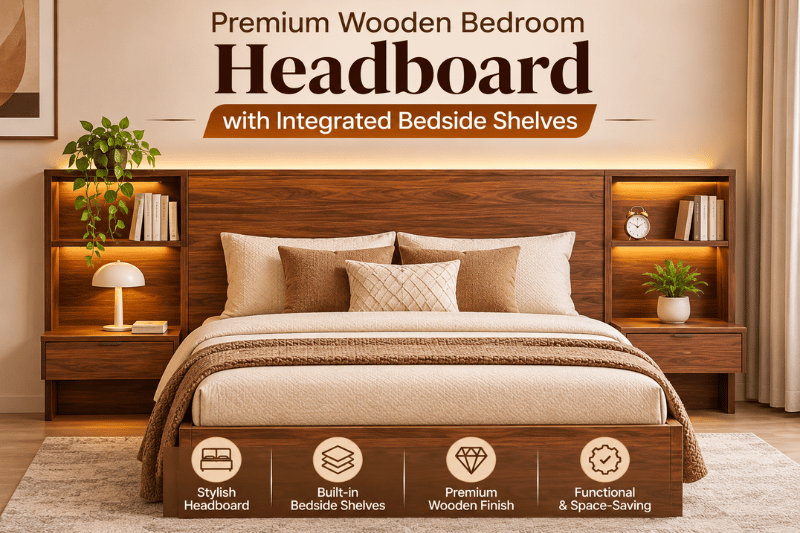
A Premium Wooden Bedroom Headboard with Integrated Bedside Shelves combines the visual appeal of a wooden headboard with the convenience of bedside storage. Instead of placing separate bedside tables on both sides of the bed, homeowners can consider a coordinated design with shelves built directly into the headboard structure.
This arrangement can be particularly useful in bedrooms where floor space is limited or where a clean, coordinated furniture appearance is preferred. It can also create a distinctive feature wall behind the bed.
However, selecting the right design requires careful consideration of bed dimensions, shelf placement, storage capacity, material quality, lighting, electrical requirements, and bedroom layout. This guide explains the important features and design considerations to help homeowners make an informed choice.
What Is a Wooden Headboard with Integrated Bedside Shelves?
A wooden headboard with integrated bedside shelves is a bedroom furniture design that combines a headboard panel with built-in storage sections positioned near the sides of the bed.
Traditional headboards are generally designed to provide a decorative background and comfortable support when sitting upright. Integrated designs extend this functionality by including shelves, small compartments, ledges, or storage niches.
The shelves can be used to keep items that people commonly need near their beds. These may include books, reading glasses, mobile phones, alarm clocks, small lamps, and decorative accessories.
Depending on the design, the shelves may be positioned on both sides of the bed, incorporated into the headboard panel, or connected to vertical storage sections.
Some designs use open shelves for easy access, while others combine open sections with concealed compartments. The structure may extend across the full width of the bed or cover only the central headboard area.
The materials, finish, dimensions, and storage arrangement can be selected according to the bedroom’s interior and practical requirements.
Why Choose a Headboard with Built-In Bedside Storage?
A bedroom usually needs several small storage surfaces around the bed. Bedside tables are commonly used for lamps, books, phones, and personal belongings. However, separate tables may not always fit comfortably in every bedroom.
An integrated design can provide an alternative by incorporating storage into the headboard itself.
Reduces the Need for Separate Bedside Tables
One of the main advantages is that the shelves can perform some of the functions of traditional bedside tables.
Instead of purchasing two separate tables, homeowners can select a headboard with suitable storage sections. This may help create a more coordinated arrangement around the bed.
The design should provide enough shelf space for the items that need to remain accessible.
Makes Better Use of Bedroom Space
In compact bedrooms, every furniture item affects the available floor area. Integrated shelves use the wall area behind the bed, which may otherwise be occupied only by a plain headboard.
This can be useful when there is limited space beside the bed for additional furniture.
However, the overall dimensions should be planned carefully. A wide headboard or deep shelves may still occupy significant space.
Keeps Everyday Essentials Accessible
Items used regularly can be placed within easy reach of the bed.
For example, a shelf may hold a reading book, mobile phone, alarm clock, or small decorative item. This reduces the need to walk across the room to access these belongings.
Creates a Coordinated Bedroom Appearance
A headboard with built-in shelves can make the bed wall look more complete.
The shelves, central panel, and side sections can share the same material and finish, creating a unified furniture arrangement.
This is particularly useful for homeowners who prefer coordinated bedroom interiors.
Provides Additional Decorative Space
Integrated shelves can also be used to display carefully selected decorative accessories.
Small framed photographs, ornaments, and decorative objects can make the bed wall more personal.
Avoid overcrowding the shelves, as too many objects can make the area look cluttered.
Popular Wooden Headboard Designs with Bedside Shelves
Different designs offer different combinations of appearance, storage, and functionality. The best option depends on the bed size, available wall space, and interior style.
Minimalist Wooden Headboard with Open Shelves
A minimalist design uses simple lines, clean surfaces, and limited decorative detailing.
Open shelves can be placed at the sides of the central headboard panel. This arrangement provides convenient access to everyday items while maintaining a modern appearance.
Natural wood finishes, neutral colours, and simple geometric shapes work well with this style.
It is suitable for bedrooms where homeowners prefer uncluttered furniture and practical storage.
Full-Wall Wooden Headboard Design
A full-wall headboard extends across a larger section of the wall behind the bed.
It may include side shelves, decorative panels, vertical sections, and integrated lighting.
This design can create a strong visual feature and help connect the bed with the surrounding bedroom furniture.
Before selecting it, check the wall dimensions, ceiling height, electrical points, and available space around the bed.
Headboard with Floating Bedside Shelves
Floating shelves are mounted or integrated into the headboard structure without visible floor-standing supports.
They create a lighter visual appearance because the storage sections do not extend down to the floor.
These shelves can hold lightweight everyday essentials and decorative objects.
The mounting structure and wall support should be suitable for the intended load. Avoid placing heavy objects on shelves that are not designed to support them.
Wooden Headboard with Side Storage Niches
A niche is a recessed storage section incorporated into the furniture structure.
It can provide a dedicated place for books, small accessories, or decorative items.
Niches may be positioned on one or both sides of the bed. Their dimensions should be planned according to the items that will be stored.
Headboard with Drawers and Open Shelves
Some designs combine open shelves with small drawers.
Open sections provide quick access to frequently used belongings, while drawers conceal items that homeowners prefer to keep out of sight.
This arrangement can be useful when both display space and private storage are required.
Upholstered Wooden Headboard with Shelves
An upholstered central panel can be combined with wooden shelves on either side.
The soft panel can provide comfortable back support when sitting up in bed, while the wooden sections provide storage.
Fabric, colour, cushion thickness, and wood finish should be selected to complement the rest of the bedroom.
Contemporary Geometric Headboard
Geometric designs use different panel shapes, straight lines, and structured shelf arrangements.
They can create a distinctive appearance behind the bed without requiring excessive decorative accessories.
The storage sections should remain practical and accessible, even when the design includes decorative shapes.
Benefits of Wooden Headboards
Wood remains a popular furniture material because it offers flexibility in design, finish, and construction.
A wooden headboard can suit traditional, modern, contemporary, and minimalist bedroom interiors.
Warm and Timeless Appearance
Wood finishes can introduce warmth into a bedroom.
Natural grain patterns and wood tones can complement neutral walls, fabric upholstery, and other wooden furniture.
The appearance depends on the wood species, surface treatment, and selected finish.
Flexible Design Options
Wooden furniture can be manufactured in different dimensions and configurations.
A headboard may include simple shelves, decorative panels, storage niches, drawers, or a combination of these features.
This flexibility makes it possible to plan a design around the available bedroom space.
Suitable for Coordinated Furniture
A wooden headboard can be finished to complement the bed frame, wardrobe, dressing table, and bedside furniture.
Matching finishes create a consistent appearance, while contrasting colours can introduce visual interest.
Supports Different Interior Styles
Light wood finishes can suit fresh and contemporary interiors, while darker finishes may complement traditional or more formal bedroom designs.
Matte surfaces and simple panel details can work well in minimalist spaces.
Allows Integrated Features
The structure can be planned to accommodate shelves, lighting provisions, cable openings, and decorative sections.
These features should be considered during the design stage so that they do not interfere with the headboard’s structure or everyday use.
Choosing the Right Headboard Size
Correct measurements are essential when selecting bedroom furniture. A headboard that is too narrow may look disconnected from the bed, while an oversized design may dominate the wall.
Match the Bed Width
Start by measuring the actual width of the bed frame.
The headboard should be proportionate to the bed. If the shelves extend beyond the central panel, include their width in the total measurement.
For a design with side shelves on both sides, measure the complete width rather than only the central headboard section.
Consider the Height
The headboard height affects the overall appearance of the bedroom.
A low headboard may suit minimalist interiors, while a taller panel can create a more prominent feature behind the bed.
Consider the mattress height, pillow arrangement, wall dimensions, and ceiling height before choosing the final measurement.
Measure Shelf Depth
Shelf depth determines how much usable space is available.
A shallow shelf may be suitable for mobile phones, glasses, and small accessories. A deeper shelf may accommodate books or decorative objects.
Avoid making shelves unnecessarily deep because they can extend into the sleeping area or create an obstruction.
Check Shelf Height
The shelves should be positioned conveniently for the people using the bed.
Consider the mattress height and the user’s seated or lying position. Frequently used items should be within comfortable reach.
Allow Space for Other Furniture
Check the distance between the headboard, wardrobe, bedroom doors, windows, and other furniture.
The design should not interfere with walking paths or access to electrical switches and sockets.
Choosing the Right Material and Construction
The material used in the headboard and shelves affects the furniture’s appearance, stability, and expected performance.
Buyers should ask about the material used for the main panel, side shelves, support structure, and finishing surfaces.
Solid Wood
Solid wood is made from natural timber.
Different species have different grain patterns, colours, weights, and physical characteristics. The final performance depends on timber quality, seasoning, joinery, construction, and surface treatment.
Solid wood may be suitable for homeowners who prefer natural grain patterns and traditional furniture styling.
Engineered Wood
Engineered wood products are manufactured using wood fibres, particles, or layers combined through different processes.
They are commonly used in furniture because they provide consistent panel dimensions and support different surface finishes.
The specific board grade, thickness, edge treatment, and construction quality should be checked before purchasing.
Plywood
Plywood is produced by bonding multiple layers of wood veneer.
Its properties depend on the grade, thickness, adhesive, and manufacturing quality.
It may be used in furniture panels, support structures, and shelving, depending on the intended application.
Check Shelf Support
Integrated shelves should be designed to support the belongings they are expected to hold.
Check how each shelf is connected to the headboard and whether the structure provides suitable support.
Avoid placing heavy objects on shelves without confirming their intended load capacity.
Inspect Joints and Edges
The joints, corners, and exposed edges should be properly finished.
Check for loose connections, uneven panels, rough edges, or visible construction defects.
Good finishing can improve the overall appearance and make the furniture easier to maintain.
Choosing a Finish for Your Bedroom
The finish plays an important role in connecting the headboard with the rest of the bedroom interior.
Natural Wood Finish
Natural wood finishes highlight the grain and create a warm appearance.
They can complement wooden beds, neutral curtains, and natural interior materials.
Light Wood Finish
Light finishes can create a fresh and understated look.
They work well with white walls, beige bedding, cream upholstery, and contemporary bedroom furniture.
Dark Wood Finish
Dark finishes can introduce contrast and visual depth.
They may complement traditional furniture, darker bed frames, and rich bedroom colour schemes.
Matte Finish
A matte surface offers a subtle appearance with limited reflection.
It can suit minimalist and contemporary interiors where homeowners prefer simple furniture styling.
Gloss Finish
A gloss finish creates a polished and reflective appearance.
However, fingerprints and surface marks may be more noticeable depending on the material and colour.
Matching or Contrasting Finishes
The headboard can match the bed frame and wardrobe for a coordinated appearance.
Alternatively, a contrasting finish can make the bed wall stand out. The selected colours should still work with the flooring, wall paint, and surrounding furniture.
How to Plan Integrated Bedside Shelves
Shelf planning is one of the most important parts of the design.
The shelves should provide useful storage without becoming difficult to access or making the headboard unnecessarily bulky.
Decide What You Want to Store
Before selecting shelf dimensions, identify the items you plan to keep nearby.
Common examples include:
- Mobile phones
- Reading books
- Glasses
- Alarm clocks
- Small lamps
- Remote controls
- Decorative accessories
- Personal essentials
The intended items will help determine the required shelf width, depth, and height.
Choose Open or Concealed Storage
Open shelves are useful for items that need to remain accessible.
Concealed sections can be used for belongings that homeowners prefer to keep out of sight.
A combination of both may provide greater flexibility.
Consider Separate Shelves on Both Sides
A symmetrical design with shelves on both sides of the bed can create a balanced appearance.
It can also provide convenient storage for two people sharing the bed.
However, the arrangement should be planned according to the available wall width and the position of nearby furniture.
Avoid Overcrowding
Shelves should not become a place for storing every small object in the bedroom.
Keep frequently used items accessible and arrange decorative objects carefully. An organized shelf is easier to clean and creates a more attractive appearance.
Check the Shelf Edges
The exposed edges should be properly finished.
Smooth edges can improve the appearance and reduce the chance of damage during everyday use.
Premium Wooden Bedroom Headboard with Integrated Bedside Shelves: Storage, Lighting and Buying Guide – Part 2
Lighting Ideas for Headboards with Bedside Shelves
Lighting can improve the functionality and appearance of a bedroom headboard. When planned properly, integrated lighting can make it easier to read, access personal belongings, and create a comfortable atmosphere.
Integrated LED Strip Lighting
LED strip lighting can be installed along selected edges or recessed sections of the headboard.
It can create a soft background glow and highlight the wooden panels. Warm white lighting is often suitable for bedrooms because it creates a relaxed appearance.
The LED placement should be planned during manufacturing so that wiring and fittings remain neatly concealed.
Reading Lights Near the Shelves
Small reading lights can be positioned near the bedside shelves. They provide focused illumination for reading without requiring a large table lamp.
Choose fixtures that can be operated conveniently from the bed.
Wall-Mounted Bedside Lights
Wall-mounted lights can be installed above or beside the integrated shelves.
This arrangement keeps the shelf surface available for books, phones, and other essentials.
Check the light’s position and direction to avoid unwanted glare.
Decorative Backlighting
Backlighting behind a headboard panel can create a subtle visual feature.
It works particularly well with layered wooden panels and contemporary bedroom interiors.
The light intensity should be comfortable rather than excessively bright.
Electrical and Cable Management Considerations
Modern bedrooms often include several electronic devices near the bed. Mobile phones, smartwatches, reading lights, and other accessories may require convenient charging or power access.
Planning these requirements early can help prevent messy cables and inconvenient socket positions.
Plan Charging Access
If you want to charge devices near the bed, consider the location of existing electrical sockets.
Some customized designs may accommodate charging points or cable openings, depending on the furniture structure and electrical requirements.
Electrical work should be completed by a qualified professional.
Use Cable Management Openings
Small cable openings can help guide charging cables through the headboard structure.
Their position should be planned according to the intended devices and socket locations.
The openings should have properly finished edges to prevent cable damage.
Keep Electrical Components Accessible
Do not permanently cover electrical connections or fittings that may require inspection or maintenance.
The furniture design should allow convenient access to relevant electrical components.
Avoid Overloading Power Points
Do not connect too many devices to one power point or use unsuitable extensions.
Follow electrical safety recommendations and use appropriately rated equipment.
Separate Lighting and Storage Planning
Electrical fittings should not reduce the usable shelf space unnecessarily.
Plan the location of lights, cables, and storage sections together so that each feature remains practical.
How to Organize Integrated Bedside Shelves
A well-organized shelf makes everyday items easier to access and keeps the bedroom looking neat.
The best arrangement depends on how the shelves are positioned and what the occupants use regularly.
Keep Everyday Essentials Nearby
Place frequently used belongings within comfortable reach.
Examples include:
- Reading glasses
- Mobile phones
- Books
- Alarm clocks
- Small remote controls
- Water bottles, where the shelf is suitable
- Personal accessories
Avoid placing too many items together.
Use Decorative Organizers
Small trays and organizers can help group similar belongings.
For example, a tray can hold glasses, a watch, or other small personal items.
Choose organizers that fit comfortably without taking up the entire shelf.
Arrange Books Carefully
If the shelves are designed to support books, arrange them according to their size and weight.
Avoid overloading a shelf with heavy books unless its construction and support are suitable for that load.
Add Limited Decorative Accessories
A small decorative object or framed photograph can make the headboard more personal.
However, too many decorative items can reduce useful storage space and make cleaning more difficult.
Keep Both Sides Balanced
When shelves are provided on both sides of the bed, a balanced arrangement can create a coordinated appearance.
The items do not need to be identical. They should simply look organized and remain practical for the people using the bed.
Headboard Ideas for Small Bedrooms
Small bedrooms require careful furniture planning because the available floor area is limited.
An integrated design can help reduce the need for separate bedside tables while using the wall area behind the bed.
Choose a Compact Headboard
A compact structure can provide useful shelf space without extending too far into the room.
Measure the bed and available wall area before selecting the overall width.
Use Floating Shelves
Floating shelves can create a visually lighter arrangement because they do not require floor-standing supports.
They may be suitable for keeping lightweight everyday essentials near the bed.
The mounting structure should be appropriate for the intended load.
Select a Simple Design
Minimalist panels and clean lines can help prevent the bedroom from looking overcrowded.
Avoid excessive decorative elements when the available wall space is limited.
Choose Light Finishes
Light wood tones and neutral colours can create a fresh appearance.
They may work well with compact bedroom layouts, white walls, and light-coloured bedding.
Plan Storage Around the Bed
Check whether shelves can replace some functions of separate bedside tables.
The design should still leave enough space for the bed, wardrobe doors, curtains, and normal movement.
Headboard Ideas for Master Bedrooms
Master bedrooms often provide more flexibility for furniture dimensions and decorative styling.
A larger headboard can become a central feature of the room while providing practical bedside storage.
Full-Wall Wooden Headboard
A full-wall design can extend across the wall behind the bed and incorporate shelves, decorative panels, and lighting.
It can create a coordinated appearance when the furniture finish complements the wardrobe and other bedroom elements.
Upholstered Central Panel
An upholstered central section can provide a softer background behind the bed.
Wooden shelves on either side can create a contrast between soft fabric and structured furniture.
Choose upholstery that is suitable for regular use and easy to maintain.
Integrated Decorative Niches
Decorative niches can provide storage for books and selected accessories.
They can also create visual interest through different panel depths or finishes.
Keep their dimensions practical and ensure the items stored inside are easy to access.
Add Coordinated Lighting
Integrated reading lights or subtle LED lighting can make the bed area more functional.
Plan wiring and fittings before manufacturing or installation.
Headboard Ideas for Guest Bedrooms
Guest bedrooms should provide comfort and convenient storage without becoming overcrowded.
A headboard with bedside shelves can help create a practical arrangement even when the room does not have space for separate bedside tables.
Provide Basic Storage
Shelves can hold books, glasses, mobile phones, and other small essentials.
This allows guests to keep frequently used belongings close to the bed.
Choose Neutral Finishes
Neutral wood tones and simple designs can complement different bedding styles.
They also make it easier to coordinate the headboard with other guest bedroom furniture.
Keep the Layout Simple
Avoid complicated shelf arrangements that may be difficult for guests to understand or use.
A straightforward design with accessible storage is often sufficient.
Consider Reading Lighting
A suitable reading light can make the room more convenient for visitors.
Check that the switch is easy to reach from the bed.
Matching the Headboard with Other Bedroom Furniture
Furniture coordination can help create a balanced and visually consistent bedroom.
The headboard should complement the bed frame, wardrobe, dressing table, and other furniture rather than appearing disconnected.
Match the Bed Frame
The headboard can use the same wood finish as the bed frame.
If the bed has a simple design, a headboard with clean lines may create a coordinated appearance.
If the bed includes decorative panels, selected details can be repeated in the headboard.
Coordinate with the Wardrobe
Wardrobes usually occupy a large part of the bedroom.
Consider the wardrobe’s finish, colour, and handle design when selecting the headboard.
Matching finishes can create a consistent interior, while contrasting finishes can add visual interest.
Complement the Dressing Table
The dressing table can provide another reference for choosing the headboard finish.
Repeating the same wood tone or hardware style can connect the different furniture pieces.
Consider Bedside Furniture
If separate bedside tables are also being used, their dimensions and finishes should work with the integrated shelves.
Avoid creating unnecessary duplication of storage.
Coordinate with Flooring and Curtains
Flooring and curtains influence the bedroom’s overall colour scheme.
A wood finish that complements the floor and a neutral upholstery colour that works with the curtains can help create a balanced arrangement.
Customization Options
A customized design can be planned according to the bed size, wall dimensions, storage requirements, and preferred interior style.
This may be particularly useful when standard headboard dimensions do not suit the bedroom layout.
Customized Dimensions
The headboard width, height, and depth can be planned according to the available space.
The design should include the dimensions of the central panel and both side shelves.
Personalized Shelf Layout
The number and position of shelves can be selected according to the items that need to be stored.
Some homeowners may prefer one open shelf on each side, while others may require several sections.
Custom Material Selection
The material can be selected according to the intended design, construction requirements, and budget.
Ask for clear specifications for the main panel, shelf structure, and support sections.
Choice of Finish
A customized finish can help coordinate the headboard with existing furniture.
Consider the bedroom’s lighting and colour scheme before choosing the final finish.
Upholstery Selection
If the headboard includes a cushioned panel, fabric, colour, texture, and thickness can be selected according to the bedroom’s interior.
Choose material according to appearance, comfort, and maintenance requirements.
Integrated Lighting Provisions
Lighting provisions can be included in the design where appropriate.
The position of fittings, switches, and wiring should be finalized before manufacturing or installation.
Maintenance Tips for Wooden Headboards
Regular care helps maintain the appearance and usability of bedroom furniture.
Cleaning methods should depend on the material, finish, upholstery, and electrical fittings.
Remove Dust Regularly
Use a soft, dry cloth to remove dust from the headboard panel and shelves.
Clean corners and recessed sections carefully because dust can accumulate in these areas.
Avoid abrasive cleaning materials that may scratch the surface.
Protect the Surface from Moisture
Wipe accidental spills promptly.
Do not leave wet objects or damp cloths on wooden shelves.
If you keep water bottles near the bed, use a suitable tray to protect the furniture surface.
Avoid Excessive Weight
Shelves should only hold items within their intended load capacity.
Avoid placing heavy objects on unsupported sections.
Maintain Upholstery
If the headboard includes fabric, follow the manufacturer’s cleaning instructions.
Vacuum gently when appropriate and use suitable fabric-cleaning methods for stains.
Check Fixings and Joints
Inspect visible joints, fittings, and connections periodically.
If the headboard or shelf becomes loose, have it checked and repaired appropriately.
Clean Around Electrical Fittings
Switch off the relevant electrical supply before cleaning around fixed lighting components.
Do not spray liquid cleaners directly onto electrical fittings.
Follow Finish-Care Instructions
Different finishes require different cleaning methods.
Use products recommended by the furniture manufacturer and avoid strong chemicals unless approved for the surface.
Common Buying Mistakes to Avoid
A headboard should be selected according to both appearance and practical requirements.
The following mistakes can make the furniture less convenient.
Ignoring Bed Measurements
A headboard that does not match the bed width may look unbalanced.
Measure the bed frame and include the complete width of the side shelves.
Choosing Shelves That Are Too Deep
Deep shelves can extend into the bedroom and create an obstruction.
Select a depth that provides useful storage without interfering with the sleeping area.
Overlooking Shelf Support
The shelves must be supported according to the weight of the intended belongings.
Ask about the construction, joints, fixing method, and recommended load capacity.
Ignoring Reachability
A shelf may look attractive but become inconvenient if it is too high, too low, or too far from the sleeping position.
Consider how the occupants will use it while sitting or lying in bed.
Forgetting Electrical Planning
Adding lights or charging access after the furniture has been manufactured may require changes to the design.
Plan electrical requirements in advance.
Selecting an Unsuitable Finish
A finish that looks attractive in isolation may not complement the existing bedroom furniture.
Compare samples with the bed frame, wardrobe, flooring, and wall colours.
Overcrowding the Shelves
Too many shelves or decorative items can make the bed wall look cluttered.
Choose a practical arrangement and leave sufficient open space.
Ignoring Installation Requirements
Large headboards and integrated shelf structures may require proper fixing.
Confirm the installation method and wall support requirements before purchasing.
Ready-Made or Customized Headboard: Which Is Better?
Both options can be suitable depending on the bedroom dimensions, design requirements, and available budget.
A ready-made headboard may be convenient when its dimensions and shelf arrangement fit the available space.
A customized design may be more suitable when the bedroom has unusual dimensions or when specific shelf sizes, finishes, or lighting features are required.
| Consideration | Ready-Made Design | Customized Design |
|---|---|---|
| Dimensions | Standard available sizes | Planned for the room |
| Shelf arrangement | Existing configurations | Can suit specific needs |
| Finish | Available finish options | Can match existing furniture |
| Lighting | Depends on the product | Can be planned into the design |
| Material | Based on the selected model | Can be specified |
| Planning | Usually simpler | Requires detailed measurements |
| Cost | Depends on the product | Depends on customization |
Before choosing, compare the complete cost, material specifications, construction, installation requirements, and storage features.
How Much Should You Budget?
The cost of a wooden headboard with shelves depends on its dimensions, materials, construction, design complexity, and additional features.
There is no single price that applies to every model.
Important cost factors include:
- Material: Solid wood, plywood, and engineered wood products have different costs.
- Dimensions: Larger headboards generally require more material and manufacturing work.
- Shelf configuration: The number, size, and position of shelves affect the design.
- Finish: Surface preparation and the selected finish influence the overall cost.
- Upholstery: Fabric type and cushion construction may add to the price.
- Lighting: Integrated LED lighting or reading fixtures may involve additional components and electrical work.
- Hardware: Fittings, supports, and other accessories vary in quality and price.
- Customization: Special dimensions and personalized arrangements may increase manufacturing costs.
- Installation: Delivery, wall fixing, and electrical work should be considered separately where applicable.
Instead of selecting a design only because it has the lowest price, compare construction quality, shelf support, material specifications, and installation requirements.
Request a clear quotation that explains what is included.
Latest Design Trends for Wooden Headboards
Bedroom furniture trends increasingly combine simple styling with useful features.
Several design directions can help homeowners plan a contemporary bed wall.
Minimalist Wooden Panels
Simple panels with clean lines can create an uncluttered appearance.
They work well with modern beds, neutral walls, and understated bedroom accessories.
Natural Wood Finishes
Natural-looking wood finishes can introduce warmth and complement other wooden furniture.
They are suitable for bedrooms that use neutral colours and natural textures.
Floating Shelf Designs
Floating shelves can create a lighter visual appearance.
They are useful for keeping frequently used items accessible without adding floor-standing furniture.
Upholstered and Wooden Combinations
A cushioned central panel combined with wooden shelves creates a mix of soft and structured surfaces.
This can work well in both contemporary and transitional bedroom interiors.
Integrated Lighting
Subtle LED lighting and reading fixtures can improve functionality and create a decorative effect.
The lighting should be planned around the user’s needs and the electrical layout.
Multi-Functional Headboards
Modern designs may combine shelves, decorative panels, lighting provisions, and concealed compartments.
The most useful design is one where every feature has a clear purpose.
Frequently Asked Questions
1. What is a headboard with integrated bedside shelves?
It is a bedroom headboard design that includes built-in shelves or storage sections near the sides of the bed. These sections can hold books, mobile phones, glasses, lamps, and other everyday essentials.
2. What are the benefits of integrated bedside shelves?
They provide convenient storage, can reduce the need for separate bedside tables, and help create a coordinated appearance around the bed.
3. Are wooden headboards suitable for small bedrooms?
Yes. A compact design with shallow shelves can make use of the wall area behind the bed. However, the overall width and depth should be planned carefully.
4. What can I keep on integrated bedside shelves?
Common items include books, mobile phones, reading glasses, alarm clocks, small lamps, remote controls, and selected decorative accessories.
5. Which material is suitable for a wooden headboard?
Solid wood, plywood, and suitable engineered wood products may be used. The right material depends on the design, construction requirements, and budget.
6. Can I customize the shelf arrangement?
Customization may allow different shelf sizes, positions, and combinations of open and concealed storage. Options depend on the furniture manufacturer.
7. How deep should bedside shelves be?
Shelf depth depends on the items being stored and the available space around the bed. Measure the intended objects and make sure the shelves do not create an obstruction.
8. Can LED lighting be added to a wooden headboard?
Some designs can accommodate LED lighting. Wiring, fittings, and access for maintenance should be planned before manufacturing or installation.
9. Can a headboard with shelves replace bedside tables?
It can replace some functions of bedside tables if the integrated shelves provide sufficient surface area and storage. The decision depends on the user’s requirements.
10. How do I maintain a wooden headboard?
Remove dust with a soft cloth, protect the surface from moisture, avoid excessive shelf loading, and follow the manufacturer’s finish-care instructions.
11. Can the headboard match my existing wardrobe?
Yes. The wood finish, colour, panel details, and overall design can be selected to complement existing bedroom furniture.
12. Are floating shelves safe for heavy objects?
Only when the mounting structure and shelf are specifically designed for the intended load. Check the manufacturer’s load guidance before placing heavy objects.
13. Should I choose open shelves or concealed storage?
Open shelves provide quick access and display space. Concealed storage keeps belongings out of sight. A combination may be useful when both functions are required.
14. What should I check before purchasing a headboard?
Check the bed dimensions, total headboard width, shelf depth, material, shelf support, finish, electrical provisions, and installation requirements.
15. Is a customized headboard better than a ready-made one?
A customized design offers more flexibility in dimensions, shelf arrangements, and finishes. A ready-made design may be suitable when standard dimensions and features meet your requirements.
Final Buying Checklist
Before purchasing a wooden headboard with integrated shelves, review these points:
- Measure the bed frame width.
- Check the available wall dimensions.
- Decide how much shelf storage is required.
- Select suitable shelf depth and height.
- Check the material used in the main panel and shelves.
- Inspect joints, edges, and shelf supports.
- Confirm the intended load capacity.
- Select a finish that complements existing furniture.
- Decide whether upholstery is required.
- Plan lighting and cable management in advance.
- Check access to electrical switches and sockets.
- Confirm installation and wall-fixing requirements.
- Compare ready-made and customized designs.
- Review the complete quotation before purchasing.
Conclusion
A thoughtfully designed headboard can do more than complete the appearance of a bed. By incorporating shelves into the structure, homeowners can create convenient storage for everyday essentials while making better use of the wall behind the bed.
A Premium Wooden Bedroom Headboard with Integrated Bedside Shelves should be selected according to the bed dimensions, shelf requirements, material quality, finish, lighting needs, and overall bedroom layout.
Whether you are planning a compact bedroom or a spacious master bedroom, the right design can help create a coordinated and functional sleeping area. Compare construction quality, shelf support, storage arrangements, and installation requirements before making a final decision.
For more bedroom furniture inspiration and practical furniture solutions, visit mkfurniture and explore the available ideas from mkfunriture.