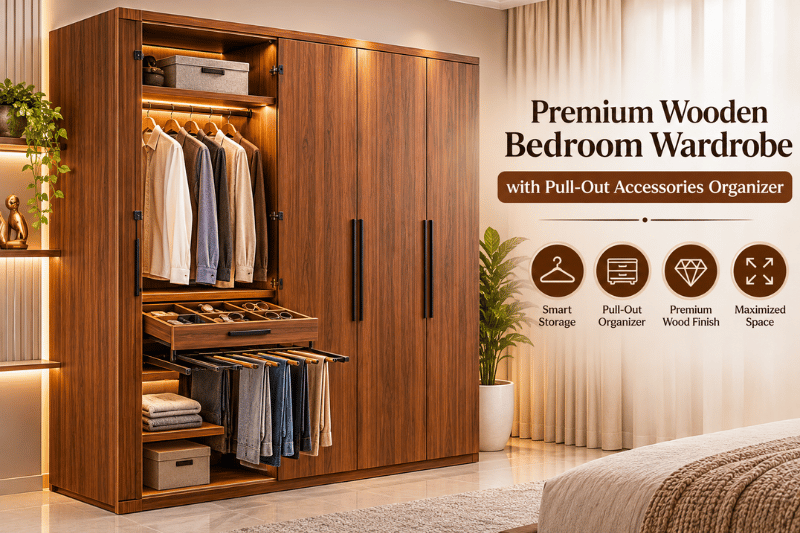
Premium Wooden Bedroom Wardrobe with Pull-Out Accessories Organizer: Design Ideas, Storage Benefits and Buying Guide
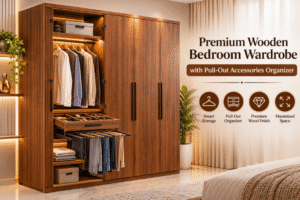
A well-designed bedroom wardrobe should do more than store clothes. It should make everyday routines easier, protect personal belongings and help maintain an organized bedroom. Modern bedroom furniture increasingly focuses on practical storage solutions that use available space efficiently. Through the latest bedroom furniture ideas shared on Instagram and mkfurniture, mkfunriture explores furniture designs that combine attractive wooden finishes with functional storage. A Premium Wooden Bedroom Wardrobe with Pull-Out Accessories Organizer is a useful option for people who want a dedicated place for watches, jewellery, belts, scarves, ties and other everyday accessories without creating clutter inside the wardrobe.
1. What Is a Wardrobe with a Pull-Out Accessories Organizer?
A wardrobe with a pull-out accessories organizer is designed to provide dedicated storage for smaller personal belongings. Instead of keeping every accessory together in a drawer or on a shelf, the wardrobe includes a sliding tray, rack, compartment or specially designed storage unit.
The organizer moves outward when needed and slides back into the wardrobe after use. This makes stored items easier to see and access without requiring the user to search through piles of clothing or accessory boxes.
Traditional wardrobes generally focus on hanging space, shelves and drawers. These sections are useful for larger belongings, but smaller accessories can become difficult to organize. Watches, jewellery, belts, ties, sunglasses and other personal items often need separate storage.
A pull-out organizer addresses this issue by creating a specific location for these belongings. Depending on the wardrobe design, it may include:
- Small divided compartments for jewellery and accessories
- Soft-lined trays for watches and delicate items
- Dedicated belt and tie holders
- Pull-out racks for scarves
- Removable storage sections
- Adjustable dividers
- Separate trays for everyday essentials
The exact arrangement depends on the available wardrobe dimensions and the user’s storage requirements.
The main purpose is to make accessories easier to find, keep them separated and use the internal wardrobe space more effectively.
2. Why Modern Bedrooms Need Better Wardrobe Organization
A bedroom wardrobe is one of the most frequently used furniture pieces in a home. It stores clothes, footwear, personal belongings and accessories that people use throughout the day.
When the internal layout is poorly planned, even a large wardrobe can become difficult to manage. Small accessories may get mixed with clothing, and frequently used items can become difficult to locate.
A well-planned storage arrangement improves everyday convenience.
Easier Access to Daily Accessories
People often use the same accessories regularly, such as watches, belts, sunglasses and jewellery.
Keeping these items in a dedicated pull-out section makes it easier to locate them when getting ready. The user can view several items at once rather than opening multiple boxes or searching through drawers.
Better Separation of Personal Belongings
Different accessories have different storage requirements. Jewellery may need individual compartments, while belts and ties require longer sections.
Separate storage areas help prevent items from becoming tangled, scratched or mixed together.
Less Clutter Inside the Wardrobe
Without proper organization, small belongings often occupy shelves that are intended for clothing or larger items.
A dedicated organizer keeps accessories in one place and allows the remaining wardrobe sections to be used more efficiently.
More Convenient Daily Routines
A properly arranged wardrobe makes it easier to select clothing and accessories together.
For example, a person preparing for work can access a shirt, belt, watch and tie without moving between several storage areas.
A Cleaner Bedroom Appearance
When accessories have designated storage locations, fewer items need to be left on dressing tables, bedside units or other bedroom surfaces.
This can help maintain a more organized interior.
3. Popular Pull-Out Accessories Organizer Designs
Different organizer designs are suitable for different accessories. The best option depends on what needs to be stored, how frequently the items are used and how much internal wardrobe space is available.
Pull-Out Jewellery Tray
<text> </text>
A jewellery tray is designed to keep smaller items separated and easy to access.
It may include individual compartments for rings, earrings, necklaces, bracelets and other accessories. Soft lining can help protect delicate surfaces from scratches.
Some designs use removable dividers, allowing the internal layout to be adjusted according to the size of the collection.
A jewellery tray is especially useful when the wardrobe is shared with other storage requirements and there is limited space for a separate jewellery box.
Pull-Out Watch Organizer
A watch organizer provides dedicated sections for storing wristwatches.
Depending on the design, it may include padded holders or individual compartments that keep watches separated.
This arrangement helps prevent watches from being placed directly on top of one another. It also makes it easier to compare available options when selecting an accessory.
For people who own several watches, a wider organizer may provide more practical storage than a standard drawer.
Pull-Out Belt Rack
Belts can occupy unnecessary drawer space when they are folded or rolled without a dedicated arrangement.
A pull-out belt rack provides individual hanging or holding positions. This makes different belts easier to identify and retrieve.
Some racks are designed to fit along the side of the wardrobe, while others are integrated into a pull-out accessory section.
The rack should have enough clearance to move smoothly without touching nearby shelves or clothing.
Pull-Out Tie Organizer
Ties are easier to manage when they are stored separately rather than placed loosely in drawers.
A tie organizer may use hooks, rails or individual hanging positions. Some designs combine tie storage with belt holders to make better use of a narrow wardrobe section.
The arrangement should allow ties to hang without becoming crushed or tangled.
Pull-Out Scarf Organizer
Scarves and similar fabric accessories can be stored using rails, hooks or divided compartments.
A pull-out scarf organizer is useful for people who own different types of scarves and want to keep them visible.
The storage method should suit the fabric. Delicate materials may benefit from a smooth surface and enough space to avoid unnecessary creasing.
Multi-Compartment Accessories Tray
A multi-compartment tray combines several storage sections within one sliding unit.
It may include small spaces for watches, rings, sunglasses, wallets and other everyday accessories.
This is a practical option for users who want different belongings organized in one place.
However, the compartment sizes should be planned carefully. Too many small sections can reduce flexibility, while oversized sections may waste available space.
4. Choosing the Right Wooden Material
The material used in wardrobe construction affects its appearance, stability, durability and maintenance requirements.
Different materials are available for modern wooden wardrobes. Each has its own characteristics, and the best choice depends on the required design, budget and construction quality.
Engineered Wood
Engineered wood is commonly used in contemporary bedroom furniture because it supports a wide range of designs and finishes.
It can be used for wardrobe panels, shelves, drawer fronts and internal storage sections. Decorative laminates can provide different colours and wood-grain appearances.
When choosing engineered wood furniture, check the board quality, thickness, edge finishing and construction method.
The material should be suitable for the intended application, particularly in areas that support hanging rails, pull-out trays and other hardware.
MDF
Medium-density fibreboard, commonly known as MDF, has a smooth surface that can be useful for painted and decorative finishes.
It is often selected for furniture components where a consistent surface is important.
However, MDF quality and moisture resistance vary. Proper finishing and protection of exposed edges are important, especially in areas that may come into contact with moisture.
Plywood
Plywood is made by bonding multiple layers of wood veneer together.
Its layered construction can provide useful strength and stability for furniture applications. It may be used in wardrobe structures, shelves and other components depending on the selected grade and thickness.
The quality of plywood depends on its manufacturing standards, adhesive and intended use. Buyers should confirm the material specification rather than assuming all plywood products have the same properties.
Solid Wood
Solid wood provides a natural appearance with visible grain patterns and a distinctive finish.
It can be used in premium wardrobe designs where natural material and traditional craftsmanship are important.
Different wood species have different characteristics, so strength, weight, colour and maintenance requirements vary.
Solid wood furniture may also require attention to changes in temperature and humidity.
Material Comparison
| Material | Main characteristic | Important consideration |
|---|---|---|
| Engineered wood | Flexible design and finish options | Check board quality and edge protection |
| MDF | Smooth surface for decorative finishes | Protect against moisture |
| Plywood | Layered construction | Confirm grade and thickness |
| Solid wood | Natural grain and appearance | Cost and maintenance vary |
The wardrobe material should be considered alongside the quality of its fittings. A well-finished panel alone does not guarantee that the pull-out organizer will operate smoothly over time.
5. Important Features of a Well-Designed Accessories Organizer
A pull-out organizer should be easy to use, stable and suitable for the accessories being stored.
Before choosing a wardrobe, examine the following features.
Smooth Sliding Mechanism
The sliding mechanism determines how easily the organizer moves in and out.
A good-quality system should operate smoothly without unnecessary noise, sticking or excessive movement.
The hardware should also be suitable for the expected load. A tray designed for lightweight jewellery may not be appropriate for heavier accessories.
Suitable Compartment Sizes
Different accessories require different storage dimensions.
Small compartments may be suitable for rings and earrings, while watches and sunglasses need more space. Belts and ties may require separate racks.
The internal arrangement should reflect the belongings that will actually be stored.
Protective Internal Lining
A soft lining can help protect delicate accessories from scratches.
It may be particularly useful for jewellery, watches and sunglasses. The lining should be easy to clean and securely fitted.
Strong Tray Construction
The tray should remain stable when fully extended.
Check its base, side panels and connections. Weak construction can lead to bending or uneven movement, especially when the organizer is loaded.
Easy Cleaning
Accessories can collect dust when stored for long periods.
Removable dividers or accessible compartments can make cleaning easier. The materials used for the internal lining should also be suitable for regular care.
Proper Clearance
The organizer needs enough room to extend without hitting wardrobe doors, shelves or nearby furniture.
Its position should be planned as part of the complete wardrobe layout.
6. Planning the Internal Wardrobe Layout
A wardrobe should be designed around the belongings it needs to store.
Before selecting its internal arrangement, consider the types of clothing and accessories used regularly.
Hanging Space for Clothes
Hanging sections are useful for shirts, dresses, jackets, trousers and other garments that need to remain relatively wrinkle-free.
The hanging height should suit the clothing type. Longer garments need more vertical clearance, while shirts and folded trousers can use shorter sections.
Shelves for Folded Clothing
Shelves can store T-shirts, sweaters, jeans and other folded garments.
Their width and depth should allow clothing to be arranged without creating unstable stacks.
Adjustable shelves can provide flexibility when storage requirements change.
Drawers for Everyday Belongings
Wardrobe drawers are useful for smaller clothing items and personal belongings.
They should be positioned at convenient heights and fitted with suitable runners.
Dedicated Accessories Section
The accessories organizer can be positioned near the dressing area or within an easy-to-reach wardrobe section.
This allows users to select clothing and accessories without searching across the entire wardrobe.
Separate Storage for Seasonal Items
Less frequently used belongings can be stored in upper shelves or dedicated compartments.
This keeps the most accessible areas available for everyday items.
Keep Frequently Used Items Accessible
The most frequently used clothing and accessories should be stored in convenient positions.
Items that are used occasionally can be placed in less accessible sections, provided they remain easy to retrieve when needed.
7. How to Choose the Right Wardrobe Size
The wardrobe dimensions should suit the available bedroom space and the amount of storage required.
A wardrobe that is too large may make the bedroom feel crowded, while a small unit may not provide enough storage.
Measure the Available Wall Space
Measure the wall where the wardrobe will be installed.
Account for nearby windows, doors, switches, electrical points and other furniture.
Do not measure only the width. Height and depth are equally important.
Consider Ceiling Height
A tall wardrobe can make use of vertical storage space.
However, the top section should remain practical to access. Frequently used belongings should not be placed in areas that are difficult to reach.
Select a Suitable Depth
The wardrobe depth should support the intended hanging and storage arrangement.
The pull-out organizer also needs sufficient internal clearance. Its dimensions should be considered before finalizing the overall wardrobe depth.
Check Door Movement
Hinged wardrobe doors require space to open outward.
Sliding doors may be useful when the bedroom has limited clearance, but their track and panel arrangement should be checked.
The selected door system should not block access to the pull-out organizer.
Consider Internal Storage Capacity
A wardrobe’s external dimensions do not always indicate how much usable storage it provides.
The internal arrangement, panel thickness, drawer sizes and organizer dimensions all influence the available space.
8. Hinged Doors or Sliding Doors?
The wardrobe door system influences both the appearance and functionality of the bedroom.
Both hinged and sliding doors can work well, depending on the available space and internal design.
Hinged Wardrobe Doors
Hinged doors open outward using hinges attached to the wardrobe frame.
They provide access to the full wardrobe opening when properly designed.
Advantages include:
- Direct access to the wardrobe interior
- Simple opening mechanism
- Wide range of handle and finish options
- Convenient access to internal drawers and accessories
However, hinged doors need enough room to open. In narrow bedrooms, their movement may interfere with nearby furniture.
Sliding Wardrobe Doors
Sliding doors move horizontally along tracks.
They do not require the same outward opening space as hinged doors, making them useful in bedrooms where floor clearance is limited.
Advantages include:
- No outward door swing
- Suitable for compact room layouts
- Modern visual appearance
- Large panel surfaces for decorative finishes
A limitation is that sliding doors generally expose only part of the wardrobe interior at one time. The internal organizer should be positioned so that it remains accessible through the available opening.
Which Option Should You Choose?
Choose hinged doors when there is sufficient room for outward movement and full access is important.
Consider sliding doors when space is limited and a more compact door arrangement is preferred.
In both cases, check that the accessories organizer can extend fully without obstruction.
9. Choosing a Finish That Matches the Bedroom
The wardrobe finish has a major influence on the bedroom’s overall appearance.
It should complement the bed, bedside tables, dressing unit, flooring and wall colours.
Natural Wood Finish
Natural wood-look finishes create a warm and familiar appearance.
They can work with different bedroom styles, from simple contemporary interiors to more traditional spaces.
Different wood-grain patterns and shades provide flexibility when coordinating furniture.
Walnut Finish
Walnut-inspired finishes often have a rich brown appearance.
They can create a premium visual effect and pair well with neutral walls, upholstered beds and warm lighting.
Oak Finish
Oak-look finishes generally offer a lighter wooden appearance.
They can be suitable for bedrooms that use soft colours, natural textures and simple furniture designs.
White Finish
White wardrobes can create a clean and bright appearance.
They are often chosen for smaller bedrooms because lighter furniture can help the space feel visually open.
Two-Tone Finish
A two-tone design combines two colours or surface finishes.
For example, a wardrobe may use a wood-grain exterior with contrasting drawer fronts. This can add visual interest without making the furniture appear overly decorative.
Matte and Gloss Finishes
Matte finishes provide a softer appearance and generally reduce visible reflections.
Gloss finishes create a more reflective surface that can make a wardrobe look brighter.
The choice depends on the bedroom’s lighting, colour scheme and maintenance preferences.
10. Planning the Wardrobe Around Different Accessories
A wardrobe organizer should not be designed around a generic list of compartments. It should reflect the user’s actual belongings.
Jewellery Storage
Jewellery needs organized storage to reduce tangling and unnecessary contact between delicate pieces.
Individual compartments can separate rings, earrings, bracelets and necklaces.
For necklaces, the storage design should provide enough length and separation to reduce tangling.
Watch Storage
Watches can be arranged using padded holders or individual sections.
The organizer should provide enough space for the number and size of watches being stored.
Belt Storage
Belts can be stored on individual hooks or racks.
This makes it easier to identify different colours and styles without folding them into a crowded drawer.
Tie Storage
Ties can be arranged using hooks or a pull-out rail.
A dedicated section helps keep them accessible and reduces unnecessary creasing.
Sunglasses Storage
Sunglasses should be stored in a way that protects their lenses and frames.
Individual compartments or protective cases can help prevent scratches.
Wallet and Small Accessory Storage
Wallets, cufflinks, key holders and other small belongings can be stored in divided sections.
These compartments are useful for keeping everyday items together and reducing the chance of misplacing them.
The most effective arrangement is one that matches the size and quantity of the accessories rather than including compartments that remain unused.
Premium Wooden Bedroom Wardrobe with Pull-Out Accessories Organizer: Smart Storage, Customization and Buying Guide
11. Smart Storage Ideas for a More Organized Wardrobe
A well-organized wardrobe should make it easy to locate clothing and accessories without disturbing other stored belongings. The internal arrangement should support everyday habits and provide enough flexibility for changing storage requirements.
Pull-out organizers are particularly useful because they make smaller items more visible and accessible.
Combine Pull-Out Trays With Regular Drawers
Regular drawers are suitable for clothing, folded garments and larger personal belongings. Pull-out trays are better suited to smaller accessories that benefit from separate compartments.
Combining both options creates a more practical wardrobe interior.
For example, the upper section can contain accessory trays, while the lower drawers can store clothing and other personal items.
Use Adjustable Dividers
Adjustable dividers allow users to change compartment sizes according to their belongings.
This is useful when accessory collections change over time. A section originally used for watches may later be adjusted for bracelets or other items.
Add Separate Sections for Frequently Used Items
Everyday accessories should be stored in easy-to-reach positions.
A watch, belt or wallet that is used regularly should not be placed behind seasonal clothing or in a difficult-to-access upper compartment.
Use Vertical Space Efficiently
The wardrobe’s vertical space can accommodate different storage functions.
Upper shelves can hold seasonal clothing and less frequently used belongings, while the middle section can be reserved for everyday accessories and garments.
Keep Similar Items Together
Grouping similar accessories makes the wardrobe easier to manage.
Keep watches together, separate jewellery by type and arrange belts and ties in dedicated sections. This reduces the time required to find individual items.
12. Designing a Wardrobe for Small Bedrooms
Small bedrooms require careful furniture planning because wardrobes occupy a significant amount of wall space.
A well-planned wardrobe can provide useful storage without making the room feel overcrowded.
Choose a Suitable Wardrobe Width
Measure the available wall before selecting the wardrobe.
The unit should provide sufficient internal storage while leaving enough room for the bed, bedside tables and walking space.
Avoid choosing a wider wardrobe simply because it offers more compartments. The complete bedroom layout should remain comfortable.
Consider Sliding Doors
Sliding doors can be useful when there is limited clearance in front of the wardrobe.
Because they move along tracks instead of opening outward, they can reduce interference with nearby furniture.
However, check that the internal pull-out organizer remains accessible through the available opening.
Use Full-Height Storage
A wardrobe that makes good use of vertical space can provide additional storage without increasing its floor footprint.
Upper shelves can hold less frequently used belongings, while accessible sections can be reserved for daily clothing and accessories.
Select a Light Finish
Light-coloured wardrobe finishes can create a brighter visual appearance.
White, light oak and other subtle shades can complement small bedrooms, particularly when combined with suitable lighting.
Avoid Too Many Deep Compartments
A complicated internal arrangement can make a compact wardrobe difficult to use.
Choose a practical combination of hanging space, shelves, drawers and accessory storage rather than filling every section with small compartments.
Consider a Mirror Panel
A mirror panel can serve a practical purpose while reducing the need for a separate full-length mirror.
It can also create a sense of visual openness in some bedroom layouts.
The mirror should be positioned conveniently and installed securely.
13. Wardrobe Lighting for Better Visibility
Lighting inside a wardrobe can make it easier to identify clothing and accessories.
It is particularly useful in deep wardrobes, darker bedroom corners and sections containing several small compartments.
LED Strip Lighting
LED strips can be installed along suitable wardrobe sections to provide additional illumination.
They can help make shelves, drawers and hanging sections easier to view.
The placement should avoid creating glare and should not interfere with the movement of wardrobe doors or organizers.
Sensor-Based Lighting
Some wardrobe lighting systems use sensors that activate when a door opens.
This can provide convenient illumination without requiring a separate manual switch every time the wardrobe is used.
Check the sensor’s placement and power requirements before selecting this option.
Lighting Inside Accessory Sections
A dedicated accessory area can benefit from gentle illumination.
It helps users view smaller belongings such as watches, jewellery and sunglasses.
Lighting should be installed safely and should not create excessive heat near stored materials.
Warm or Neutral Lighting
Warm lighting can create a comfortable appearance, while neutral lighting may help users identify colours more clearly.
The choice depends on personal preference and the overall bedroom lighting scheme.
Keep Electrical Components Accessible
Wardrobe lighting should use suitable electrical components and follow the manufacturer’s installation instructions.
Wiring should be arranged so that it does not become trapped in drawers, hinges or sliding mechanisms.
For electrical installation, use a qualified professional.
14. Pull-Out Accessories Organizers for Different Users
Not every wardrobe needs the same organizer layout. Storage should reflect the user’s lifestyle, accessory collection and daily routine.
For Working Professionals
Working professionals may regularly use watches, belts, ties, wallets and formal accessories.
A combination of a watch tray, belt rack and tie organizer can make getting ready easier.
Keeping work-related accessories together also reduces the need to search through multiple wardrobe sections.
For Jewellery Collections
People with larger jewellery collections may benefit from divided trays with soft lining.
Separate sections can be planned for rings, earrings, necklaces, bracelets and other items.
The organizer should provide enough space to prevent delicate pieces from becoming tangled.
For People Who Travel Frequently
Travel accessories such as belts, wallets, sunglasses and small pouches can be stored in dedicated compartments.
A removable tray may be useful when the user wants to organize belongings before packing.
However, the tray should be designed for its intended load and should be easy to handle.
For Shared Bedrooms
When two people share a wardrobe, separate accessory sections can make storage easier to manage.
Each person can have dedicated trays or drawers, reducing the chances of belongings getting mixed together.
A clearly divided internal layout can also improve everyday convenience.
For Guest Bedrooms
Guest wardrobes generally need simpler storage arrangements.
A small pull-out section, a few shelves and a hanging area may be enough.
The organizer should remain easy to understand and accessible to visitors.
15. Customization Ideas for a Better Wardrobe Interior
Customization can help create a wardrobe that fits the available bedroom space and the user’s actual storage requirements.
Instead of selecting compartments based only on appearance, consider what needs to be stored and how frequently each item is used.
Customize the Number of Trays
A wardrobe can include one or multiple pull-out trays depending on the available space.
One tray may be sufficient for a small accessory collection. Larger collections may require separate sections for jewellery, watches and other belongings.
Select the Compartment Layout
The compartment arrangement should suit the size of the accessories.
Small sections can be used for rings and cufflinks, while larger sections can hold watches, sunglasses and wallets.
Adjustable dividers provide additional flexibility.
Choose the Organizer Position
The organizer can be placed at a convenient height within the wardrobe.
Frequently used accessories should be accessible without requiring the user to bend excessively or reach above shoulder level.
Select Suitable Sliding Hardware
The organizer should use hardware designed for its dimensions and expected weight.
Smooth movement is important because the tray may be opened and closed several times each day.
Coordinate the Internal Finish
The organizer’s internal finish can complement the wardrobe exterior.
Soft lining, matching panels and neat edge finishing can improve the overall appearance.
Add Dedicated Belt and Tie Racks
Separate racks can make long accessories easier to organize.
Their placement should provide enough clearance so that stored items do not touch nearby doors or shelves.
Plan for Future Storage Needs
Storage requirements may change over time.
A flexible organizer with adjustable compartments can be more useful than a design that supports only one fixed arrangement.
16. How to Match the Wardrobe With Other Bedroom Furniture
A wardrobe is often one of the largest furniture pieces in a bedroom. Its colour, finish and design can influence the appearance of the entire room.
Matching it with other furniture creates a coordinated interior.
Match the Wardrobe With the Bed
The bed is usually the central furniture item in a bedroom.
A wardrobe with a similar wooden tone can create continuity. Alternatively, a contrasting finish can add visual interest while maintaining a balanced colour scheme.
For example, a light wooden wardrobe can complement a darker upholstered bed.
Coordinate With the Bedside Tables
Bedside tables can repeat the wardrobe’s finish, handle style or panel design.
They do not need to match exactly, but a consistent design approach can make the bedroom feel more organized.
Match With the Dressing Table
A dressing table often sits near the wardrobe and can share similar colours and surface finishes.
Using complementary drawer fronts, handles and edge profiles can create a consistent appearance.
Consider the Floor and Wall Colours
The wardrobe should work with the bedroom’s flooring, wall paint and curtains.
A darker wardrobe can create contrast against light walls, while a lighter finish may blend more subtly into the room.
Maintain Consistent Hardware
Handles, hinges and visible fittings can influence the overall design.
Choosing similar hardware finishes across different furniture pieces helps create a more coordinated appearance.
17. Common Buying Mistakes to Avoid
A wardrobe may look attractive in a photograph or showroom, but its everyday usefulness depends on the internal layout and construction.
Avoid these common mistakes before making a purchase.
Ignoring the Actual Accessory Collection
A wardrobe organizer should be selected according to the accessories that need to be stored.
Buying a design with many small compartments may be unnecessary if most belongings are larger items.
Make a simple list of the items you want to organize before choosing the tray layout.
Choosing the Wrong Tray Size
A tray that is too small may not hold the intended accessories.
A tray that is too large can occupy valuable wardrobe space that could be used for other storage.
Check the dimensions of the tray and compare them with the available internal space.
Overlooking Sliding Hardware Quality
Poor-quality runners can make the organizer difficult to operate.
Check how smoothly the tray extends and whether it remains stable when fully open.
Forgetting Door Clearance
The organizer may fit inside the wardrobe but still be difficult to use if its movement is blocked by the door system.
This is especially important with sliding wardrobes because only part of the interior may be accessible at a time.
Choosing Too Many Compartments
Excessive compartment divisions can reduce storage flexibility.
Choose a balanced arrangement with suitable spaces for different accessories.
Ignoring Internal Wardrobe Dimensions
External wardrobe measurements do not show the full usable storage area.
Panel thickness, shelf position, drawer construction and organizer hardware all affect internal dimensions.
Prioritizing Appearance Over Functionality
A decorative finish cannot replace strong construction and reliable fittings.
Check the material quality, joints, drawer movement, sliding hardware and overall stability.
Not Considering Future Requirements
A wardrobe should remain useful as storage needs change.
Where possible, choose adjustable shelves and flexible compartments that can support different belongings later.
18. Ready-Made or Customized Wardrobe: Which Is Better?
Both ready-made and customized wardrobes can be suitable choices.
The decision depends on the bedroom dimensions, storage requirements, design preferences and available budget.
Ready-Made Wardrobes
Ready-made wardrobes are available in established dimensions and designs.
They can be convenient for people who want a straightforward furniture solution without making many design decisions.
Common advantages include:
- Faster selection and purchase
- Standardized dimensions
- Established designs and finishes
- Easier comparison between models
- Suitable options for common bedroom layouts
However, a ready-made wardrobe may not provide the exact accessory organizer arrangement required.
Some models may offer limited flexibility in tray size, compartment layout and internal fittings.
Customized Wardrobes
Customized wardrobes allow the internal arrangement to be planned according to specific requirements.
They can be useful when the bedroom has unusual dimensions or when the user needs dedicated storage for particular accessories.
Possible advantages include:
- Dimensions suited to the available room
- Flexible shelf and drawer arrangements
- Dedicated accessory storage
- Choice of internal and external finishes
- Better coordination with existing bedroom furniture
The final result depends on the quality of materials, workmanship, fittings and installation.
How to Make the Right Decision
Choose ready-made furniture when an available design meets your requirements.
Consider customization when standard dimensions or internal layouts do not provide the storage you need.
In either case, compare the actual construction, material specifications and organizer hardware before making a decision.
19. Maintenance Tips for Long-Lasting Wooden Wardrobes
Regular maintenance helps preserve the appearance and functionality of a wardrobe.
The external panels, internal shelves, sliding trays and hardware should all receive appropriate care.
Clean the Exterior Regularly
Use a soft cloth to remove dust from the wardrobe surface.
Follow the manufacturer’s cleaning instructions for laminate, painted, polished or natural wood finishes.
Avoid harsh chemicals that may damage the surface.
Keep the Interior Dry
Moisture can affect some wooden and engineered wood materials.
Avoid placing wet clothing or damp accessories directly inside the wardrobe.
If moisture is present, identify its source and allow the affected area to dry properly.
Clean Pull-Out Trays
Remove dust and small particles from accessory compartments.
If the organizer has removable dividers or lining, clean them according to the manufacturer’s instructions.
Avoid soaking wooden or lined components.
Maintain Sliding Runners
Check the movement of pull-out trays periodically.
If a tray becomes difficult to open, inspect for obstructions, loose fittings or damaged hardware.
Do not force a stuck organizer because this may damage the sliding mechanism.
Check Hinges and Door Tracks
Wardrobe hinges and sliding door tracks should be inspected regularly.
Remove dust and debris from accessible areas. Any adjustment or repair should follow the hardware manufacturer’s instructions.
Avoid Overloading Storage Sections
Each drawer, shelf and organizer has a suitable load capacity.
Avoid storing excessive weight in pull-out trays, particularly those designed for small accessories.
Protect Delicate Accessories
Use suitable individual compartments or protective cases for valuable or delicate belongings.
This helps reduce scratches, tangling and unnecessary contact between items.
20. Budget Considerations When Buying a Wooden Wardrobe
The price of a wooden wardrobe depends on several factors. There is no single standard cost because the dimensions, material, internal fittings and finishing options can vary.
Material and Board Quality
The type and grade of material influence the overall cost.
Engineered wood, MDF, plywood and solid wood have different characteristics and manufacturing requirements.
Check the actual specifications rather than relying only on general material names.
Wardrobe Dimensions
Larger wardrobes require more material and may involve more complex construction.
Height, width, depth and the number of internal sections all influence the final design.
Number of Pull-Out Organizers
A wardrobe with several specialized trays and racks may cost more than a basic model.
The number and type of organizers should be selected according to actual storage requirements.
Hardware Quality
Sliding runners, drawer channels, hinges and other fittings influence usability.
Good-quality hardware may increase the initial cost but can improve the everyday operation of the furniture.
Surface Finish
Different finishes may have different costs and maintenance requirements.
Consider appearance, durability and cleaning needs when selecting the final surface.
Door Mechanism
Hinged and sliding wardrobe systems use different hardware arrangements.
The choice can affect the design, construction and installation requirements.
Installation and Customization
Customized dimensions, special internal sections and installation work may affect the overall budget.
Ask for a clear breakdown of materials, hardware, finishing and installation before confirming the purchase.
21. Modern Trends in Wooden Bedroom Wardrobes
Bedroom wardrobe designs continue to evolve as homeowners look for better organization, efficient space usage and attractive finishes.
Several trends are influencing contemporary wardrobe interiors.
Minimalist Exterior Designs
Simple panel designs, clean lines and subtle handles create a modern appearance.
Minimalist exteriors can work with different bedroom styles without making the room feel visually crowded.
Specialized Internal Storage
Dedicated sections for jewellery, watches, belts and other accessories are becoming useful additions to wardrobe interiors.
They help separate smaller belongings from clothing and make everyday items easier to locate.
Handleless Wardrobe Doors
Handleless designs use recessed grips or integrated opening systems.
They create a clean front surface and can complement contemporary bedroom furniture.
Integrated Lighting
LED lighting can improve visibility inside wardrobes.
Sensor-based systems may provide additional convenience when opening doors or accessing selected storage areas.
Natural Wood-Look Finishes
Wood-grain surfaces continue to be popular because they add warmth and can complement a wide range of bedroom colours.
Light oak, walnut-inspired and other natural-looking finishes offer different visual styles.
Flexible Storage Layouts
Adjustable shelves and movable dividers help wardrobes adapt to changing requirements.
Flexible storage can be especially useful for households with different clothing and accessory collections.
Space-Efficient Door Systems
Sliding doors and carefully planned hinged doors can help wardrobes fit different bedroom layouts.
The right choice depends on available clearance and how frequently the wardrobe’s internal sections are accessed.
22. How to Select the Best Organizer Layout
Choosing the right organizer layout begins with understanding what you own and how you use it.
Start by separating accessories into categories such as jewellery, watches, belts, ties, sunglasses and wallets.
Next, estimate how much space each category needs. A small collection may fit into one divided tray, while a larger collection may require separate sections.
Consider which accessories are used every day. Place these in an accessible location.
Less frequently used items can be stored in lower-priority sections, provided they remain easy to reach.
Then examine the wardrobe’s internal dimensions. Confirm that the organizer can extend fully and that it does not interfere with doors, shelves or other drawers.
Finally, check the hardware and tray construction. Smooth movement, stable support and suitable compartment sizes are essential for comfortable everyday use.
A Premium Wooden Bedroom Wardrobe with Pull-Out Accessories Organizer should make storage simpler rather than adding unnecessary complexity. The best design is one that reflects real storage habits and uses available space efficiently.
23. Frequently Asked Questions
1. What is a pull-out accessories organizer in a wardrobe?
It is a sliding storage section designed for smaller personal belongings such as watches, jewellery, belts, ties, sunglasses and wallets. It moves outward for access and slides back into the wardrobe when not in use.
2. What accessories can be stored in a pull-out organizer?
Depending on its design, it can store jewellery, watches, belts, ties, scarves, sunglasses, wallets and other small personal accessories.
3. Are pull-out organizers useful in small wardrobes?
Yes. A properly sized organizer can make better use of available internal space. The layout should be planned carefully so that it does not reduce essential hanging or shelf storage.
4. Which material is suitable for wooden wardrobes?
Engineered wood, MDF, plywood and solid wood can all be used in wardrobe construction. The right option depends on material grade, design, budget and construction quality.
5. Can I customize the compartments inside a wardrobe?
Some wardrobe designs allow adjustable dividers, removable trays and customized storage sections. The available options depend on the design and hardware system.
6. What is the advantage of a pull-out jewellery tray?
It provides separate compartments for different jewellery pieces. This can help reduce tangling, improve visibility and make accessories easier to locate.
7. Are sliding wardrobes suitable for pull-out organizers?
Yes, but the organizer must be positioned so that it can be accessed through the available door opening. Its extension should not be blocked by the sliding panels.
8. How do I maintain wardrobe sliding trays?
Keep the trays clean, remove dust from accessible hardware areas and avoid overloading them. If movement becomes uneven, check for obstructions or damaged fittings.
9. Should I choose a ready-made or customized wardrobe?
A ready-made wardrobe is suitable when its dimensions and internal arrangement meet your needs. Customization is useful when you require specific dimensions, storage sections or accessory organizer layouts.
10. Can a wardrobe include lighting inside the accessories section?
Yes. Suitable LED lighting can be incorporated into selected wardrobe sections. It should be installed safely and should not interfere with moving hardware.
11. How do I organize watches and jewellery together?
Use separate compartments or dedicated trays to keep the items apart. Soft lining and individual sections can help protect delicate accessories from scratches.
12. What should I check before buying a wardrobe organizer?
Check the tray dimensions, compartment layout, sliding mechanism, load suitability, internal clearance and compatibility with the wardrobe doors.
24. Final Thoughts
A well-organized wardrobe can make everyday bedroom routines more comfortable and efficient. Clothing storage is important, but smaller belongings also need dedicated spaces to remain accessible and organized.
Pull-out accessories organizers provide a practical way to store watches, jewellery, belts, ties, sunglasses and other personal items. By keeping these belongings in separate compartments, they help reduce clutter and make it easier to select accessories when getting ready.
When selecting a wardrobe, consider more than its exterior appearance. The internal dimensions, storage layout, material quality, sliding hardware and finishing all contribute to everyday usability.
The most suitable design is one that matches the available bedroom space and the user’s actual storage requirements. A simple and well-planned organizer can often be more useful than a complicated arrangement with unnecessary compartments.
Explore bedroom furniture designs and storage ideas through mkfurniture and the Instagram updates shared by mkfunriture. Choosing the right wardrobe layout can help create a bedroom that feels organized, practical and visually coordinated.
25. Practical Wardrobe Buying Checklist
Before purchasing, review the following points:
- The wardrobe dimensions fit the available bedroom space.
- The internal layout provides enough hanging and shelf space.
- The pull-out organizer suits the accessories being stored.
- Tray compartments have practical dimensions.
- Sliding hardware moves smoothly.
- The organizer remains stable when extended.
- The wardrobe doors do not block the organizer.
- Frequently used accessories are easy to reach.
- The material and board quality are suitable.
- Edges and surfaces are finished properly.
- Drawers and hinges operate smoothly.
- The finish complements the existing bedroom furniture.
- Installation requirements are clear.
- The price includes the agreed materials, fittings and accessories.
A careful review of these details can help you choose a wardrobe that offers practical storage, convenient accessory access and a coordinated bedroom appearance.