Modern Wooden Bedroom Wardrobe with Pull-Down Hanging Rail: Design Ideas, Benefits, Storage Solutions and Buying Guide
A well-organized bedroom starts with furniture that makes everyday storage simple and convenient. A Modern Wooden Bedroom Wardrobe with Pull-Down Hanging Rail is a practical choice for homeowners who want to use their wardrobe space more efficiently without compromising on appearance. Through its furniture ideas and bedroom inspiration shared on Instagram, mkfurniture helps readers explore functional furniture designs for modern homes. Visit mkfurniture to explore more wooden furniture ideas and discover how mkfunriture approaches practical bedroom furniture and storage solutions.
1. Understanding a Wardrobe with a Pull-Down Hanging Rail
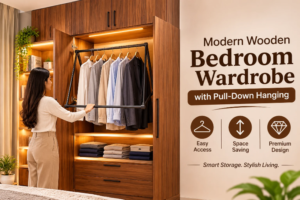
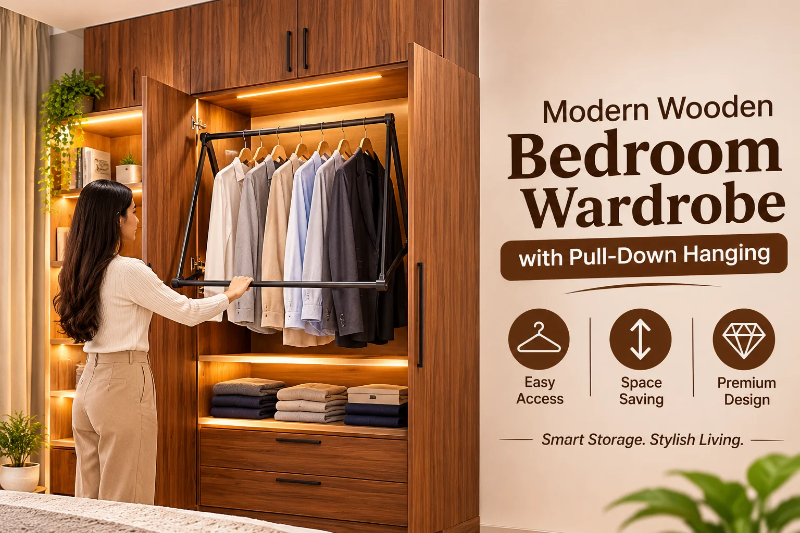
A wardrobe with a pull-down hanging rail is designed to make clothing storage more accessible, especially in wardrobes with tall interiors. Unlike a conventional hanging rod that remains fixed at a particular height, a pull-down rail uses a movable mechanism that allows users to bring hanging clothes closer to their reach.
The rail is generally installed inside the upper section of a wardrobe. When someone needs to access clothes stored at a higher level, they can pull the handle downward. The mechanism lowers the hanging section, making it easier to select or remove garments. After use, the rail can be pushed back into its original position.
This design is particularly useful for wardrobes that extend close to the ceiling. Traditional hanging sections in such wardrobes may leave upper space difficult to access. A movable rail makes that space more practical.
The system is commonly used for shirts, trousers, jackets, dresses and other garments that need to remain hanging. Depending on the rail’s size and weight capacity, it can accommodate different types of clothing.
The main purpose is not simply to add another wardrobe accessory. It is to improve how the internal storage area works. By making upper hanging sections easier to access, homeowners can use more of the available wardrobe height.
2. Why Pull-Down Hanging Rails Are Useful in Modern Bedrooms
Modern bedrooms often need to accommodate several furniture items within a limited floor area. Beds, bedside tables, dressing units and wardrobes all compete for available space. This makes efficient furniture planning important.
A pull-down hanging system can help solve one common storage problem: inaccessible upper wardrobe sections.
Better use of vertical space
Many wardrobes have unused space near the top because the hanging rod is positioned too high for comfortable everyday access. A movable rail helps turn that section into usable storage.
Instead of leaving the upper area empty, homeowners can use it for frequently worn clothes while keeping access convenient.
Easier access to hanging clothes
A fixed rail may require users to stretch their arms or use a stool to reach clothes stored near the ceiling. This can be inconvenient, particularly when the wardrobe is tall.
A pull-down mechanism brings the hanging section closer to the user. It reduces the need to reach upward and makes selecting clothing more comfortable.
Improved wardrobe organization
Separating clothes into different hanging sections can make a wardrobe easier to manage. For example, one section can hold office shirts, another can accommodate casual clothing, and a third can store occasional outfits.
The movable rail helps make upper hanging sections part of the regular organization system.
Cleaner bedroom appearance
When the wardrobe interior is planned properly, clothes can be stored without overcrowding. This reduces the tendency to leave garments on chairs, beds or other bedroom furniture.
A well-organized wardrobe also makes daily bedroom cleaning easier.
Suitable for different household needs
Different family members have different storage requirements. Some need more space for formal clothing, while others prefer separate sections for dresses, jackets or everyday garments.
A wardrobe with adjustable internal planning can accommodate these requirements more effectively.
3. Popular Designs of Wooden Wardrobes with Pull-Down Rails
Wardrobe design should balance appearance, storage capacity and ease of use. The pull-down mechanism can be included in different wardrobe styles depending on bedroom dimensions and personal preferences.
Full-height wooden wardrobe
A full-height wardrobe extends from the floor towards the ceiling. It is useful when homeowners want to maximize vertical storage.
The upper section can include a pull-down hanging rail, while the lower section can contain drawers, shelves or fixed hanging rods.
This arrangement creates a practical division between different storage requirements.
Floor-to-ceiling wardrobe
A floor-to-ceiling design uses nearly the entire available wall height. It can provide additional storage without occupying more floor space.
The pull-down rail makes the upper hanging section more accessible. The remaining space can be planned for seasonal garments, luggage or other household items.
Before choosing this design, the ceiling height and available installation clearance should be measured carefully.
Sliding-door wooden wardrobe
Sliding doors move horizontally rather than opening outward. They are useful in bedrooms where there is limited clearance between the wardrobe and the bed.
The internal layout can include a movable hanging rail, drawers and shelves.
However, the placement of the rail should be planned around the sliding-door tracks and available internal width. The mechanism must have enough clearance to move without hitting other components.
Hinged-door wooden wardrobe
Hinged wardrobes use doors that open outward. They provide a wider opening into the wardrobe interior and can make it easier to inspect the hanging section.
This design can be suitable when the bedroom has enough space for the doors to open comfortably.
A pull-down mechanism can be installed in one of the upper hanging compartments.
Wardrobe with a combination of storage sections
Some homeowners need more than one type of storage. A combination wardrobe can include hanging sections, shelves, drawers and accessory compartments.
The pull-down rail can be placed in the upper portion, while the lower area can accommodate folded clothes and everyday accessories.
This arrangement is useful for people who own different types of clothing and want separate storage spaces.
4. Choosing the Right Wooden Material
The material used to manufacture a wardrobe affects its strength, appearance, maintenance and overall lifespan. Before selecting a design, it is important to understand the common materials used in wooden bedroom furniture.
Engineered wood
Engineered wood is manufactured by combining wood fibres, particles or layers with adhesives and other materials.
It is commonly used in contemporary wardrobes because it supports different surface finishes and design styles.
Depending on its grade and construction, engineered wood can provide a suitable option for bedroom storage furniture.
When selecting an engineered wood wardrobe, check the board thickness, edge finishing, hardware quality and resistance to moisture.
Medium-density fibreboard
Medium-density fibreboard, commonly called MDF, is made from fine wood fibres combined with resin under pressure.
Its relatively smooth surface makes it suitable for painted finishes and decorative wardrobe panels.
MDF can be used for wardrobe shutters, internal panels and other furniture components. However, its performance depends on the board quality and protection against moisture.
For wardrobes, properly finished edges and suitable installation conditions are important.
Plywood
Plywood is manufactured by bonding multiple thin wood layers together. The grain direction of adjacent layers is generally arranged to improve stability.
It is widely used in furniture construction because it can provide good structural performance when the appropriate grade and thickness are selected.
For a wardrobe with a movable rail, the mounting area deserves special attention. The supporting panels must be suitable for the hardware and expected clothing load.
Solid wood
Solid wood is made from natural timber. It offers a distinctive grain pattern and can create a traditional or premium appearance.
Different timber species have different characteristics, including weight, hardness, colour and maintenance requirements.
Solid wood wardrobes may require a higher investment depending on the wood species and construction.
Comparing common wardrobe materials
| Material | Common advantage | Important consideration |
|---|---|---|
| Engineered wood | Supports many finishes and designs | Check board quality and moisture protection |
| MDF | Smooth surface for decorative finishes | Protect exposed edges from moisture |
| Plywood | Layered construction and structural versatility | Select an appropriate grade and thickness |
| Solid wood | Natural grain and traditional appearance | Consider cost, weight and maintenance |
The material should be selected according to the bedroom environment, intended use and budget. The rail mechanism also needs proper support, so material selection should not be based on appearance alone.
5. Important Features of a Pull-Down Hanging Mechanism
The mechanism is one of the most important parts of this wardrobe design. Even an attractive wardrobe may become inconvenient if its movable rail is difficult to operate.
Strong support structure
The mounting points must be properly secured to the wardrobe’s side panels or designated support structure.
The supporting material should be appropriate for the hardware being installed. Weak fixing points can lead to instability or damage.
Smooth movement
A quality mechanism should move smoothly between its raised and lowered positions.
Jerky movement, excessive resistance or unusual noise may indicate poor hardware quality or incorrect installation.
Comfortable handle position
The handle should be easy to reach when the rail is in its upper position.
Its design should allow users to operate the mechanism without pulling excessively or using an awkward hand position.
Appropriate load capacity
Every pull-down rail has a specified load capacity. This limit should be checked before storing clothes.
Heavy winter jackets, multiple garments and other items can increase the total weight. Overloading may damage the mechanism or mounting points.
Controlled movement
Some mechanisms are designed to provide controlled lowering and lifting. This can make operation more comfortable and reduce sudden movement.
The quality of the lifting mechanism should be considered during the buying process.
Durable hardware
The rail, brackets, joints and moving components should be made from suitable materials.
Metal components should have a suitable finish to help protect against corrosion and everyday wear.
Correct installation
A pull-down rail must be installed according to the manufacturer’s instructions. Its position, alignment and mounting strength affect how safely and smoothly it operates.
Professional installation is advisable when the system requires specific measurements or specialized fittings.
6. Planning the Internal Wardrobe Layout
A wardrobe should be designed around the clothing and accessories that will be stored inside it. Adding a movable rail without planning the remaining compartments may result in wasted space.
A practical interior layout usually includes a combination of hanging areas, shelves and drawers.
Upper hanging section
The upper hanging section can accommodate frequently used garments when a pull-down mechanism is installed.
It is useful for shirts, jackets, dresses and other clothing that benefits from hanging storage.
The rail should have sufficient clearance above and below it to move freely.
Lower hanging section
A separate fixed hanging rod can be placed below the movable section if the wardrobe has sufficient height.
This section can be used for shorter garments such as shirts, trousers or folded-over clothing.
The exact arrangement should depend on garment length and the wardrobe’s internal dimensions.
Adjustable shelves
Adjustable shelves allow users to change the storage arrangement as their needs evolve.
They can accommodate folded clothes, handbags, boxes and seasonal garments.
Shelf spacing should be planned according to the size of the items being stored.
Drawer compartments
Drawers are suitable for smaller clothing items and accessories.
They can be used for socks, innerwear, scarves and other everyday belongings.
Soft-close drawer channels can improve convenience and reduce noise.
Dedicated accessory storage
Separate compartments can help organize belts, watches, jewellery and other small accessories.
These sections can be positioned where they are easy to access without interfering with the movement of the hanging rail.
Shoe storage
A lower compartment may be used for shoes if the wardrobe layout and bedroom requirements allow it.
However, shoes should ideally be stored in a separate, ventilated section to help prevent odours from affecting clothing.
7. How to Measure Your Bedroom Before Selecting a Wardrobe
Correct measurements help prevent problems during delivery and installation. A wardrobe that looks suitable in a catalogue may not fit comfortably in the actual bedroom.
Measure the available wall width
Start by measuring the wall where the wardrobe will be installed.
Check for nearby doors, windows, switches, electrical outlets and other obstructions.
If the wardrobe is planned between two walls, measure the width at more than one height because walls may not be perfectly straight.
Measure the ceiling height
The ceiling height is particularly important when choosing a tall wardrobe with a movable hanging system.
The wardrobe should have enough internal height for the rail to move properly.
Also consider whether the wardrobe can be brought into the bedroom and positioned upright during installation.
Check the available depth
Wardrobe depth affects how comfortably clothes can hang.
The depth should accommodate garments without allowing them to press against the doors.
Sliding-door systems may require additional space for their tracks, so the internal usable depth should be checked separately.
Consider bed clearance
Measure the distance between the planned wardrobe position and the bed.
For hinged wardrobes, there should be sufficient room to open the doors.
For sliding wardrobes, check that the doors can move without obstruction.
Check ceiling fittings and lighting
Ceiling fans, decorative lights and other fittings may affect the installation of a tall wardrobe.
Make sure the wardrobe will not interfere with the movement of doors or other bedroom furniture.
Plan for movement inside the room
A wardrobe should not block the natural walking path.
Leave enough clearance for opening drawers, accessing clothes and moving around the bedroom.
8. Choosing the Right Wardrobe Door Style
The door style affects both the appearance and functionality of the wardrobe. It should be selected according to available space, personal preference and internal storage requirements.
Sliding wardrobe doors
Sliding doors are suitable for bedrooms where outward-opening doors would occupy too much space.
They can create a clean and modern appearance, especially when combined with simple wooden or laminated finishes.
One consideration is that sliding doors may not expose the entire wardrobe interior at the same time.
The movable rail must be positioned so it remains accessible through the available door opening.
Hinged wardrobe doors
Hinged doors offer direct access to the wardrobe compartments.
They are available in single-door and multiple-door arrangements.
This style can be useful when the interior contains several storage sections that users need to access regularly.
However, sufficient opening space is necessary.
Folding wardrobe doors
Folding doors use panels that fold together when opened.
They can provide a wider opening than some sliding-door arrangements while requiring less outward clearance than traditional full-width hinged doors.
The hinges and folding hardware should be checked for durability.
Mirror-finish doors
Mirror panels can make a bedroom appear brighter and visually more spacious.
They can also eliminate the need for a separate full-length mirror.
When using mirror panels, ensure they are properly secured and suitable for wardrobe applications.
Wooden finish doors
Wooden finishes can complement beds, bedside tables and dressing units.
Natural wood patterns, textured laminates and matte surfaces can all create different visual effects.
The final selection should match the overall bedroom interior rather than being chosen separately.
9. Selecting a Finish That Complements Your Bedroom
The finish of a wardrobe has a major influence on the bedroom’s appearance. A suitable finish can make the furniture feel integrated with the room rather than appearing like a separate storage unit.
Natural wood finish
Natural wood finishes highlight the appearance of wood grain.
They can create a warm atmosphere and work well with neutral walls, wooden beds and simple bedroom decorations.
Light oak finish
Light oak shades can help create a bright and relaxed interior.
They are suitable for bedrooms with white, cream, beige or soft grey colour schemes.
Walnut finish
Walnut-inspired finishes offer a darker and richer appearance.
They can complement modern bedrooms with neutral walls and darker furniture accents.
White finish
White wardrobes are commonly selected for minimalist bedrooms.
They can make furniture appear visually lighter and work well with different colour combinations.
Two-tone finish
A two-tone wardrobe combines two complementary colours or textures.
For example, a wooden finish can be paired with white or grey panels.
This approach creates visual variation without requiring complicated decorative details.
Matte and glossy surfaces
Matte finishes provide a subtle appearance and generally show fewer reflections.
Glossy surfaces reflect more light and can create a polished look.
The choice depends on the desired interior style and maintenance preferences.
10. Organizing Different Types of Clothing
A well-planned wardrobe should provide suitable storage for different garment types. The hanging rail should not be treated as a place to store every item.
Formal shirts
Formal shirts are best stored on suitable hangers to help maintain their shape.
Keep frequently used shirts together so they are easy to locate.
A separate hanging section can be useful for office clothing.
Trousers
Trousers can be stored on dedicated trouser hangers or folded neatly on shelves.
If the wardrobe has a suitable pull-out accessory rack, it may also accommodate trouser storage accessories.
Jackets and blazers
Jackets and blazers generally require enough hanging height and width.
Avoid overcrowding them because compressed garments can develop creases.
Dresses and long garments
Long dresses and coats need sufficient vertical clearance.
If the wardrobe includes both long and short hanging areas, reserve the taller compartment for these garments.
Seasonal clothing
Clothing that is not used regularly can be stored on upper shelves or in labelled storage boxes.
Keep seasonal garments clean and dry before storing them.
Casual clothing
T-shirts, jeans and everyday clothing can be folded on shelves or placed in drawers.
Separating these garments by type can make daily selection easier.
11. Common Mistakes to Avoid When Planning the Wardrobe
A wardrobe may have an attractive exterior but still fail to meet everyday storage requirements if its interior is poorly planned.
Choosing a mechanism without checking its capacity
One common mistake is selecting a pull-down rail based only on appearance.
Every mechanism has a load limit. The expected clothing weight should be considered before purchasing it.
Ignoring internal clearance
The rail needs enough room to move downward and upward.
Shelves, drawers or hanging garments should not obstruct its movement.
Making the wardrobe too deep or too shallow
Incorrect depth can reduce storage convenience.
A wardrobe should provide enough space for hanging clothes while maintaining comfortable access inside the bedroom.
Ignoring the mounting structure
The rail needs secure fixing points.
Installing heavy hardware into an unsuitable panel can lead to long-term problems.
Adding too many compartments
More compartments do not automatically mean better organization.
A wardrobe with excessive shelves and small sections may become difficult to use.
The layout should be based on actual storage needs.
Forgetting future requirements
Clothing and storage needs can change over time.
A flexible layout with adjustable shelves and practical compartments can provide greater long-term value.
Choosing appearance over functionality
A stylish finish is important, but it should not replace attention to construction, hardware and internal design.
The wardrobe should be comfortable to use every day.
12. Practical Benefits for Different Bedroom Sizes
A movable hanging system can be useful in bedrooms of different sizes, although its value depends on the available wardrobe height and storage requirements.
Small bedrooms
In smaller bedrooms, a tall wardrobe can provide additional storage without taking up extra floor space.
A pull-down mechanism makes the upper hanging area more accessible.
Sliding doors may also help preserve floor clearance.
Medium-sized bedrooms
Medium-sized bedrooms generally offer more flexibility in wardrobe planning.
A combination of hanging sections, shelves and drawers can provide balanced storage.
The movable rail can be placed in a dedicated upper compartment.
Large bedrooms
Large bedrooms may accommodate wider wardrobes with multiple storage sections.
The layout can include separate areas for formal clothes, casual garments, accessories and seasonal storage.
A coordinated wardrobe design can complement other bedroom furniture and create a consistent interior appearance.
Guest bedrooms
Guest bedrooms often require flexible storage for different visitors.
A practical hanging section, a few shelves and a small drawer unit can provide sufficient organization.
A movable rail may be useful when the wardrobe is tall and the upper space would otherwise be difficult to reach.
13. Final Planning Considerations Before Buying
Before selecting a wooden wardrobe with a pull-down mechanism, consider how the furniture will be used in everyday life.
Think about the number of people sharing the wardrobe, the types of clothes being stored and the amount of hanging space required.
Check the mechanism’s load capacity, operating movement, warranty and installation requirements. Confirm that the wardrobe’s internal measurements allow the rail to move freely.
Also consider the wardrobe’s finish, door style, material and compatibility with other bedroom furniture.
A carefully planned wardrobe should make storage more convenient while maintaining a neat and comfortable bedroom environment.
14. Advanced Storage Planning for a Modern Wooden Wardrobe
A well-designed wardrobe should make it easy to store, locate and maintain clothing. Beyond the main hanging sections, additional storage features can improve the usefulness of the furniture.
When planning a wardrobe, consider how frequently each item is used and where it should be positioned. Everyday clothing should remain easy to reach, while occasional-use items can be stored in less accessible sections.
Separate storage for everyday clothing
Keep frequently worn shirts, trousers, jackets and dresses in convenient hanging sections. This reduces the time spent searching for clothing and helps maintain an organized interior.
The pull-down rail can be particularly useful for garments stored in the upper section of a tall wardrobe.
Dedicated storage for accessories
Small accessories can easily become mixed with clothing if they do not have designated compartments.
Consider adding:
- Jewellery trays
- Watch storage compartments
- Belt holders
- Tie racks
- Scarf organizers
- Small accessory drawers
These features help prevent smaller items from getting misplaced.
Storage for seasonal clothing
Winter jackets, blankets and seasonal garments may not need everyday access. Upper shelves and labelled storage boxes can provide a suitable place for these items.
Before storing clothing for extended periods, make sure it is clean and completely dry.
Separate compartments for bags
Handbags, backpacks and other personal bags can be stored on dedicated shelves.
The shelf height should accommodate the size of the bags without forcing them into narrow spaces. Smaller bags can be arranged in storage boxes to keep them protected.
Use adjustable shelves
Adjustable shelves make it easier to modify the wardrobe when storage requirements change.
For example, a shelf can be moved to create additional space for folded clothing or taller storage boxes.
This flexibility can make the wardrobe useful for a longer period.
15. How to Choose the Right Pull-Down Rail Mechanism
The performance of the movable hanging system depends on the quality of its hardware. A suitable mechanism should operate smoothly and support the expected clothing load.
Before purchasing, compare the following features.
Weight capacity
Check the maximum load mentioned by the manufacturer.
The capacity should be sufficient for the garments that will be stored on the rail. Do not assume that every mechanism supports heavy winter clothing or a large number of garments.
Rail width
The width should match the wardrobe compartment.
A rail that is too wide may interfere with the side panels or doors. A rail that is too narrow may waste available hanging space.
Measure the internal width before selecting the mechanism.
Operating handle
The handle should be comfortable to grip and easy to reach.
A well-positioned handle makes it easier to bring the rail down without pulling clothing or applying unnecessary force.
Lifting assistance
Some mechanisms use assisted movement to make lowering and lifting more convenient.
Check how the system operates and whether it provides controlled movement throughout its range.
Construction quality
Inspect the rail, joints, brackets and other moving components.
The materials should be suitable for regular operation. Poor-quality hardware may become loose or difficult to operate over time.
Compatibility with wardrobe panels
The mounting arrangement should be compatible with the wardrobe’s construction.
The installer should confirm the correct fixing method and ensure that the panels can support the mechanism.
Warranty and replacement support
Ask whether the hardware comes with a warranty and whether replacement components are available.
This can be useful if a moving component needs servicing in the future.
16. Customization Ideas for Better Wardrobe Functionality
A wardrobe should reflect the storage requirements of the people using it. Customization allows the interior to be arranged according to clothing types, available room space and daily habits.
Two-level hanging arrangement
A wardrobe can include a movable upper rail and a fixed lower hanging rod.
This arrangement provides separate areas for different garment lengths.
However, the distance between both sections must be planned carefully to prevent clothes from overlapping.
Pull-out drawers
Drawers can be added below the hanging section to store smaller clothing items.
Soft-close channels can improve the operating experience and help reduce noise.
Adjustable shelf system
An adjustable shelf system allows users to change the compartment arrangement when necessary.
It can accommodate folded garments, storage boxes, handbags and other bedroom essentials.
Full-length mirror
A mirror can be integrated into the wardrobe door or installed on a nearby wall.
This can be useful for dressing and checking outfits without requiring a separate large mirror.
Built-in lighting
LED lighting can improve visibility inside deep wardrobe compartments.
Motion-activated lighting may switch on when the wardrobe door opens, depending on the selected system.
The wiring should be planned safely and installed without interfering with the movable hardware.
Dedicated shoe compartment
A separate lower compartment can be used for footwear.
It should be designed with sufficient ventilation and easy cleaning access.
Hidden accessory storage
Small pull-out trays can be installed behind wardrobe doors or inside suitable compartments.
These provide a convenient place for jewellery, watches and other personal belongings.
Laundry section
Some wardrobes can include a designated laundry basket compartment.
A removable basket makes it easier to separate used clothing from clean garments.
This feature should be included only when sufficient space is available.
17. Designing a Wardrobe for Small Bedrooms
Small bedrooms require careful furniture planning because every part of the room has a practical purpose.
A wardrobe should provide enough storage without making the bedroom feel crowded.
Choose a vertical design
A tall wardrobe makes better use of wall height.
Instead of increasing the wardrobe’s floor area, homeowners can use upper compartments for additional storage.
A pull-down hanging system can make the upper hanging section more accessible.
Prefer sliding doors when suitable
Sliding doors do not require the same outward opening space as hinged doors.
They can be useful when the wardrobe is positioned close to the bed or another piece of furniture.
However, check the internal layout carefully because only part of a sliding wardrobe may be accessible at a time.
Use light finishes
White, cream, light oak and soft grey finishes can create a visually lighter appearance.
These colours can work well in bedrooms with limited natural light.
Combine hanging and folded storage
Not every garment needs to be stored on a hanger.
Use hanging sections for shirts, dresses and jackets, while folded clothing can be placed on shelves or inside drawers.
This helps use the available wardrobe space efficiently.
Avoid unnecessary decorative details
Heavy decorative panels and complicated exterior designs may make a small wardrobe appear visually bulky.
Simple shutters and clean lines can help maintain a balanced bedroom appearance.
Measure the complete furniture arrangement
Before ordering a wardrobe, consider the bed, bedside tables, dressing unit and walking space.
The wardrobe should not block drawers, windows or room entrances.
18. Wardrobe Lighting and Visibility Improvements
Lighting can make a wardrobe easier to use, particularly when it has deep compartments or multiple storage sections.
A poorly lit wardrobe may make it difficult to identify clothing colours and find smaller belongings.
LED strip lighting
LED strips can be installed along suitable wardrobe interiors.
They provide illumination without taking up much storage space.
The placement should avoid obstructing shelves, moving rails and door mechanisms.
Motion sensor lighting
Motion sensors can automatically activate the lights when the wardrobe is opened or someone approaches, depending on the selected system.
This reduces the need to operate a separate switch every time.
Vertical lighting
Vertical LED lighting can be installed along the inside edges of selected wardrobe compartments.
It may provide more even illumination than a single light placed at the top.
Drawer lighting
Small lighting units can improve visibility inside deep drawers.
This can be helpful for accessory storage and compartments containing smaller clothing items.
Safe electrical installation
Lighting should be installed using suitable electrical components.
Wires must be properly routed and secured so they do not interfere with moving hardware or create an obstruction.
19. Matching the Wardrobe with Other Bedroom Furniture
A wardrobe is one of the largest furniture items in a bedroom. Its colour, material and overall appearance can influence the entire interior design.
Coordinating it with other furniture creates a more consistent appearance.
Match the wardrobe with the bed
The bed and wardrobe do not need to have identical finishes, but their colours should complement one another.
For example, a light wooden bed can work well with a wardrobe featuring a similar wood tone or a neutral finish.
Coordinate with bedside tables
Bedside tables are smaller furniture items, but their finish can help connect the wardrobe and bed visually.
Matching handles, colours or surface textures can create a consistent look.
Complement the dressing table
A dressing table can be designed with a similar finish to the wardrobe.
If the wardrobe uses a simple wooden texture, the dressing unit can follow the same design approach.
Consider bedroom wall colours
The wardrobe should work with the wall colour rather than compete with it.
Neutral furniture finishes are generally easier to coordinate with changing wall colours and decorations.
Maintain visual balance
A large wardrobe with a dark finish may become the main visual feature of a small room.
In such cases, lighter bedding, neutral walls and simple decorations can help balance the overall appearance.
20. Choosing Between Ready-Made and Customized Wardrobes
Both ready-made and customized wardrobes can be suitable choices. The right option depends on room dimensions, storage requirements and budget.
Ready-made wardrobes
Ready-made wardrobes are manufactured in standard sizes and designs.
They can be useful when the bedroom has conventional dimensions and the available storage arrangement meets the user’s requirements.
Advantages include:
- Standardized designs
- Easier comparison between models
- Defined dimensions
- Availability in different finishes
- Potentially shorter purchasing timelines
However, the internal layout may not perfectly match every household’s storage needs.
Customized wardrobes
Customized wardrobes are planned according to the available space and intended use.
They can include specific combinations of hanging sections, drawers, shelves and accessory compartments.
Advantages include:
- Flexible internal planning
- Better use of unusual wall dimensions
- Choice of finishes and layouts
- Opportunity to include specialized hardware
- Storage arrangements based on personal requirements
The final cost and installation time may vary depending on materials, dimensions and hardware.
Which option is more suitable?
A ready-made wardrobe may be appropriate when standard dimensions and existing layouts are sufficient.
A customized option may be more suitable when the bedroom has limited space, unusual dimensions or specific storage requirements.
In either case, check the quality of the movable rail mechanism before making a decision.
21. Maintenance Tips for a Wooden Wardrobe
Regular maintenance helps keep a wardrobe clean and functional. It also helps prevent unnecessary wear to the surfaces and moving components.
Clean the exterior regularly
Use a soft, dry or slightly damp cloth to remove dust from wardrobe shutters and panels.
Avoid harsh chemicals that may damage the surface finish.
Always follow the cleaning instructions provided for the specific material.
Keep the interior dry
Moisture can affect wooden furniture and some engineered boards.
Avoid placing wet clothing directly inside the wardrobe.
Make sure garments are completely dry before hanging or folding them.
Clean the hanging rail
Dust can accumulate on hanging rods and other metal components.
Wipe the rail with a suitable dry cloth and check for signs of corrosion or damage.
Inspect the moving mechanism
Periodically check the pull-down mechanism for loose screws, unusual noise or irregular movement.
If the rail becomes difficult to operate, avoid forcing it.
Have the hardware inspected by a qualified installer or service professional.
Do not exceed the load capacity
Overloading can place unnecessary pressure on the rail and mounting points.
Follow the manufacturer’s specified weight limit.
Check hinges and drawer channels
Inspect wardrobe hinges, sliding tracks and drawer channels from time to time.
Loose fittings should be tightened using the appropriate tools and methods.
Avoid excessive force
Always operate the rail using its designated handle.
Pulling clothes directly or forcing the mechanism can damage its moving components.
Keep the wardrobe organized
Avoid overcrowding the hanging section.
Leave enough space between garments to reduce wrinkles and make clothes easier to remove.
22. Budget Considerations When Buying a Wooden Wardrobe
The cost of a wardrobe depends on several factors. A basic design and a feature-rich wardrobe may have very different prices, even when their external dimensions are similar.
Material selection
The type and quality of board or timber can influence the overall cost.
Engineered wood, MDF, plywood and solid wood have different construction characteristics and price ranges.
Wardrobe dimensions
Larger wardrobes generally require more material and hardware.
Tall wardrobes may also require additional installation planning.
Pull-down mechanism quality
The mechanism’s brand, material, load capacity and operating features can affect the final price.
A suitable quality mechanism should be selected according to expected usage rather than choosing only the lowest-priced option.
Door design
Sliding systems, folding doors and specialized shutters may have different hardware requirements.
Mirror panels and decorative finishes can also influence the cost.
Interior accessories
Additional features such as jewellery trays, pull-out baskets, lighting and soft-close drawers may increase the total investment.
Choose accessories that solve actual storage problems.
Installation requirements
Installation costs may vary according to wardrobe dimensions, wall conditions and hardware complexity.
Ask whether the quoted price includes delivery, assembly and fitting.
Long-term value
A wardrobe should be evaluated by its construction quality, usability and expected maintenance requirements.
A slightly higher initial investment may be worthwhile when it provides better hardware, stronger construction and a more practical interior arrangement.
23. Modern Wardrobe Design Trends
Bedroom furniture continues to evolve as homeowners look for practical storage and simple interior styles.
Several design approaches are commonly considered when planning contemporary wooden wardrobes.
Minimalist wardrobe designs
Minimalist wardrobes use simple lines, clean shutters and limited decorative details.
They can work well in modern bedrooms because they keep the overall appearance uncluttered.
Handleless shutters
Handleless designs use integrated grooves, recessed handles or push-to-open hardware.
They create a clean exterior, although the selected opening system should be practical for regular use.
Natural wood textures
Wood-inspired finishes remain a popular choice for bedroom furniture.
They can add warmth while working with neutral colours and modern interior styles.
Mixed material finishes
Some wardrobes combine wooden textures with glass, mirrors or neutral-coloured panels.
This creates visual variation while keeping the design coordinated.
Smart internal storage
Modern wardrobes increasingly focus on practical interior accessories.
Movable hanging rails, pull-out trays, adjustable shelves and dedicated accessory compartments can help make storage more convenient.
Integrated lighting
LED lighting can improve the usability of wardrobe interiors.
It is particularly useful for deep compartments and wardrobes with several storage sections.
Space-efficient furniture planning
Homeowners increasingly look for furniture that uses available room space effectively.
Tall wardrobes, sliding doors and flexible interior layouts can help achieve this objective.
24. How to Select the Best Wardrobe Layout for Your Needs
The best wardrobe layout depends on the number of users, clothing collection and available bedroom space.
Before selecting the design, prepare a basic list of the items that need to be stored.
For one person
A single-user wardrobe may include:
- One main hanging section
- One pull-down hanging section
- Adjustable shelves
- Two or three drawers
- A dedicated accessory compartment
The exact arrangement should depend on the clothing collection.
For two people
A shared wardrobe should provide clearly separated storage areas.
Each person may have an individual hanging section and dedicated drawers.
If a movable rail is included, make sure both users can operate it comfortably.
For families
Family wardrobes may require more shelves and separate compartments.
Clothing can be grouped by family member or garment type.
Frequently used items should be stored in accessible areas.
For people with extensive formal clothing
Formal shirts, jackets, dresses and suits may require additional hanging space.
The hanging sections should provide sufficient height and width to prevent garments from becoming compressed.
For people with limited storage space
A combination of hanging sections, shelves and drawers can help maximize available capacity.
A tall wardrobe with carefully planned internal compartments may provide more useful storage without increasing its floor footprint.
25. Frequently Asked Questions
1. What is a pull-down hanging rail in a wardrobe?
A pull-down hanging rail is a movable wardrobe accessory that lowers an upper hanging section to make clothes easier to access. It is generally installed in tall wardrobes where a fixed hanging rod may be difficult to reach.
2. Is a pull-down hanging rail useful for tall wardrobes?
Yes. It can make upper hanging areas more accessible and help homeowners use vertical wardrobe space more effectively. The mechanism should be selected according to the wardrobe’s dimensions and expected clothing load.
3. What types of clothes can be stored on a pull-down rail?
Depending on its design and weight capacity, it can hold shirts, trousers, jackets, dresses and other hanging garments. Always follow the manufacturer’s load recommendations.
4. Can a pull-down rail be installed in an existing wardrobe?
In some cases, it may be possible to install one in an existing wardrobe. However, the internal dimensions, panel strength, mounting points and available clearance must be checked before installation.
5. Does a pull-down hanging rail require regular maintenance?
It generally requires occasional inspection and cleaning. Check for loose fittings, unusual noise and difficult movement. Follow the manufacturer’s maintenance instructions.
6. Which material is suitable for a wooden bedroom wardrobe?
Engineered wood, MDF, plywood and solid wood can all be used for wardrobes. The appropriate material depends on the required construction, finish, budget and bedroom conditions.
7. Are sliding doors suitable for wardrobes with pull-down rails?
They can be suitable, provided the rail is positioned correctly and has enough clearance to operate through the available opening. The internal layout should be planned around the door tracks.
8. How much weight can a pull-down wardrobe rail support?
The supported weight varies by mechanism and manufacturer. Check the product’s specified load capacity rather than assuming that all pull-down systems support the same weight.
9. Can a wardrobe include both a pull-down rail and drawers?
Yes. A wardrobe can combine a movable hanging section with drawers, shelves and accessory compartments. The layout must provide enough clearance for each component.
10. Is a tall wardrobe better than a wide wardrobe?
Neither option is universally better. A tall wardrobe can make better use of vertical space, while a wider wardrobe may provide more accessible compartments. The choice depends on room dimensions and storage needs.
11. What is the best wardrobe finish for a modern bedroom?
Light oak, walnut, white, grey and matte finishes are common choices. The best option depends on the bedroom’s wall colour, flooring and other furniture.
12. How can I make a wardrobe more organized?
Use separate hanging sections, adjustable shelves, drawers and accessory trays. Store frequently used clothing in accessible areas and keep seasonal items in designated upper compartments.
13. Can a pull-down rail be used by different family members?
Yes, provided the mechanism can be operated comfortably by the intended users. Consider the handle position, movement and installation height when selecting the system.
14. Are pull-down wardrobe mechanisms expensive?
The cost depends on the mechanism’s design, brand, material and load capacity. Compare product specifications and warranty terms before making a purchase.
15. What should I check before buying a wardrobe with a movable rail?
Check the wardrobe dimensions, material quality, rail load capacity, hardware construction, internal clearance, installation requirements and warranty. These details help determine whether the design is suitable for everyday use.
26. Final Thoughts
A thoughtfully designed wardrobe can make everyday bedroom organization easier while improving the appearance of the room. Choosing a Modern Wooden Bedroom Wardrobe with Pull-Down Hanging Rail can be a practical solution when the bedroom has limited floor space but enough vertical height for additional storage.
The most important factors are suitable materials, reliable hardware, correct measurements and a well-planned internal layout. A movable hanging mechanism should operate smoothly, support the intended clothing load and remain easy to access.
Homeowners should also consider how the wardrobe will work with their bed, bedside tables, dressing unit and other bedroom furniture. Matching finishes and practical storage sections can create a bedroom that feels organized and comfortable.
For more wooden furniture ideas and bedroom storage inspiration, explore mkfurniture. mkfunriture focuses on sharing useful furniture information to help readers understand design choices and make informed decisions.
27. Practical Buying Checklist
Before purchasing or installing a wardrobe, review these points:
- Measure the available wall width, height and depth.
- Check the distance between the wardrobe and the bed.
- Choose a suitable wooden material.
- Confirm the quality of the wardrobe panels.
- Check the pull-down rail’s weight capacity.
- Confirm that the rail moves smoothly.
- Check the handle position and operating comfort.
- Ensure enough clearance for the mechanism.
- Plan hanging sections according to garment length.
- Include shelves and drawers where required.
- Consider dedicated accessory compartments.
- Select a suitable door style.
- Choose a finish that matches the bedroom.
- Check the hardware warranty and replacement support.
- Confirm delivery and installation arrangements.
- Review the final wardrobe layout before installation.
A wardrobe should not only look attractive when installed. It should also remain practical, accessible and easy to maintain throughout everyday use.