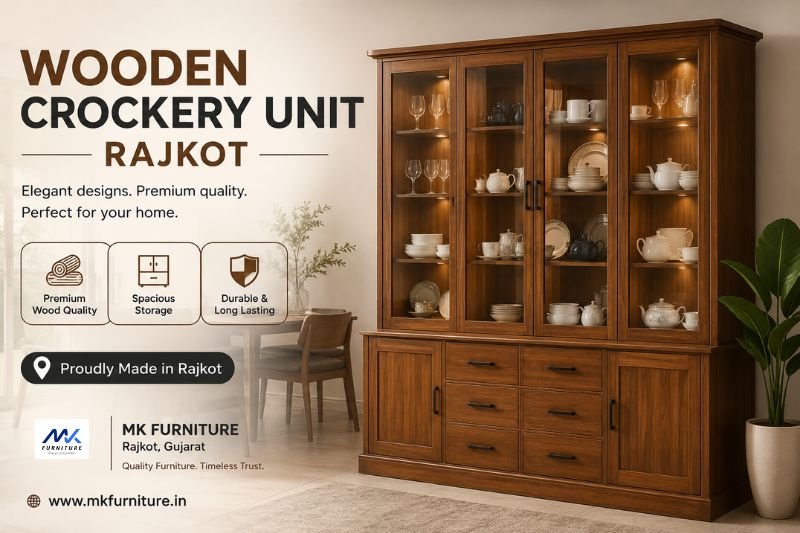
Wooden Crockery Unit Rajkot: Elegant Storage for Modern Dining Spaces
A beautifully organized dining space can make everyday meals and special gatherings feel more comfortable, welcoming, and refined. Furniture plays an important role in achieving this balance, especially when homeowners need practical storage without compromising the appearance of their interiors. The growing demand for wooden crockery unit Rajkot reflects the preference for elegant furniture that keeps dinnerware organized while adding character to modern homes. At mkfunriture, we regularly share furniture and interior inspiration on Instagram, while homeowners can also explore our furniture solutions through our website, https://mkfurniture.in, to discover ideas for creating stylish, functional, and well-organized living and dining spaces.
A crockery unit is more than a cabinet for storing plates and glasses. It can become an important part of the dining room by providing dedicated storage for dinner sets, serving bowls, cups, mugs, glassware, cutlery, table linen, and decorative accessories. When designed thoughtfully, it helps homeowners keep frequently used dining essentials accessible while protecting valuable crockery from dust and accidental damage.
Modern homes increasingly require furniture that can perform more than one function. A well-designed crockery unit can combine enclosed cabinets, drawers, glass-front sections, open display shelves, and serving surfaces within one structure. This makes it possible to organize different types of items according to how often they are used and how homeowners want them displayed.
The increasing popularity of wooden crockery unit Rajkot can also be connected to changing interior preferences. Homeowners are paying greater attention to dining spaces and want furniture that feels integrated with the rest of their interiors. Rather than selecting storage only for capacity, many people now consider finish, proportions, materials, hardware, and overall visual appeal.
Why a Crockery Unit Is Useful in Modern Homes
Dining rooms often contain more items than people initially realize. Everyday dinnerware may need to be stored separately from formal crockery, while serving dishes, glasses, tablecloths, and cutlery require their own organized spaces. Without suitable furniture, these essentials can quickly occupy kitchen cabinets that could otherwise be used for cooking ingredients and appliances.
A dedicated crockery unit solves this problem by creating storage specifically for dining-related items. It can reduce unnecessary movement between the kitchen and dining area while making table preparation more convenient.
For families that regularly host guests, an organized crockery unit can be especially valuable. Serving dishes, glasses, and special dinner sets can remain neatly arranged and ready whenever they are needed.
The right storage system also makes it easier to protect delicate crockery. Glass-front cabinets, enclosed shelves, and carefully designed drawers can help keep valuable items secure while maintaining convenient access.
Combining Storage with Interior Design
Furniture has a strong influence on how a dining room looks and feels. A large cabinet with unsuitable proportions can make a room feel crowded, while a thoughtfully designed unit can enhance visual balance.
The appeal of wooden crockery unit Rajkot lies partly in the versatility of wooden furniture. Natural textures and warm finishes can complement many interior themes, from contemporary and minimalist spaces to more traditional homes.
Wooden surfaces can introduce warmth into dining rooms dominated by neutral walls and flooring. At the same time, modern finishes allow wooden furniture to achieve a cleaner and more streamlined appearance.
The final design should complement nearby furniture, particularly the dining table and chairs. Coordinating finishes does not necessarily mean every piece must look identical. Instead, materials, colors, and design details should work together to create a cohesive environment.
Different Types of Wooden Crockery Units
There is no single crockery unit design suitable for every home. The ideal configuration depends on available space, storage requirements, and interior preferences.
A freestanding crockery cabinet is a flexible choice because it can be positioned against an available wall and relocated if the furniture layout changes. These units may include a combination of drawers, shelves, and cabinets.
Tall crockery units make efficient use of vertical space. They can provide substantial storage capacity without requiring excessive floor area, making them useful for compact dining rooms.
Low-height sideboard-style units create a different visual effect. Their upper surfaces can be used as serving counters or styled with decorative objects, artwork, plants, or lighting.
Glass-front crockery units are suitable for homeowners who want to display selected dinnerware and decorative pieces while keeping them protected. The transparency of glass can also make larger cabinets appear visually lighter.
Open shelving offers easy accessibility and creates opportunities for decorative styling. However, items displayed on open shelves generally require more frequent cleaning.
Many modern designs combine these features, providing closed cabinets for everyday storage, glass sections for premium crockery, and drawers for cutlery and smaller accessories.
Smart Storage for Better Organization
An effective crockery unit should make organization simple rather than merely provide empty cabinet space. Thoughtful internal layouts can significantly improve usability.
Adjustable shelves provide flexibility for storing objects of different heights. Dinner plates, serving bowls, glasses, and decorative pieces can be arranged efficiently without wasting vertical space.
Drawers are useful for cutlery, napkins, placemats, serving tools, and smaller dining accessories. Internal organizers can further improve accessibility and prevent items from becoming mixed together.
Closed cabinets are ideal for dinnerware that homeowners prefer to keep protected from dust. Glass cabinets, on the other hand, allow attractive crockery to become part of the room’s decoration.
The growing interest in wooden crockery unit Rajkot shows how homeowners increasingly value furniture that combines organization with thoughtful presentation. A successful design should make it easy to find what is needed while keeping the dining area visually clean.
Material Quality and Long-Term Durability
A crockery unit may hold considerable weight when fully loaded with plates, bowls, glassware, and serving dishes. For this reason, material selection and construction quality are particularly important.
Quality wood and engineered wood can provide the structural stability required for everyday storage. Shelf thickness, cabinet construction, hinges, drawer channels, and other hardware also influence long-term performance.
A premium finish contributes to both appearance and maintenance. Smooth, properly finished surfaces are easier to clean and can better withstand regular handling.
Hardware should also be selected carefully. Hinges and drawer mechanisms experience repeated movement, so reliable components contribute significantly to everyday convenience.
For glass-front units, glass quality and secure installation are equally important. Shelves should be designed to support the intended weight safely.
Investing in durable materials can provide better long-term value because furniture is expected to remain functional for many years.
Customized Crockery Units for Personalized Homes
Every dining space has different dimensions and storage requirements. Customization allows homeowners to create furniture according to the actual needs of the room rather than adapting their lifestyle to a standard cabinet.
A customized wooden crockery unit Rajkot can be planned around available wall dimensions, ceiling height, existing furniture, and the quantity of crockery that needs to be stored.
Homeowners can choose the number of drawers, shelves, cabinets, and display sections based on their requirements. Someone with a large collection of glassware may prefer more glass-front shelving, while another household may prioritize concealed storage.
Finishes can also be selected to coordinate with dining tables, wall colors, flooring, and surrounding furniture. Handles and hardware provide additional opportunities for personalization.
Customized designs can be especially beneficial for unusual layouts. Narrow walls, corners, and compact dining areas may require furniture with specific dimensions to maximize storage without restricting movement.
Creating an Elegant Dining Room
The dining room is often where families gather for meals and where guests are entertained. Furniture should therefore contribute to a comfortable and welcoming atmosphere.
A thoughtfully designed crockery unit can become an attractive focal point. Decorative dinnerware, glassware, ceramics, or collectibles can be displayed in selected areas while less visually appealing essentials remain concealed.
Lighting can further enhance the appearance of display sections. Subtle integrated lighting may highlight glassware or decorative pieces and create a sophisticated atmosphere during evening gatherings.
However, visual simplicity remains important. Overloading shelves with too many objects can make even premium furniture appear cluttered. Leaving sufficient empty space between displayed items often creates a more refined presentation.
Crockery Units for Compact Homes
Smaller homes and apartments require careful furniture planning. The objective is to gain sufficient storage capacity without making the dining area feel crowded.
Vertical units can be effective because they utilize wall height instead of consuming excessive floor space. Slim cabinets can fit into narrower areas while still providing useful storage.
Wall-mounted units are another option for certain interiors. Keeping some floor area visible can make compact rooms appear more spacious.
The increasing demand for wooden crockery unit Rajkot among modern homeowners highlights the importance of furniture that adapts to different property sizes. A properly proportioned unit can offer substantial functionality even when space is limited.
Multifunctional designs can provide additional benefits. For example, a low crockery cabinet can serve as both storage and a buffet surface when hosting guests.
Choosing Between Open and Closed Storage
Open and closed storage each offer different advantages. The right combination depends on what homeowners plan to store and how they use their dining space.
Open shelves provide immediate accessibility and are excellent for displaying decorative dinnerware, plants, books, or accessories. They can make furniture feel lighter and more contemporary.
Closed cabinets create a cleaner appearance and protect stored items from dust. They are particularly suitable for everyday dinnerware and items that do not need to remain visible.
Glass-front cabinets provide a balance between the two approaches. They allow attractive crockery to remain visible while offering protection.
Combining all three storage styles can create a highly functional furniture piece. The key is to allocate each section according to how frequently items are used.
Matching a Crockery Unit with Dining Furniture
Interior harmony depends on how individual furniture pieces relate to one another. A crockery unit should complement the dining table, chairs, lighting, and surrounding décor.
Wood tones can be coordinated to create a unified appearance, but subtle contrasts can also produce interesting results. A darker cabinet may become a focal point in a lighter room, while natural wood tones can add warmth to neutral interiors.
The scale of the furniture is equally important. A large crockery cabinet may suit a spacious dining room but overwhelm a compact apartment. Similarly, a very small unit may appear visually insignificant in a large dining area.
Before choosing furniture, homeowners should consider both storage requirements and room proportions.
How MK Furniture Supports Modern Interior Needs
At mkfunriture, our approach focuses on furniture that brings together functionality, craftsmanship, and thoughtful design. Homeowners looking for ideas related to wooden crockery unit Rajkot can explore furniture solutions through our website, https://mkfurniture.in, and discover options that complement contemporary dining and living spaces.
Our goal is to help customers consider furniture not simply as individual products but as an important part of how a home functions. Storage requirements, available space, interior style, and everyday habits should all influence the final furniture choice.
A well-designed crockery unit can simplify dining room organization while creating an attractive feature that contributes to the character of the home.
Long-Term Value of Quality Crockery Furniture
Furniture designed for regular use should provide value beyond its initial appearance. Quality construction, reliable hardware, practical storage, and timeless styling all contribute to long-term satisfaction.
A durable crockery unit can continue serving a household even as interior accessories and decorating trends change. Neutral and timeless designs are particularly adaptable because they can be refreshed through new décor without replacing the furniture itself.
Good storage furniture also supports better organization over time. When every item has a designated place, maintaining a clean dining environment becomes considerably easier.
Choosing the Right Crockery Unit
Before selecting a crockery unit, homeowners should begin by measuring the available space accurately. Doorways, walking paths, dining chairs, and nearby furniture should all be considered.
The next step is evaluating storage requirements. The amount and type of crockery being stored will determine the appropriate combination of shelves, drawers, cabinets, and display areas.
Material quality and hardware should also be assessed because these elements influence durability and everyday usability.
Finally, the design should complement the overall interior. A crockery unit is usually a substantial furniture piece, so its appearance can significantly influence the character of the dining space.
Final Thoughts
A carefully selected crockery unit can transform how a dining area looks and functions. It provides dedicated organization for dinnerware, improves accessibility, protects valuable items, and creates opportunities for elegant display.
Modern homeowners increasingly expect furniture to solve practical problems while contributing to interior design. By combining thoughtful storage, durable materials, suitable proportions, and personalized finishes, a crockery unit can become a valuable long-term addition to the home.
Whether the priority is maximizing storage in a compact apartment, creating a premium display for special dinnerware, or developing a coordinated dining room interior, choosing the right furniture makes a meaningful difference. A thoughtfully designed wooden crockery unit brings organization and elegance together, creating a dining environment that feels comfortable, functional, and visually refined.Wooden Crockery Unit Rajkot: Elegant Storage for Modern Dining Spaces
A beautifully organized dining space can make everyday meals and special gatherings feel more comfortable, welcoming, and refined. Furniture plays an important role in achieving this balance, especially when homeowners need practical storage without compromising the appearance of their interiors. The growing demand for wooden crockery unit Rajkot reflects the preference for elegant furniture that keeps dinnerware organized while adding character to modern homes. At mkfunriture, we regularly share furniture and interior inspiration on Instagram, while homeowners can also explore our furniture solutions through our website, https://mkfurniture.in, to discover ideas for creating stylish, functional, and well-organized living and dining spaces.
A crockery unit is more than a cabinet for storing plates and glasses. It can become an important part of the dining room by providing dedicated storage for dinner sets, serving bowls, cups, mugs, glassware, cutlery, table linen, and decorative accessories. When designed thoughtfully, it helps homeowners keep frequently used dining essentials accessible while protecting valuable crockery from dust and accidental damage.
Modern homes increasingly require furniture that can perform more than one function. A well-designed crockery unit can combine enclosed cabinets, drawers, glass-front sections, open display shelves, and serving surfaces within one structure. This makes it possible to organize different types of items according to how often they are used and how homeowners want them displayed.
The increasing popularity of wooden crockery unit Rajkot can also be connected to changing interior preferences. Homeowners are paying greater attention to dining spaces and want furniture that feels integrated with the rest of their interiors. Rather than selecting storage only for capacity, many people now consider finish, proportions, materials, hardware, and overall visual appeal.
Why a Crockery Unit Is Useful in Modern Homes
Dining rooms often contain more items than people initially realize. Everyday dinnerware may need to be stored separately from formal crockery, while serving dishes, glasses, tablecloths, and cutlery require their own organized spaces. Without suitable furniture, these essentials can quickly occupy kitchen cabinets that could otherwise be used for cooking ingredients and appliances.
A dedicated crockery unit solves this problem by creating storage specifically for dining-related items. It can reduce unnecessary movement between the kitchen and dining area while making table preparation more convenient.
For families that regularly host guests, an organized crockery unit can be especially valuable. Serving dishes, glasses, and special dinner sets can remain neatly arranged and ready whenever they are needed.
The right storage system also makes it easier to protect delicate crockery. Glass-front cabinets, enclosed shelves, and carefully designed drawers can help keep valuable items secure while maintaining convenient access.
Combining Storage with Interior Design
Furniture has a strong influence on how a dining room looks and feels. A large cabinet with unsuitable proportions can make a room feel crowded, while a thoughtfully designed unit can enhance visual balance.
The appeal of wooden crockery unit Rajkot lies partly in the versatility of wooden furniture. Natural textures and warm finishes can complement many interior themes, from contemporary and minimalist spaces to more traditional homes.
Wooden surfaces can introduce warmth into dining rooms dominated by neutral walls and flooring. At the same time, modern finishes allow wooden furniture to achieve a cleaner and more streamlined appearance.
The final design should complement nearby furniture, particularly the dining table and chairs. Coordinating finishes does not necessarily mean every piece must look identical. Instead, materials, colors, and design details should work together to create a cohesive environment.
Different Types of Wooden Crockery Units
There is no single crockery unit design suitable for every home. The ideal configuration depends on available space, storage requirements, and interior preferences.
A freestanding crockery cabinet is a flexible choice because it can be positioned against an available wall and relocated if the furniture layout changes. These units may include a combination of drawers, shelves, and cabinets.
Tall crockery units make efficient use of vertical space. They can provide substantial storage capacity without requiring excessive floor area, making them useful for compact dining rooms.
Low-height sideboard-style units create a different visual effect. Their upper surfaces can be used as serving counters or styled with decorative objects, artwork, plants, or lighting.
Glass-front crockery units are suitable for homeowners who want to display selected dinnerware and decorative pieces while keeping them protected. The transparency of glass can also make larger cabinets appear visually lighter.
Open shelving offers easy accessibility and creates opportunities for decorative styling. However, items displayed on open shelves generally require more frequent cleaning.
Many modern designs combine these features, providing closed cabinets for everyday storage, glass sections for premium crockery, and drawers for cutlery and smaller accessories.
Smart Storage for Better Organization
An effective crockery unit should make organization simple rather than merely provide empty cabinet space. Thoughtful internal layouts can significantly improve usability.
Adjustable shelves provide flexibility for storing objects of different heights. Dinner plates, serving bowls, glasses, and decorative pieces can be arranged efficiently without wasting vertical space.
Drawers are useful for cutlery, napkins, placemats, serving tools, and smaller dining accessories. Internal organizers can further improve accessibility and prevent items from becoming mixed together.
Closed cabinets are ideal for dinnerware that homeowners prefer to keep protected from dust. Glass cabinets, on the other hand, allow attractive crockery to become part of the room’s decoration.
The growing interest in wooden crockery unit Rajkot shows how homeowners increasingly value furniture that combines organization with thoughtful presentation. A successful design should make it easy to find what is needed while keeping the dining area visually clean.
Material Quality and Long-Term Durability
A crockery unit may hold considerable weight when fully loaded with plates, bowls, glassware, and serving dishes. For this reason, material selection and construction quality are particularly important.
Quality wood and engineered wood can provide the structural stability required for everyday storage. Shelf thickness, cabinet construction, hinges, drawer channels, and other hardware also influence long-term performance.
A premium finish contributes to both appearance and maintenance. Smooth, properly finished surfaces are easier to clean and can better withstand regular handling.
Hardware should also be selected carefully. Hinges and drawer mechanisms experience repeated movement, so reliable components contribute significantly to everyday convenience.
For glass-front units, glass quality and secure installation are equally important. Shelves should be designed to support the intended weight safely.
Investing in durable materials can provide better long-term value because furniture is expected to remain functional for many years.
Customized Crockery Units for Personalized Homes
Every dining space has different dimensions and storage requirements. Customization allows homeowners to create furniture according to the actual needs of the room rather than adapting their lifestyle to a standard cabinet.
A customized wooden crockery unit Rajkot can be planned around available wall dimensions, ceiling height, existing furniture, and the quantity of crockery that needs to be stored.
Homeowners can choose the number of drawers, shelves, cabinets, and display sections based on their requirements. Someone with a large collection of glassware may prefer more glass-front shelving, while another household may prioritize concealed storage.
Finishes can also be selected to coordinate with dining tables, wall colors, flooring, and surrounding furniture. Handles and hardware provide additional opportunities for personalization.
Customized designs can be especially beneficial for unusual layouts. Narrow walls, corners, and compact dining areas may require furniture with specific dimensions to maximize storage without restricting movement.
Creating an Elegant Dining Room
The dining room is often where families gather for meals and where guests are entertained. Furniture should therefore contribute to a comfortable and welcoming atmosphere.
A thoughtfully designed crockery unit can become an attractive focal point. Decorative dinnerware, glassware, ceramics, or collectibles can be displayed in selected areas while less visually appealing essentials remain concealed.
Lighting can further enhance the appearance of display sections. Subtle integrated lighting may highlight glassware or decorative pieces and create a sophisticated atmosphere during evening gatherings.
However, visual simplicity remains important. Overloading shelves with too many objects can make even premium furniture appear cluttered. Leaving sufficient empty space between displayed items often creates a more refined presentation.
Crockery Units for Compact Homes
Smaller homes and apartments require careful furniture planning. The objective is to gain sufficient storage capacity without making the dining area feel crowded.
Vertical units can be effective because they utilize wall height instead of consuming excessive floor space. Slim cabinets can fit into narrower areas while still providing useful storage.
Wall-mounted units are another option for certain interiors. Keeping some floor area visible can make compact rooms appear more spacious.
The increasing demand for wooden crockery unit Rajkot among modern homeowners highlights the importance of furniture that adapts to different property sizes. A properly proportioned unit can offer substantial functionality even when space is limited.
Multifunctional designs can provide additional benefits. For example, a low crockery cabinet can serve as both storage and a buffet surface when hosting guests.
Choosing Between Open and Closed Storage
Open and closed storage each offer different advantages. The right combination depends on what homeowners plan to store and how they use their dining space.
Open shelves provide immediate accessibility and are excellent for displaying decorative dinnerware, plants, books, or accessories. They can make furniture feel lighter and more contemporary.
Closed cabinets create a cleaner appearance and protect stored items from dust. They are particularly suitable for everyday dinnerware and items that do not need to remain visible.
Glass-front cabinets provide a balance between the two approaches. They allow attractive crockery to remain visible while offering protection.
Combining all three storage styles can create a highly functional furniture piece. The key is to allocate each section according to how frequently items are used.
Matching a Crockery Unit with Dining Furniture
Interior harmony depends on how individual furniture pieces relate to one another. A crockery unit should complement the dining table, chairs, lighting, and surrounding décor.
Wood tones can be coordinated to create a unified appearance, but subtle contrasts can also produce interesting results. A darker cabinet may become a focal point in a lighter room, while natural wood tones can add warmth to neutral interiors.
The scale of the furniture is equally important. A large crockery cabinet may suit a spacious dining room but overwhelm a compact apartment. Similarly, a very small unit may appear visually insignificant in a large dining area.
Before choosing furniture, homeowners should consider both storage requirements and room proportions.
How MK Furniture Supports Modern Interior Needs
At mkfunriture, our approach focuses on furniture that brings together functionality, craftsmanship, and thoughtful design. Homeowners looking for ideas related to wooden crockery unit Rajkot can explore furniture solutions through our website, https://mkfurniture.in, and discover options that complement contemporary dining and living spaces.
Our goal is to help customers consider furniture not simply as individual products but as an important part of how a home functions. Storage requirements, available space, interior style, and everyday habits should all influence the final furniture choice.
A well-designed crockery unit can simplify dining room organization while creating an attractive feature that contributes to the character of the home.
Long-Term Value of Quality Crockery Furniture
Furniture designed for regular use should provide value beyond its initial appearance. Quality construction, reliable hardware, practical storage, and timeless styling all contribute to long-term satisfaction.
A durable crockery unit can continue serving a household even as interior accessories and decorating trends change. Neutral and timeless designs are particularly adaptable because they can be refreshed through new décor without replacing the furniture itself.
Good storage furniture also supports better organization over time. When every item has a designated place, maintaining a clean dining environment becomes considerably easier.
Choosing the Right Crockery Unit
Before selecting a crockery unit, homeowners should begin by measuring the available space accurately. Doorways, walking paths, dining chairs, and nearby furniture should all be considered.
The next step is evaluating storage requirements. The amount and type of crockery being stored will determine the appropriate combination of shelves, drawers, cabinets, and display areas.
Material quality and hardware should also be assessed because these elements influence durability and everyday usability.
Finally, the design should complement the overall interior. A crockery unit is usually a substantial furniture piece, so its appearance can significantly influence the character of the dining space.
A carefully selected crockery unit can transform how a dining area looks and functions. It provides dedicated organization for dinnerware, improves accessibility, protects valuable items, and creates opportunities for elegant display.
Modern homeowners increasingly expect furniture to solve practical problems while contributing to interior design. By combining thoughtful storage, durable materials, suitable proportions, and personalized finishes, a crockery unit can become a valuable long-term addition to the home.
Whether the priority is maximizing storage in a compact apartment, creating a premium display for special dinnerware, or developing a coordinated dining room interior, choosing the right furniture makes a meaningful difference. A thoughtfully designed wooden crockery unit brings organization and elegance together, creating a dining environment that feels comfortable, functional, and visually refined.
Why Modern Homes Need Dedicated Crockery Storage
Modern homes are designed around convenience, organization, and efficient use of available space. As families collect different types of dinnerware, serving dishes, glassware, and dining accessories, having a dedicated storage solution becomes increasingly valuable. A thoughtfully designed crockery unit provides a specific place for these essentials while helping maintain a clean and attractive dining environment.
Without organized storage, dinnerware often occupies valuable kitchen cabinets that could otherwise be used for cookware, appliances, groceries, and other kitchen necessities. Moving selected dining items into a dedicated cabinet can improve organization in both the kitchen and dining room.
The increasing interest in wooden crockery unit Rajkot reflects this changing approach to home furniture. Homeowners are looking beyond basic cabinets and choosing furniture that provides efficient storage while becoming an attractive part of their interior design.
A properly planned unit can separate everyday crockery from items reserved for celebrations and special occasions. Frequently used plates and bowls can remain within easy reach, while premium dinner sets and delicate glassware can be stored safely in protected sections.
This structured approach makes everyday dining more convenient and helps homeowners maintain an organized home without sacrificing style.
Creating a Practical Storage Layout
The internal layout of a crockery unit can determine how useful it becomes in everyday life. Simply having a large cabinet does not always guarantee efficient storage. Shelves, drawers, and compartments should be planned according to the items that will actually be stored.
Large shelves can accommodate dinner plates, serving bowls, and cookware used for entertaining guests. Smaller sections can organize cups, mugs, glasses, and decorative accessories.
Drawers provide practical storage for cutlery, napkins, placemats, bottle openers, serving spoons, and other smaller dining essentials. Using separate drawers for different categories makes items easier to locate.
Glass-front cabinets can be reserved for decorative crockery or premium collections that homeowners want to display. Enclosed cabinets are useful for everyday items that need protection from dust.
Adjustable shelving provides additional flexibility. As storage requirements change, shelf heights can be modified to accommodate different objects.
The objective should be to create a system where every item has a logical place. This approach improves accessibility and makes maintaining an organized dining room considerably easier.
Modern Crockery Unit Design Trends
Contemporary furniture design is increasingly focused on simplicity and purposeful functionality. Instead of excessive decorative detailing, many homeowners prefer clean lines, smooth surfaces, and carefully balanced proportions.
Handleless cabinet fronts can create a streamlined appearance, while subtle handles provide practical accessibility without dominating the design.
Wood finishes remain popular because they introduce natural warmth into modern interiors. Lighter finishes can help compact dining rooms appear more spacious, while deeper wood tones can create a luxurious and sophisticated atmosphere.
Combining wooden surfaces with glass is another popular approach. Glass-front sections create visual openness while allowing selected dinnerware to become part of the interior decoration.
The popularity of wooden crockery unit Rajkot also reflects demand for designs that can integrate naturally with modern dining tables, chairs, and interior themes rather than appearing like separate storage furniture.
Using Glass Doors for Elegant Display
Glass-front crockery cabinets provide an attractive balance between storage and display. They allow homeowners to showcase carefully selected dinnerware while protecting it from dust and unnecessary handling.
Premium glasses, ceramic collections, decorative plates, and special dinner sets can become visual features when arranged thoughtfully behind glass.
Lighting can further enhance these sections. Subtle internal lighting can highlight displayed items and create a warm atmosphere, particularly during evening gatherings.
However, display sections should remain carefully organized. Filling every available shelf may create visual clutter. Selecting fewer objects and leaving sufficient space between them often produces a more sophisticated result.
For homeowners who prefer complete privacy for everyday storage, a combination of glass and solid cabinet doors can provide greater flexibility.
Creating a Functional Serving Area
A crockery unit can also function as an additional serving station. Low-height cabinets and sideboard-style designs provide useful countertop space that can support food, beverages, desserts, or serving dishes during family gatherings.
This functionality can be particularly valuable when entertaining guests. Instead of placing everything on the dining table, selected dishes can remain on the crockery unit, leaving more comfortable space for diners.
The surface can serve decorative purposes when it is not being used for entertaining. Artwork, lamps, vases, indoor plants, and decorative trays can transform the cabinet into an attractive interior feature.
A multifunctional wooden crockery unit Rajkot can therefore contribute to both everyday organization and special occasions, making it a practical investment for contemporary homes.
Crockery Units for Large Dining Rooms
Spacious dining rooms provide greater flexibility when selecting storage furniture. Larger crockery units can include multiple sections for display, concealed storage, drawers, and serving surfaces.
A full-wall crockery unit can create a dramatic visual feature while providing extensive storage capacity. Such designs can be particularly suitable for families with large dinnerware collections or homeowners who frequently entertain guests.
Symmetrical layouts often work well in larger spaces. Glass cabinets can be positioned on either side, with a central serving surface and enclosed storage below.
However, even in spacious rooms, furniture proportions remain important. The cabinet should complement the dimensions of the dining table and surrounding architecture without making the space feel unnecessarily heavy.
Space-Saving Solutions for Apartments
Apartment living often requires more strategic furniture planning. A large traditional cabinet may not be practical when floor space is limited, but this does not mean homeowners must sacrifice useful storage.
Tall and narrow units make effective use of vertical space. Wall-mounted cabinets can provide storage while keeping the floor visually open.
Corner units can transform underused areas into functional storage. Customized cabinets can also be designed to fit specific wall dimensions, helping homeowners maximize every available section of the dining area.
The growing demand for wooden crockery unit Rajkot among apartment owners demonstrates the importance of flexible furniture designs. Compact units can deliver meaningful storage capacity when their internal layouts are planned intelligently.
Sliding doors may also be considered where appropriate because they require less clearance than conventional hinged doors.
Integrating a Crockery Unit with an Open Kitchen
Open-plan homes often combine kitchens, dining areas, and living rooms into a connected environment. Furniture within these spaces should therefore maintain visual continuity.
A crockery unit positioned between the kitchen and dining area can act as a practical transition between the two zones. It provides storage close to both areas while helping define the dining space.
Finishes can be coordinated with kitchen cabinetry or dining furniture to create a cohesive appearance.
In some layouts, the crockery unit can include a serving counter that supports movement between food preparation and dining. This can improve functionality during everyday meals and larger gatherings.
Careful planning is especially important in open interiors because furniture remains visible from multiple areas of the home.
Choosing the Right Finish
The finish of a crockery unit significantly influences its visual impact. Natural wood textures create warmth and can complement a wide range of interior styles.
Lighter finishes often suit contemporary and Scandinavian-inspired spaces, while darker finishes can contribute to luxurious or traditional interiors.
Matte finishes create a subtle and sophisticated appearance, whereas selected polished surfaces may add visual richness.
The choice should consider surrounding furniture, flooring, wall colors, and natural lighting. Rather than selecting a finish independently, homeowners should evaluate how the furniture will appear within the complete room.
A carefully chosen finish allows a crockery unit to feel like an integrated part of the interior rather than an afterthought.
Importance of Quality Hardware
While exterior appearance receives significant attention, hardware plays an equally important role in everyday furniture performance.
Drawer channels should operate smoothly even when drawers contain heavy cutlery or accessories. Hinges should provide stable movement and reliable support for cabinet doors.
Soft-close mechanisms can improve user experience by allowing drawers and doors to close gently. This can also reduce repeated impact on furniture components.
Handles should be comfortable to use while complementing the overall design.
For glass doors, secure fittings and quality hardware are particularly important. Furniture should be designed to provide stability and safe everyday operation.
When evaluating a wooden crockery unit Rajkot, homeowners should consider construction and hardware quality alongside appearance because these details strongly influence long-term satisfaction.
Organizing Everyday and Special Crockery
An effective storage strategy separates frequently used items from those needed only occasionally.
Everyday plates, bowls, cups, and glasses should remain within convenient reach. Shelves positioned at comfortable heights can make daily access easier.
Special dinner sets, decorative plates, and premium glassware can be placed in upper cabinets or dedicated display sections.
Cutlery should be organized in drawers, preferably with internal dividers. Table linen can be folded and stored separately to keep it clean and easily accessible.
Heavy serving dishes are generally better stored on strong lower shelves, where they can be accessed safely without unnecessary lifting.
This simple organization system can make a significant difference in how efficiently the dining area functions.
Maintaining a Wooden Crockery Unit
Regular maintenance helps furniture retain its appearance and functionality. Dust can be removed from wooden surfaces using a clean, soft cloth.
Spills should be cleaned promptly to prevent moisture from remaining on furniture surfaces. Strong or abrasive cleaning products should generally be avoided unless specifically recommended for the finish.
Glass sections require regular cleaning to maintain clear visibility of displayed items.
Drawer channels and hinges can also be checked periodically to ensure they continue operating smoothly.
Avoiding excessive direct sunlight can help preserve certain furniture finishes over time. Maintaining suitable indoor conditions can further contribute to long-term furniture performance.
How Customization Improves Functionality
Standard furniture can work well in many homes, but customization provides greater control over dimensions and storage configuration.
A customized wooden crockery unit Rajkot can be designed around the exact available wall space, allowing homeowners to avoid unnecessary gaps or oversized furniture.
Internal storage can be planned according to the household’s actual crockery collection. Families with extensive glassware can prioritize display cabinets, while those requiring more practical storage can choose larger enclosed sections.
Electrical points and lighting requirements can also be considered during planning if integrated illumination is desired.
Customization creates an opportunity to balance visual design with everyday practicality rather than compromising one for the other.
Furniture That Adapts to Changing Needs
Home storage requirements often change over time. Families may purchase new dinner sets, collect additional glassware, or begin hosting larger gatherings.
Furniture with adjustable shelving and flexible storage configurations can adapt more easily to these changes.
Timeless exterior designs also provide greater longevity. Instead of following short-lived trends, choosing balanced proportions and versatile finishes can help furniture remain relevant as surrounding décor evolves.
This adaptability contributes significantly to long-term value.
Creating Visual Balance in the Dining Room
A crockery unit should contribute to the overall composition of the dining area. Its height, width, and visual weight should be considered in relation to the dining table and room dimensions.
In compact spaces, furniture with lighter finishes and glass sections can help maintain visual openness.
Larger rooms can accommodate more substantial cabinets without feeling crowded.
Decorative objects placed around the unit should also be selected carefully. Artwork positioned above a low cabinet can create vertical balance, while a mirror may help reflect light and visually expand the space.
Indoor plants can introduce natural texture and soften the structured appearance of cabinetry.
How MK Furniture Helps Create Better Dining Spaces
At mkfunriture, we focus on furniture solutions that combine useful storage with thoughtful design and quality craftsmanship. Through our website, https://mkfurniture.in, homeowners can explore furniture inspiration and discover options suited to different interior requirements.
Customers interested in wooden crockery unit Rajkot can consider factors such as available space, storage capacity, preferred finishes, and everyday dining habits when planning their furniture.
We also share furniture ideas and interior inspiration on Instagram, helping homeowners explore different approaches to organizing and styling their living spaces.
The objective of good furniture design should always be to improve how a space works while contributing positively to how it looks.
Long-Term Value of a Well-Designed Crockery Unit
Quality furniture should continue providing practical benefits long after it is purchased. A durable crockery unit can support everyday dining routines, family gatherings, celebrations, and changing storage requirements for many years.
Its value comes not only from the materials used but also from thoughtful design. Convenient drawers, properly positioned shelves, reliable hardware, and suitable proportions all contribute to better everyday usability.
A timeless design can also adapt to changing interior trends. Decorative accessories can be updated over time while the main furniture remains relevant.
Common Mistakes to Avoid
One common mistake is choosing a cabinet based solely on appearance without evaluating storage requirements. Beautiful furniture may become inconvenient if shelves and drawers do not accommodate the items that need to be stored.
Another issue is selecting furniture that is too large for the room. Adequate walking space should always remain around the dining table and surrounding furniture.
Ignoring hardware quality can also lead to long-term inconvenience. Drawers and cabinet doors are used frequently, making reliable components essential.
Homeowners should also avoid overcrowding display sections. A carefully curated arrangement usually creates a more elegant appearance than filling every shelf.
Accurate measurements, thoughtful planning, and attention to construction quality can prevent many of these problems.
Choosing Furniture for Everyday Comfort
The best furniture solutions are those that make daily routines easier. A crockery unit should provide convenient access, logical organization, and sufficient storage without creating unnecessary complexity.
Frequently used items should be easy to reach. Heavy objects should be stored safely, while delicate items should receive suitable protection.
Furniture placement should also support natural movement between the kitchen and dining table.
These practical considerations may appear simple, but they can significantly improve the everyday experience of using the dining space.
The growing interest in wooden crockery unit Rajkot reflects a broader preference for furniture that combines intelligent storage, durable craftsmanship, and elegant interior design. A thoughtfully planned crockery unit can organize everyday dinnerware, protect valuable collections, provide additional serving space, and enhance the visual character of a dining room.
Homeowners should consider available space, storage requirements, material quality, internal organization, and overall interior style before selecting a design. Customized solutions can provide additional flexibility when standard furniture does not fully meet the needs of a particular room.
At mkfunriture, the focus is on creating furniture solutions that support comfortable and organized living. By choosing furniture that balances functionality with timeless aesthetics, homeowners can create dining spaces that remain practical and welcoming for years.
Ultimately, the right crockery unit is more than a place to store plates and glasses. It becomes an important part of the dining experience, helping families stay organized while creating an attractive environment for everyday meals and memorable gatherings. A well-crafted wooden crockery unit offers lasting value by bringing storage, presentation, and practical convenience together in one thoughtfully designed furniture piece.