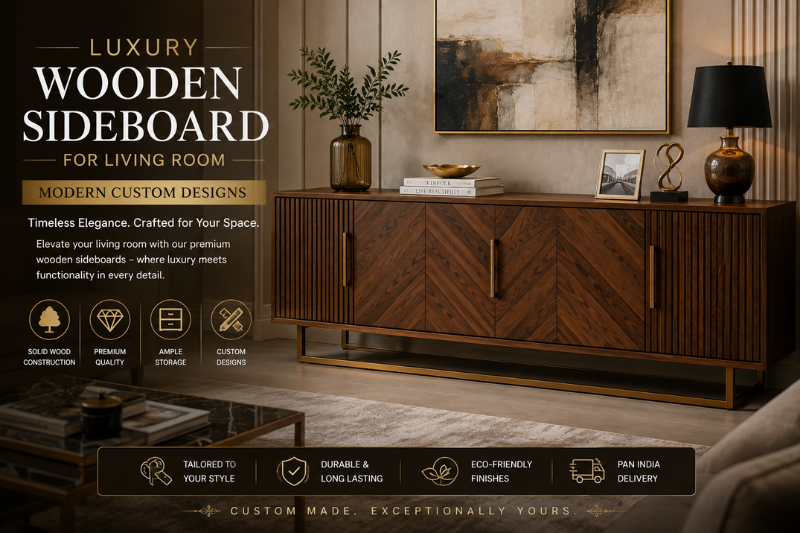
Luxury Wooden Sideboard for Living Room: Complete Guide to Design, Storage, Materials, and Styling
Modern living rooms need furniture that looks refined while solving everyday storage problems. Luxury Wooden Sideboard for Living Room is a strong furniture choice because it combines decorative appeal, organized storage, and natural wooden character in one piece. At mkfunriture, we share modern furniture ideas and interior inspiration on Instagram, while MK Furniture provides customized wooden furniture solutions for homes. You can explore the range and furniture solutions through MK Furniture.
A sideboard can transform an unused wall into a useful storage and display area. It can hold books, decorative accessories, electronics, documents, crockery, and everyday items while keeping the living room visually organized.
The right sideboard should not be selected only because it looks attractive. Its dimensions, storage configuration, material, finish, hardware, and relationship with the rest of the room all influence its usefulness.
This guide explores how to choose, design, style, and maintain a wooden sideboard for modern living spaces.
What Is a Wooden Sideboard?
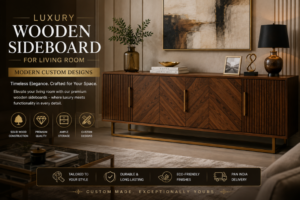
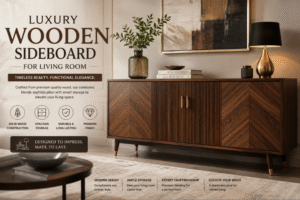
A wooden sideboard is a cabinet-style furniture unit generally positioned against a wall. Traditionally associated with dining areas, modern sideboards are increasingly used in living rooms.
A contemporary sideboard can include:
- Closed cabinets
- Drawers
- Open shelves
- Display niches
- Glass doors
- Adjustable shelves
- Decorative panels
- Integrated lighting
- Cable-management openings
This flexibility allows a sideboard to function as both storage furniture and an interior design element.
Why Sideboards Are Useful in Modern Homes
Modern homes often need additional storage without filling the room with large cabinets.
A sideboard provides horizontal storage while keeping the central floor area open.
It can help organize:
- Books
- Remotes
- Documents
- Electronics
- Decorative accessories
- Games
- Household items
It can also provide a surface for lamps, artwork, plants, photographs, and other decorative pieces.
Benefits of Wooden Sideboards
Wooden furniture brings warmth and texture into contemporary interiors.
Key benefits include:
Natural Appearance
Wood grain adds character and visual warmth.
Flexible Design
Wood-based furniture can be produced in different shapes, sizes, colors, and finishes.
Storage
Cabinets and drawers can hide items that would otherwise create clutter.
Display
Open compartments can be used for books, plants, artwork, and collectibles.
Customization
A custom unit can be designed around the exact dimensions of a wall.
Long-Term Appeal
A carefully selected design can remain relevant even when other interior elements change.
Choosing the Right Sideboard Size
Size is one of the most important factors when planning a sideboard.
Before selecting dimensions, measure:
- Available wall width
- Wall height
- Floor space
- Sofa position
- TV unit position
- Doors
- Windows
- Walking paths
The sideboard should provide sufficient storage without making the room feel crowded.
Sideboard Width
A wider sideboard provides more storage and can become a strong visual feature.
However, it should remain proportional to the wall.
A very short unit against a large wall can look disconnected, while an oversized cabinet can dominate a smaller room.
Sideboard Height
Low sideboards create a streamlined contemporary appearance.
They work well beneath:
- Mirrors
- Large artwork
- Wall décor
- Television screens
Taller sideboards provide additional storage but need careful planning to avoid making the room feel visually heavy.
Sideboard Depth
Depth determines how far the furniture extends into the living area.
A deeper cabinet may offer greater internal storage, but it also reduces circulation space.
For smaller living rooms, a shallower design can provide practical storage while maintaining comfortable movement.
Where to Place a Sideboard
A sideboard can be positioned in several locations.
Common choices include:
- Against an empty wall
- Behind the sofa
- Beneath artwork
- Beneath a mirror
- Beside a TV unit
- Along a dining wall
- Near the entrance
The best position depends on how the room is used.
Sideboard Behind the Sofa
A low sideboard behind a sofa can create a useful secondary storage and display zone.
The surface can hold:
- Lamps
- Books
- Small plants
- Decorative objects
- Photographs
This arrangement can also help visually define an open-plan living space.
Sideboard Beneath a Mirror
A mirror above a sideboard can create an attractive focal point.
The mirror can reflect natural or artificial light and may make the room feel brighter.
For a coordinated appearance, the mirror frame can complement the furniture finish.
Sideboard Beneath Artwork
Artwork can be used to create a balanced composition above the cabinet.
A large artwork can be centred over the furniture, while smaller artworks can be arranged as a gallery.
The artwork should be appropriately scaled relative to the sideboard.
Sideboard for Open-Plan Living Areas
Open-plan homes often require furniture that connects different functional zones.
A sideboard can sit between living and dining areas while providing useful storage.
It can store:
- Dining accessories
- Crockery
- Books
- Decorative items
- Household accessories
Using a coordinated wood finish can visually connect the two areas.
Storage Configuration
Storage should be designed around actual requirements.
Possible configurations include:
- Full-width cabinets
- Central drawers
- Open display sections
- Adjustable shelving
- Glass-front storage
- Hidden compartments
A well-planned combination of storage types can make the furniture more useful.
Open Shelves
Open shelving is ideal for objects that you want to display.
Suitable items include:
- Books
- Plants
- Artwork
- Sculptures
- Collectibles
Open shelves should not be overloaded because too many visible objects can create visual clutter.
Closed Cabinets
Closed storage keeps everyday belongings hidden.
It can be used for:
- Documents
- Electronics
- Games
- Household accessories
- Crockery
- Personal items
Handleless or flush cabinet doors can create a clean contemporary appearance.
Drawers
Drawers are useful for smaller objects.
They can store:
- Remote controls
- Chargers
- Stationery
- Keys
- Small accessories
- Documents
Soft-close mechanisms can make drawers smoother and quieter during everyday use.
Glass Doors
Glass doors add visual variety to wooden furniture.
They can be used to display:
- Crockery
- Collectibles
- Books
- Decorative objects
Clear, tinted, or textured glass can create different visual effects.
Choosing the Right Material
Different materials can be used depending on the desired design and construction.
Solid Wood
Solid wood provides natural grain and a premium material character.
Plywood
Plywood can provide strength and dimensional stability for many furniture applications.
MDF
MDF offers a smooth surface suitable for paint, laminate, and other decorative finishes.
Engineered Wood
Engineered wood offers consistent dimensions and numerous finish choices.
Veneered Boards
Wood veneer can provide a natural wood appearance with consistent surface characteristics.
Selecting the Right Finish
The finish should coordinate with the existing interior.
Popular finishes include:
- Walnut
- Teak
- Oak
- Ash
- Natural wood
- Matte finishes
- Gloss finishes
- Rustic finishes
- Dual-tone finishes
The surrounding flooring, doors, TV unit, coffee table, and wall colors should be considered before choosing the final finish.
Dark Wooden Sideboards
Dark wood creates a rich and sophisticated appearance.
It can work particularly well with:
- Light-colored walls
- Beige sofas
- Leather seating
- Warm lighting
- Metallic accessories
In smaller rooms, however, excessive dark furniture can make the interior feel visually heavy.
Light Wooden Sideboards
Light wood can create a bright and relaxed appearance.
It works well with:
- White walls
- Neutral sofas
- Beige interiors
- Natural fabrics
- Minimalist décor
Light finishes can be especially useful in compact interiors.
Two-Tone Sideboard Designs
Two-tone designs combine different materials or finishes.
Examples include:
- Natural wood and white
- Walnut and beige
- Wood and black
- Wood and glass
- Wood and metal
The combination should remain balanced rather than overly decorative.
Modern Minimalist Sideboards
Minimalist sideboards focus on simplicity.
Typical features include:
- Straight lines
- Flat cabinet fronts
- Neutral finishes
- Handleless doors
- Hidden storage
- Slim profiles
This approach works particularly well in contemporary homes.
Luxury Sideboard Designs
Premium sideboards can use distinctive materials and refined details.
Possible features include:
- Premium veneer
- Decorative wood patterns
- Glass sections
- Metal accents
- Integrated lighting
- High-quality hardware
- Custom storage arrangements
A luxury design should still prioritize usability rather than appearance alone.
Fluted Wooden Sideboards
Fluted surfaces add texture to cabinet doors.
Vertical grooves can create a modern architectural appearance without requiring excessive decorative elements.
Fluted panels can coordinate with:
- Wall panels
- TV units
- Room dividers
- Coffee tables
- Decorative furniture
Floating Sideboards
A floating sideboard is installed above the floor.
Potential advantages include:
- Lightweight visual appearance
- Easier floor cleaning
- Modern styling
- Additional visual openness
The installation must be properly planned according to wall construction and furniture load.
Sideboard with Integrated Lighting
Lighting can enhance display sections and decorative niches.
Possible lighting solutions include:
- LED strips
- Interior cabinet lighting
- Backlit niches
- Under-cabinet lighting
Electrical planning should be completed before installation so wiring can be concealed effectively.
Sideboard and TV Unit Combination
A sideboard can be coordinated with a TV unit to create a complete furniture wall.
A combined arrangement may include:
- TV console
- Sideboard
- Display shelves
- Closed cabinets
- Open niches
- Cable management
Matching or complementary finishes can create a cohesive appearance.
Sideboard and Bookshelf Combination
A sideboard can also work alongside a bookshelf.
Together they can provide:
- Horizontal storage
- Vertical storage
- Display areas
- Closed cabinets
This arrangement can be useful for homeowners who need both book storage and concealed storage.
Styling the Sideboard
The surface should remain practical while looking attractive.
A simple arrangement could include:
- Decorative vase
- Small plant
- Table lamp
- Books
- Artwork
- Decorative tray
Avoid filling every available space.
Negative space helps the furniture look more sophisticated.
Sideboard as an Entryway Cabinet
Although commonly associated with living rooms, a sideboard can also work near an entrance.
It can provide storage for:
- Keys
- Bags
- Accessories
- Documents
- Small household objects
Adding a mirror above the unit can create a functional entrance arrangement.
Maintenance of Wooden Sideboards
Regular care helps preserve furniture appearance.
Basic maintenance includes:
- Dusting regularly
- Cleaning spills quickly
- Avoiding excessive moisture
- Using suitable cleaning products
- Avoiding abrasive materials
- Checking hardware periodically
Maintenance requirements can vary depending on the specific material and finish.
Protecting the Surface
The top surface may be used for lamps, plants, decorative objects, and other accessories.
To reduce damage:
- Use coasters where suitable.
- Avoid placing excessive heat directly on the surface.
- Clean spills promptly.
- Avoid dragging heavy objects.
- Use protective pads under decorative items.
These simple practices can help preserve the finish.
Common Buying Mistakes
Choosing the Wrong Dimensions
A sideboard that is too large can restrict movement.
Ignoring Storage Requirements
The internal configuration should match what you actually need to store.
Using Too Much Open Storage
Too many visible items can make the room look cluttered.
Ignoring Existing Furniture
The sideboard should coordinate with the surrounding furniture.
Selecting a Finish Without Considering Lighting
Wood colors can appear different under warm and cool lighting, so the room’s lighting should be considered.
Cost Factors
The cost of a custom sideboard can depend on:
- Dimensions
- Material
- Finish
- Number of cabinets
- Number of drawers
- Hardware
- Glass
- Lighting
- Decorative detailing
- Installation
A simple cabinet generally requires less material and detailing than a large customized unit with premium hardware and integrated lighting.
Why Customization Is Valuable
Ready-made sideboards come in predetermined dimensions.
Customization provides control over:
- Width
- Height
- Depth
- Storage configuration
- Material
- Finish
- Hardware
- Decorative elements
This is particularly useful when a wall has unusual dimensions or when the furniture needs to coordinate with existing pieces.
Choosing a Furniture Manufacturer
Before ordering customized furniture, consider:
- Material quality
- Construction
- Hardware
- Finishing quality
- Design experience
- Customization options
- Installation
- After-sales support
Clear communication about dimensions, materials, finishes, and storage requirements is important.
Why Choose MK Furniture?
At mkfunriture, customized wooden furniture can be planned according to the requirements of individual spaces. A sideboard can be designed as a standalone piece or coordinated with TV units, coffee tables, bookshelves, consoles, and other furniture.
For customized furniture solutions, visit MK Furniture. MK Furniture also shares furniture ideas and interior inspiration on Instagram.
Planning Before Ordering
Before finalizing the design, prepare:
- Wall measurements
- Required width
- Desired height
- Available depth
- Storage requirements
- Material preference
- Finish preference
- Hardware
- Lighting requirements
- Existing furniture details
Good planning helps the final unit fit naturally into the room.
A sideboard can be one of the most useful furniture pieces in a modern living room. It provides storage, display space, and a decorative foundation for mirrors, artwork, lighting, and accessories.
A well-planned Luxury Wooden Sideboard for Living Room should balance appearance and functionality. The right dimensions, storage configuration, material, finish, and hardware can make the furniture comfortable to use while giving the room a refined appearance.
Whether the preferred style is minimalist, contemporary, rustic, fluted, floating, or premium, wooden furniture offers considerable flexibility. Customization provides even more control by allowing the furniture to be designed around the exact wall dimensions and storage requirements.
At mkfunriture, customized furniture can be developed to complement the complete living-room environment. Coordinating a sideboard with a TV unit, coffee table, bookshelf, or console can create a consistent furniture style throughout the room.
The best sideboard is not simply the one with the most decorative features. It is the one that fits the room, provides appropriate storage, complements the existing interior, and remains convenient for everyday use.
A well-planned Luxury Wooden Sideboard for Living Room can bring together storage and interior design while keeping everyday belongings organized. For homeowners working with modern interiors, the right sideboard can become a practical focal point without making the room feel overcrowded. At mkfunriture, MK Furniture focuses on customized wooden furniture solutions, while its Instagram presence can also provide ideas for contemporary furniture styling. You can explore the available furniture solutions through MK Furniture.
Modern Sideboard Design Trends
Modern sideboards are increasingly designed around clean lines, useful storage, and simple detailing. Instead of heavy ornamentation, contemporary furniture often relies on proportions, wood texture, hardware, and carefully selected finishes.
Popular options include:
- Fluted cabinet fronts
- Handleless doors
- Natural wood finishes
- Floating cabinets
- Open display niches
- Glass-front cabinets
- Mixed-material designs
- Integrated LED lighting
- Soft-close drawers
- Hidden storage
The ideal design should complement the overall interior instead of following a trend simply because it is popular.
Fluted Wooden Sideboard Design
Fluted detailing introduces texture through repeated vertical grooves. It can make a simple cabinet appear more architectural without requiring elaborate decoration.
Fluted panels can be coordinated with:
- TV units
- Wooden wall panels
- Room dividers
- Coffee tables
- Bookshelves
- Interior doors
For a balanced appearance, fluting can be limited to cabinet fronts or one central section.
Floating Sideboard Design
A floating sideboard is installed above the floor rather than resting directly on it. The open space underneath gives the furniture a lighter visual appearance.
Benefits can include:
- Easier floor cleaning
- Contemporary styling
- Better visual openness
- Efficient use of wall space
The mounting system must be suitable for the wall structure and furniture load.
Sideboard with Integrated Lighting
Lighting can enhance display areas and make furniture more visually attractive during the evening.
Possible lighting options include:
- LED strips
- Internal cabinet lighting
- Backlit niches
- Under-cabinet lighting
Electrical points and cable routes should be planned before manufacturing and installation.
Sideboard with Glass Cabinets
Glass sections can provide display space while protecting decorative items from dust.
They can be used for:
- Collectibles
- Books
- Crockery
- Decorative objects
- Awards
- Photographs
Clear glass offers maximum visibility, while tinted or textured glass can provide a more contemporary appearance.
Hidden Storage
Hidden storage is useful for maintaining a clean-looking living room.
Handleless cabinet doors and push-to-open mechanisms can conceal:
- Remotes
- Chargers
- Documents
- Games
- Electronic accessories
- Household items
This approach is especially suitable for minimalist interiors.
Open and Closed Storage
Combining open and closed storage gives homeowners greater flexibility.
Closed cabinets can hide everyday clutter, while open niches can display selected decorative objects.
A practical configuration might include two closed cabinets, a central display section, drawers, and adjustable shelves.
Choosing Hardware
Furniture hardware affects both appearance and usability.
Common options include:
- Soft-close hinges
- Premium drawer runners
- Push-to-open fittings
- Recessed handles
- Slim handles
- Adjustable shelf supports
For a minimalist appearance, concealed hardware can help maintain clean cabinet lines.
Matching Existing Furniture
The sideboard should work visually with the furniture already present in the room.
Consider its relationship with:
- Sofa
- Coffee table
- TV unit
- Bookshelf
- Flooring
- Doors
- Wall panels
- Curtains
- Lighting
Matching does not necessarily mean using exactly the same finish. Complementary wood tones can create a more natural interior.
Choosing Wood Tones
Wood colors influence the overall mood of a living room.
Walnut can create a rich appearance, while lighter oak and natural wood tones can make an interior feel brighter.
Possible combinations include:
- Walnut with beige
- Teak with cream
- Oak with white
- Dark wood with light walls
- Natural wood with black accents
Avoid combining too many unrelated wood tones within the same room.
Sideboard for Neutral Interiors
Neutral interiors provide a strong background for wooden furniture.
White, cream, beige, taupe, and grey walls can allow the wood grain to become a central visual element.
A medium or light wood finish can add warmth without overpowering the room.
Sideboard for Dark Interiors
Dark furniture can create a sophisticated and dramatic atmosphere.
It can work well with:
- Charcoal walls
- Black metal
- Warm lighting
- Deep-colored upholstery
- Dark flooring
If the room receives limited natural light, integrated lighting can help maintain visual balance.
Sideboard for Small Living Rooms
Small rooms require careful planning.
A compact sideboard can provide useful storage without occupying excessive floor space.
Useful features include:
- Shallow depth
- Floating installation
- Sliding doors
- Handleless fronts
- Vertical compartments
- Combination storage
The goal should be to maximize useful storage while maintaining comfortable circulation.
Sideboard for Large Living Rooms
Large living rooms can accommodate wider furniture.
A longer unit can become a strong visual anchor while providing substantial storage.
It may include:
- Multiple cabinet sections
- Drawers
- Glass doors
- Open niches
- Decorative panels
- Integrated lighting
Even in a large room, sufficient open space should remain around the furniture.
Sideboard Behind the Sofa
A low sideboard placed behind the sofa can create another useful storage area.
Its surface can accommodate:
- Lamps
- Plants
- Books
- Photographs
- Decorative objects
A low profile helps maintain visual connection between different parts of the room.
Sideboard Beneath a Mirror
A mirror above the sideboard can create a simple decorative arrangement.
When selecting the mirror, consider:
- Width
- Height
- Frame
- Furniture finish
- Wall color
- Lighting
The mirror and cabinet should feel connected rather than like two unrelated objects.
Sideboard Beneath Artwork
Artwork can make the furniture wall more visually interesting.
A large artwork can be centred above a wide cabinet, while smaller pieces can be arranged as a gallery.
Colors within the artwork can subtly repeat colors found elsewhere in the room.
Sideboard for Dining Areas
Although this article focuses on living rooms, wooden sideboards can also be useful in dining spaces.
They can store:
- Plates
- Bowls
- Cutlery
- Glassware
- Table linens
- Serving accessories
This makes them particularly useful in open-plan homes.
Sideboard for Electronics
Modern living rooms often contain several electronic accessories.
A sideboard can provide storage for:
- Gaming consoles
- Speakers
- Routers
- Controllers
- Chargers
- Media accessories
Cable openings can be incorporated during manufacturing.
Ventilation should also be considered when electronic devices are stored inside closed compartments.
Cable Management
Cable management can significantly improve the appearance of modern furniture.
A customized unit can include concealed openings that allow cables to travel between internal compartments and nearby electrical outlets.
Good cable management helps:
- Reduce visible wires
- Improve organization
- Make cleaning easier
- Maintain a cleaner appearance
Sideboard as a Room Divider
In open-plan interiors, a sideboard can help visually define different areas.
For example, it can separate:
- Living and dining spaces
- Entry and living spaces
- Lounge and workspace areas
A lower cabinet maintains openness, while a taller unit creates stronger visual separation.
Styling with Plants
Indoor plants can complement wooden furniture by introducing natural color and texture.
Small plants can sit on the cabinet surface, while larger plants can be positioned beside the furniture.
Use suitable trays or protective surfaces where watering may expose the furniture to moisture.
Styling with Books
Books provide an easy way to decorate a sideboard.
They can be:
- Stacked horizontally
- Arranged vertically
- Grouped by size
- Combined with plants or decorative objects
Keeping some empty surface area prevents the arrangement from looking crowded.
Styling with Decorative Objects
A few carefully selected accessories can create a sophisticated display.
Consider:
- Ceramic vases
- Sculptures
- Decorative trays
- Picture frames
- Candles
- Small plants
The objective is balance rather than filling every available space.
Lighting Around the Sideboard
Lighting affects how furniture colors and finishes appear.
Warm lighting can emphasize the warmth of wood, while cooler lighting can create a cleaner visual effect.
Possible sources include:
- Ceiling lights
- Wall lights
- Floor lamps
- Table lamps
- Cabinet LEDs
The furniture should ideally be assessed under the actual lighting conditions of the room.
Selecting a Timeless Design
A timeless sideboard can remain relevant even as interior trends change.
Useful characteristics include:
- Balanced proportions
- Simple cabinet fronts
- Quality finish
- Neutral colors
- Functional storage
- Controlled detailing
These qualities allow the furniture to work with changing rugs, sofas, artwork, and accessories.
Custom Sideboard Design
Customization allows the furniture to respond directly to the room and its storage requirements.
Possible customizations include:
- Width
- Height
- Depth
- Cabinet layout
- Drawer layout
- Shelf positions
- Material
- Finish
- Hardware
- Glass
- Lighting
This is particularly useful when standard furniture does not fit the available wall.
Why Custom Dimensions Matter
Walls may contain windows, doors, columns, electrical outlets, corners, or other architectural features.
A customized design can account for these conditions instead of forcing standard dimensions into the space.
Measuring the Space
Before manufacturing, consider:
- Wall width
- Available height
- Usable depth
- Door positions
- Window positions
- Electrical outlets
- Walking space
- Existing furniture
Accurate measurements help reduce fitting issues during installation.
Selecting the Right Finish
The finish should support the desired interior style.
Natural finishes emphasize wood grain.
Matte finishes create a contemporary appearance.
Gloss finishes reflect more light but may show fingerprints more easily.
Textured finishes can provide additional visual character.
Sideboards for Apartments
Apartments often require furniture that uses available space efficiently.
A customized unit can maximize wall storage without unnecessarily reducing floor area.
Floating and shallow designs can be especially useful where circulation space is limited.
Sideboards for Large Homes
Large homes can accommodate statement furniture with wider proportions.
A premium design can incorporate:
- Decorative panels
- Glass sections
- Premium hardware
- Custom lighting
- Multiple storage zones
Even large furniture should maintain a balanced relationship with the surrounding room.
Maintenance Tips
Proper maintenance helps preserve the furniture’s appearance.
Regularly:
- Remove dust
- Clean spills quickly
- Use suitable cleaning products
- Avoid excessive moisture
- Avoid abrasive materials
- Check hardware
Specific care should always follow the recommendations appropriate to the selected material and finish.
Protecting the Surface
The top surface is often used for lamps, plants, books, and decorative accessories.
To reduce wear:
- Use suitable coasters
- Avoid direct excessive heat
- Clean spills promptly
- Do not drag heavy objects
- Use protective pads when necessary
Protecting Drawers and Doors
Avoid excessive force when opening or closing furniture.
Do not overload drawers beyond their hardware capacity.
If doors or drawers become misaligned, adjustment should be carried out rather than continuing to use them incorrectly.
Common Design Mistakes
Some common problems can reduce both appearance and functionality.
Oversized Furniture
Furniture that is too large can restrict movement.
Insufficient Storage
A beautiful design is less useful if it cannot accommodate the required items.
Too Much Open Storage
Excessive display space can create visual clutter.
Poor Cable Planning
Electronics should be considered before manufacturing.
Incompatible Finishes
The sideboard should complement existing furniture rather than clash with it.
Making a Sideboard Look Premium
A sophisticated appearance does not require excessive decoration.
Focus on:
- Clean proportions
- Consistent finish
- Quality construction
- Controlled detailing
- Minimal hardware
- Balanced styling
- Appropriate lighting
Simple furniture with excellent proportions can often look more premium than heavily decorated designs.
Creating a Coordinated Living Room
The sideboard should be considered as part of the entire room.
Coordinate it with:
- Sofa
- Coffee table
- TV unit
- Bookshelf
- Rug
- Curtains
- Wall décor
- Lighting
The objective is visual harmony rather than making every furniture piece identical.
Why Choose MK Furniture?
At mkfunriture, customized wooden furniture can be planned around individual room dimensions, storage needs, materials, finishes, and interior preferences.
A sideboard can be designed as an independent furniture piece or coordinated with other wooden furniture such as TV units, coffee tables, bookshelves, consoles, and cabinets.
For customized furniture solutions, visit MK Furniture.
Frequently Asked Questions
What can I store in a wooden sideboard?
A sideboard can store books, electronics, documents, games, crockery, chargers, remotes, decorative accessories, and other household items.
Can a sideboard be customized?
Yes. Dimensions, storage configuration, materials, finishes, hardware, shelving, glass sections, and lighting can be customized.
Is a sideboard suitable for a small living room?
Yes. A compact, shallow, or floating design can provide useful storage while preserving floor space.
Can the sideboard match an existing TV unit?
Yes. The finish, wood tone, hardware, and design details can be coordinated with an existing TV unit.
Can a sideboard be used in a dining room?
Yes. It can provide storage for crockery, glassware, serving accessories, and table linens.
How do I maintain wooden furniture?
Regular dusting, quick spill removal, suitable cleaning products, and protection from excessive moisture and heat can help maintain the furniture.
A thoughtfully designed Luxury Wooden Sideboard for Living Room can provide storage while also becoming an attractive part of the interior. The best design balances dimensions, material, finish, storage capacity, and styling.
For a small apartment, a compact floating cabinet may be the most practical choice. For a large living room, a wide sideboard with multiple storage zones can create a stronger focal point. For modern interiors, handleless doors, fluted panels, natural wood finishes, glass sections, and integrated lighting can add visual character without unnecessary decoration.
Customization is especially valuable when standard furniture does not fit the available space. By planning the dimensions and internal configuration around actual requirements, homeowners can achieve a better balance between appearance and functionality.
MK Furniture provides customized wooden furniture solutions that can be developed around different interior styles and space requirements. A well-coordinated sideboard can work alongside TV units, coffee tables, bookshelves, cabinets, and other furniture to create a consistent living-room design.
For more customized furniture ideas and solutions, visit MK Furniture.