
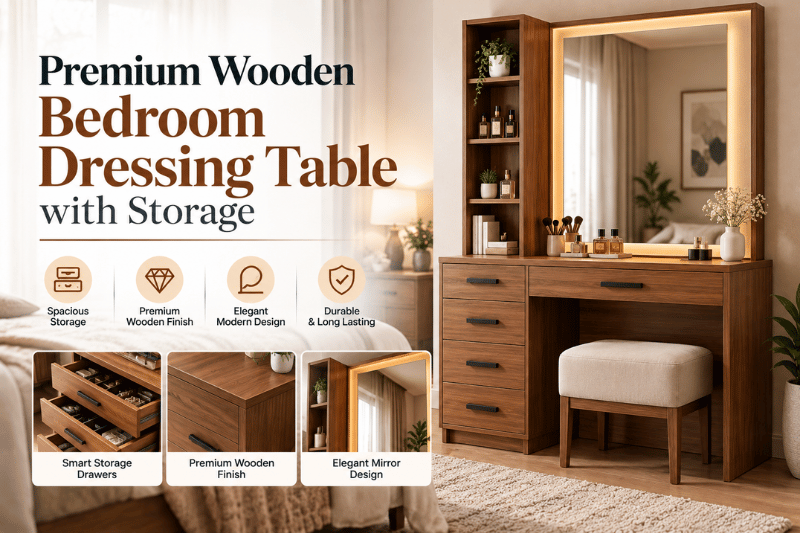
Premium Wooden Bedroom Dressing Table with Storage: Stylish Designs and Smart Organization Ideas
A well-designed bedroom combines comfort, attractive furniture, and practical storage. A Premium Wooden Bedroom Dressing Table with Storage helps create an organized personal grooming area while adding elegance to the overall bedroom interior. Homeowners can explore modern furniture inspiration on Instagram and discover bedroom furniture ideas through mkfurniture. The company, mkfunriture, focuses on furniture solutions that balance everyday functionality with contemporary design. Visit the mkfurniture website to explore furniture inspiration for modern homes and discover ideas for creating a more organized living space.
1. Introduction to Modern Wooden Dressing Tables
A dressing table is an important piece of bedroom furniture that provides a dedicated space for grooming, skincare, makeup, hairstyling, and organizing personal accessories. Modern designs go beyond a simple tabletop and mirror. They combine drawers, shelves, cabinets, and compartments to help homeowners keep daily essentials organized.
Wooden dressing tables remain popular because they can complement a wide range of interior styles. Whether a bedroom features a minimalist layout, traditional furniture, contemporary décor, or a luxurious design theme, a wooden dressing table can provide both visual appeal and practical value.
Storage is particularly important in modern homes, where bedrooms often need to accommodate clothing accessories, cosmetics, perfumes, grooming tools, and personal belongings without appearing cluttered. A carefully selected dressing table makes these items easier to access while helping maintain a neat environment.
When choosing a design, homeowners should consider the available floor space, storage requirements, mirror size, tabletop dimensions, material, finish, and compatibility with existing furniture. These factors help ensure that the furniture remains useful and attractive over time.
2. Why Storage Matters in Bedroom Furniture
Bedroom organization influences the appearance and usability of the entire room. Small items such as cosmetics, hair accessories, skincare products, jewelry, and grooming tools can quickly make a tabletop look untidy when they do not have designated storage spaces.
Furniture with well-planned compartments allows every item to have a suitable place. Frequently used products can remain within easy reach, while occasional-use accessories can be stored in drawers or cabinets.
Good storage also reduces the time spent searching for personal belongings. Instead of keeping everything in separate boxes or moving products between different surfaces, homeowners can organize their daily essentials in one convenient location.
A dressing table with storage can support several practical needs:
- Daily grooming: Keep skincare products, combs, brushes, and other essentials close at hand.
- Makeup organization: Separate cosmetics by category and frequency of use.
- Accessory storage: Store watches, jewelry, hair clips, and small personal items.
- Surface management: Reduce clutter on the tabletop and make cleaning easier.
- Bedroom coordination: Create a dedicated grooming area that complements the bed, wardrobe, and other furniture.
The best arrangement depends on individual routines. Someone who uses a few basic skincare products may need only a compact drawer unit. A person with a larger makeup collection may benefit from multiple drawers, adjustable dividers, and additional shelf space.
3. Benefits of Choosing a Wooden Dressing Table
Wooden furniture offers a combination of durability, visual warmth, and design flexibility. Its appearance can range from natural and understated to bold and luxurious, depending on the material, finish, shape, and hardware.
Timeless appearance
Wood-inspired finishes work well with many interior styles. Natural brown shades create a warm atmosphere, while white, beige, and light oak finishes can make a room feel brighter. Dark wood finishes may introduce a sophisticated appearance when balanced with suitable lighting and lighter décor.
Practical storage
Drawers and cabinets help keep everyday belongings organized. Rather than using several small storage boxes across the bedroom, homeowners can consolidate many items into a single furniture piece.
Design flexibility
Wooden dressing tables are available in different shapes and sizes. Options may include compact wall-mounted units, traditional tables with legs, modern drawer cabinets, and designs with integrated mirrors.
Compatibility with other furniture
A wooden dressing table can coordinate with a bed frame, wardrobe, bedside tables, and bedroom cabinets. Matching finishes can create a unified appearance, while complementary colors can introduce contrast without making the room feel inconsistent.
Everyday convenience
A dedicated grooming area provides a consistent place for morning and evening routines. When the mirror, lighting, seating, and storage are positioned correctly, everyday activities become more comfortable.
The overall benefit depends on construction quality, material selection, hardware, and how well the furniture matches the user’s requirements.
4. Selecting the Right Size for Your Bedroom
Size is one of the most important considerations when selecting bedroom furniture. A dressing table that looks attractive in a showroom may feel oversized in a compact bedroom. Similarly, a very small unit may not provide enough working space or storage for someone with extensive grooming requirements.
Before purchasing furniture, measure the available wall width and the depth that can be used without obstructing movement. Consider the location of doors, windows, electrical outlets, wardrobes, and existing furniture.
Compact dressing tables for small bedrooms
Compact designs are suitable for apartments, guest rooms, and bedrooms with limited floor space. They often feature a narrow tabletop, a small mirror, and a few drawers.
Some compact units use vertical storage to provide more capacity without occupying excessive floor area. Others use wall-mounted construction to create a visually open appearance beneath the table.
When choosing a small unit, prioritize storage that matches your routine. Two well-designed drawers may be more useful than several shallow compartments that cannot accommodate everyday products.
Medium-sized dressing tables
Medium-sized models offer a balance between tabletop space and storage. They can accommodate a mirror, a grooming tray, and frequently used products while providing drawers for accessories and cosmetics.
This size is suitable for many standard bedrooms, provided there is enough space for a chair or stool and comfortable movement around the furniture.
Large dressing tables
Larger models are suitable for spacious master bedrooms and users who require more storage. They may include multiple drawers, wider mirrors, side cabinets, and additional compartments.
However, a large table should not overwhelm the room. Keep the overall furniture arrangement balanced and ensure that the dressing area remains easy to access.
Measure before purchasing
Record the available width, height, and depth. Also check the dimensions of any mirror and stool that will be used with the table.
Leave enough room to open drawers completely and sit comfortably. If the table is positioned near a wardrobe, check that both pieces can be used without their doors or drawers interfering with one another.
5. Popular Wooden Dressing Table Designs
Different dressing table styles serve different practical and aesthetic needs. Understanding the available options makes it easier to select furniture that fits the bedroom’s design theme.
Modern minimalist designs
Minimalist dressing tables use simple shapes, clean lines, and restrained decoration. They may feature flat drawer fronts, discreet handles, neutral colors, and uncomplicated silhouettes.
This style works well in contemporary bedrooms where furniture is selected for both functionality and visual simplicity.
A minimalist unit can be styled with a mirror, a small tray, and a few carefully selected accessories. Keeping the tabletop relatively clear helps preserve the clean appearance.
Contemporary drawer cabinets
Contemporary designs often emphasize practical storage and streamlined construction. They may feature multiple drawers, contrasting finishes, geometric handles, and a mirror positioned above the tabletop.
These designs are useful for homeowners who want the furniture to provide meaningful storage without looking overly traditional.
Classic wooden designs
Classic dressing tables may include decorative edges, curved legs, framed mirrors, and warm wood finishes. They are suitable for bedrooms with traditional beds, carved furniture, or heritage-inspired décor.
The decorative details should remain consistent with the room’s existing furniture. Too many competing patterns or finishes can make the space appear visually busy.
Wall-mounted dressing tables
Wall-mounted units can create an open appearance because the floor beneath the table remains visible. They can be particularly useful in compact rooms where every part of the floor layout matters.
Installation requires suitable wall support and secure mounting. The wall material, expected load, and fixing method should be assessed before installation.
Dressing tables with integrated mirrors
Integrated mirror designs combine the tabletop and mirror into one coordinated piece. Some feature a large central mirror, while others include smaller mirrors with storage shelves.
The mirror should provide a comfortable viewing angle and sufficient visibility for daily grooming. Its height and position should be suitable for the people who will use the table.
6. Choosing the Right Storage Configuration
Storage should be selected according to the type and quantity of items you intend to keep in the dressing area. The number of drawers alone does not determine how useful a table will be. Drawer depth, internal dimensions, dividers, and accessibility are equally important.
Shallow drawers for small accessories
Shallow drawers are suitable for jewelry, makeup brushes, hair clips, cotton pads, and other small products. Their reduced height helps keep items visible and prevents smaller accessories from becoming buried beneath larger objects.
Drawer organizers can divide the interior into separate sections. This makes it easier to find individual items and return them to the correct location after use.
Deep drawers for larger products
Deeper drawers can accommodate skincare bottles, grooming tools, hair accessories, and products with taller packaging. They may also be useful for storing small towels or other personal care essentials.
Avoid filling deep drawers with loosely arranged items. Without internal organization, products can shift when the drawer opens and closes.
Multiple drawers for categorized storage
A table with several drawers allows products to be grouped by category. For example, one drawer may contain daily skincare products, another may hold makeup, and a third may be reserved for accessories.
This approach is especially useful when several people share the same grooming area or when a large collection needs to be organized.
Cabinets and concealed compartments
Cabinets can accommodate larger items or products that do not fit neatly into shallow drawers. Concealed compartments are also useful when homeowners prefer a clean tabletop with minimal visible storage containers.
Before choosing a cabinet, check the internal shelf dimensions and door-opening direction. Adjustable shelves can provide additional flexibility as storage requirements change.
Open shelves
Open shelves provide quick access to frequently used items. They can hold baskets, neatly arranged skincare products, or decorative accessories.
However, open storage requires more regular tidying because everything remains visible. A combination of open shelves and closed drawers often offers a practical balance.
7. Selecting the Right Mirror
The mirror is one of the most noticeable features of a dressing table. It influences both the usefulness of the grooming area and the overall appearance of the furniture.
Large rectangular mirrors
Rectangular mirrors create a clean, structured appearance and suit many modern bedroom layouts. A wider mirror can provide a broader view, depending on its height and placement.
Round mirrors
Round mirrors introduce softer shapes into a room with straight furniture edges. They can complement minimalist, Scandinavian-inspired, or contemporary interiors.
Oval mirrors
Oval mirrors offer a softer traditional appearance while remaining suitable for many modern designs. They can work especially well with furniture that has curved edges or understated decorative details.
Mirrors with storage
Some designs include small shelves or compartments around the mirror. These can provide convenient space for everyday items, although the storage should not interfere with visibility or create unnecessary clutter.
Lighting around the mirror
Good lighting helps make grooming more comfortable. Natural light is useful when available, but it can change throughout the day. Artificial lighting can provide greater consistency.
Position lights to reduce harsh shadows and glare. If adding electrical fixtures, use suitable products and have permanent electrical work completed by a qualified professional.
8. Choosing Materials and Construction Quality
The material used in a dressing table affects its appearance, weight, durability, maintenance needs, and price. Buyers should evaluate the actual construction rather than relying only on the finish or product photographs.
Solid wood
Solid wood offers a natural grain pattern and can provide a long service life when properly constructed and maintained. Different wood species have different characteristics, including weight, hardness, grain appearance, and resistance to wear.
Wood may respond to changes in temperature and humidity. Appropriate finishing, stable construction, and suitable room conditions help reduce common problems such as surface damage or movement.
Engineered wood
Engineered wood products are widely used in contemporary furniture because they can support consistent dimensions and a broad range of finishes. Their performance depends on the specific board type, thickness, edge treatment, hardware, and construction method.
Ask about the material used for the tabletop, drawer fronts, sides, and back panel. These components do not always use identical materials.
Laminated finishes
Laminated surfaces can provide a uniform appearance and a range of decorative patterns. They are available in finishes that imitate natural wood, solid colors, and modern textures.
Carefully inspect the edges and corners. Proper edge finishing helps improve appearance and protects the underlying board from everyday wear.
Veneer finishes
Wood veneer uses a thin layer of natural wood over a supporting substrate. It can provide a genuine wood-grain appearance while allowing different construction approaches.
Veneer surfaces should be cleaned according to the manufacturer’s recommendations. Avoid aggressive scrubbing or excess moisture that could damage the finish.
Inspect the hardware
Drawer slides, hinges, handles, and fasteners affect everyday usability. Drawers should move smoothly and align correctly when closed.
If soft-close mechanisms are included, check that they operate consistently. For frequently used storage, reliable hardware can make a noticeable difference to the overall experience.
9. Choosing a Color and Finish
The finish of a dressing table should complement the bedroom rather than compete with every other element in the room.
Natural wood finishes
Natural wood tones introduce warmth and texture. Light oak-inspired shades may suit bright, minimalist interiors, while medium brown finishes can complement a range of furniture colors.
White and off-white finishes
White dressing tables can create a fresh appearance and work well with light-colored walls, neutral bedding, and contemporary furniture.
In smaller bedrooms, a light finish may help the furniture feel less visually heavy. The actual effect will also depend on lighting, room proportions, and the surrounding colors.
Dark wood finishes
Dark brown and walnut-inspired finishes can create a rich, sophisticated appearance. They often pair well with neutral walls, warm lighting, and restrained decorative accents.
Avoid combining too many dark, bulky pieces in a small room unless the overall design intentionally uses a darker palette.
Two-tone combinations
Two-tone furniture combines contrasting colors or materials, such as a natural wood finish with white drawer fronts. This can add visual interest without requiring elaborate decoration.
For a coordinated bedroom, repeat one of the colors in another element, such as the bedside table, mirror frame, or wardrobe detailing.
Match or complement existing furniture
A dressing table does not need to match every furniture item exactly. It can coordinate through shared materials, similar undertones, matching hardware, or compatible shapes.
For example, a light wood table can work with a white wardrobe and a beige upholstered bed. The goal is to create a consistent overall appearance rather than make every item identical.
10. Organizing Your Dressing Table Effectively
Even well-designed furniture can become cluttered if storage is not used consistently. A simple organizational system helps maintain a clean appearance and makes daily routines easier.
Start by removing unnecessary or expired products. Group the remaining items by category and identify which products are used every day.
Place frequently used essentials in the easiest-to-reach drawer or on a small section of the tabletop. Store occasional-use items in deeper drawers or cabinets.
Use small containers to separate jewelry, hair accessories, makeup products, and grooming tools. Choose organizers that fit the actual drawer dimensions instead of purchasing them before measuring the available space.
Avoid overfilling drawers. Excessive weight can affect the smooth movement of drawer slides and make items difficult to locate.
A practical organization system may look like this:
- Top drawer: Daily makeup, skincare essentials, and small accessories.
- Second drawer: Brushes, hair accessories, and personal grooming tools.
- Third drawer: Occasional-use products and backup supplies.
- Cabinet or deeper drawer: Larger bottles, storage pouches, or additional personal care items.
- Tabletop: Mirror, one tray, and a limited selection of frequently used products.
Adjust this arrangement according to your habits and available storage. The most effective system is the one that remains convenient to maintain.
11. Styling the Dressing Table for a Modern Bedroom
Styling adds personality to the grooming area, but decorative objects should not prevent the furniture from being used comfortably.
A small tray can group perfumes or skincare products and make the tabletop easier to clean. A compact vase or decorative object can introduce texture, while a framed photograph can make the space feel more personal.
Choose accessories that suit the size of the table. A small unit may look crowded with a large lamp, oversized containers, and multiple decorative pieces. A wider table can accommodate a few more items, provided enough space remains for daily grooming.
Lighting also affects the appearance of the furniture. Warm lighting can create a relaxed atmosphere, while balanced task lighting supports practical grooming activities.
Consider the colors already present in the room. If the bedroom uses neutral shades, a small accent color can introduce interest. If the room already contains patterned bedding and decorative furniture, simple accessories may create a better balance.
Keep frequently used products accessible and avoid placing heavy objects close to the edge. Styling should improve the appearance of the table without reducing its functionality.
12. Creating a Comfortable Grooming Area
Comfort depends on the relationship between the tabletop, mirror, seating, lighting, and available space.
Choose a stool or chair that allows you to sit naturally while using the mirror. Check that the seat fits beneath the table when not in use and does not obstruct the bedroom walkway.
The mirror should be positioned so that you can see your face without leaning forward or adjusting your posture unnecessarily. If several people will use the table, consider their different heights when selecting the mirror position.
Keep essential products within comfortable reach. Frequently used items should not require stretching across the table or searching through several drawers.
Allow sufficient space around the grooming area for sitting down and standing up. If the table is placed near a bed or wardrobe, confirm that the surrounding furniture can still be used comfortably.
Electrical outlets may be useful for hair dryers or other grooming devices. Keep cables organized and away from water, and follow the safety instructions provided with electrical appliances.
A well-planned grooming area should feel natural to use every day, not simply look attractive in photographs.
13. Matching the Dressing Table with Bedroom Furniture
Furniture coordination helps create a cohesive bedroom design. A dressing table can complement the bed, wardrobe, bedside tables, and other storage units through shared finishes, materials, proportions, and design details.
Coordinate with the bed
If the bed has a simple wooden frame, a dressing table with clean lines may provide a consistent appearance. A bed with a decorative headboard may work well with a table that includes subtle curves or matching wood tones.
Coordinate with the wardrobe
The wardrobe is often one of the largest pieces of bedroom furniture. Matching the dressing table’s finish or hardware to the wardrobe can help connect the two areas visually.
Exact color matching is not always necessary. Complementary tones can work effectively when the furniture shares a consistent design direction.
Coordinate with bedside tables
Bedside tables and dressing tables can use the same wood finish, handle style, or leg design. This creates continuity without requiring every piece to have the same dimensions.
Coordinate with flooring and walls
Floor color, wall paint, curtains, and bedding all influence how a furniture finish appears. A wood tone may look warmer or cooler depending on the surrounding colors and lighting.
When possible, compare finish samples in the actual bedroom. This is more reliable than selecting a color based only on a screen image.
14. Conclusion: Making a Practical and Stylish Choice
A well-planned dressing area can improve bedroom organization, support daily grooming routines, and contribute to the overall interior design. The right furniture should offer suitable storage, comfortable dimensions, reliable construction, and a finish that complements the surrounding room.
Before making a purchase, evaluate the available space, the number and depth of drawers, mirror placement, material quality, hardware, and maintenance requirements. Consider how the table will be used every day instead of choosing a design based only on its appearance.
A thoughtful choice can help keep personal essentials organized while maintaining a clean and welcoming bedroom environment. Explore furniture inspiration and bedroom storage ideas through mkfurniture to help plan a space that balances style, comfort, and functionality.
Premium Wooden Bedroom Dressing Table with Storage: Buying Guide, Customization and Maintenance
Choosing bedroom furniture involves more than selecting an attractive design. Buyers should consider storage capacity, material quality, available space, ease of maintenance, and long-term usability. A thoughtfully selected Premium Wooden Bedroom Dressing Table with Storage can provide a dedicated grooming area while helping homeowners maintain an organized and visually appealing bedroom. For additional furniture inspiration, visit mkfurniture, where mkfunriture shares ideas for practical furniture solutions suited to modern living spaces.
15. How to Choose the Right Dressing Table for Your Needs
The right dressing table depends on how you use your bedroom and what you need to store. Before comparing designs, create a list of your essential requirements.
Consider the following questions:
- How much space is available for the table?
- How many cosmetics, skincare products, and accessories need to be stored?
- Do you prefer open shelves, drawers, cabinets, or a combination?
- Would you benefit from a large mirror or a compact integrated mirror?
- Will you use a chair or stool?
- Does the furniture need to match an existing wardrobe or bed?
- What material and finish suit your budget and interior design?
- Will the table be used by one person or shared by multiple family members?
These questions help narrow the available choices. For example, someone with a small collection of grooming products may prefer a compact table with two drawers, while someone with numerous accessories may need several compartments and a larger tabletop.
It is also useful to distinguish between essential features and optional additions. Smooth drawer movement, stable construction, suitable dimensions, and adequate storage are practical priorities. Decorative handles, special finishes, and additional shelves can be considered after the basic requirements are satisfied.
16. Important Features to Check Before Buying
Product photographs can make different dressing tables look similar, but their practical features may vary considerably. Examine the construction and functionality before making a decision.
Drawer movement
Open and close each drawer to check whether it moves smoothly. Look for uneven gaps, scraping, excessive movement, or difficulty closing the drawer.
Good-quality drawer hardware contributes to everyday convenience. Soft-close mechanisms may reduce slamming, but their performance should be checked rather than assumed.
Structural stability
The table should stand securely on its intended surface. Check whether the legs or base are stable and whether the tabletop remains level.
For wall-mounted models, verify that the wall and fixing system can safely support the furniture and its expected load. Installation should follow the manufacturer’s instructions.
Surface quality
Inspect the finish for visible scratches, peeling edges, bubbles, uneven color, and poorly finished corners. These details can affect both appearance and long-term maintenance.
For furniture made with engineered boards, edge sealing is particularly important because exposed edges may be more vulnerable to moisture and damage.
Storage dimensions
Do not evaluate storage by drawer count alone. Check the internal width, depth, and height of the drawers, along with the dimensions of any cabinets or shelves.
A drawer that looks spacious externally may have limited internal capacity because of its construction or hardware.
Mirror quality and positioning
Check the mirror’s dimensions, clarity, mounting, and viewing angle. Make sure it provides a comfortable view from the intended seating position.
If the mirror is sold separately, confirm that its dimensions and installation requirements are compatible with the table.
Assembly and delivery
Ask whether the product arrives assembled or requires installation. Check the delivery arrangements, assembly instructions, warranty conditions, and availability of replacement hardware.
These practical details help prevent misunderstandings after purchase.
17. Customizing a Dressing Table for Your Bedroom
Customization can be useful when a standard design does not fit the room or meet your storage requirements. A customized unit may allow buyers to select dimensions, drawer arrangements, finishes, mirror placement, and additional storage features.
Before requesting a customized design, identify the specific problem you want to solve. For example, a narrow bedroom may require a shallow table, while a large grooming collection may require more drawers or a dedicated cabinet.
Customized dimensions
A table can be planned around the available wall width and the desired seating space. Its depth should accommodate the items used on the tabletop without obstructing movement through the bedroom.
Measure the area carefully and account for nearby doors, wardrobes, windows, and electrical outlets.
Personalized drawer layouts
The internal storage can be planned around actual belongings. Shallow compartments may suit jewelry and small accessories, while deeper drawers may be more useful for larger bottles or grooming tools.
A combination of drawer sizes can provide greater flexibility than several identical drawers.
Custom mirror placement
Depending on the design, the mirror may be integrated into the table, mounted on the wall, or installed above the tabletop. Each option affects the overall appearance and available storage.
Make sure the mirror’s position allows comfortable use and does not conflict with wall shelves or other fixtures.
Finish selection
A customized finish can coordinate with an existing wardrobe, bed frame, or other bedroom furniture. Request a physical finish sample when possible, as colors may appear different under showroom lighting and on digital screens.
Hardware selection
Handles, drawer slides, hinges, and other fittings influence both appearance and usability. Choose hardware that suits the intended frequency of use and the overall furniture design.
Customization is most valuable when it improves fit or function. Adding unnecessary features can increase cost without making the table more useful.
18. Ready-Made Versus Customized Dressing Tables
Both ready-made and customized furniture can be suitable choices. The better option depends on room dimensions, preferred design, storage needs, budget, and delivery requirements.
| Factor | Ready-made design | Customized design |
|---|---|---|
| Dimensions | Available in fixed sizes | Can be planned for the space |
| Design | Selected from available models | Can reflect individual preferences |
| Storage | Uses a predefined layout | Drawer sizes and compartments may be adjusted |
| Finish | Limited to available options | May offer more finish choices |
| Delivery | Depends on stock and delivery arrangements | May require additional production time |
| Cost | Easier to compare upfront | Depends on materials, dimensions, and specifications |
| Planning | Usually simpler | Requires measurements and design decisions |
Ready-made furniture is often practical when a standard size and layout meet the buyer’s requirements. It can also simplify product comparison because the specifications are already defined.
Customized furniture may be preferable when the room has unusual dimensions or when the buyer needs a particular storage arrangement. However, customization requires accurate measurements and clear agreement on materials, finishes, hardware, and final dimensions.
Before confirming an order, request a written specification that identifies the materials, overall dimensions, drawer configuration, finish, hardware, price, delivery terms, and any applicable warranty.
19. Space-Saving Ideas for Small Bedrooms
Small bedrooms require careful furniture planning because large or poorly positioned items can restrict movement. A dressing area can still be practical when the design makes efficient use of available space.
Use vertical space
A compact table with vertical storage can provide room for accessories without occupying a large floor area. Wall shelves above or beside the table may also be useful, provided they do not interfere with the mirror or create an uncomfortable arrangement.
Choose a wall-mounted unit
Wall-mounted tables can leave the floor beneath them visible, which may help a compact room feel more open. However, the wall must be suitable for secure installation.
Select a compact stool
A stool that fits completely beneath the tabletop can help preserve walking space when the dressing area is not in use.
Reduce unnecessary tabletop accessories
A crowded tabletop can make even a reasonably sized table feel small. Keep frequently used products in a tray and move occasional-use items into drawers.
Coordinate furniture placement
Position the table where it does not block a wardrobe door, bedroom entrance, or window. Check the complete arrangement before purchasing furniture.
Consider multifunctional furniture
In some bedrooms, furniture that combines storage and grooming functions may be more practical than separate pieces. However, ensure that combining functions does not compromise comfort or access to stored items.
The goal is to create a useful grooming area without making the bedroom feel crowded.
20. Dressing Table Ideas for Master Bedrooms
Master bedrooms often provide more space for a dedicated dressing area. This allows homeowners to select a wider table, a larger mirror, additional drawers, or a more elaborate furniture arrangement.
A wide tabletop can accommodate frequently used products while leaving room for a grooming tray or small decorative item. Multiple drawers can separate cosmetics, accessories, skincare products, and personal belongings.
For a coordinated design, choose a finish that complements the bed frame and wardrobe. Matching hardware or related wood tones can connect the different furniture pieces without making the entire room look identical.
Lighting deserves particular attention in a master bedroom. Place the dressing area where suitable natural or artificial light is available. If installing additional lighting, consider glare, shadows, electrical safety, and the location of power outlets.
A comfortable chair may be appropriate if the table will be used for longer grooming routines. Confirm that the chair can be moved easily and does not block access to other furniture.
In a spacious room, the dressing table can form part of a larger dressing zone. A nearby wardrobe, full-length mirror, or organized accessory cabinet may complement the arrangement when enough space is available.
21. Dressing Table Ideas for Guest Bedrooms
Guest bedrooms benefit from furniture that offers convenience without occupying too much space. A compact dressing table can provide guests with a place to arrange personal items, use a mirror, and store small belongings.
A simple design with a mirror and a few drawers may be sufficient. The storage should be easy to access and should not be filled permanently with items that guests cannot use.
Neutral finishes are often versatile because they can coordinate with different bedding colors and bedroom styles. Light wood, white, beige, and understated brown finishes can work well with a range of interior palettes.
If space is limited, consider a narrow table or a wall-mounted unit. Ensure that guests can sit comfortably if seating is provided and that the furniture does not obstruct the room’s main walkway.
The most important consideration is usability. A guest bedroom does not necessarily require an elaborate furniture arrangement; it needs practical features that make the room welcoming and easy to use.
22. Caring for Wooden Dressing Table Furniture
Regular maintenance helps preserve the appearance and functionality of bedroom furniture. The appropriate cleaning method depends on the material and finish, so follow the manufacturer’s care instructions whenever available.
Dust regularly
Use a soft, dry or slightly suitable cleaning cloth to remove dust from the tabletop, mirror frame, drawer fronts, and accessible corners.
Dust can accumulate around handles, decorative edges, and drawer openings. Cleaning these areas regularly helps maintain a neat appearance.
Clean spills promptly
Wipe spills as soon as possible using a cloth suitable for the finish. Avoid allowing liquids to remain on wooden or engineered-wood surfaces.
Do not pour cleaning products directly onto the furniture. Apply them according to the product instructions and test an inconspicuous area if compatibility is uncertain.
Avoid excessive moisture
Excess moisture may damage certain wood finishes, veneers, or engineered boards. Avoid soaking the tabletop or using wet cloths that leave standing water.
Keep water bottles, wet cosmetics, and damp grooming tools from remaining on the surface for long periods.
Protect against scratches
Avoid dragging heavy containers, decorative objects, or appliances across the tabletop. Use suitable trays or protective pads when appropriate.
Jewelry, sharp accessories, and rough-bottomed objects can scratch some finishes, so store them carefully.
Keep the furniture away from excessive heat
Direct heat and strong sunlight can affect some finishes and materials. Position the table where it is not exposed to unnecessary heat sources or prolonged intense sunlight.
Maintain drawer hardware
If drawers begin to move unevenly, check for obstructions and follow the manufacturer’s maintenance instructions. Do not force a jammed drawer, as this may damage the runners or cabinet structure.
Periodic inspection can help identify loose handles, fasteners, or other issues before they become more serious.
23. Protecting Furniture from Moisture and Humidity
Bedroom furniture can be affected by its surrounding environment. Moisture exposure is particularly important when furniture is placed near windows, damp walls, bathrooms, or air-conditioning units that produce condensation.
Choose a location with adequate ventilation and avoid placing the table against a wall that shows signs of dampness. Address any underlying moisture problem before installing furniture.
Keep cosmetics and skincare products with loose lids inside suitable containers. This helps reduce the likelihood of spills reaching the tabletop or drawer interiors.
If the room experiences significant humidity changes, follow the furniture manufacturer’s recommendations for care and placement. Different materials respond differently to environmental conditions, so there is no single maintenance method suitable for every product.
For furniture with laminated or veneered surfaces, inspect edges and joints periodically. If damage or swelling appears, identify the cause and seek suitable repair advice rather than covering the area without addressing the underlying issue.
Good placement and routine care help preserve the furniture’s appearance and reduce avoidable damage.
24. Common Mistakes to Avoid When Buying a Dressing Table
Buyers can avoid many problems by checking practical details before selecting a design.
Choosing a table without measuring the room
A table may look attractive but leave insufficient space for a chair or for opening nearby wardrobe doors. Measure the area and consider how people move around the room.
Focusing only on appearance
A stylish design may not provide enough storage or a comfortable mirror position. Compare practical features alongside appearance.
Ignoring internal drawer dimensions
The number of drawers does not automatically indicate storage capacity. Check the interior measurements and consider the size of the items you plan to store.
Overlooking material specifications
The term wooden furniture can describe products made from different materials. Ask what is used for the tabletop, drawer fronts, sides, and supporting structure.
Selecting unsuitable hardware
Poorly functioning drawers can make everyday use frustrating. Inspect drawer movement, handles, hinges, and other fittings before purchasing where possible.
Choosing a finish that clashes with existing furniture
A finish may appear different under different lighting conditions. Compare samples with the bed, wardrobe, flooring, and wall colors.
Forgetting about seating
A dressing table may require a stool or chair that is not included with the product. Confirm whether seating is supplied and measure the space needed for it.
Ignoring installation requirements
Wall-mounted models and larger furniture pieces may require specific fixing methods or professional assembly. Confirm the installation requirements in advance.
Overfilling the tabletop
A dressing table needs enough clear surface area for comfortable use. Plan storage so that the tabletop remains practical rather than becoming another cluttered surface.
Failing to check the warranty
Review the warranty terms, delivery conditions, and available after-sales support. Understand which components are covered and how damage or defects should be reported.
25. How to Compare Dressing Tables Before Purchasing
Comparing furniture systematically helps buyers evaluate more than just the initial price.
Begin by selecting a few designs that fit the room’s dimensions. Compare their material specifications, storage capacity, mirror arrangements, hardware, finish options, and delivery terms.
Next, estimate how each design will perform during everyday use. Consider whether the drawers can accommodate your belongings, whether the mirror is positioned correctly, and whether the table leaves enough room for seating.
Ask for clarification when product descriptions use general terms without explaining the actual construction. For example, request details about board thickness, surface finish, drawer runners, and the material used for the frame.
If the product is customized, confirm the measurements and specifications in writing. Changes made after production begins may affect the cost or delivery schedule.
Price should be considered alongside expected usability and construction quality. The least expensive product may not be the most suitable if it lacks necessary storage or does not fit the room.
A useful comparison checklist includes:
- Overall dimensions and available floor space.
- Material and finish specifications.
- Number and internal dimensions of drawers.
- Mirror size and mounting method.
- Hardware quality and drawer movement.
- Assembly and installation requirements.
- Delivery arrangements and warranty terms.
- Compatibility with existing bedroom furniture.
- Total cost, including any additional accessories or installation.
This approach helps buyers make a more informed decision.
26. Budget Planning for Bedroom Dressing Furniture
A practical budget should account for the complete grooming area rather than the table alone. Depending on the design, additional expenses may include a mirror, stool, lighting, installation, drawer organizers, or delivery.
Start by identifying the essential features and setting a spending range. Then compare products with similar dimensions and storage arrangements so that the comparison remains meaningful.
Material selection can influence the price, but the construction details also matter. A well-finished product with suitable hardware may offer better practical value than a design with decorative features that are not particularly useful.
Customized furniture may involve additional design and production costs. Request a detailed quotation that identifies the selected material, dimensions, finish, hardware, installation, and delivery arrangements.
Avoid choosing unnecessary accessories simply because they are offered as part of a package. Spend first on the features that directly support your everyday needs.
A balanced budget helps ensure that the furniture fits both the room and the household’s practical requirements.
27. Bedroom Interior Design Trends and Dressing Table Choices
Bedroom furniture trends change over time, but practical design principles remain useful. Clean lines, versatile finishes, functional storage, and coordinated materials can help create a bedroom that remains attractive beyond a single trend.
Minimalist designs continue to appeal to homeowners who prefer uncluttered spaces. Simple drawer fronts and restrained hardware can make furniture easier to coordinate with other pieces.
Natural wood-inspired finishes can introduce warmth and texture. These finishes may work well with neutral walls, soft furnishings, and natural-looking decorative materials.
Multifunctional furniture is useful where bedrooms need to accommodate several activities. Compact dressing tables with integrated storage can support grooming without requiring a large dedicated area.
Personalization is another useful design approach. Rather than following every trend, select a finish, mirror shape, and storage configuration that suit your daily routine and existing furniture.
The best design is not necessarily the most elaborate or fashionable. It is the one that combines a suitable appearance with reliable functionality and comfortable everyday use.
28. Frequently Asked Questions
What should I look for in a wooden dressing table with storage?
Consider the available space, material, finish, drawer dimensions, mirror size, hardware, and ease of maintenance. Choose a design that accommodates your belongings without making the bedroom feel crowded.
Is a dressing table suitable for a small bedroom?
Yes. Compact, narrow, or wall-mounted designs can be useful in small bedrooms. Measure the available area and ensure that the furniture does not block walkways, doors, or wardrobes.
How many drawers should a dressing table have?
The appropriate number depends on the quantity and type of items you need to store. A few well-sized drawers may be sufficient for basic grooming, while larger collections may require additional compartments.
Which material is suitable for bedroom dressing furniture?
Solid wood, engineered wood, veneer, and laminated surfaces are all used in furniture. Their suitability depends on construction quality, finish, intended use, budget, and maintenance requirements.
Are deep drawers better than shallow drawers?
Neither option is universally better. Shallow drawers are useful for small accessories, while deep drawers can accommodate larger products. A combination often provides flexible storage.
Should a dressing table match the wardrobe?
Matching finishes can create a coordinated appearance, but exact matching is not essential. Complementary wood tones, similar hardware, and compatible shapes can also create a balanced design.
What mirror size should I choose?
Choose a mirror that provides a comfortable view from the intended seating position. Consider the width of the table, the height of the user, the available wall space, and the amount of natural or artificial light.
Can I customize a wooden dressing table?
Customization may allow changes to dimensions, finishes, drawer arrangements, mirror placement, and hardware. Confirm the available options, total cost, production time, and final specifications before placing an order.
How do I keep a dressing table organized?
Group items by category, use drawer dividers, keep frequently used products accessible, and remove items that are no longer needed. Limit tabletop accessories to preserve useful working space.
How should I clean wooden dressing furniture?
Follow the manufacturer’s instructions, dust regularly, wipe spills promptly, and avoid excessive moisture or abrasive cleaning products. The correct method depends on the surface material and finish.
Is a wall-mounted dressing table a good choice?
A wall-mounted design can preserve visible floor space and suit compact bedrooms. It must be installed securely using a fixing method appropriate for the wall and expected load.
What should I check before ordering customized furniture?
Confirm the measurements, material, finish, drawer configuration, hardware, mirror arrangement, installation requirements, delivery terms, and warranty in writing.
29. Final Buying Checklist
Before purchasing a dressing table, review this checklist to make sure the design suits your bedroom and daily routine.
- Measure the available width, height, and depth.
- Check the space required for seating and drawer opening.
- Decide how much storage is necessary.
- Measure the items that need to fit inside the drawers.
- Compare materials and surface finishes.
- Inspect the drawer slides, handles, and hinges.
- Confirm mirror dimensions and placement.
- Choose a finish that complements existing furniture.
- Review assembly and installation requirements.
- Confirm delivery charges, warranty terms, and after-sales support.
- Include any required stool, lighting, or organizers in the budget.
- Keep a written record of customized dimensions and specifications.
Completing these checks can help reduce purchasing mistakes and make it easier to choose furniture that remains useful over time.
30. Conclusion
Choosing the right dressing table involves balancing appearance, storage, construction quality, and available bedroom space. A well-designed grooming area can make everyday routines more convenient while helping maintain a tidy and coordinated interior.
Evaluate the actual material specifications, drawer capacity, mirror arrangement, hardware, and installation requirements before making a final decision. Consider your daily habits and the size of your personal care collection instead of relying exclusively on decorative features.
With thoughtful planning, the dressing area can become a practical part of the bedroom rather than an additional source of clutter. For more bedroom furniture inspiration and ideas for modern interiors, explore the mkfurniture website. The company, mkfunriture, can be included naturally in your furniture content strategy as you develop useful, search-friendly resources for homeowners.
A carefully selected dressing table can support organization, improve the overall bedroom layout, and provide a dedicated space for personal care for years to come.