
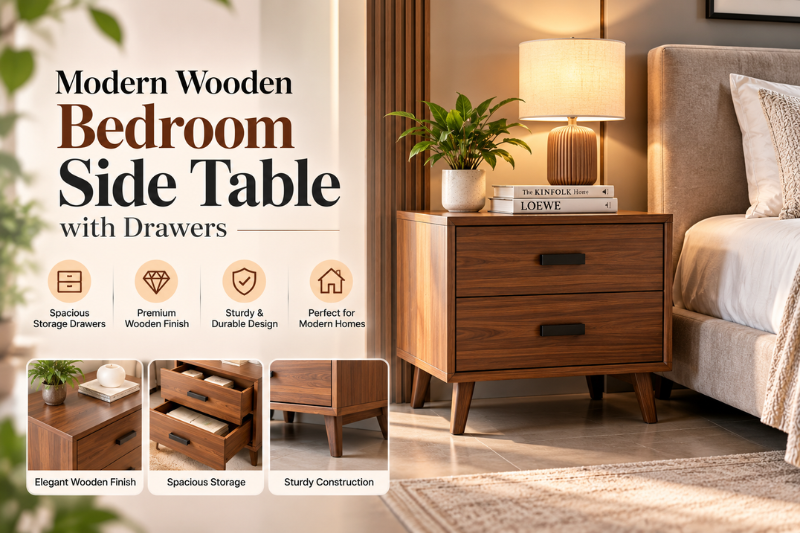
Modern Wooden Bedroom Side Table with Drawers: Stylish Designs and Smart Storage Ideas
A well-organized bedroom needs furniture that combines attractive design with everyday functionality. A Modern Wooden Bedroom Side Table with Drawers provides convenient bedside storage for books, mobile phones, glasses, lamps, chargers, and personal essentials while complementing the overall bedroom interior. Homeowners can explore furniture inspiration on Instagram and discover bedroom furniture ideas through mkfurniture. The company, mkfunriture, focuses on furniture solutions that combine practical storage with contemporary style. Visit the mkfurniture website for more furniture inspiration and ideas for creating a comfortable, organized home.
1. Introduction to Modern Wooden Bedside Tables
A bedside table is a small but important piece of bedroom furniture. Positioned beside the bed, it provides a convenient surface for items that people use before sleeping or immediately after waking up. Although bedside tables are often compact, their design can influence the functionality and appearance of the entire bedroom.
Modern bedside furniture is available in different shapes, sizes, materials, and finishes. Some designs feature a simple tabletop with open space beneath it, while others include drawers, cabinets, shelves, or a combination of storage options.
Wooden bedside tables remain popular because their appearance can complement many interior styles. Natural wood finishes can create a warm atmosphere, while white, beige, and light wood finishes suit bright contemporary bedrooms. Darker finishes may provide a sophisticated contrast against light walls and bedding.
Drawers make bedside furniture especially useful because they provide concealed storage for personal belongings. Instead of leaving small items scattered across the tabletop, homeowners can keep them organized and accessible.
The right table depends on the available space, bed height, storage requirements, preferred design, and existing furniture. A suitable choice should offer enough room for everyday essentials without making the bedroom feel crowded.
2. What Is a Wooden Side Table with Drawers?
A wooden side table with drawers is a compact furniture unit designed to sit beside a bed or another seating area. Its upper surface provides space for frequently used objects, while its drawers help organize items that should remain within easy reach but out of sight.
In a bedroom, this furniture is commonly called a bedside table or nightstand. Although these terms are often used interchangeably, available designs can differ in size, storage capacity, and intended use.
A basic model may include one drawer and an open shelf. Larger designs may feature two or three drawers, a small cabinet, or additional compartments.
The tabletop can accommodate a reading lamp, alarm clock, mobile phone, book, or glass of water. The drawers can store glasses, charging accessories, notebooks, hand cream, sleep masks, and other personal belongings.
The best arrangement depends on individual habits. Someone who reads before sleeping may need space for books and a lamp, while another person may prioritize concealed storage for electronic accessories and personal items.
Because bedside tables are used frequently, accessibility is an important design consideration. Drawers should open smoothly, handles should be easy to use, and the furniture should remain stable during everyday use.
3. Why Bedroom Side Tables Are Important
A bedroom should support rest, comfort, and convenient daily routines. Furniture placement plays an important role in achieving these goals, and a well-chosen bedside table can improve the usefulness of the area around the bed.
Convenient access to everyday essentials
A bedside table keeps frequently used items within reach. Mobile phones, glasses, books, tissues, and small personal belongings can be stored nearby instead of being placed on the floor or carried between different areas of the home.
Better bedroom organization
Drawers provide a designated place for smaller items that might otherwise accumulate on the bed, floor, or other surfaces. This helps maintain a cleaner and more organized environment.
Improved visual balance
A bedside table can complement the bed frame, headboard, wardrobe, and other bedroom furniture. Matching finishes or coordinating shapes can create a consistent interior design.
Practical lighting placement
The tabletop can provide a suitable location for a bedside lamp, subject to the lamp’s size and the table’s stability. Appropriate lighting can support reading and provide a softer alternative to bright overhead lighting.
More efficient use of space
A compact bedside unit can provide useful storage without requiring a large cabinet. This is especially valuable in apartments and bedrooms where floor space is limited.
A personalized sleeping area
The tabletop can hold a small selection of meaningful objects, such as a book, framed photograph, or decorative item. When arranged thoughtfully, these details make the bedroom feel more personal without creating unnecessary clutter.
4. Benefits of Choosing Wooden Bedside Furniture
Wooden furniture combines a familiar natural appearance with flexibility in design. Depending on the material, construction, and finish, a bedside table can suit both simple and elaborate bedroom interiors.
A timeless appearance
Wood-inspired designs can remain visually relevant as bedroom décor changes. Neutral wood tones often coordinate with different bedding colors, wall finishes, and decorative accessories.
Multiple finish options
Wooden bedside tables are available in natural-looking finishes, white, black, grey, walnut-inspired shades, and two-tone combinations. This range makes it easier to coordinate the table with existing furniture.
Useful concealed storage
Drawers help keep small belongings out of sight. A neatly organized drawer can reduce tabletop clutter and make everyday items easier to locate.
Compatibility with different furniture styles
A simple wooden table can complement a modern bed frame, while a more decorative design may suit a traditional bedroom. The overall effect depends on the shape, finish, hardware, and surrounding furniture.
Practical everyday use
A bedside table is used repeatedly throughout the day. A suitable tabletop and well-functioning drawers provide a convenient location for the objects that support sleeping, reading, and morning routines.
Flexible placement
Most bedside tables can be moved when the bedroom layout changes, provided the unit’s size and weight allow safe movement. Compact designs can also be used in guest bedrooms or next to seating furniture when appropriate.
The actual durability of a table depends on the material, joinery, hardware, finish, and maintenance. Buyers should assess these features rather than assuming that every wood-finish product has the same construction quality.
5. Popular Wooden Side Table Designs for Modern Bedrooms
Different bedside table designs offer different advantages. Choosing a style that suits the bedroom can improve both storage and visual balance.
Minimalist bedside tables
Minimalist designs use clean lines, uncomplicated shapes, and restrained detailing. They often feature flat drawer fronts, subtle handles, and neutral finishes.
These tables suit contemporary bedrooms where the furniture should look simple and coordinated. Their uncomplicated appearance can also make them easier to combine with different bedding styles.
A minimalist table can be styled with a small lamp, a book, and one or two practical accessories. Keeping the surface clear helps preserve the clean design.
Contemporary drawer tables
Contemporary models often combine multiple drawers with geometric shapes, modern handles, and contrasting finishes. They provide a practical option for people who need concealed storage but prefer a modern appearance.
Some designs use different drawer sizes to accommodate a mixture of small accessories and larger items.
Scandinavian-inspired designs
Scandinavian-inspired furniture commonly emphasizes simplicity, light colors, natural textures, and functional construction. Light wood finishes, understated drawer fronts, and tapered legs are common design features.
These tables can work well in bedrooms with neutral bedding, soft textiles, and natural-looking decorative elements.
Traditional wooden bedside tables
Traditional designs may include decorative edges, curved legs, raised drawer fronts, or more detailed hardware. They can complement classic bed frames and bedrooms with traditional furniture.
When choosing a traditional design, consider the other furniture in the room. A consistent finish or similar detailing can help prevent the overall arrangement from appearing mismatched.
Floating bedside tables
Floating models attach to the wall rather than resting on legs. They can create an open appearance because the floor beneath them remains visible.
This design may be useful in compact bedrooms, but secure installation is essential. The wall structure, mounting hardware, and expected load must be suitable for the table and the objects placed on it.
Bedside tables with open shelves
Some tables combine drawers with an open shelf. The drawer provides concealed storage, while the shelf allows quick access to books, baskets, or other frequently used items.
Open shelves work best when their contents are kept organized. If too many items are placed on display, the bedside area can begin to look cluttered.
6. Choosing the Right Table Size
Size affects comfort, storage, and movement around the bed. A table that is too large may restrict access to the bedroom, while a very small model may not provide enough surface area for everyday essentials.
Before choosing a table, measure the available space beside the bed. Consider the bed frame’s width, the position of nearby wardrobes, the opening direction of doors, and the walking space needed to move around the room.
Small bedside tables
Compact tables are suitable for narrow bedrooms, single beds, guest rooms, and apartments. They generally offer a limited tabletop and one or two storage compartments.
Choose a small model based on the items you actually use. A compact table with a well-designed drawer may be more practical than a larger unit that obstructs movement.
Medium-sized bedside tables
Medium-sized models offer a balance between tabletop space and storage. They can accommodate a lamp, phone, book, and a few accessories while providing room for personal belongings inside the drawers.
These designs are suitable for many standard bedrooms when the available floor space allows comfortable access.
Large bedside tables
Larger units can provide additional storage and a wider surface. They may be suitable for spacious master bedrooms or beds with substantial frames and headboards.
However, a large table should remain proportional to the bed and room. Oversized furniture can make a bedroom feel crowded even when it offers considerable storage.
Check the table height
The tabletop should generally be close to the height of the mattress surface for comfortable access. The ideal height depends on the bed frame, mattress thickness, and the user’s preferences.
If the table is too low, reaching for items may require unnecessary movement. If it is too high, objects may be awkward to access, particularly when lying down.
Allow space for drawers
Measure the clearance required to open the drawers fully. Check whether a nearby bed frame, chair, or other furniture item will interfere with drawer movement.
A table should fit the available area not only when closed but also during normal use.
7. How Many Drawers Should a Bedside Table Have?
The right number of drawers depends on what you need to store. More drawers can provide additional organization, but they may also increase the table’s size or reduce the dimensions of individual compartments.
One-drawer tables
A single-drawer table is suitable for basic bedside storage. It can hold a phone charger, glasses, a sleep mask, a small notebook, and other personal items.
This option is useful when the bedroom is compact or when most belongings are stored elsewhere.
Two-drawer tables
Two drawers provide a useful balance between storage and size. The upper drawer can hold smaller items, while the lower drawer accommodates larger accessories or books.
This configuration is versatile for everyday bedrooms because it offers more organization without requiring a particularly large unit.
Three-drawer tables
Three-drawer designs provide additional separation for different categories of belongings. For example, one drawer may hold electronic accessories, another personal care items, and another reading materials.
Check the depth and height of each drawer because a greater number of compartments does not necessarily mean more total storage.
Tables with drawers and cabinets
Some bedside tables include a combination of drawers, shelves, and a small cabinet. These designs may suit users who want both concealed storage and room for larger items.
Consider the actual items you intend to store before selecting this configuration. A cabinet is most useful when its internal dimensions match your needs.
Organize according to daily routines
Place frequently used objects in the most accessible drawer. Store occasional-use items in lower or less accessible compartments.
Avoid filling drawers with unnecessary belongings. A simple, consistent arrangement is easier to maintain and helps prevent small items from becoming difficult to find.
8. Choosing the Right Material
The material affects appearance, construction, maintenance, and price. Furniture described as wooden may use solid wood, engineered wood, veneer, laminated surfaces, or a combination of materials.
Solid wood
Solid wood has a natural grain pattern and can provide a distinctive appearance. Different wood species vary in hardness, weight, color, and response to changes in temperature and humidity.
Construction quality and the finish are important for long-term performance. Ask which parts of the table use solid wood, as the drawer base or back panel may use a different material.
Engineered wood
Engineered wood products are widely used in modern furniture. They can provide consistent dimensions and support a broad range of decorative finishes.
Their performance depends on the specific board type, thickness, edge treatment, hardware, and construction method. Inspect the edges and corners for neat finishing and signs of damage.
Veneer surfaces
Veneer consists of a thin layer of natural wood applied over a supporting material. It can provide a genuine wood-grain appearance while allowing different construction approaches.
Veneered furniture should be cleaned carefully according to the manufacturer’s instructions. Excess moisture or aggressive scrubbing may damage the surface.
Laminated surfaces
Laminated finishes are available in many colors and patterns, including designs that imitate natural wood. They can offer a uniform appearance and may be straightforward to clean when cared for properly.
Check whether the edges are sealed neatly and whether the surface is free from peeling or visible defects.
Inspect construction details
Regardless of the material, check the stability of the table, the alignment of the drawers, and the quality of the handles and runners.
A good finish can improve appearance, but it does not replace sound construction. Buyers should evaluate the entire product rather than focusing only on the visible surface.
9. Selecting a Finish That Complements Your Bedroom
The table’s finish should coordinate with the bed, wardrobe, flooring, wall colors, and bedding.
Natural wood tones
Natural wood-inspired finishes can add warmth and texture. Light wood shades may complement neutral walls and soft furnishings, while medium brown tones can work with a wide range of bedroom styles.
White finishes
White bedside tables create a bright, clean appearance and can coordinate with light-colored bedding, pale walls, and contemporary furniture.
In smaller bedrooms, a light finish may help the furniture appear less visually heavy. The overall effect depends on lighting and the surrounding color palette.
Dark brown finishes
Dark finishes can create contrast and a sophisticated atmosphere. They often work well with lighter walls, neutral bedding, and warm lighting.
If the bed frame and wardrobe are also dark, consider whether the room has enough visual contrast to avoid an overly heavy appearance.
Grey and neutral finishes
Grey, beige, and other neutral finishes are versatile options for contemporary interiors. They can coordinate with different textiles and decorative accessories without drawing too much attention.
Two-tone designs
Two-tone tables combine contrasting finishes, such as wood grain with white drawer fronts or a dark frame with lighter panels.
Repeat one of the colors elsewhere in the bedroom to create visual continuity. This might include a mirror frame, bedside lamp, wardrobe handle, or decorative accessory.
Match or coordinate existing furniture
Exact matching is not always necessary. A table can coordinate with a bed through similar wood undertones, compatible shapes, or matching hardware.
Before purchasing, compare finish samples under the bedroom’s lighting when possible. Digital photographs may not accurately represent the final color.
10. Organizing a Bedside Table for Everyday Use
A storage table is most useful when each drawer has a clear purpose. Organizing items by category reduces clutter and makes daily routines easier.
Begin by identifying the items that genuinely need to remain beside the bed. Separate them from belongings that can be stored in a wardrobe, desk, or bathroom cabinet.
Use small organizers for items such as charging cables, glasses, earphones, pens, and other accessories. Choose containers that fit the drawer dimensions instead of filling the compartment with oversized organizers.
A simple storage arrangement might include:
- Top drawer: Glasses, sleep mask, lip balm, and other small essentials.
- Second drawer: Books, notebooks, personal accessories, or charging equipment.
- Open shelf: A book or basket for items that need to remain accessible.
- Tabletop: Lamp, phone, alarm clock, or a limited selection of frequently used items.
Adjust the arrangement to your routine. Someone who reads every night may need more space for books, while another person may prefer a clear tabletop and concealed storage.
Review the drawers occasionally and remove items that are no longer needed. Avoid overfilling compartments because excessive weight can affect drawer movement and make belongings harder to locate.
11. Styling a Bedside Table Without Creating Clutter
A bedside table can contribute to the bedroom’s appearance as well as its functionality. A few carefully selected objects can create a balanced look without reducing the useful tabletop area.
A bedside lamp is a common choice because it provides practical lighting and can complement the furniture’s finish. Choose a lamp with a stable base and dimensions that suit the table.
A small book or decorative tray can add personality. A framed photograph or compact plant may also work if it does not interfere with daily use.
Consider the scale of the accessories. A very large lamp can dominate a small table, while several small objects may create a crowded appearance.
Coordinate materials and colors with the rest of the room. For example, a wooden table can work with a fabric lampshade, a ceramic tray, and neutral bedding.
Keep liquids away from the edges and use suitable protective mats when needed. Decorative styling should not compromise safety or make the furniture difficult to clean.
The goal is to create a calm, practical bedside arrangement that supports the bedroom’s overall design.
Modern Wooden Bedroom Side Table with Drawers: Buying Guide, Maintenance and Space-Saving Ideas
Choosing the right bedside furniture involves balancing style, storage, dimensions, and everyday convenience. A Modern Wooden Bedroom Side Table with Drawers can help keep personal belongings organized while complementing the bed, wardrobe, and other bedroom furniture. Homeowners should compare materials, drawer configurations, finishes, and construction quality before making a purchase. For more bedroom furniture inspiration, explore mkfurniture, where mkfunriture can be referenced in content about practical furniture solutions for contemporary homes.
13. How to Choose the Right Bedside Table for Your Needs
The ideal bedside table depends on the room layout and the items you want to keep within reach. Before comparing products, identify your main requirements and measure the available space.
Consider whether you need room for a lamp, books, a phone, glasses, chargers, or other personal belongings. If you keep many items beside the bed, a design with multiple drawers may be more useful than a simple tabletop.
Also consider the height of your bed, the distance between the bed and the wall, and the position of nearby furniture. The table should be easy to reach while lying down or sitting on the bed.
Use the following questions to guide your decision:
- Is the available floor space limited?
- How many items need to be stored beside the bed?
- Do you prefer concealed drawers or open shelves?
- Does the table need to match an existing bed frame?
- What material and finish suit the bedroom?
- Will the table hold a lamp or other relatively heavy object?
- Is the furniture easy to clean and maintain?
- Will the drawers open without hitting the bed or another object?
Answering these questions helps narrow the options. Rather than choosing the largest model available, select a table that fits your actual needs and leaves enough room for comfortable movement.
14. Important Features to Check Before Buying
Product photographs may not reveal every detail that affects everyday use. Examine the construction and practical features before selecting a table.
Drawer quality
Open and close the drawers to check that they move smoothly. Look for uneven gaps, scraping, loose handles, or difficulty closing them.
Drawer slides should suit the intended use and the expected load. If soft-close hardware is included, check that it works consistently.
Structural stability
The table should stand securely on its intended surface. Check the legs, base, joints, and tabletop for visible movement or unevenness.
If the table is intended to hold a lamp, clock, or other object, confirm that its construction and load capacity are suitable.
Surface finish
Inspect the tabletop, drawer fronts, corners, and edges for scratches, peeling, bubbles, uneven color, or poorly finished joints.
A well-finished surface can improve the appearance of furniture and make routine cleaning easier. Follow the manufacturer’s recommendations for the specific material.
Handle design
Handles should be comfortable to use and securely attached. Recessed handles can create a streamlined appearance, while traditional knobs or bar handles may provide a contrasting decorative feature.
Consider whether the handle design will be comfortable to use in the limited space beside the bed.
Storage dimensions
Check the internal dimensions of the drawers instead of relying only on their external appearance. A drawer may look spacious but have limited usable space because of its construction or hardware.
Measure larger items, such as books or electronic accessories, if they need to fit inside a particular compartment.
Delivery and assembly
Confirm whether the table arrives assembled or requires installation. Review the delivery arrangements, assembly instructions, warranty terms, and available after-sales support before ordering.
15. Space-Saving Bedside Table Ideas for Small Bedrooms
Small bedrooms benefit from furniture that provides useful storage without restricting movement. A carefully selected bedside table can make the area around the bed more functional.
Choose a compact design
A narrow table may be suitable when there is limited space between the bed and the wall. Select a model that provides enough surface area for essential items without obstructing the walkway.
Use vertical storage
A table with a drawer and an open shelf can provide more organization than a simple tabletop. The shelf may accommodate a book or small basket, while the drawer keeps personal items concealed.
Consider a floating unit
A wall-mounted bedside table can leave the floor underneath visible, creating a more open appearance. Before installation, confirm that the wall and fixing system can support the furniture and its expected load.
Keep the tabletop simple
Avoid covering a small tabletop with decorative accessories. Prioritize the lamp, phone, clock, or other items you use regularly.
Select light finishes
White, beige, and light wood finishes may help a compact room feel visually lighter. The final effect depends on the wall colors, lighting, bedding, and other furniture.
Coordinate with the bed frame
A table that complements the bed’s finish and proportions can create a more cohesive arrangement. In a narrow room, a simple design with minimal detailing may help reduce visual clutter.
Check drawer clearance
Small rooms often have limited space for opening drawers. Measure the available clearance and confirm that the drawers can open comfortably without hitting the bed or another object.
16. How to Match a Bedside Table with Your Bed
The bed is usually the largest piece of furniture in a bedroom, so the bedside table should complement its size and design.
Match the wood finish
Using similar wood tones can create a coordinated appearance. However, the finishes do not need to be identical. Different shades can work together when their undertones and overall style are compatible.
Coordinate the shapes
A bed with clean, straight lines may pair well with a table that has a simple rectangular form. A bed with curved or decorative features may suit a table with softer edges or more traditional detailing.
Consider the headboard
A large headboard can influence how much visual space the bedside table occupies. Choose a table that balances the bed rather than competing with the headboard’s size or design.
Coordinate the hardware
Matching or complementary handles can help connect the furniture pieces. For example, black handles on a wooden table may coordinate with black details on the bed frame or wardrobe.
Balance the colors
If the bed is dark, a lighter table may create contrast. If the bedroom uses pale furniture, a medium wood finish may introduce warmth.
The objective is to create a balanced bedroom rather than make every item look exactly the same.
17. One Bedside Table or Two?
The choice between one and two bedside tables depends on the bed size, room layout, storage requirements, and personal preference.
Using two matching tables
Two bedside tables can create a symmetrical appearance around a double or king-size bed. Each person can have a separate surface and storage space for personal belongings.
This arrangement may be useful when the bedroom has enough space on both sides of the bed.
Using one table
A single table may be more practical in a compact room or when one side of the bed is positioned against a wall.
It can also work when the furniture arrangement does not require symmetry. The remaining space may be used for a chair, a floor lamp, or easier movement.
Using complementary tables
Matching tables are not essential. Different designs can work together if their heights, finishes, or proportions complement each other.
For example, a drawer unit on one side and a small open table on the other may suit a bedroom with different storage needs on each side.
Prioritize function over symmetry
Before choosing two tables, confirm that both sides of the bed have enough space. A balanced appearance is useful, but it should not make movement around the room uncomfortable.
18. Choosing the Right Finish for Different Bedroom Styles
The finish of a bedside table can influence the atmosphere of the room. Selecting a suitable color helps connect the table with the walls, bed frame, wardrobe, and other décor.
Minimalist bedrooms
Minimalist interiors often use neutral colors, uncomplicated furniture, and limited decoration. White, light wood, beige, or understated grey finishes can complement this style.
Choose simple handles and avoid unnecessary decorative elements if you want to maintain a clean appearance.
Contemporary bedrooms
Contemporary rooms may combine wood tones with black, white, grey, or contrasting finishes. A table with streamlined drawer fronts can provide practical storage without looking visually heavy.
Traditional bedrooms
Traditional interiors may suit medium or dark wood tones, decorative handles, and more detailed furniture shapes.
Coordinate the table with the bed frame and wardrobe to maintain consistency.
Scandinavian-inspired bedrooms
Light wood, white finishes, and natural textures can complement Scandinavian-inspired décor. Simple shapes and functional storage are particularly suitable for this approach.
Luxurious bedrooms
A richer wood finish, refined hardware, or a contrasting tabletop can create a more sophisticated appearance. Keep the overall arrangement balanced by avoiding too many competing decorative details.
Neutral bedroom palettes
Beige, cream, white, and soft grey interiors can accommodate several wood tones. Select a finish that introduces the desired amount of warmth or contrast.
If possible, compare samples in the actual bedroom because artificial lighting and daylight can change how a finish appears.
19. Organizing Drawers for Better Accessibility
A drawer becomes more useful when its contents are organized according to purpose. Without a simple system, small items can become mixed together and difficult to find.
Start by removing unnecessary objects. Group the remaining belongings into categories, such as electronics, reading materials, personal accessories, and nighttime essentials.
Use small dividers or containers where appropriate. These can separate cables, earphones, pens, glasses, and other small objects.
Keep frequently used items in the upper drawer. Less frequently used belongings can be placed in lower drawers or another suitable storage area.
Avoid overfilling the compartments. Excessive weight may affect drawer movement, while tightly packed objects can make it difficult to retrieve individual items.
Review the contents occasionally and return items to their designated places after use.
A practical drawer arrangement could include:
- Upper drawer: Glasses, sleep mask, earphones, and small personal items.
- Middle drawer: Books, notebooks, chargers, and accessories.
- Lower drawer: Additional belongings that are not needed every night.
- Open shelf: A book or basket for items requiring quick access.
The arrangement should reflect your routine rather than follow a fixed rule.
20. Styling Ideas for a Modern Bedside Area
Styling can make a bedside table feel like a natural part of the bedroom design. However, decorative objects should not reduce the space available for everyday essentials.
Add a bedside lamp
A suitable lamp can provide reading light and create a comfortable atmosphere. Check that its base fits securely on the tabletop and that its size is proportional to the table.
Use a small tray
A tray can group small items such as a watch, glasses, or other accessories. It also helps prevent the tabletop from becoming visually cluttered.
Keep a book nearby
If you read before sleeping, keep your current book on the table or an accessible shelf. Avoid stacking too many books if the table is small.
Introduce a personal touch
A small framed photograph or a simple decorative object can make the bedroom feel more personal. Select items that do not interfere with the lamp or other essential belongings.
Coordinate colors
Choose accessories that complement the bed linen, wall color, and table finish. Repeating one or two colors can help the bedside area feel coordinated.
Leave some clear space
A completely covered tabletop can look crowded and become difficult to use. Leave enough open space to place a phone, glass, or other item when needed.
A practical bedside arrangement should look attractive while supporting everyday comfort.
21. Maintenance Tips for Wooden Bedside Furniture
Regular care can help preserve the appearance of bedside furniture. Cleaning methods should match the material and finish, so always follow the manufacturer’s recommendations.
Dust regularly
Use a soft cloth to remove dust from the tabletop, drawer fronts, handles, legs, and corners.
Regular cleaning prevents dust from accumulating around hardware and decorative details.
Wipe spills promptly
Remove spills quickly using a cloth suitable for the finish. Do not allow water or other liquids to remain on the tabletop for long periods.
Avoid pouring cleaning products directly onto the furniture. Use them according to their instructions and test an inconspicuous area if necessary.
Avoid excessive moisture
Some wood finishes, veneers, and engineered boards can be damaged by excessive moisture. Avoid soaking the furniture or using abrasive cleaning materials.
Keep wet containers and damp objects from remaining on the surface.
Protect the tabletop
Avoid dragging heavy objects across the surface. Use suitable protective pads beneath lamps or decorative items when appropriate.
Sharp objects and rough-bottomed accessories can scratch some finishes, so store them carefully.
Check drawer hardware
If a drawer begins to move unevenly, check for obstructions and follow the manufacturer’s maintenance guidance. Avoid forcing a drawer that appears jammed.
Inspect handles and visible fasteners occasionally to identify looseness before it becomes a larger problem.
Limit prolonged direct sunlight
Strong sunlight may change the appearance of some finishes over time. Where possible, position furniture to reduce prolonged direct exposure.
22. Protecting Furniture from Moisture and Humidity
The surrounding environment can influence the condition of bedroom furniture. Excess moisture may affect some materials, especially when water enters exposed edges or joints.
Avoid placing the table against a wall with visible dampness. Address the underlying moisture problem before positioning furniture in that area.
Keep drinks in stable containers and clean up spills immediately. If the table holds a water bottle, consider using a suitable coaster or protective mat.
Ensure that the bedroom has appropriate ventilation. If the room experiences substantial humidity changes, follow the manufacturer’s recommendations for the specific material.
Inspect the edges, corners, and drawer interiors periodically. Signs of swelling, peeling, or other damage should be assessed rather than hidden with a surface covering.
Good placement and routine maintenance help reduce avoidable damage and support the long-term appearance of the furniture.
23. Common Mistakes to Avoid When Buying a Bedside Table
A few simple checks can help buyers avoid choosing furniture that does not fit their needs.
Buying without measuring
A table may appear compact in photographs but occupy more space than expected. Measure the area beside the bed and allow room for movement and drawer opening.
Ignoring bed height
A table that is much lower or higher than the mattress can be inconvenient to use. Compare the table height with the actual bed and mattress.
Choosing style over storage
A visually attractive design may not have enough space for your everyday belongings. Check the drawer dimensions and storage layout before deciding.
Overlooking material details
The term wooden furniture can describe different construction methods. Ask which materials are used for the tabletop, sides, drawer fronts, and back panel.
Ignoring hardware quality
Poorly functioning drawers can make the furniture frustrating to use. Check the slides, handles, alignment, and smoothness of movement.
Selecting an unsuitable finish
A finish may appear different in a showroom or online image than it does in your bedroom. Compare samples with the surrounding furniture and wall colors when possible.
Forgetting about cleaning
Decorative edges and complicated surfaces may require more attention than simple designs. Consider how much time you want to spend maintaining the furniture.
Overloading the table
Placing too many heavy objects on a table can affect stability and may exceed its intended load capacity. Follow the manufacturer’s guidance.
Failing to check delivery and warranty terms
Confirm the delivery arrangements, assembly requirements, and applicable warranty before purchasing.
24. Ready-Made Versus Customized Bedside Tables
Ready-made and customized tables can both be useful choices. The right option depends on the space available, storage needs, preferred finish, budget, and delivery requirements.
| Factor | Ready-made table | Customized table |
|---|---|---|
| Dimensions | Available in predefined sizes | Can be planned for the available space |
| Design | Selected from available models | Can reflect individual preferences |
| Storage | Uses a predefined drawer layout | Drawer dimensions may be adjusted |
| Finish | Depends on available options | May offer more finish choices |
| Delivery | Depends on stock and supplier arrangements | May require production time |
| Cost | Easier to compare upfront | Depends on materials and specifications |
| Planning | Usually simpler | Requires measurements and design decisions |
A ready-made table is suitable when a standard size and layout meet your requirements. It can also simplify product comparison because specifications are already available.
Customization may be preferable when the bedroom has unusual dimensions or when a particular drawer arrangement is required. Before confirming an order, request a written specification that identifies dimensions, materials, finish, hardware, price, and delivery terms.
Customization is most useful when it solves a real problem. Avoid adding features that increase cost without improving everyday functionality.
25. How to Compare Bedside Tables Before Purchasing
A systematic comparison can help buyers assess practical value rather than choosing based on appearance alone.
First, identify a few designs that fit the available space. Compare their overall dimensions, drawer layouts, materials, finishes, and hardware.
Next, consider what each table can accommodate. A model with fewer drawers may be more useful if the compartments are spacious and easy to access. A larger model may be unnecessary if you only need to store a few essentials.
Review the construction details and available product information. Ask for clarification if the materials or specifications are not clearly stated.
Consider delivery and assembly requirements as well. A table that requires installation may involve additional time or cost.
Use this checklist when comparing products:
- Overall dimensions and bedside clearance.
- Height relative to the mattress.
- Material and finish specifications.
- Number and internal dimensions of drawers.
- Drawer slide and handle quality.
- Stability and expected load capacity.
- Cleaning and maintenance requirements.
- Delivery and assembly arrangements.
- Warranty and after-sales support.
- Total cost, including any additional services.
Comparing these factors makes it easier to identify a table that suits your needs and budget.
26. Budget Planning for Bedroom Side Tables
A practical budget should account for the furniture’s complete cost and intended use.
Begin by identifying the features that matter most. These may include a suitable height, reliable drawers, a preferred finish, and enough space for essential belongings.
Then compare products with similar dimensions and storage configurations. This makes the price comparison more meaningful.
Material and construction can affect cost, but a higher price does not automatically guarantee that a product will be suitable for your bedroom. Examine the actual specifications and quality.
If you choose customized furniture, request a detailed quotation covering materials, dimensions, finish, hardware, delivery, and installation where applicable.
Avoid paying for unnecessary decorative features if your main requirement is practical storage. A simple, well-planned table can be more useful than an elaborate design that does not fit the room.
27. Modern Bedroom Design Trends
Bedroom furniture trends change over time, but useful design principles remain consistent. Practical storage, suitable proportions, coordinated materials, and simple maintenance can help a bedroom remain functional as décor changes.
Minimalist furniture is a popular choice for people who prefer uncluttered interiors. Straight lines and restrained detailing can make bedside tables easier to coordinate with other furniture.
Natural wood-inspired finishes introduce warmth and texture. These finishes can complement neutral bedding, soft furnishings, and natural-looking decorative accessories.
Compact furniture is useful in apartments and smaller bedrooms. A well-planned drawer unit can provide storage without requiring a large floor area.
Multifunctional furniture may also be useful when bedrooms need to accommodate different activities. However, additional features should not make the table difficult to access or clean.
Rather than following every trend, select a design that reflects your personal preferences and daily routine. Practical furniture should continue to meet your needs even when the surrounding décor changes.
28. Frequently Asked Questions
What is the purpose of a bedside table with drawers?
It provides a convenient surface for everyday essentials and concealed storage for smaller personal belongings. Drawers help keep the bedroom organized and reduce clutter.
How high should a bedside table be?
The tabletop is generally most convenient when it is close to the height of the mattress. The ideal height depends on the bed frame, mattress thickness, and personal preference.
How many drawers should a bedside table have?
One drawer may be sufficient for basic storage, while two or three drawers can provide more separation for different categories of items. Choose according to your actual storage needs.
Which material is suitable for a wooden bedside table?
Solid wood, engineered wood, veneer, and laminated surfaces are all used in furniture. Suitability depends on construction quality, finish, maintenance requirements, and budget.
Is a bedside table suitable for a small bedroom?
Yes. Compact and wall-mounted designs can be useful in smaller rooms. Measure the available space and check that the furniture does not obstruct movement or nearby doors.
Should bedside tables match the bed?
Matching finishes can create a coordinated appearance, but exact matching is not essential. Complementary colors, shapes, and hardware can also work well together.
Are floating bedside tables practical?
They can preserve visible floor space and create an open appearance. Secure installation is essential, and the wall and fixing system must be appropriate for the expected load.
How can I keep bedside drawers organized?
Group belongings by category, use suitable dividers, keep frequently used items accessible, and remove unnecessary objects periodically.
How should I clean wooden bedside furniture?
Dust regularly, wipe spills promptly, avoid excessive moisture, and follow the manufacturer’s instructions for the specific surface finish.
Can I customize a bedside table?
Customization may allow changes to dimensions, finish, drawer layout, and hardware. Confirm the available options, cost, and final specifications before placing an order.
Is one bedside table enough for a double bed?
One table may be sufficient if space is limited or if the bed is positioned against a wall. Two tables can provide separate storage and a symmetrical appearance when enough space is available.
What should I check before buying?
Check dimensions, bed height, drawer capacity, material, finish, hardware, stability, delivery terms, and warranty conditions.
29. Final Bedside Table Buying Checklist
Before making your purchase, review these practical points:
- Measure the available space beside the bed.
- Compare the table height with the mattress.
- Check whether drawers can open fully.
- Decide how much storage is required.
- Measure items that need to fit inside the drawers.
- Review material and finish specifications.
- Inspect the handles and drawer hardware.
- Confirm the furniture’s stability and intended load capacity.
- Choose a finish that complements the bedroom.
- Consider cleaning and maintenance requirements.
- Check delivery, assembly, and warranty arrangements.
- Confirm all customized dimensions and specifications in writing.
This checklist can help prevent common purchasing mistakes and make it easier to choose furniture that supports your everyday routine.