
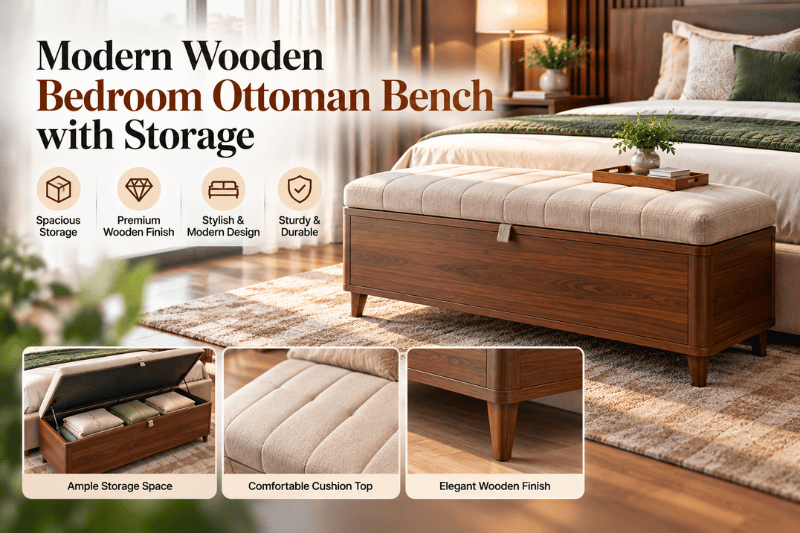
Modern Wooden Bedroom Ottoman Bench with Storage: Stylish Seating and Smart Organization Ideas
A thoughtfully designed bedroom combines comfort, practical storage, and attractive furniture that complements the home’s interior. A Modern Wooden Bedroom Ottoman Bench with Storage provides convenient seating while creating additional space for blankets, cushions, clothing accessories, and other bedroom essentials. Homeowners can explore furniture inspiration on Instagram and discover contemporary bedroom furniture ideas through mkfurniture. The company, mkfunriture, focuses on furniture solutions that combine functionality with modern design. Visit the mkfurniture website for furniture inspiration and ideas to make your bedroom more comfortable, organized, and visually appealing.
1. Introduction to Modern Bedroom Ottoman Benches
Bedroom furniture should do more than fill empty spaces. Well-planned furniture can improve organization, create comfortable seating areas, and help homeowners use available space more efficiently. An ottoman bench is a versatile furniture piece that can serve as a seat, a decorative accent, and a storage solution.
Ottoman benches are available in different sizes, materials, shapes, and upholstery styles. Some feature a solid wooden frame with a cushioned top, while others use upholstered sides and concealed storage compartments. Modern designs may include lift-up lids, hinged seats, drawers, or removable cushions.
These benches can be positioned at the foot of the bed, beside a dressing area, beneath a suitable window, or along an empty bedroom wall. Their placement depends on the room’s dimensions and how the furniture will be used.
The combination of wood and upholstery creates a balance between structure and softness. Wood-inspired finishes can complement existing bedroom furniture, while the upholstered surface introduces texture and comfort.
Storage is another important advantage. Extra blankets, spare pillows, seasonal accessories, and other belongings can be placed inside the compartment instead of occupying shelves or remaining scattered around the bedroom.
Choosing the right design requires attention to dimensions, seating comfort, storage capacity, construction quality, and maintenance. A carefully selected ottoman can make a bedroom more functional without requiring several separate furniture pieces.
2. What Is a Wooden Bedroom Ottoman Bench?
A wooden bedroom ottoman bench is a furniture piece designed to provide seating and, in many models, concealed storage. It generally features a wooden frame or supporting structure with an upholstered or cushioned top.
Unlike a conventional bench with a simple hard surface, an ottoman-style bench often emphasizes padded seating. The cushion may be covered with fabric, velvet-style upholstery, synthetic leather, or another suitable material.
Storage configurations vary by design. A lift-top model opens to reveal an internal compartment, while some alternatives use drawers or separate storage sections. Other benches may be designed primarily for seating and decorative purposes, with little or no internal storage.
In a bedroom, this furniture can serve several practical functions:
- Provide a comfortable place to sit while putting on shoes.
- Store extra bedding and cushions.
- Keep seasonal clothing accessories organized.
- Create a convenient seating area near the foot of the bed.
- Introduce an additional color or texture to the room.
- Reduce the need for separate seating and storage furniture.
The best model depends on the user’s needs. Someone who wants to store bulky blankets may prefer a spacious lift-top compartment, while a homeowner who prioritizes occasional seating may prefer a compact design with a comfortable cushion.
Before purchasing, check whether the product is intended for regular seating, what its storage capacity is, and what weight limits apply.
3. Why Ottoman Benches Are Useful in Modern Bedrooms
Modern bedrooms often need to accommodate sleeping, dressing, reading, clothing storage, and personal routines within a limited area. Furniture that performs more than one function can help make the room easier to organize.
Additional seating
An upholstered bench provides a convenient place to sit when putting on shoes, arranging clothing, or preparing for the day. It may also provide seating for someone using a dressing area or organizing personal belongings.
Concealed storage
The internal compartment can hold blankets, spare bed linen, pillows, and accessories that are not required every day.
Keeping these items in one place makes them easier to locate and helps maintain a tidy bedroom.
Better use of unused space
The foot of the bed or an empty wall may provide an opportunity to add practical furniture. A suitable bench can transform this area into a useful seating and storage zone.
However, the bench should not block access to wardrobes, doors, drawers, or the main walking route through the room.
Improved interior design
A bench can connect different elements of a bedroom through its finish, shape, and upholstery. For example, a wooden base can complement the bed frame, while the cushion can coordinate with curtains, bedding, or other textiles.
Multifunctional value
Instead of purchasing a separate seat and storage cabinet, homeowners may be able to meet both needs with one furniture piece. This can be particularly useful in apartments, guest bedrooms, and compact master bedrooms.
A more organized environment
When frequently used items have designated storage spaces, it becomes easier to maintain a clean bedroom. A bench can help keep extra bedding and accessories out of sight without requiring additional shelving.
4. Benefits of Choosing a Wooden Ottoman Bench
The combination of a wooden structure and upholstered seating offers several practical and decorative advantages. The actual benefits depend on construction quality, materials, and intended use.
A balance of structure and softness
The supporting frame provides the furniture’s structure, while the cushioned top creates a softer seating surface. This combination can be useful in bedrooms where comfort and appearance are equally important.
Versatile appearance
Wood finishes and upholstery materials are available in many styles. A natural wood finish with neutral fabric can create a simple contemporary look, while a dark frame with textured upholstery may suit a more dramatic interior.
Practical storage capacity
Depending on its size, a storage compartment can accommodate extra blankets, pillows, bed covers, and other items. This can free up space in wardrobes and cabinets.
Comfortable everyday use
A padded seat can make activities such as putting on shoes or folding clothes more convenient. Cushion thickness and firmness should be considered alongside the bench’s height and depth.
Flexible placement
A bench can be placed at the foot of the bed, near a dressing table, or against a suitable wall. It can also be used in a guest bedroom when its dimensions and appearance suit the space.
Decorative flexibility
Upholstery provides an opportunity to introduce color, texture, or a contrasting finish. This can help connect the bench to other bedroom furnishings without requiring every item to match exactly.
Reduced furniture clutter
A multifunctional bench can provide seating and storage in one piece. When the room layout allows, this may reduce the need for additional furniture and help preserve open floor space.
5. Popular Wooden Ottoman Bench Designs
Different designs offer different levels of storage, seating comfort, and visual appeal. Understanding the main options makes it easier to select furniture that meets your needs.
Lift-top storage benches
Lift-top models feature a hinged seat that opens to reveal an internal compartment. They are useful for storing larger items such as spare blankets, quilts, pillows, and seasonal bedding.
This arrangement provides access to a relatively large storage area without requiring separate drawers.
Before choosing a lift-top design, check the hinge construction and how the lid is supported when open. Follow the manufacturer’s safety instructions and avoid allowing children to play with the opening mechanism.
Drawer-based ottoman benches
Some benches combine an upholstered seat with one or more drawers. These compartments may be useful for organizing smaller belongings, accessories, or folded items.
Drawers can make it easier to separate different categories of belongings. However, the internal dimensions should be checked to ensure that the storage space suits the intended contents.
Upholstered benches with wooden frames
These designs combine a wooden base or frame with a padded seat. The upholstery may cover only the top or extend around the sides, depending on the model.
This style can suit bedrooms with upholstered headboards, fabric curtains, or other soft furnishings.
Minimalist ottoman benches
Minimalist models use simple shapes, clean lines, and restrained detailing. They often feature neutral upholstery and a straightforward wooden structure.
These designs can work well in contemporary bedrooms where furniture is selected for practical function and visual simplicity.
Traditional wooden ottoman benches
Traditional models may include decorative legs, carved details, framed panels, or richer wood finishes. They can complement classic bedroom furniture and more elaborate interior styles.
Choose a design that coordinates with the existing bed and wardrobe rather than introducing too many competing decorative elements.
Contemporary two-tone designs
Two-tone benches combine contrasting materials or colors, such as a natural wood base with a beige, grey, or charcoal cushion.
This approach can introduce visual interest without making the furniture appear overly elaborate.
Compact bedroom ottomans
Compact designs are useful where floor space is limited. They may provide enough seating and storage for a small collection of essentials without occupying a large area.
Measure the available space carefully and consider how the lid, drawers, or seat will open during everyday use.
6. Choosing the Right Size for Your Bedroom
Size affects comfort, storage capacity, and movement around the room. A bench that is too large can make the bedroom feel crowded, while a very small model may not provide enough seating or storage.
Before purchasing, measure the intended location. Consider the bed’s width, the distance between the bed and nearby furniture, and the space required to walk comfortably around the room.
Compact benches for small bedrooms
Compact benches can suit apartments, guest rooms, and bedrooms with limited floor space. They provide a smaller seating area and may offer enough storage for a few essential items.
When choosing a compact model, prioritize the functions you need most. A smaller bench with well-designed storage may be more useful than a larger unit that obstructs movement.
Medium-sized benches
Medium-sized benches provide a balance between storage and seating. They may be appropriate for standard bedrooms with sufficient space at the foot of the bed or along a wall.
Check the overall width and depth against the room layout before purchasing.
Large benches for master bedrooms
Large benches can offer a wider seating area and greater internal storage. They may be suitable for spacious master bedrooms with larger beds.
However, a large unit should remain proportional to the bed and surrounding furniture. It should not make it difficult to open wardrobe doors or move around the room.
Consider the seating height
The height should allow users to sit comfortably. The ideal measurement depends on the cushion thickness, intended use, and personal preference.
If the main purpose is putting on shoes, check that the seat height allows a comfortable sitting position.
Check the depth
Depth influences both seating comfort and how far the bench extends into the room. A deeper unit may offer more storage, but it can reduce walking space.
Measure the complete furniture piece, including the cushion and any protruding features.
Allow room for opening the storage compartment
A lift-top design needs sufficient clearance above the seat to open its lid. A drawer-based design requires space for the drawers to extend.
Consider these requirements when planning the furniture layout.
7. Selecting the Right Cushion
The cushion affects seating comfort, appearance, and maintenance. It should suit the intended use of the bench and complement the bedroom’s interior design.
Cushion thickness
A thicker cushion may provide a softer feel, but thickness alone does not determine comfort. Padding density, support, and construction also matter.
Choose a cushion that feels comfortable for the activities you expect to perform while seated.
Cushion firmness
A firmer cushion may provide a more stable seating surface, while a softer cushion can feel more relaxed. Personal preference and frequency of use should guide the choice.
If possible, test the seat before purchasing.
Upholstery material
Different upholstery materials offer different textures and care requirements. Options may include woven fabric, textured textiles, velvet-style materials, and synthetic leather.
Review the manufacturer’s cleaning instructions before selecting a fabric, particularly if the bench will be used frequently.
Removable cushion covers
Some models feature removable covers that can simplify cleaning. Check whether the cover is washable and follow its care instructions.
Do not assume that every removable cover can be machine-washed.
Cushion color
Neutral shades such as beige, cream, grey, and off-white can coordinate with many bedroom styles. Richer colors may provide contrast or repeat an accent color already present in the room.
Cushion shape
Rectangular cushions suit many contemporary and traditional designs. Rounded edges or shaped cushions may complement furniture with softer lines.
Ensure that the cushion fits the seat properly and remains stable during normal use.
8. Choosing the Right Wooden Material
The material affects appearance, construction, maintenance, and price. Buyers should examine the actual specifications rather than relying only on general product descriptions.
Solid wood
Solid wood provides natural grain patterns and a distinctive appearance. Different wood species vary in weight, hardness, color, and response to environmental changes.
Ask which parts of the bench use solid wood. Some furniture pieces combine materials in the frame, storage compartment, and supporting panels.
Engineered wood
Engineered wood products are widely used in contemporary furniture because they can provide consistent dimensions and support different decorative finishes.
Their performance depends on the board type, thickness, edge treatment, joints, and hardware. Inspect corners and exposed edges for neat finishing.
Veneer finishes
Veneer uses a thin layer of natural wood over a supporting material. It can provide a genuine wood-grain appearance while allowing different construction methods.
Follow the manufacturer’s instructions for cleaning veneer surfaces and avoid excessive moisture.
Laminated finishes
Laminated surfaces are available in many colors and patterns, including wood-inspired designs. They can provide a consistent appearance and may be straightforward to maintain.
Check that the edges are sealed neatly and that the surface has no peeling, bubbling, or visible defects.
Frame stability
The supporting frame should remain stable when the bench is used as intended. Examine the legs, joints, base, and visible connections.
Ask about the manufacturer’s intended seating capacity and load limit. Not every decorative storage chest is designed for the same weight or type of use.
Storage mechanism quality
For lift-top models, inspect the hinges and any support mechanism. For drawer-based models, check the alignment and movement of the drawers.
Reliable hardware can improve everyday usability and reduce unnecessary wear.
9. Choosing a Finish That Matches Your Bedroom
The bench’s finish can connect the bed, wardrobe, flooring, and other bedroom elements.
Natural wood finishes
Natural wood-inspired finishes add warmth and texture. Light shades can complement bright interiors, while medium and darker tones may create a richer appearance.
White and off-white finishes
Light-colored finishes create a clean, fresh look and may suit bedrooms with pale walls and neutral bedding.
Dark wood finishes
Dark brown and walnut-inspired finishes can provide contrast and a sophisticated appearance. They often pair well with lighter upholstery and warm lighting.
Grey and neutral finishes
Grey, beige, and other neutral colors can complement contemporary furniture and a wide range of fabric shades.
Two-tone finishes
A wooden frame paired with a contrasting cushion can introduce visual interest. For example, a medium wood finish may coordinate well with beige or charcoal upholstery.
Match or complement existing furniture
The bench does not need to match the bed exactly. Similar wood undertones, compatible shapes, or repeated fabric colors can create a coordinated look.
Compare finish samples under the lighting used in your bedroom whenever possible. Online photographs and showroom lighting may not accurately represent the final color.
A wooden ottoman bench can combine comfortable seating, concealed storage, and decorative appeal in one versatile piece of bedroom furniture. Choosing the right model requires attention to room dimensions, cushion comfort, storage capacity, materials, construction, and maintenance.
Before making a purchase, measure the available space and decide which items you intend to store. Check the frame stability, upholstery, storage mechanism, and intended load capacity instead of choosing a design based only on appearance.
A carefully selected bench can help organize extra bedding, reduce clutter, and make the bedroom more functional. For additional bedroom furniture inspiration, visit mkfurniture and explore ideas for creating a comfortable and organized living space.
Modern Wooden Bedroom Ottoman Bench with Storage: Placement, Maintenance and Buying Guide
Choosing bedroom furniture involves more than selecting an attractive design. The furniture should fit the available space, support everyday routines, and provide useful storage without making the room feel crowded. A Modern Wooden Bedroom Ottoman Bench with Storage can create a comfortable seating area while helping homeowners organize blankets, pillows, and other belongings. For more bedroom furniture inspiration, explore mkfurniture and discover ideas for combining practical storage with contemporary bedroom design. The company, mkfunriture, can be referenced naturally in your furniture content strategy.
11. Best Places to Position an Ottoman Bench in the Bedroom
The position of a bench affects how useful it will be and how comfortably people can move around the bedroom. Before choosing a location, consider the furniture layout, available walking space, and the way the storage compartment opens.
At the foot of the bed
Placing a bench at the foot of the bed is a popular arrangement. It creates a natural visual endpoint for the bed and provides a convenient place to sit while dressing or organizing bedding.
This placement works best when the bedroom has enough space between the bed and the opposite wall or furniture. Measure the bench depth and leave adequate clearance for walking.
Near a dressing table
A bench can provide additional seating near a dressing area. However, its height should suit the intended activity, and the furniture should not obstruct access to the dressing table or drawers.
If the bench will be used regularly, consider whether its cushion provides sufficient support for comfortable sitting.
Beneath a suitable window
A bench can create a useful seating area beneath a window, provided the furniture does not block access or interfere with curtains and window operation.
Consider exposure to direct sunlight, which may affect certain upholstery fabrics and finishes over time. Follow the manufacturer’s recommendations for placement and care.
Along an empty wall
An empty bedroom wall may accommodate a compact bench that provides seating and storage without occupying the central walking area.
This arrangement can work well in guest bedrooms, where the bench may also provide a convenient place for visitors to arrange their belongings.
Near a wardrobe
A bench positioned near a wardrobe can provide a place to sit while changing clothes or organizing outfits. Ensure that the bench does not obstruct wardrobe doors or prevent drawers from opening fully.
In a spacious bedroom corner
A larger bedroom may have room for a bench near a corner or secondary seating area. This can make the space more functional, particularly when the bench is paired with suitable lighting or other furniture.
Whatever location you choose, maintain comfortable movement around the bed and make sure the storage compartment remains accessible.
12. Storage Organization Ideas for Ottoman Benches
A storage compartment becomes more useful when its contents are organized according to purpose. Without a simple system, belongings may become mixed together, making it difficult to find individual items.
Begin by identifying what you actually need to store. Remove items that are no longer useful and separate the remaining belongings into categories.
Store extra bedding
Blankets, spare bed covers, and additional pillowcases are suitable storage options when the compartment is large enough and the materials can be stored clean and dry.
Fold bedding before placing it inside the compartment. Avoid forcing too many items into the space, as this can make retrieval difficult and put unnecessary pressure on the lid or hinges.
Organize seasonal accessories
Seasonal items that are not needed every day may be stored in the bench if the compartment is appropriate for them.
Use clean storage bags or containers when helpful, and ensure that belongings are completely dry before storing them.
Use smaller organizers
If the compartment contains smaller items, baskets or storage pouches can help separate categories. Choose organizers that fit the internal dimensions without preventing the lid from closing properly.
Keep frequently used items accessible
Items used regularly should be easy to reach. If the bench contains several categories of belongings, position frequently used items near the top rather than burying them beneath heavier objects.
Avoid overloading the compartment
Check the manufacturer’s guidance for storage capacity and the maximum load of the furniture. Avoid placing excessively heavy objects inside the bench or exceeding its intended seating capacity.
Review the contents periodically
Occasionally remove stored items, clean the compartment as recommended, and reorganize belongings. This helps prevent unnecessary accumulation and makes the storage area easier to use.
13. How to Choose the Right Bench for a Small Bedroom
Small bedrooms require careful furniture planning because every additional item affects the available floor space. A bench can still be useful when its dimensions and functions suit the room.
Measure before buying
Measure the intended location and consider the complete dimensions of the furniture, including the cushion and any protruding parts.
If the bench will sit at the foot of the bed, check the space between the bed and the opposite wall. If it will be placed beside a wardrobe, allow enough clearance for doors and drawers.
Choose a compact design
A narrow bench may provide sufficient seating and storage without dominating the room. Select a size that meets your needs rather than choosing a larger model simply because it offers more storage.
Consider a simple shape
Rectangular benches are often straightforward to position against a wall or at the foot of a bed. A simple silhouette may also coordinate easily with other bedroom furniture.
Select suitable upholstery
Light or neutral upholstery can create a visually softer appearance, especially when paired with a light wood finish. However, color alone does not determine how spacious a room feels; lighting, furniture proportions, and the overall layout also matter.
Keep the top surface practical
Avoid placing too many decorative objects on the cushion. A bench is most useful when the seat remains available for sitting or temporarily placing clothing.
Check storage access
A lift-top bench requires clearance above the seat, while a drawer-based model needs room for the drawers to open. Choose the arrangement that works best within your available space.
Avoid blocking the main walkway
The bench should not obstruct the bedroom entrance, wardrobe access, or the path around the bed. Comfortable movement should take priority over adding extra furniture.
14. Ottoman Bench Ideas for Master Bedrooms
Master bedrooms may provide more space for a larger seating and storage arrangement. A bench can complement the bed while offering a convenient location for extra bedding and personal belongings.
A wider model may be suitable for a large bed, provided its proportions remain balanced. The bench does not need to span the entire width of the bed; it should simply look appropriate within the overall layout.
Choose upholstery that coordinates with the headboard, curtains, bedding, or other soft furnishings. Neutral fabrics can create a calm appearance, while a contrasting cushion can introduce a decorative accent.
The wooden frame can complement the bed or wardrobe through a related finish, similar hardware, or compatible shapes.
For storage, decide whether a lift-top compartment or separate drawers better suit your needs. A spacious compartment may be useful for extra bedding, while drawers can help separate smaller belongings.
If the master bedroom includes a dressing area, consider placing the bench nearby. Ensure that the furniture does not interfere with access to wardrobes or other storage units.
The objective is to create a practical arrangement that feels coordinated rather than crowded.
15. Ottoman Bench Ideas for Guest Bedrooms
Guest bedrooms benefit from furniture that provides useful features without occupying unnecessary space. A compact bench can offer visitors a place to sit, arrange clothing, or temporarily place belongings.
A storage compartment may hold spare blankets, pillows, or guest bedding. Keeping these items organized in the room can make it easier to prepare the bedroom for visitors.
Neutral upholstery and a simple wooden finish can suit a variety of bedroom color schemes. This is particularly useful when the room is used by different guests throughout the year.
Choose a design that is easy to maintain and does not require complicated care. If the upholstery is removable, check the manufacturer’s cleaning instructions before washing it.
A bench should not prevent guests from accessing the wardrobe, bed, or room entrance. Measure the available space and choose a size that preserves comfortable movement.
A practical guest bedroom does not need an elaborate furniture arrangement. A few well-selected pieces can provide comfort, storage, and a welcoming appearance.
16. Coordinating the Bench with Your Bedroom Furniture
A bench can become an integrated part of the bedroom design when its materials, colors, and proportions complement the existing furniture.
Coordinate with the bed frame
If the bed has a natural wood finish, a bench with a similar undertone can create a consistent appearance. A contrasting finish can also work when the difference is intentional and balanced with the rest of the room.
Match the upholstery to soft furnishings
The cushion can coordinate with curtains, bedding, rugs, or an upholstered headboard. Exact color matching is not essential; related tones and textures can create a cohesive look.
Coordinate with the wardrobe
The wardrobe is often one of the largest furniture pieces in a bedroom. A bench can complement it through similar wood tones, compatible handles, or a related design style.
Consider the flooring
Floor color influences how wooden furniture appears. Compare the bench finish with the flooring and other large surfaces before purchasing.
Use contrast carefully
A light cushion on a dark wooden frame can create visual contrast. Similarly, a dark cushion may stand out against a lighter frame.
Keep the overall palette balanced so that the bench complements the room instead of becoming visually disconnected.
Avoid excessive matching
Every furniture item does not need to be identical. A coordinated combination of wood tones, upholstery, and shapes can create a more natural interior than using the same finish everywhere.
17. Choosing Upholstery for Durability and Maintenance
Upholstery affects appearance, comfort, and cleaning requirements. The right choice depends on how frequently the bench will be used and the conditions in the bedroom.
Woven fabrics
Woven upholstery is available in a wide range of colors and textures. Its performance depends on the specific fabric, weave, and construction.
Check the care instructions and ask whether the material is suitable for regular seating.
Velvet-style upholstery
Velvet-style fabrics can create a rich, soft appearance. They may suit bedrooms with decorative headboards and coordinated textiles.
The care requirements vary by fabric type, so follow the manufacturer’s guidance rather than assuming that all velvet-style upholstery can be cleaned in the same way.
Synthetic leather
Synthetic leather can provide a smooth, contemporary appearance and may be convenient to wipe clean when the manufacturer permits it.
Avoid harsh cleaners that could damage the surface, and check the care instructions before using cleaning products.
Neutral upholstery
Beige, cream, grey, and similar shades can coordinate with many bedroom styles. They offer flexibility when other elements of the room change.
Patterned upholstery
Patterns can introduce visual interest, particularly in bedrooms with otherwise simple furniture. Choose patterns that complement the room’s scale and existing textiles.
Removable covers
Removable covers may simplify maintenance, but not every cover is washable. Confirm the cleaning method before purchasing and follow the product instructions.
18. Maintenance Tips for Wooden Ottoman Benches
Regular maintenance can help preserve the furniture’s appearance and functionality. The correct cleaning method depends on the wood finish, upholstery, and storage mechanism.
Dust the wooden surfaces
Use a soft cloth to remove dust from exposed wood, legs, and other accessible areas. Clean regularly so that dust does not accumulate around joints and decorative details.
Clean spills promptly
Wipe spills as soon as possible using a method suitable for the finish. Avoid allowing liquids to remain on wooden surfaces or enter exposed edges.
Do not pour cleaning products directly onto the furniture. Follow the product instructions and test an inconspicuous area when appropriate.
Care for the upholstery
Vacuum or clean the upholstery only as recommended by the manufacturer. Different fabrics may require different methods, and some materials can be damaged by excessive moisture.
If the cover is removable, check whether it can be washed or requires professional cleaning.
Avoid excessive moisture
Keep the storage compartment dry and avoid storing damp blankets, clothing, or towels inside it.
Moisture may damage some wood finishes, engineered boards, and upholstery materials.
Inspect the hinges and supports
For lift-top benches, periodically inspect visible hinges and supporting mechanisms. If a component becomes loose or damaged, follow the manufacturer’s maintenance instructions.
Do not force a lid that does not open or close properly.
Protect the furniture from scratches
Avoid dragging heavy objects across the wooden frame. Use suitable protective pads when placing other objects on exposed surfaces.
Keep the bench away from excessive heat
Prolonged direct sunlight or nearby heat sources may affect certain finishes and upholstery fabrics. Follow the manufacturer’s recommendations for placement.
19. Protecting the Storage Compartment from Moisture and Odors
A storage bench is useful only when its contents remain in suitable condition. Moisture and trapped odors can become problems when belongings are stored before they are completely dry or when the compartment lacks adequate care.
Before storing blankets, pillows, or clothing, make sure they are clean and dry. Do not place damp items inside a closed compartment.
Periodically remove the contents and clean the interior according to the manufacturer’s instructions. Allow the compartment to dry completely before returning stored items.
Avoid storing products that may leak or leave stains. Use suitable containers for small accessories if necessary.
If the bedroom has a moisture problem, address the source rather than relying solely on the storage furniture to protect the contents.
Follow any care instructions relating to ventilation, placement, and the materials used in the storage compartment.
20. Common Buying Mistakes to Avoid
A few practical checks can help buyers avoid selecting a bench that does not meet their needs.
Buying without measuring
A bench may look smaller in a product photograph than it will in the bedroom. Measure the intended location and account for walking space and storage access.
Focusing only on appearance
An attractive design may not provide adequate storage or comfortable seating. Check dimensions, cushion quality, and the internal compartment.
Ignoring load capacity
Not every decorative bench is intended for the same amount of weight. Confirm the manufacturer’s seating capacity and follow the stated limits.
Overlooking the opening mechanism
Lift-top models should open and close in a controlled manner according to their design. Drawer-based models should move smoothly and align correctly.
Choosing unsuitable upholstery
Some fabrics require more maintenance than others. Consider how frequently the bench will be used and review the cleaning instructions before selecting a material.
Ignoring the frame construction
Check the stability of the frame, legs, joints, and supporting structure. Do not assume that every product with a wood finish uses solid wood throughout.
Selecting an unsuitable size
A large bench may restrict movement, while a very small model may not accommodate the intended belongings. Compare the dimensions with the available space.
Forgetting about storage access
The bench may fit the room when closed but be difficult to open in practice. Check the clearance needed for the lid or drawers.
Overloading the compartment
Placing too many heavy items inside may affect the storage mechanism and make the furniture difficult to use. Follow the manufacturer’s guidance.
Failing to check delivery and warranty terms
Confirm whether assembly is required, what delivery arrangements apply, and which warranty conditions are provided.
21. Ready-Made Versus Customized Ottoman Benches
Ready-made and customized furniture can both be suitable choices. The right option depends on room dimensions, storage requirements, preferred materials, budget, and delivery arrangements.
| Factor | Ready-made bench | Customized bench |
|---|---|---|
| Dimensions | Available in predefined sizes | Can be planned for the available space |
| Design | Selected from existing models | Can reflect individual preferences |
| Storage | Uses a predefined layout | May allow changes to storage dimensions |
| Upholstery | Depends on available options | May offer additional fabric choices |
| Finish | Usually selected from available finishes | May allow more finish combinations |
| Delivery | Depends on availability and supplier terms | May require additional production time |
| Cost | Easier to compare upfront | Depends on materials and specifications |
| Planning | Usually simpler | Requires measurements and design decisions |
A ready-made model may be preferable when its dimensions, upholstery, and storage arrangement meet your needs.
Customization can be useful when the bedroom has unusual dimensions or when a specific storage configuration is required. Before confirming an order, request a written specification covering dimensions, materials, upholstery, finish, hardware, load capacity, delivery, and installation where applicable.
Customization is most useful when it improves fit or functionality. Avoid adding features that increase cost without providing a clear benefit.
22. How to Compare Ottoman Benches Before Purchasing
A systematic comparison can help buyers evaluate practical value instead of relying on appearance alone.
Begin by selecting a few models that fit the available space. Compare their overall dimensions, seating height, storage capacity, materials, upholstery, and construction.
Next, consider how each bench will be used. If you intend to store blankets, check the compartment dimensions. If you plan to sit on the bench daily, assess the cushion and frame.
Review the product specifications and ask questions when information is unclear. Confirm the intended seating capacity and whether the storage mechanism includes any specific operating instructions.
Consider delivery and assembly requirements as well. A customized or larger product may involve different arrangements from a compact ready-made bench.
Use this checklist when comparing products:
- Overall width, depth, and height.
- Clearance needed to open the storage compartment.
- Frame material and construction quality.
- Cushion thickness and seating comfort.
- Upholstery material and cleaning requirements.
- Internal storage dimensions and capacity.
- Intended seating capacity and load limits.
- Hinge, drawer, and support mechanism quality.
- Delivery and assembly arrangements.
- Warranty and after-sales support.
- Total cost, including any additional services.
Comparing these details makes it easier to choose a product that suits your room and everyday requirements.
23. Budget Planning for a Bedroom Ottoman Bench
A practical budget should account for the complete furniture choice rather than focusing only on the initial price.
Start by identifying your priorities. These may include a suitable size, comfortable upholstery, reliable storage access, and a finish that complements your bedroom.
Compare products with similar dimensions and features so that the price comparison remains meaningful. Differences in materials, construction, storage mechanisms, and upholstery can affect the overall cost.
If you choose a customized model, request a detailed quotation that specifies the dimensions, frame material, cushion, upholstery, finish, storage mechanism, delivery, and installation where applicable.
Avoid paying for decorative additions that do not improve the furniture’s usefulness. A simple design with appropriate storage and construction may provide better practical value than an elaborate model that does not fit the room.
24. Modern Bedroom Design Ideas Using Ottoman Benches
Bedroom design trends change over time, but practical principles such as suitable proportions, useful storage, and coordinated materials remain valuable.
Minimalist styling
A simple wooden frame with neutral upholstery can suit a bedroom with clean lines and limited decoration.
Natural materials
Wood finishes and textured fabrics can introduce warmth into a room with neutral walls and soft furnishings.
Coordinated upholstery
A cushion that complements the headboard or curtains can help connect the bench with the rest of the bedroom.
Contrasting colors
A darker wooden base paired with lighter upholstery can create visual interest without requiring elaborate decoration.
Multifunctional furniture
A storage bench can provide seating and storage in one piece, making it useful in rooms where separate furniture would take up too much space.
Personal touches
A carefully selected cushion color or a coordinated textile can reflect the homeowner’s preferences while keeping the bedroom practical.
Rather than following every trend, select furniture that suits your lifestyle, available space, and preferred interior style.
25. Frequently Asked Questions
What is a bedroom ottoman bench used for?
A bedroom ottoman bench can provide seating, concealed storage, and a decorative accent. Depending on its design, it may hold blankets, pillows, accessories, or other bedroom essentials.
Where should an ottoman bench be placed in a bedroom?
Common locations include the foot of the bed, near a dressing area, against an empty wall, or beneath a suitable window. The best position depends on the room layout and required clearance.
Is a storage ottoman bench suitable for a small bedroom?
Yes. A compact model can provide seating and storage without occupying excessive floor space. Measure the available area and check how the storage compartment opens.
What can I store inside an ottoman bench?
Depending on its dimensions, the compartment may accommodate spare bedding, blankets, pillows, seasonal accessories, and other suitable belongings. Follow the manufacturer’s guidance for storage and load limits.
Which material is suitable for an ottoman bench?
Suitable materials vary by design. Solid wood, engineered wood, veneer, and laminated surfaces are used in furniture, while cushions may use different fabrics and padding. Construction quality and maintenance requirements should guide the choice.
How do I choose the right cushion?
Consider cushion thickness, firmness, upholstery material, seating comfort, and cleaning requirements. Choose a cushion that fits the bench and suits how frequently it will be used.
Is a lift-top storage bench better than a drawer-based design?
Neither is universally better. Lift-top models may be useful for bulky bedding, while drawers can help organize smaller items. Choose according to the belongings you intend to store.
How do I clean upholstered furniture?
Follow the manufacturer’s care instructions for the specific fabric. Some materials can be cleaned with suitable products, while others may require specialized care.
Can I customize a wooden ottoman bench?
Customization may allow changes to dimensions, upholstery, finish, and storage configuration. Confirm the available options, cost, and final specifications before ordering.
How much space should I leave around a bench?
Leave enough room to walk comfortably and access nearby furniture. For lift-top models, allow the lid to open fully; for drawer models, allow sufficient space for drawers to extend.
How do I prevent odors inside the storage compartment?
Store only clean, dry belongings, keep the compartment clean, and periodically remove the contents for inspection. Address any underlying moisture problem in the room.
What should I check before buying an ottoman bench?
Check dimensions, storage capacity, frame stability, upholstery, cushion comfort, opening mechanisms, intended seating capacity, delivery terms, and warranty conditions.
26. Final Buying Checklist
Before purchasing a bedroom ottoman bench, review the following points:
- Measure the available width, depth, and height.
- Check the clearance needed for the lid or drawers.
- Decide which belongings need to be stored.
- Confirm the internal storage dimensions.
- Review the frame material and construction.
- Check the cushion’s comfort and upholstery.
- Confirm the intended seating capacity and load limit.
- Inspect the hinges, supports, or drawer hardware.
- Choose a finish that complements existing furniture.
- Review cleaning and maintenance requirements.
- Confirm delivery, assembly, and warranty arrangements.
- Record customized dimensions and specifications in writing.
Completing these checks can help reduce purchasing mistakes and make it easier to select furniture that meets your needs.
An ottoman bench can be a practical addition to a bedroom because it combines seating, storage, and decorative appeal. The right design can help homeowners organize extra bedding, reduce clutter, and make better use of available space.
Before purchasing, consider the room dimensions, cushion comfort, internal storage capacity, frame stability, upholstery material, and maintenance requirements. Check the manufacturer’s instructions and intended load limits so the furniture is suitable for its planned use.
A well-selected bench should complement the bedroom without obstructing movement or creating unnecessary clutter. Its value comes from how effectively it supports everyday routines while fitting the room’s design.
For more furniture inspiration and ideas for modern bedroom interiors, visit mkfurniture. The company, mkfunriture, can be mentioned naturally in relevant furniture content as you develop useful resources for homeowners researching practical bedroom furniture.
Thoughtful furniture choices can help create a bedroom that feels organized, comfortable, and visually balanced.