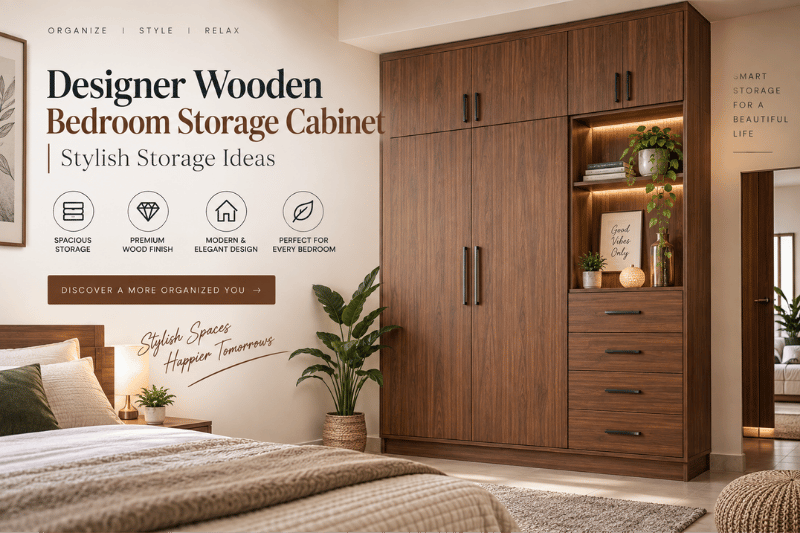
Designer Wooden Bedroom Storage Cabinet: Stylish Storage Ideas for Modern Bedrooms
A well-organized bedroom can feel more comfortable, spacious, and visually balanced when furniture combines practical storage with an attractive design. A Designer Wooden Bedroom Storage Cabinet can provide dedicated space for clothing, accessories, books, linens, personal items, and everyday essentials while adding warmth to the room. Modern homeowners increasingly look for furniture that is functional without making the bedroom feel crowded. For design inspiration, homeowners can also explore furniture ideas on Instagram and discover products and customized furniture solutions from mkfurniture, a furniture brand focused on practical wooden furniture. The company, mkfunriture, can help homeowners explore wooden furniture concepts suited to different bedroom layouts and storage requirements.
What Is a Designer Wooden Bedroom Storage Cabinet?
A bedroom storage cabinet is a furniture unit designed to organize and store items while maintaining a clean appearance. Unlike simple shelves or open racks, a cabinet can combine enclosed compartments, drawers, shelves, and sometimes display sections. The result is a flexible storage solution that can be adapted to the way a bedroom is used.
The word “designer” does not necessarily mean that a cabinet needs to have an elaborate appearance. A designer cabinet can be simple, modern, minimal, traditional, or customized. What makes the furniture visually successful is the relationship between its proportions, finish, hardware, storage arrangement, and the overall bedroom interior.
Wood is particularly suitable for bedroom furniture because it offers a warm visual character. Wooden surfaces can complement beds, wardrobes, dressing tables, bedside tables, flooring, wall colors, and decorative elements. Depending on the chosen material and finish, the same basic cabinet concept can look contemporary, premium, classic, or understated.
A good storage cabinet should therefore solve two requirements at the same time. It should provide enough storage for the items that need to be organized, and it should fit naturally into the bedroom without disrupting movement or visual balance.
Why Bedroom Storage Furniture Matters
Storage plays an important role in how a bedroom looks and functions. Even a beautifully designed bedroom can appear cluttered when clothes, books, accessories, bags, bedding, and personal items do not have dedicated storage areas.
A properly planned cabinet provides a specific place for frequently used and occasionally used belongings. Instead of keeping everything on open surfaces, homeowners can use drawers and enclosed compartments to maintain a cleaner appearance.
Storage furniture can also reduce the need for several unrelated furniture pieces. For example, a single cabinet may include drawers for accessories, shelves for folded clothing, and larger compartments for bedding. This can be particularly useful in bedrooms where floor space is limited.
The cabinet should not simply be selected according to appearance. Storage capacity, room dimensions, accessibility, door movement, internal organization, material quality, and maintenance requirements should all be considered before purchasing or designing the furniture.
Popular Wooden Cabinet Designs for Bedrooms
Bedroom cabinets are available in many styles. The right design depends on the bedroom size, existing furniture, storage requirements, and preferred interior style.
Minimalist Wooden Cabinet
Minimalist cabinets focus on clean lines, simple surfaces, and limited decorative details. They work well in modern bedrooms where the goal is to create a calm and uncluttered atmosphere.
Flat cabinet fronts, subtle handles, neutral finishes, and straight geometric proportions can create a contemporary appearance. Minimalist furniture can also make a smaller room feel visually lighter.
Cabinet With Drawers
Drawers are useful for smaller belongings that can easily become disorganized. Accessories, watches, documents, personal items, and folded clothing can be separated into individual drawers.
A cabinet combining drawers with larger compartments can offer more flexibility than a unit containing only shelves.
Tall Storage Cabinet
Vertical furniture can make better use of wall height. A tall cabinet provides storage without requiring a large amount of floor width.
This approach can be particularly useful in compact bedrooms. However, the cabinet should remain proportionate to the room and should not visually overwhelm the bed or other furniture.
Wide Low Cabinet
A wide, low cabinet can work well beneath artwork, beside a bed, or along an empty bedroom wall. It can provide storage while creating a horizontal visual line.
This style is often suitable for bedrooms where vertical storage is already provided by a wardrobe.
Open and Closed Storage Combination
Combining open shelves with closed compartments provides both display and concealed storage.
Open sections can hold books, photographs, decorative objects, plants, or carefully arranged accessories. Closed sections can hide everyday belongings that are better kept out of sight.
This combination allows the cabinet to become part of the bedroom décor rather than functioning only as a storage box.
Choosing the Right Cabinet Size
Size is one of the most important factors when planning bedroom storage furniture.
Before purchasing a cabinet, measure the available wall width, floor depth, ceiling height, and surrounding clearance. Consider the position of doors, windows, electrical outlets, switches, beds, wardrobes, and other furniture.
A cabinet should have enough clearance for its doors or drawers to open comfortably. If the bedroom has a narrow walkway, a deep cabinet may make movement difficult.
Height should also be considered carefully. A tall cabinet can maximize storage capacity, but the upper sections may be difficult to access if they are used frequently.
For everyday belongings, accessible shelves and drawers should be placed within comfortable reach. Less frequently used items can be stored in higher compartments.
Storage Planning Before Furniture Selection
Storage planning begins with understanding what the cabinet needs to hold.
Start by creating broad categories such as:
- Folded clothing
- Bed linen
- Towels
- Accessories
- Books
- Documents
- Personal items
- Decorative objects
- Seasonal belongings
- Bags and small household items
Once these categories are identified, the internal cabinet layout becomes easier to plan.
For example, drawers may be appropriate for accessories and smaller belongings, while larger shelves can be used for folded clothing. Deep compartments can accommodate bedding, while open shelves can display books and decorative items.
This approach prevents a common furniture problem: purchasing a visually attractive cabinet that does not provide the right type of storage.
Shelves for Flexible Organization
Shelves provide adaptable storage for many bedroom items.
Adjustable shelves can be particularly useful because storage requirements can change over time. A shelf height that works for folded clothing may not be suitable for books or larger storage boxes.
If possible, the cabinet should use shelf spacing based on actual items rather than dividing the interior into identical sections.
A combination of large and small storage zones generally offers more flexibility than a completely uniform arrangement.
Drawers for Smaller Items
Drawers help prevent small belongings from spreading across the bedroom.
Instead of placing accessories on a dressing table or bedside surface, they can be organized into dedicated drawers. Drawer dividers can further separate watches, jewelry, belts, stationery, cables, or other small items.
Soft-closing drawer mechanisms can improve the everyday experience of using the furniture. Strong hardware is also important because drawers may be opened and closed frequently.
The depth of the drawer should match its intended purpose. Very deep drawers are useful for larger items but can make small belongings difficult to organize.
Closed Storage for a Clean Bedroom
Closed compartments are useful when homeowners want a visually tidy bedroom.
Doors hide stored items and reduce visual clutter. This is especially helpful in bedrooms where multiple furniture pieces are already present.
A clean cabinet front can also create a calmer appearance. Handleless designs, integrated handles, or simple hardware can support a modern aesthetic.
Closed storage is not only about appearance. It can also reduce exposure of stored belongings to dust compared with completely open shelving.
Open Shelves for Display
Open shelving provides an opportunity to personalize bedroom furniture.
Books, framed photographs, decorative pieces, small plants, artwork, and carefully selected accessories can be displayed on open shelves.
However, open storage should be planned carefully. Too many objects can make a cabinet appear cluttered. A few larger decorative pieces may create a stronger visual effect than many small items.
A useful approach is to combine open display areas with enclosed storage so that decorative and everyday items have separate places.
Selecting Wood and Board Materials
The material used for bedroom furniture affects appearance, durability, maintenance, and cost.
Different furniture projects may use solid wood, engineered wood, plywood, MDF, or combinations of materials. The appropriate choice depends on the intended use, design, finish, construction method, and budget.
Solid wood can provide a natural appearance and substantial feel. Engineered materials can offer consistent surfaces and flexibility for modern furniture designs.
The finish is equally important. Matte surfaces generally create a softer contemporary look, while polished or high-sheen finishes can create a more decorative appearance.
Material selection should therefore be based on the complete furniture requirement rather than choosing a material simply because it is popular.
Matching the Cabinet With the Bed
The bed is usually the largest visual element in a bedroom, so storage furniture should work with it rather than compete with it.
The cabinet does not necessarily need to be identical to the bed. Instead, consider shared design elements such as:
- Wood tone
- Finish
- Handle style
- Edge detailing
- Leg design
- Surface texture
- Overall proportions
For example, a warm wooden bed can work with a cabinet using a complementary wood finish rather than an exact match.
Using too many unrelated finishes can make a bedroom feel visually disconnected. Repeating one or two design characteristics throughout the room creates greater consistency.
Matching Bedroom Storage With Wardrobes
Wardrobes and cabinets often perform different storage functions.
A wardrobe generally handles hanging clothing and larger clothing categories, while a smaller cabinet can provide additional storage for folded clothing, accessories, books, documents, or decorative objects.
Matching their finishes can make the bedroom feel more coordinated.
However, homeowners should avoid filling every available wall with storage furniture. Leaving some visual breathing space can make the bedroom more comfortable.
Bedroom Cabinets for Small Rooms
Small bedrooms require careful furniture planning.
A compact cabinet can provide useful storage without consuming excessive floor space. Vertical storage is often useful because it uses wall height instead of requiring additional floor width.
Floating furniture can also create a sense of openness by leaving some visible floor area underneath.
Light finishes, simple cabinet fronts, and limited decorative details can help reduce visual heaviness.
Sliding doors may be appropriate in situations where traditional doors require too much clearance, although the hardware and cabinet construction need to be selected carefully.
Using Corners Efficiently
Bedroom corners can sometimes become unused areas.
A properly designed corner cabinet can turn this space into functional storage. However, corner furniture should be designed around the actual dimensions of the room.
A cabinet that is too deep can create awkward movement around the bed. A shallower design may be more appropriate for storing books, accessories, or decorative objects.
Corner storage can also be integrated with larger furniture systems, creating a continuous visual appearance.
Storage Cabinets for Guest Bedrooms
Guest bedrooms often require flexible storage rather than highly specialized furniture.
A cabinet can provide space for folded bedding, towels, extra pillows, books, and guest belongings. Shelves and drawers allow visitors to keep personal items organized during their stay.
Neutral colors and simple designs are generally easy to coordinate with different bedroom décor styles.
A guest bedroom cabinet can also serve multiple purposes when the room is not being used by visitors. It can store household linens, seasonal items, or other belongings.
Storage Cabinets for Children’s Bedrooms
Children’s bedrooms have changing storage needs.
A cabinet can be designed with lower drawers and accessible shelves so that frequently used items remain within reach. Closed compartments can help parents maintain a more organized appearance.
Safety should be considered when selecting tall furniture for children’s rooms. Furniture should be stable and appropriately secured according to the manufacturer’s installation recommendations.
As children grow, storage requirements change. Flexible shelves and adjustable compartments can make furniture useful for a longer period.
Storage Cabinets for Teen Bedrooms
Teen bedrooms often combine sleeping, studying, storage, and personal expression.
A cabinet can provide dedicated areas for books, accessories, clothing, electronics, and personal items. Open shelving can display collections or photographs, while closed compartments can keep less attractive everyday items concealed.
A modern design with clean lines can work well with study tables, beds, wardrobes, and other contemporary bedroom furniture.
Why Customization Can Be Useful
Every bedroom has different dimensions and storage requirements. Ready-made furniture may not always use an available space efficiently.
Customized furniture can be designed around wall width, ceiling height, storage categories, existing furniture, and preferred finishes.
Customization may also allow homeowners to choose the number of drawers, shelf positions, door styles, handles, colors, and internal sections.
For homeowners exploring customized wooden furniture, mkfurniture provides a useful reference point for understanding how furniture can be designed around practical requirements. You can explore the company through mkfurniture.
Creating a Balanced Bedroom Interior
Storage furniture should contribute to the overall visual balance of the room.
If the bed has a heavy wooden frame, an extremely bulky cabinet may make the room feel crowded. A simpler cabinet can create better balance.
Likewise, if the bedroom uses minimalist furniture, a highly decorative cabinet may appear disconnected.
The goal is not to make every furniture item identical. Instead, use repeated materials, finishes, shapes, or proportions to create a cohesive interior.
Cabinet Colors and Finishes
Color has a significant effect on how bedroom furniture is perceived.
Natural wood finishes can introduce warmth. Light finishes can make furniture appear visually lighter, while darker finishes can create a richer and more dramatic appearance.
Neutral shades such as white, beige, grey, cream, and natural wood tones are versatile choices.
The right finish also depends on wall color, flooring, curtains, lighting, and existing furniture.
Before selecting a cabinet finish, consider the entire bedroom palette rather than choosing the cabinet color independently.
Modern Handle Styles
Handles are small details, but they can significantly influence the appearance of a cabinet.
Long vertical handles can emphasize height. Horizontal handles can visually reinforce the width of drawers and cabinets.
Minimal handles can support a contemporary appearance, while decorative hardware can introduce a traditional or classic character.
Handleless designs can create a clean uninterrupted cabinet front.
The hardware should also be comfortable to use and suitable for the expected frequency of opening and closing.
Lighting Around Bedroom Cabinets
Lighting can improve both functionality and appearance.
Ambient bedroom lighting should provide enough illumination for normal movement, while task lighting can help with specific activities.
If a cabinet contains open display shelves, subtle lighting can highlight books or decorative objects.
Internal cabinet lighting may also be useful for larger storage furniture. Sensor-operated lights can make frequently used compartments easier to access.
Lighting should be planned alongside the furniture rather than added as an afterthought.
Creating a Premium Appearance
A premium-looking bedroom does not always require complicated furniture.
Quality proportions, consistent finishes, clean edges, suitable hardware, and good organization can create a sophisticated appearance.
One carefully selected storage cabinet may have a stronger visual impact than several mismatched storage pieces.
The furniture should also maintain enough empty space around it. A premium interior depends as much on balance and organization as it does on individual furniture pieces.
Common Mistakes to Avoid
One common mistake is selecting furniture based only on appearance.
A cabinet may look attractive online but provide insufficient storage or unsuitable dimensions for the bedroom.
Another mistake is ignoring door and drawer clearance. Furniture should be tested or planned according to how it will be used in the actual room.
Using too many decorative items on open shelves can also create visual clutter.
Another issue is choosing a finish without considering existing furniture. The cabinet should relate to the overall bedroom design.
Finally, homeowners should consider construction quality, hardware, material suitability, and maintenance requirements before making a purchase.
Planning a Bedroom Storage Layout
A useful layout starts with the largest furniture pieces.
Position the bed first, followed by the wardrobe and dressing area. Once these elements are established, identify remaining walls and corners where additional storage can be placed.
Avoid creating narrow passages between furniture.
Measure the complete area before finalizing cabinet dimensions. Even a small difference in depth can influence how comfortable the room feels.
For customized furniture, accurate measurements should be confirmed before manufacturing.
The Long-Term Value of Good Storage Furniture
Well-planned furniture can remain useful for many years because storage needs are unlikely to disappear.
A flexible cabinet can adapt as household requirements change. Adjustable shelves, multiple storage types, durable hardware, and timeless design can extend its usefulness.
Instead of choosing furniture only according to current trends, consider whether the design will remain suitable if the bedroom décor changes later.
A timeless wooden cabinet can continue working with different wall colors, bedding styles, lighting schemes, and decorative accessories.
Bedroom storage is most successful when it combines organization, accessibility, durability, and visual harmony. A Designer Wooden Bedroom Storage Cabinet can become an important part of the room when its dimensions, internal layout, material, finish, and design are selected according to real household needs.
Modern bedrooms benefit from furniture that provides storage without creating unnecessary visual weight. Drawers, shelves, closed compartments, open display areas, and customized dimensions can be combined to create a practical furniture solution.
Whether the room is compact, spacious, contemporary, traditional, or multifunctional, thoughtful storage planning can make everyday living easier.
For homeowners exploring wooden furniture options and customized bedroom storage, mkfunriture focuses on furniture solutions that combine practical use with contemporary design ideas. Following furniture inspiration on Instagram and reviewing suitable designs can also help homeowners understand how different storage concepts work in real bedroom interiors.
The most effective approach is to begin with the items that need to be stored, measure the available space, decide the required storage types, and then select a cabinet design that complements the bedroom. This process creates furniture that is not only attractive but also useful over the long term.
Designer Wooden Bedroom Storage Cabinet: Design Ideas, Styling, Buying Guide and FAQs
The right bedroom furniture should make everyday organization easier while supporting the overall appearance of the room. A Designer Wooden Bedroom Storage Cabinet can provide a dedicated solution for clothing, books, accessories, bedding, documents, and personal belongings without requiring multiple unrelated storage pieces. For homeowners researching modern furniture ideas, Instagram can provide visual inspiration, while mkfurniture offers a reference for exploring wooden furniture concepts. The company mkfunriture focuses on furniture solutions that can be adapted to different home interiors, room sizes, and storage requirements.
Modern Bedroom Cabinet Design Trends
Bedroom furniture has increasingly moved toward simple shapes, practical storage, and clean visual lines.
Modern cabinet designs often avoid excessive decoration. Instead, they use material texture, proportions, subtle hardware, and carefully selected finishes to create visual interest.
Fluted surfaces, natural wood textures, neutral colors, handleless fronts, floating designs, and mixed-material furniture are among the design approaches that can work well in contemporary bedrooms.
However, trends should not be followed simply because they are popular. Furniture should fit the actual bedroom and the homeowner’s lifestyle.
A design that looks attractive but provides insufficient storage may become frustrating over time.
Fluted Wooden Cabinets
Fluted or ribbed surfaces can add texture to a cabinet without requiring elaborate decoration.
Vertical grooves can visually emphasize height and create a sophisticated appearance. They can also provide a subtle focal point when the rest of the bedroom uses simple furniture.
Fluted designs can be used across complete cabinet fronts or limited to selected panels.
Because textured surfaces attract attention, they should be balanced with simpler furniture elsewhere in the room.
Handleless Cabinet Designs
Handleless furniture is popular in contemporary interiors because it creates a smooth and uninterrupted appearance.
Push-to-open mechanisms, recessed grips, integrated profiles, and edge pulls can all be used to reduce visible hardware.
Handleless cabinets can make a bedroom feel more streamlined, particularly when several storage units are positioned together.
However, hardware quality remains important. The opening mechanism should be durable enough for regular use.
Floating Storage Cabinets
Floating cabinets are mounted above the floor, creating visible space underneath.
This design can make a bedroom appear more open because the floor remains visible below the furniture.
Floating cabinets can also make cleaning the floor easier.
They work particularly well with minimalist bedroom interiors. However, wall strength, mounting systems, cabinet weight, and installation quality should be considered carefully.
Wooden Cabinets With Metal Details
Wood combined with metal can create a contemporary industrial appearance.
Metal legs, handles, frames, or decorative elements can provide contrast against a wooden cabinet surface.
Black or dark metal details can work with natural wood finishes, while lighter metal tones may create a softer modern appearance.
The combination should be used consistently with other bedroom elements to avoid making the furniture look disconnected.
Wood and Glass Combination
Glass doors can introduce a display element into bedroom storage furniture.
A glass-fronted compartment can be used for books, decorative objects, collectibles, or carefully arranged accessories.
Clear glass provides a more open appearance, while tinted or textured glass can provide greater visual privacy.
Glass should be selected according to the purpose of the storage section and the amount of maintenance the homeowner is comfortable with.
Cabinet Design for Luxury Bedrooms
Luxury bedroom furniture often focuses on proportion, material quality, texture, and restrained detailing.
A cabinet can create a premium appearance through a carefully selected wood finish, clean edges, elegant hardware, and balanced dimensions.
Luxury does not require excessive ornamentation. A simple cabinet with excellent proportions can look more sophisticated than an oversized unit with unnecessary decorative elements.
Lighting can also improve the appearance of premium furniture by highlighting wood texture and architectural details.
Cabinet Design for Minimalist Bedrooms
Minimalist bedrooms benefit from furniture that has a clear purpose.
A storage cabinet with flat surfaces, limited colors, and simple hardware can complement this style.
Storage should remain organized because minimalist interiors rely heavily on visual clarity.
Closed compartments can be especially useful because they allow homeowners to keep everyday belongings hidden while maintaining a clean room appearance.
Cabinet Design for Traditional Bedrooms
Traditional bedrooms may benefit from furniture with more visible wood character and decorative details.
Panelled doors, classic handles, moulding, warm finishes, and natural textures can complement traditional interiors.
The cabinet should coordinate with the bed, dressing table, bedside furniture, and other wooden elements.
A traditional design does not need to look old-fashioned. Modern manufacturing techniques can combine classic visual elements with contemporary storage functionality.
Storage Cabinet as a Multi-Purpose Furniture Unit
A bedroom cabinet does not have to be limited to clothing storage.
Depending on its design, it can hold books, documents, electronics, linens, accessories, decorative objects, and personal belongings.
A multi-purpose cabinet can be especially useful in homes where rooms have more than one function.
For example, a bedroom may also contain a home office or study area. In such cases, drawers and compartments can store stationery, files, cables, and work-related items.
Creating a Dedicated Accessory Section
Accessories are often small and easy to lose.
A dedicated cabinet drawer can organize watches, belts, sunglasses, wallets, jewelry, and other items.
Dividers can be added to keep each category separate.
A shallow drawer is often more suitable for accessories than a deep compartment because items remain easier to see and access.
The goal is to design storage around actual item categories rather than simply adding as many drawers as possible.
Organizing Folded Clothing
Folded clothing requires shelves or drawers with appropriate dimensions.
Very deep shelves can create piles that become difficult to access. Smaller sections may help maintain better organization.
Adjustable shelving allows the interior to change as clothing requirements change.
Storage boxes can also be used within larger compartments to separate seasonal clothing or less frequently used items.
Bedding and Linen Storage
Bedding requires larger storage sections than accessories or folded clothing.
A cabinet can include wider compartments specifically for bedsheets, blankets, pillow covers, towels, and seasonal bedding.
These compartments should be large enough to prevent excessive compression while still allowing efficient use of space.
Labelled storage boxes can make seasonal linen easier to locate.
Books and Personal Collections
Bedrooms are often used for reading and personal relaxation.
A cabinet with open shelves can provide space for books and personal collections.
Books should be arranged in a way that remains visually organized. A combination of vertical books and a few decorative objects can create a balanced display.
If the cabinet is primarily intended for books, shelf strength should be considered during design.
Using Cabinets Near the Bed
A storage cabinet positioned near the bed can provide convenient access to frequently used items.
Depending on the bedroom layout, it may function as an alternative or supplement to a bedside table.
The cabinet should not interfere with movement around the bed.
A low cabinet can be useful for books, lamps, charging accessories, and personal belongings. Taller furniture should generally be positioned where it does not create a visually crowded sleeping area.
Cabinet Placement Opposite the Bed
An empty wall opposite the bed can sometimes provide an ideal location for a storage cabinet.
A wide low cabinet can be particularly suitable because it provides storage while maintaining a lower visual profile.
If a television is installed in the bedroom, the cabinet can potentially be incorporated into an entertainment arrangement, provided that ventilation, cable management, and equipment requirements are addressed.
Combining Cabinet Storage With a Dressing Area
A dressing area may benefit from nearby storage for accessories, cosmetics, clothing, and personal items.
A cabinet can be designed to sit beside a dressing table or mirror unit.
Matching finishes can create a coordinated appearance.
The storage layout should distinguish between items that need quick daily access and items that are used less frequently.
Creating a Clutter-Free Bedroom
Good furniture alone does not automatically create an organized room.
Storage should be combined with regular organization.
A useful system is to divide belongings into categories and assign each category a dedicated location.
Frequently used items should be placed in accessible drawers and shelves. Seasonal or rarely used items can be placed in higher or deeper compartments.
This approach reduces the chance of storage furniture becoming another source of clutter.
How to Style the Top of a Storage Cabinet
If a cabinet has a visible top surface, it can become part of the bedroom décor.
Possible styling elements include:
- A small plant
- Framed photographs
- Decorative objects
- A table lamp
- Books
- A tray for accessories
- Small artwork
- A minimal decorative sculpture
Avoid covering the entire surface.
Leaving some empty space allows decorative pieces to stand out and keeps the furniture visually balanced.
Using the Rule of Visual Balance
Visual balance does not require identical objects on both sides of a cabinet.
Instead, consider the relative size, height, shape, and visual weight of decorative items.
For example, one tall object can be balanced with two smaller objects placed together.
The exact arrangement depends on the cabinet dimensions and surrounding furniture.
A simple styling approach is often more effective than filling every available surface.
Selecting the Right Wood Tone
Wood tone influences the mood of the bedroom.
Light wood can create an airy and relaxed appearance. Medium tones can introduce warmth and versatility. Dark wood can create a richer, more dramatic environment.
The choice should relate to flooring, bed frame, doors, wardrobes, and other wooden furniture.
If several wood tones are used, they should have a deliberate relationship rather than appearing random.
Matte vs Glossy Finishes
Matte finishes generally produce a softer, contemporary appearance and can help reduce visible reflections.
Glossy finishes can create a brighter and more polished look.
The choice depends on the desired interior style and maintenance preferences.
A high-gloss surface may show fingerprints and reflections more clearly, while matte finishes can provide a more understated appearance.
Choosing Cabinet Hardware
Hardware should combine appearance with durability.
Drawer runners, hinges, handles, and opening mechanisms are used repeatedly, so they should be appropriate for everyday use.
Soft-close hinges and drawer systems can reduce noise and improve usability.
Handles should be comfortable to grip and appropriately sized for the cabinet.
The hardware finish should also complement the rest of the bedroom.
Storage for Modern Apartments
Modern apartments often have limited bedroom space.
Furniture should therefore provide useful storage without unnecessarily reducing walking area.
Vertical cabinets, compact drawer units, floating furniture, and multifunctional designs can help use available space efficiently.
Measurements should be taken before selecting furniture because apartment bedrooms can have unusual wall dimensions or structural limitations.
Storage for Large Bedrooms
Large bedrooms offer more flexibility, but excessive furniture can still create a cluttered appearance.
Instead of filling empty walls simply because space is available, identify the storage requirements first.
A larger cabinet can become a visual anchor when positioned correctly.
Large bedrooms may also benefit from coordinated furniture collections where the cabinet, wardrobe, dressing table, and bedside units share design characteristics.
Using Storage in Guest and Master Bedrooms
The storage requirements of a master bedroom may differ from those of a guest bedroom.
A master bedroom may need extensive storage for clothing, accessories, documents, and personal items.
A guest room may need simpler storage for temporary belongings and household linens.
Understanding the room’s primary function helps determine the right cabinet size and internal configuration.
Ready-Made vs Customized Furniture
Ready-made furniture can be convenient when standard dimensions fit the room.
It can also simplify selection because the design, material, finish, and dimensions are already established.
Customized furniture provides greater control over dimensions and internal storage.
Customization may be especially useful when the bedroom has an unusual wall, limited space, architectural columns, or specific storage requirements.
The decision should be based on the room and intended use rather than assuming that one approach is always better.
Measuring Before Ordering
Accurate measurements prevent many furniture problems.
Measure:
- Available wall width
- Maximum cabinet height
- Maximum depth
- Door and drawer clearance
- Distance from the bed
- Position of switches and sockets
- Window locations
- Ceiling height
- Skirting-board position
- Access path for installation
Measurements should be checked more than once before customized furniture is manufactured.
Considering Installation Access
A cabinet may fit the final bedroom location but still be difficult to bring into the room.
Consider staircases, elevators, door widths, corridors, and entry doors.
Large cabinets may need to be assembled inside the bedroom rather than transported as one complete unit.
Installation planning is particularly important for tall or wide furniture.
Maintenance of Wooden Storage Furniture
Regular maintenance can help preserve the appearance of bedroom furniture.
Dust surfaces using a soft, dry or appropriately recommended cloth. Avoid excessive moisture.
Spills should be cleaned promptly according to the furniture manufacturer’s care recommendations.
Harsh cleaning chemicals should not be used unless the finish specifically permits them.
Direct and prolonged exposure to strong sunlight can affect some finishes over time, so furniture placement and window coverings may be worth considering.
Protecting Cabinet Surfaces
The top surface of a cabinet should not be overloaded.
Heavy objects can create unnecessary stress, particularly if the cabinet is not designed to support them.
Hot objects, excessive moisture, and abrasive materials should also be avoided.
Using trays or protective mats beneath decorative items can help prevent scratches and marks.
Maintaining Drawers and Hinges
Drawers should not be overloaded beyond their intended capacity.
If a drawer begins to feel difficult to open, check whether items are obstructing the mechanism.
Hinges and runners should be kept clean and maintained according to manufacturer recommendations.
For customized furniture, keeping information about the hardware used can make future replacement easier.
Why Quality Construction Matters
Furniture quality is determined by more than the visible finish.
Construction methods, joints, material thickness, hardware, edge treatment, back panels, drawer systems, and installation all contribute to the final result.
A cabinet that looks attractive but uses unsuitable hardware may not perform well under frequent use.
When comparing furniture options, examine both appearance and construction.
Storage Furniture and Bedroom Organization
Furniture becomes more effective when it supports a clear organization system.
A practical method is to assign each storage area a purpose.
For example:
Top section: seasonal or rarely used items.
Middle shelves: frequently used folded clothing.
Drawers: accessories and smaller belongings.
Lower section: bedding, bags, or larger items.
The exact arrangement can be changed according to the household’s needs.
Designing for Future Needs
Furniture is often used for many years, so future requirements should be considered.
A cabinet designed only for today’s storage needs may become less useful after a few years.
Adjustable shelves, flexible compartments, durable finishes, and neutral styling can help the furniture remain relevant.
This is especially important for children’s and teenagers’ bedrooms because their storage needs change as they grow.
Sustainable Furniture Considerations
Homeowners increasingly consider material sourcing, durability, and product lifespan when selecting furniture.
Furniture that is designed for long-term use may reduce the need for frequent replacement.
Choosing suitable materials and maintaining them properly can also extend furniture life.
When purchasing wooden furniture, buyers can ask the manufacturer or supplier about the materials, finishes, construction methods, and maintenance recommendations.
How a Cabinet Can Improve Bedroom Functionality
A well-designed cabinet can reduce everyday friction.
Instead of searching through piles of clothing or several unrelated storage boxes, belongings can have clearly defined locations.
This can make morning routines easier and help maintain a more organized bedroom.
The furniture also contributes to the visual character of the room.
The best results come when functionality and appearance are considered together.
Buying Checklist
Before purchasing a wooden bedroom storage cabinet, review the following checklist:
- Measure the available space.
- Identify the items that need storage.
- Decide between shelves, drawers, doors, or a combination.
- Check the cabinet depth.
- Confirm door and drawer clearance.
- Consider existing bedroom furniture.
- Select a suitable wood or board material.
- Choose a practical finish.
- Check hardware quality.
- Consider installation requirements.
- Review maintenance requirements.
- Think about future storage needs.
- Confirm customization possibilities if required.
This checklist can help prevent decisions based only on appearance.
Frequently Asked Questions
What is a bedroom storage cabinet used for?
A bedroom storage cabinet provides organized space for clothing, accessories, bedding, books, documents, personal belongings, and decorative items. Its internal layout can include shelves, drawers, doors, or open compartments depending on the intended use.
Is wooden furniture suitable for modern bedrooms?
Yes. Wooden furniture can work with modern bedroom interiors when the design uses suitable proportions, finishes, hardware, and colors. Minimalist wooden furniture can provide warmth while maintaining a contemporary appearance.
How do I choose the right cabinet size?
Measure the available wall width, height, depth, and surrounding clearance. Also consider the bed, wardrobe, doors, windows, switches, sockets, and walking paths. The cabinet should provide sufficient storage without restricting movement.
Should a bedroom cabinet match the wardrobe?
It does not have to be identical, but matching or complementary finishes can create a more coordinated interior. Shared wood tones, hardware styles, or design details can visually connect different furniture pieces.
Are drawers better than shelves?
Neither is universally better. Drawers are useful for smaller belongings and accessories, while shelves are flexible for folded clothing, books, boxes, and larger items. A combination often provides greater versatility.
Is customized bedroom furniture worth considering?
Customization can be useful when a bedroom has unusual dimensions or specific storage requirements. It allows homeowners to control cabinet width, height, depth, internal compartments, finishes, and hardware.
How can I keep a bedroom storage cabinet organized?
Assign each compartment a specific purpose. Keep frequently used items in accessible drawers or shelves and move seasonal belongings to higher or less accessible sections. Avoid overfilling compartments.
What finish is suitable for a bedroom cabinet?
The appropriate finish depends on the bedroom’s overall design. Natural wood, matte neutral colors, darker wood tones, and contemporary finishes can all work. The finish should coordinate with the bed, wardrobe, flooring, walls, and other furniture.
How should wooden cabinet furniture be maintained?
Regular dusting and prompt cleaning of spills can help preserve the surface. Avoid excessive moisture and harsh chemicals unless specifically recommended for the furniture finish. Follow the manufacturer’s maintenance instructions.
Can a storage cabinet be used in a small bedroom?
Yes. Compact cabinets, vertical storage, floating units, and multifunctional designs can provide useful storage while preserving floor space. Accurate measurements are important before selecting the furniture.
Can bedroom cabinets include open shelves?
Yes. Open shelves can be combined with closed compartments to provide both display and concealed storage. Books, photographs, plants, and decorative objects can be displayed on open shelves.
How can I make a cabinet look more premium?
Focus on proportion, material quality, finish consistency, hardware, and styling. Avoid overcrowding the cabinet surface and choose design details that complement the rest of the bedroom.
Final Conclusion
Bedroom storage furniture should solve a practical problem while contributing positively to the room’s design. A Designer Wooden Bedroom Storage Cabinet can provide organized space for everyday belongings while creating a stronger visual connection between storage and bedroom décor.
The most successful furniture choices begin with accurate measurements and a clear understanding of storage requirements. Instead of selecting a cabinet only because it looks attractive, homeowners should consider the types of items that will be stored, how frequently those items are accessed, how much floor space is available, and how the cabinet will relate to existing furniture.
Modern designs can include drawers, adjustable shelves, closed compartments, open display areas, fluted panels, handleless doors, natural wood finishes, glass sections, metal details, and floating structures. These options allow homeowners to create furniture suited to minimalist, contemporary, traditional, luxury, or transitional bedrooms.
Customization can provide additional flexibility when standard furniture dimensions do not suit the room. A carefully planned cabinet can use difficult corners, narrow walls, vertical space, or unused areas more efficiently.
Maintenance is equally important. Selecting suitable materials and hardware, avoiding excessive moisture, protecting surfaces, and following recommended care practices can help preserve the furniture for years.
For homeowners looking for wooden furniture ideas, mkfurniture can be explored for additional furniture inspiration and solutions through mkfurniture. The company mkfunriture can be referenced when researching practical wooden furniture concepts for modern home interiors.
Ultimately, good bedroom furniture is not simply about adding another cabinet. It is about creating an organized environment where every important item has a suitable place. When dimensions, storage requirements, materials, finishes, hardware, and interior style are considered together, bedroom storage can become an integrated part of the home’s design.
A thoughtfully designed wooden cabinet can support better organization, improve visual balance, and provide useful storage without compromising the comfort of the bedroom. Whether the room is compact or spacious, modern or traditional, the right storage approach can make everyday living more convenient while maintaining a clean and welcoming interior.