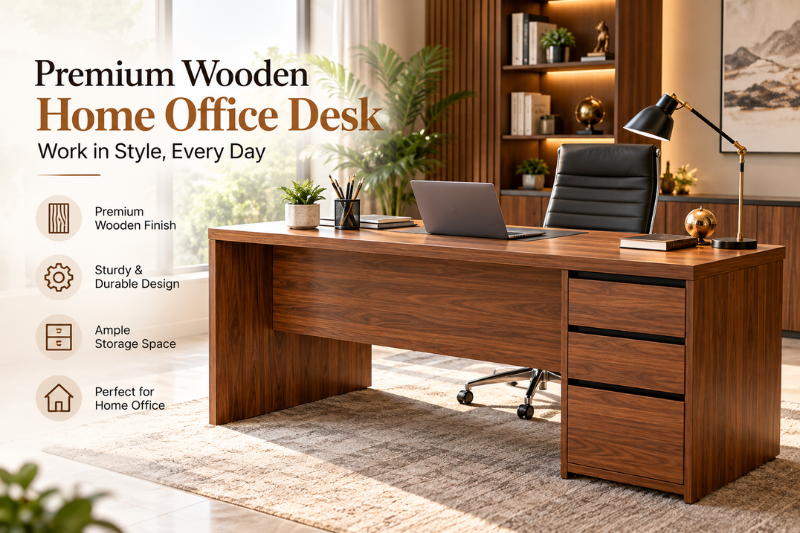
Premium Wooden Home Office Desk: Stylish and Functional Workspace Ideas for Modern Homes
A well-designed workspace can make everyday work more comfortable, organized, and visually appealing. A Premium Wooden Home Office Desk can become the central element of a productive home office by combining a practical work surface with attractive furniture design. For homeowners and professionals searching for workspace inspiration, Instagram offers many modern office styling ideas, while mkfurniture provides furniture solutions for home and office environments. The company mkfunriture focuses on furniture that combines creativity, quality, customization, aesthetics, and functionality. You can explore its furniture solutions through mkfurniture.
Why a Home Office Desk Matters
Working from home requires more than simply placing a laptop on any available table.
A dedicated desk creates a defined workspace where a person can focus on work, organize essential items, and maintain a consistent working routine.
The desk often becomes the central furniture piece in a home office. It determines how much workspace is available, where accessories are placed, how cables are managed, and how the surrounding storage is arranged.
A thoughtfully selected desk can also help the room look more organized.
Instead of using temporary furniture, a dedicated workstation provides a sense of permanence and structure.
For people who work remotely, manage businesses, study from home, attend online meetings, or perform creative work, the desk can become one of the most frequently used furniture pieces in the house.
What Is a Premium Wooden Home Office Desk?
A Premium Wooden Home Office Desk is a purpose-designed workstation that combines a durable work surface with thoughtful construction, storage possibilities, appropriate proportions, and a finish suited to a home office environment.
The word premium can describe several characteristics rather than one particular material.
These characteristics may include:
- Quality construction
- Suitable furniture materials
- Strong work surface
- Durable finish
- Practical dimensions
- Functional storage
- Cable management
- Comfortable legroom
- Modern design
- Customization options
- Appropriate hardware
The right desk should support the user’s actual working habits.
A designer who needs space for a monitor and drawing tablet may require a different desk from someone who primarily works on a laptop.
Similarly, a person handling documents may need drawers, while someone working digitally may prioritize cable management and monitor space.
Benefits of Wooden Home Office Furniture
Wooden furniture is popular for home offices because it can combine functionality with a warm visual character.
Warm Appearance
Wood introduces natural texture into a workspace.
Compared with purely industrial materials, wooden furniture can make a home office feel more connected to the rest of the house.
Design Flexibility
Wooden desks can be created in minimalist, traditional, contemporary, industrial, or luxury-inspired styles.
The finish can also be selected to complement walls, flooring, cabinets, and other furniture.
Storage Integration
A wooden desk can be designed with drawers, shelves, cabinets, or side storage.
This allows the workstation to perform more than one function.
Customization
A customized desk can be planned around the available wall, room dimensions, equipment, and storage requirements.
Long-Term Use
A well-designed desk can become a long-term part of the home office rather than a temporary workstation.
Choosing the Right Desk Size
Desk size should be based on the work being performed.
A compact laptop workstation may require considerably less width than a desk designed for two monitors, a printer, documents, and accessories.
Before selecting a desk, consider:
- Available wall width
- Room depth
- Monitor size
- Keyboard space
- Mouse movement
- Laptop placement
- Documents
- Writing space
- Printer requirements
- Storage requirements
- Cable routing
- Legroom
The desk should provide enough workspace without overwhelming the room.
Desk Width for Different Work Styles
A small desk can work well for basic laptop tasks.
A medium-sized desk can provide space for a monitor, keyboard, notebook, and everyday accessories.
A larger workstation may be suitable for professionals using multiple monitors or physical documents.
The correct width depends on the user’s workflow.
It is generally better to plan the work surface around actual equipment rather than choosing dimensions based only on the size of the room.
Desk Depth and Comfortable Working Space
Depth affects how far the monitor sits from the user and how much usable workspace remains in front of it.
A very shallow desk may feel cramped when a monitor, keyboard, and other accessories are placed on it.
A very deep desk may occupy unnecessary floor space.
The ideal depth should provide sufficient equipment space while preserving comfortable movement.
Wall-mounted desks can sometimes use limited space effectively, particularly in smaller rooms.
Desk Height Considerations
Desk height affects comfort during extended work sessions.
The height should work with the user’s chair and allow comfortable positioning of the arms while typing.
A desk should also provide sufficient space beneath the surface for the legs.
Fixed-height desks are common, while adjustable solutions can provide greater flexibility.
The chair, monitor, keyboard, and desk should be considered together rather than independently.
Desk With Drawers
Drawers are useful for items that need to remain close to the workstation.
Common drawer contents include:
- Stationery
- Notebooks
- Chargers
- Documents
- Pens
- Cables
- Small electronic accessories
- Office supplies
A drawer does not have to occupy the entire desk width.
A compact drawer unit can provide convenient storage while leaving most of the work surface open.
Desk With Side Cabinets
Side cabinets can increase storage without reducing the main work surface.
A cabinet positioned beside the desk can hold files, books, office equipment, or less frequently used items.
For home offices with limited space, an integrated side cabinet can create a compact workstation.
The cabinet height can also be coordinated with the desk for a continuous appearance.
Desk With Open Shelves
Open shelving provides quick access to frequently used items.
Books, files, decorative objects, plants, and equipment can be displayed on open shelves.
However, open shelves should not become overcrowded.
A mixture of functional and decorative objects can create a balanced workspace.
Closed storage can be used for items that need to remain hidden.
Floating Home Office Desk
A floating desk attaches to the wall and leaves the floor beneath it open.
This can make a small workspace feel less crowded.
The open floor area can also make cleaning easier.
Floating desks are particularly useful for compact bedrooms, study corners, apartments, and multipurpose rooms.
However, the wall and mounting system need to support the intended load.
Corner Office Desk
Corner desks can make use of otherwise underutilized areas.
An L-shaped configuration can provide two work surfaces.
One side can be used for a computer while the other can support documents, creative work, meetings, or equipment.
Corner desks can also separate different activities within the same room.
L-Shaped Wooden Desk
An L-shaped workstation can be useful for professionals who require substantial workspace.
One section may hold monitors and computing equipment while the second provides writing or project space.
It can also allow two people to work within the same room.
However, the corner configuration should be planned carefully so that drawers, chairs, doors, and walking paths do not interfere with each other.
Executive-Style Home Office Desk
An executive-style desk generally provides a larger visual presence.
It may feature a broad work surface, substantial side storage, drawers, or decorative detailing.
This style can suit dedicated home offices where the desk is intended to become a major visual element.
The surrounding furniture should be proportionate to the desk so that the room remains balanced.
Minimalist Wooden Desk Design
Minimalist furniture focuses on clean lines and practical simplicity.
A minimalist desk may feature:
- Straight edges
- Flat surfaces
- Limited hardware
- Neutral finishes
- Integrated cable management
- Simple storage
- Balanced proportions
Minimalism can be especially useful in smaller home offices because reducing visual clutter can make the room feel more spacious.
Modern Desk With Cable Management
Cable management is one of the most important practical features of a contemporary workstation.
Computers, monitors, chargers, speakers, lamps, and networking equipment can create multiple cables.
A desk can incorporate cable holes, rear channels, concealed compartments, or dedicated cable openings.
Keeping cables organized can make the workspace easier to clean and visually calmer.
Cable management should be planned before manufacturing rather than added as an afterthought.
Computer Desk vs General Work Desk
A computer desk is usually designed around electronic equipment.
A general work desk may provide a broader surface for writing, paperwork, planning, or creative activities.
Some users need both functions.
A versatile desk can provide a computer area while leaving sufficient space for notebooks, documents, or other activities.
Understanding the primary purpose of the desk makes furniture selection easier.
Study Desk for Adults Working From Home
A home office desk can also serve as a study workstation.
Adults may use the same furniture for professional work, online courses, certification programs, reading, or personal projects.
A flexible layout can therefore increase the usefulness of the furniture.
A desk with drawers and shelves can accommodate books and stationery without requiring separate storage.
Home Office Desk for Small Rooms
Small rooms require efficient furniture planning.
A slim desk can fit against a wall without taking up excessive floor space.
Floating furniture can create additional visual openness.
Vertical storage can be added above the desk.
A wall-mounted shelf can hold books and accessories while keeping the desktop clear.
Light-colored finishes can also help maintain an airy appearance.
Home Office Desk for a Bedroom
A bedroom may need to perform several functions.
When a workspace is located inside the bedroom, the desk should coordinate with the existing furniture.
A compact workstation can be placed near a window or against a suitable wall.
Storage should remain organized so that work materials do not spread into the sleeping area.
A simple desk design can help visually separate the work zone from the rest of the bedroom.
Home Office Desk for a Living Room
Some homes do not have a separate office room.
A workstation may therefore be placed within a living room.
In this situation, furniture should complement the surrounding interior.
A slim wooden desk can function as a workspace without looking like traditional office furniture.
A coordinated finish can help connect the desk with the living room’s existing furniture.
Home Office Desk Near a Window
A window can provide natural light during the day.
A desk positioned near a window can create an attractive workspace, although direct sunlight should be considered when positioning monitors and other equipment.
Glare can affect screen visibility.
The desk should also avoid obstructing window access.
Curtains, blinds, or adjustable lighting can help manage changing daylight.
Choosing the Right Wood Finish
The finish plays an important role in the desk’s appearance.
Light wood can create an open and natural look.
Medium wood can provide a balanced appearance.
Dark wood can create a more formal or sophisticated workspace.
Matte finishes generally offer a subtle appearance, while more reflective finishes can create a polished look.
The finish should coordinate with the room rather than being selected independently.
Natural Wood Appearance
A natural wood appearance can make the workspace feel warm and comfortable.
Visible grain provides texture and can become a subtle decorative feature.
Natural finishes can work particularly well with neutral walls, plants, woven accessories, and simple lighting.
Two-Tone Desk Designs
Two-tone desks combine different colors or finishes.
For example, a wood-toned work surface can be paired with a darker cabinet.
Another option is a natural wood finish combined with a neutral body.
Two-tone designs can help define different components of the desk.
They can also connect the workstation with existing room colors.
Desk With Built-In Bookshelf
A desk with integrated shelving can create a complete workstation.
Books can be placed within easy reach while decorative objects can add personality.
This arrangement is particularly useful when wall space is limited.
The shelves should be proportioned so that they do not make the desk feel visually heavy.
Desk With File Storage
Professionals working with documents may need dedicated file storage.
A cabinet or drawer can keep important papers close to the workstation.
Files should be organized according to the user’s workflow.
Frequently used documents should be accessible, while archived material can be stored separately.
Creating a Clutter-Free Desktop
Even a large desk can become cluttered if every available surface is filled.
A simple organization system can keep the main work area clear.
Use drawers for small objects, shelves for books, and cable management for electronic equipment.
A desk mat, pen holder, document tray, or small organizer can provide structure.
The objective is to keep frequently used items accessible without covering the entire work surface.
Desk Accessories That Improve Functionality
Useful accessories can include:
- Monitor stand
- Desk lamp
- Keyboard tray
- Cable organizer
- Document holder
- Pen holder
- Laptop stand
- Headphone holder
- Desk mat
- Storage trays
Accessories should be selected according to actual needs.
Adding too many items can create the clutter the desk was intended to prevent.
Matching the Desk With Office Storage
A home office often includes more than one furniture piece.
The desk may be combined with a bookcase, filing cabinet, storage cabinet, wall shelves, or display unit.
Using complementary finishes can create a coordinated appearance.
The furniture does not have to be identical, but repeating materials or colors can help create visual continuity.
Custom Furniture for Home Offices
Every workspace has different requirements.
A customized desk can be designed around room dimensions, equipment, storage requirements, and personal workflow.
Customization can include:
- Desk width
- Desk depth
- Desk height
- Drawer configuration
- Cabinet placement
- Shelf arrangement
- Finish
- Cable openings
- Monitor sections
- Printer storage
- Side storage
This flexibility can be particularly useful for rooms with unusual dimensions.
mkfunriture and Customized Furniture
The MK Furniture website describes its approach as rooted in creativity, quality, and customization, with furniture designed to align with individual requirements and spaces. It also lists study tables and office furniture among its offerings.
For homeowners looking for customized furniture solutions, mkfunriture can be considered when planning a workspace around specific room dimensions and functional needs.
You can explore the company’s furniture portfolio and home and office furniture solutions through mkfurniture.
Planning the Workspace Before Buying
The desk should be selected after understanding the room.
Measure the available wall space.
Identify electrical outlets.
Determine where internet equipment will be positioned.
Measure the computer monitor.
Consider the chair’s movement.
Check door and window clearance.
Identify storage requirements.
This planning process reduces the possibility of purchasing furniture that does not work with the room.
A home office desk is the foundation of a functional workspace. The right design should provide sufficient working space, comfortable proportions, appropriate storage, organized cables, and a finish that complements the surrounding interior.
A Premium Wooden Home Office Desk can combine these practical requirements with the natural character of wooden furniture.
From compact floating desks to large L-shaped workstations, the available design possibilities allow homeowners to create a workspace suited to their daily activities.
In Part 2, we will explore desk placement, ergonomics, lighting, storage organization, modern design styles, maintenance, buying mistakes, customization, productivity-focused workspace planning, FAQs, and a final buying checklist.
Premium Wooden Home Office Desk: Workspace Planning, Styling, Maintenance and Buying Guide
Choosing the Best Placement for Your Home Office Desk
Where you place your desk can significantly affect how comfortable and productive your workspace feels. A good location should provide enough natural light, sufficient movement space, access to power outlets, and a practical background for video calls.
A desk positioned near a window can provide pleasant daylight during working hours. However, placing a computer monitor directly in front of a bright window may create glare. Positioning the desk perpendicular to the window is often a practical solution because it allows natural light to enter without placing the screen directly against the light source.
For rooms with limited space, a wall-facing arrangement can create a focused working zone. You can use shelves, cabinets, or wall-mounted storage above the desk to make better use of vertical space.
Creating a Comfortable Computer Workspace
A home office desk should support the way you actually work. If your daily tasks involve a computer, monitor, keyboard, documents, and accessories, the desktop should have enough usable surface area to keep frequently used items within comfortable reach.
A practical workspace can include:
- Computer or laptop area
- Keyboard and mouse space
- Notebook area
- Document storage
- Charging point
- Desk lamp
- Small stationery organizer
- Cable management system
Avoid filling the entire desk with decorative objects. A clean surface provides greater flexibility and makes it easier to move between different tasks.
Ergonomic Desk Planning
Comfort should be considered when selecting home office furniture. The desk and chair should work together rather than being selected independently.
The desk should provide enough legroom, while the chair should allow you to sit comfortably with your feet supported. Your monitor should be positioned at a comfortable viewing height, and frequently used items should be easy to reach without excessive stretching.
Desk depth is also important. A very shallow desk may not provide enough distance between your eyes and a monitor, while an excessively deep desk can make everyday items difficult to reach.
For people working several hours a day from home, these small planning decisions can make a noticeable difference to the overall workspace experience.
Lighting for a Home Office Desk
Lighting is an important part of a functional home office. Natural daylight can make a workspace feel open and pleasant, while task lighting can provide focused illumination during evenings or cloudy days.
A desk lamp can be placed to one side of the workspace to reduce shadows. If you regularly write by hand, consider the direction from which the light reaches the desk so your hand does not create a shadow across your work.
Modern home office furniture can also incorporate integrated lighting into shelves or storage units. This can create a refined appearance while providing additional illumination.
The goal is to combine ambient room lighting with focused task lighting rather than depending on a single bright ceiling light.
Cable Management Ideas
Modern workspaces often contain several cables for monitors, laptops, chargers, speakers, printers, and other equipment. Without planning, these cables can quickly make even a beautiful wooden desk look cluttered.
A desk can be designed with:
- Cable holes
- Rear cable channels
- Hidden power-strip compartments
- Under-desk cable trays
- Dedicated charging areas
- Concealed wire routes
A customized wooden office desk can incorporate these features directly into the furniture. This approach keeps cables organized without requiring visible clips and loose wires across the desktop.
Cable management is particularly useful for desks positioned in open areas of a home because it helps maintain a clean appearance from different viewing angles.
Creating a Small Home Office
Not every home has a separate office room. A compact workspace can be created in a bedroom, living room, hallway, guest room, or unused corner.
A narrow desk can work well where floor space is limited. Floating designs can leave the floor visually open, while wall-mounted shelves provide storage without requiring additional floor-standing furniture.
For a small room, consider combining:
- Compact wooden desk
- Wall shelves
- Vertical cabinet
- Small drawer unit
- Cable management
- Adjustable task lighting
The furniture should be proportional to the room. A large desk in a small area can make the space feel crowded, while an undersized desk may not provide enough working surface.
Home Office Under a Staircase
The area beneath a staircase is often difficult to use effectively, but it can become a useful workspace with carefully planned furniture.
A desk can follow the available wall length, with storage cabinets positioned around the available height. Open shelves can display books, while closed cabinets can hide documents and office supplies.
A customized design is especially useful for irregular spaces because the desk can be built around the dimensions of the available area.
The result can be a dedicated working zone without requiring a separate room.
Using a Guest Room as a Home Office
A guest bedroom can serve multiple purposes when furniture is selected carefully. Instead of creating a permanent office arrangement that occupies the entire room, use compact furniture that complements the room’s other functions.
A wooden desk can be positioned against a wall, while storage can be integrated into a wardrobe or shelving system. When guests arrive, the workspace can remain visually organized without dominating the room.
Choosing furniture with a neutral wood finish can also make it easier to coordinate the workspace with existing bedroom furniture.
Designing a Creative Work Area
Home offices are not limited to computer-based work. Designers, writers, architects, artists, freelancers, and business owners may need larger working surfaces.
A creative workspace may require:
- Larger desktop
- Drawing or writing area
- Open shelves
- Reference-book storage
- Document drawers
- Equipment storage
- Flexible lighting
For these users, desk functionality should be based on workflow rather than simply appearance.
A well-designed wooden workstation can provide both a professional environment and the flexibility needed for creative activities.
Home Office Furniture for Business Owners
People running a business from home often need more than a simple computer desk. Documents, invoices, files, stationery, client materials, and technology may all need dedicated storage.
An executive-style wooden desk with drawers or side cabinets can provide a more structured arrangement.
A larger desk can also provide space for client meetings when the home office occasionally doubles as a consultation area.
The furniture should communicate the desired atmosphere while remaining practical for everyday business activities.
Creating a Professional Video Call Background
Video meetings have become an important part of many home-based work routines. The area behind the desk can therefore become part of the overall workspace design.
A clean wall, wooden shelving, selected books, plants, or a simple storage cabinet can create an organized background.
Avoid filling the background with excessive objects. A simple arrangement often looks more professional and keeps attention on the conversation.
A wooden desk combined with coordinated storage can create a consistent visual identity across the entire workspace.
Styling a Wooden Office Desk
Furniture styling should support functionality rather than reduce usable space.
A simple desk arrangement can include a desk lamp, notebook, small plant, a few books, and an organized stationery holder. If the desk has open shelves, decorative objects can be grouped rather than spread across every shelf.
Use visual balance when arranging accessories. Taller objects can be placed toward the back, while frequently used items should remain easily accessible.
The natural texture of wood can also serve as a decorative element, reducing the need for excessive accessories.
Adding Plants to the Workspace
Indoor plants can add a natural element to a home office. A small plant can be placed on a shelf or in a corner where it does not interfere with work.
For smaller desks, avoid using large planters that consume valuable working space. Wall shelves and nearby side tables can provide alternative locations for greenery.
Plants should also be positioned carefully to avoid moisture or water spills reaching wooden furniture.
Bookshelves and Desk Storage
A desk becomes more useful when storage is located close to the working area.
A bookshelf above or beside the desk can hold reference books, notebooks, folders, and decorative items. Closed cabinets can be used for documents and less frequently accessed supplies.
Combining open and closed storage provides flexibility. Open shelves keep frequently accessed items visible, while closed storage helps maintain a cleaner visual appearance.
For a coordinated interior, the wood tone and finish of the desk and storage furniture can be matched.
Matching the Desk With Other Furniture
A home office should feel connected to the rest of the interior. The desk does not necessarily need to be identical to every other piece of furniture, but its material, color, or design language can complement the surrounding furniture.
For example, a warm wood desk can work with neutral walls and matching shelving. A darker finish can create a more formal appearance, while a lighter wood tone can make a compact room feel more open.
If the home already contains wooden wardrobes, cabinets, or shelves, choosing compatible finishes can create visual continuity.
Modern Wooden Desk Styles
Modern furniture design includes several styles that can be adapted for home offices.
Minimalist Wooden Desk
A minimalist desk focuses on clean lines and limited visual details. It works particularly well in contemporary interiors where simplicity is important.
Fluted Wooden Desk Design
Fluted or grooved wood details can introduce texture without requiring complicated decoration. These details can be incorporated into drawer fronts, side panels, or matching storage cabinets.
Handleless Desk Storage
Handleless drawers and cabinets create a streamlined appearance. Push-to-open mechanisms or recessed grips can reduce visual clutter.
Two-Tone Wooden Desk
Combining two complementary finishes can create a more contemporary look. For example, a natural wood desktop can be paired with a darker storage base.
Executive Wooden Desk
An executive design generally provides a larger work surface and additional storage. It can be suitable for larger home offices or users who require a more substantial workstation.
Choosing the Right Wood Finish
The finish has a strong influence on the final appearance of furniture.
Light wood finishes can create a bright and contemporary environment. Medium wood tones offer versatility, while darker finishes can create a formal and sophisticated atmosphere.
The best choice depends on the room’s flooring, wall color, lighting, existing furniture, and overall design direction.
Before selecting a finish, consider how the desk will look during both daytime and artificial lighting.
Maintenance of Wooden Office Furniture
Regular maintenance helps keep wooden furniture looking neat and well cared for.
MK Furniture recommends regular dusting with a soft, dry cloth, avoiding direct sunlight and heat, using coasters or placemats, and cleaning spills promptly. mkfurniture
These simple habits can help protect the furniture surface during everyday use.
Avoid leaving wet objects, hot items, or spilled liquids on the desk for long periods. Keeping the working surface organized also makes cleaning easier.
Protecting the Desk Surface
A home office desk may experience constant contact with laptops, keyboards, notebooks, coffee cups, stationery, and other objects.
Using a desk mat can help protect the main working area from minor scratches. Coasters can help prevent moisture marks from beverages.
Heavy equipment should also be placed carefully rather than dragged across the surface.
These small precautions are especially useful for maintaining the appearance of a frequently used workspace.
Keeping the Workspace Organized
Good furniture design becomes more effective when combined with consistent organization.
Use drawers for smaller objects, closed cabinets for documents, and shelves for books or frequently accessed materials.
A simple organization system can divide items into categories such as:
- Daily-use items
- Documents
- Stationery
- Technology accessories
- Reference materials
- Personal items
When every category has a dedicated place, it becomes easier to keep the desktop clear.
Common Home Office Desk Buying Mistakes
Several mistakes can reduce the usefulness of a desk.
One common mistake is selecting furniture based only on appearance without checking dimensions. Another is ignoring cable management and storage requirements.
Some buyers also choose desks that are too large for their rooms. Others select very compact desks and later discover that there is not enough space for their computer equipment.
Before purchasing, measure the available area and identify the equipment that needs to sit on the desk.
Think about how you work today and how the workspace may need to change in the future.
Ready-Made vs Customized Desk
Ready-made furniture can be convenient when standard dimensions suit the room. It can provide a faster solution and may offer a variety of established designs.
Customized furniture provides greater flexibility when the room has unusual dimensions or when specific storage requirements need to be included.
A customized desk can be designed around:
- Wall dimensions
- Computer equipment
- Storage requirements
- Cable routing
- Drawer preferences
- Existing furniture
- Room design
The decision should depend on the space, budget, functionality, and level of personalization required.
How to Choose the Right Home Office Desk
Before selecting a desk, consider the following questions:
- How much space is available?
- What equipment will be placed on the desk?
- Do you need drawers?
- Do you need closed storage?
- Will the desk be used for computer work or other activities?
- Where are the power outlets?
- How much cable management is required?
- What wood finish matches the room?
- Is a standard size suitable?
- Would customized furniture solve specific space requirements?
Answering these questions can make the selection process more practical.
Frequently Asked Questions
What size desk is suitable for a home office?
The suitable size depends on the room and the equipment you use. Measure the available wall and floor space before selecting the desk.
Is wooden furniture suitable for a modern home office?
Yes. Wooden furniture can work with minimalist, contemporary, traditional, industrial, and other interior styles depending on its shape, finish, and supporting furniture.
Should a home office desk have drawers?
Drawers are useful for stationery, documents, chargers, and other smaller items. However, a desk without drawers can work well when separate storage is already available.
How can I hide computer cables?
Cable holes, rear channels, under-desk trays, and dedicated charging compartments can help keep cables organized and less visible.
Is a customized desk useful for a small room?
Customization can be useful when standard furniture does not fit the available dimensions. A desk can be designed around specific wall measurements and storage requirements.
How do I maintain a wooden desk?
Regularly dust the surface with a soft dry cloth, clean spills promptly, and protect the furniture from excessive direct sunlight, heat, moisture, and unnecessary abrasion.
Can a home office desk be used in a bedroom?
Yes. A compact desk can be integrated into a bedroom, especially when space is limited. Matching the desk finish with existing furniture can help maintain a cohesive appearance.
How can I make a home office look professional?
Use organized storage, appropriate lighting, limited desk accessories, clean cable management, and a consistent furniture finish. A simple background can also help during online meetings.
Is a large executive desk suitable for every home?
No. Executive desks generally require more floor space. They are better suited to larger rooms where the furniture can be used without restricting movement.
Final Buying Checklist
Before choosing your home office furniture, review these points:
- Measure the available space.
- Decide the required desk width and depth.
- Identify all equipment that needs to fit on the desk.
- Plan cable management.
- Decide whether drawers are required.
- Consider additional storage.
- Choose a suitable wood finish.
- Check comfortable legroom.
- Consider lighting and desk placement.
- Compare ready-made and customized options.
- Select furniture that complements the rest of the home.
A workspace should be designed around real working habits rather than appearance alone.
A thoughtfully designed home office can make everyday work more organized, comfortable, and visually appealing. The right desk provides a foundation for the entire workspace, while suitable storage, lighting, cable management, and furniture placement help create a practical environment.
Wooden furniture offers flexibility across different interior styles, from minimalist workspaces to larger executive home offices. The key is to select dimensions, storage features, materials, and finishes that match the room and the way the workspace will actually be used.
For homeowners who need furniture designed around specific dimensions or storage requirements, customized furniture can provide additional flexibility. The approach used by mkfunriture focuses on creating furniture around individual space and functional requirements.
Whether the workspace is a dedicated office, a bedroom corner, a guest room, or an area beneath the staircase, careful planning can turn even a compact area into an efficient work environment.