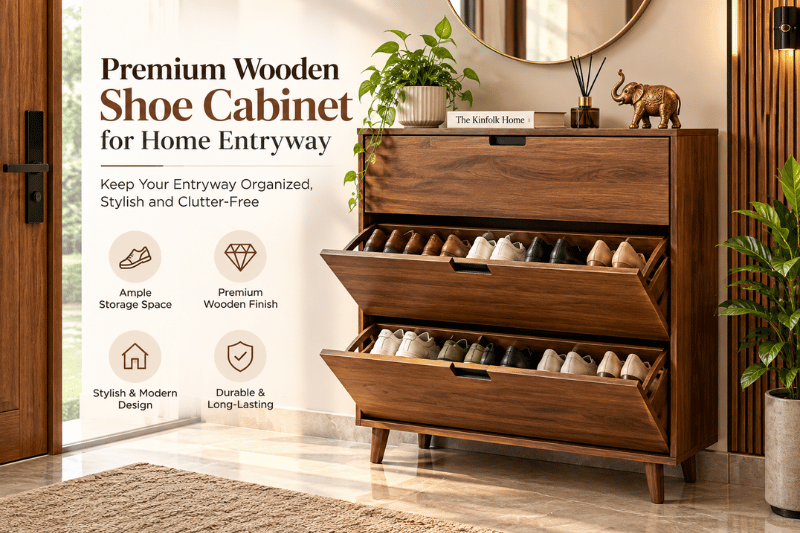
Premium Wooden Shoe Cabinet for Home Entryway: Stylish Storage Ideas for Modern Homes
A well-organized entrance creates the first impression of a home, and choosing the right Premium Wooden Shoe Cabinet for Home Entryway can make the space cleaner, more practical, and visually appealing. For homeowners exploring stylish furniture ideas, Instagram is a useful source of inspiration for entryway designs, while mkfurniture offers ideas and furniture solutions for modern interiors. The company mkfunriture focuses on practical wooden furniture that combines storage, functionality, and attractive design. You can explore more furniture solutions through mkfurniture.
Why Entryway Shoe Storage Matters
The entrance of a home is one of the most frequently used areas, yet it is often one of the least organized. Shoes, sandals, slippers, sports footwear, and everyday footwear can quickly create clutter when there is no dedicated storage.
A well-designed shoe cabinet provides a specific place for footwear while helping maintain a neat appearance. Instead of leaving shoes near the door, homeowners can organize them inside a cabinet according to family members, frequency of use, footwear type, or season.
Modern shoe storage is no longer limited to simple racks. Furniture manufacturers now offer cabinets with doors, drawers, shelves, ventilation features, seating sections, and decorative finishes. This makes it possible to choose a design that works both as storage furniture and as part of the interior design.
For contemporary homes, wooden furniture is especially useful because it can introduce warmth into an entrance. Wood tones can complement flooring, doors, wall colors, consoles, mirrors, and other furniture pieces.
What Is a Premium Wooden Shoe Cabinet for Home Entryway?
A Premium Wooden Shoe Cabinet for Home Entryway is a purpose-built storage unit designed to keep footwear organized near the entrance while contributing to the overall appearance of the space.
Unlike basic open shoe racks, a cabinet generally provides enclosed storage. Doors hide footwear from view and create a cleaner visual appearance. Depending on the design, the cabinet may include adjustable shelves, drawers, ventilation openings, or a combination of storage compartments.
The word premium can refer to several characteristics. These may include the quality of materials, construction, hardware, finishing, storage planning, proportions, customization options, and overall design.
A good shoe cabinet should not simply hold shoes. It should work comfortably with the dimensions and routine of the household.
For example, a family with children may need several easily accessible compartments, while a couple living in a compact apartment may prefer a slim cabinet with vertical storage.
Benefits of Wooden Shoe Cabinets
Wooden shoe cabinets offer several practical and visual advantages.
1. Organized Footwear Storage
The primary purpose of a shoe cabinet is organization. Dedicated shelves allow different types of footwear to be separated instead of being stacked randomly.
Daily footwear can be kept on lower shelves, formal shoes can occupy middle compartments, and less frequently used footwear can be placed higher.
2. Cleaner Entryway
An open collection of footwear can make even a large entrance appear untidy. Closed cabinet doors conceal footwear and provide a cleaner appearance.
This is particularly helpful in homes where the entrance is visible from the living room.
3. Better Use of Vertical Space
A tall shoe cabinet can use vertical wall space without taking up excessive floor area.
This makes vertical shoe storage particularly useful for apartments, narrow hallways, and compact entryways.
4. Design Flexibility
Wooden cabinets can be designed in numerous styles, including minimalist, contemporary, traditional, transitional, industrial, and luxury-inspired designs.
Different finishes can also create very different visual effects.
5. Long-Term Furniture Value
A well-designed cabinet can serve the household for years when it is made with appropriate materials and maintained properly.
Its usefulness can also extend beyond footwear storage if the internal configuration is flexible.
Choosing the Right Shoe Cabinet Size
Size is one of the most important considerations when selecting entryway storage.
Before purchasing furniture, measure the available wall width, floor depth, ceiling height, and surrounding clearance. Also consider doors, windows, electrical switches, stairways, and walking paths.
A cabinet that is too deep may obstruct movement. A cabinet that is too narrow may not provide sufficient storage.
Width
The required width depends on the amount of footwear and the available wall space.
A compact cabinet may be suitable for a small household, while a wider unit can accommodate footwear for larger families.
Height
Tall cabinets are useful when floor space is limited. They can provide multiple storage levels within a relatively small footprint.
However, the top section should remain accessible enough for items that are used regularly.
Depth
Shoe cabinets need enough depth to accommodate footwear without unnecessarily projecting into the passage.
Slim designs are particularly useful for narrow entrances.
Internal Configuration
The outside dimensions do not tell the complete story. Two cabinets with the same external dimensions can have very different storage capacities depending on shelf spacing and internal construction.
Shoe Cabinets for Small Entryways
Small homes require careful furniture planning. A bulky storage cabinet can make an already narrow entrance feel crowded.
Slim-profile cabinets are therefore popular for compact apartments and narrow hallways.
Vertical storage is another practical solution. Instead of extending the cabinet across a large section of the wall, homeowners can use height to create additional compartments.
A floating cabinet can also create a visually lighter appearance. By leaving some floor area visible underneath, the entryway may feel more open.
Light-colored wood finishes can further support an airy appearance, especially when combined with light walls and reflective surfaces.
Shoe Cabinets for Large Entryways
Larger entrances provide more design opportunities.
A wide shoe cabinet can become a central furniture element and may be combined with a mirror, bench, decorative panel, open shelf, or storage drawer.
For larger families, the cabinet can be divided into zones. Each family member may have dedicated shelves, reducing confusion and making everyday organization easier.
A large entryway can also accommodate a furniture composition rather than a single cabinet.
For example, a cabinet can sit beneath a large mirror while a small bench occupies one side. Decorative lighting and wall art can complete the arrangement.
Closed vs Open Shoe Storage
Both open and closed storage have practical uses.
Open racks provide quick access. Shoes can be taken out without opening doors, which can be convenient for everyday footwear.
However, open racks expose footwear to view and can make the entrance appear busy when many shoes are stored together.
Closed cabinets create a more visually controlled environment. Doors conceal footwear and can protect shoes from excessive dust.
For formal interiors, closed storage often works well because it allows the entrance to maintain a furniture-focused appearance rather than a utility-focused appearance.
Shoe Cabinet With Adjustable Shelves
Adjustable shelves increase the flexibility of storage.
Not all footwear has the same height. Flats, sandals, sneakers, boots, heels, and larger footwear can require different amounts of vertical space.
Fixed shelves may leave unused gaps, while adjustable shelves can be repositioned according to changing storage needs.
This feature is particularly useful for families because different people may use different types of footwear.
When evaluating a cabinet, homeowners should consider whether the shelves can be removed or repositioned without damaging the structure.
Shoe Cabinet With Drawers
Drawers can make an entryway cabinet more versatile.
Small drawers can store socks, shoe-care products, keys, laces, polish, brushes, or other accessories.
A drawer placed near the top of the cabinet can function as a convenient drop zone for everyday items.
However, drawers should be planned according to actual storage requirements. Too many drawers can reduce the amount of open shelf space available for footwear.
A balanced combination of shelves and drawers can provide better functionality.
Ventilation in Shoe Storage
Footwear storage should consider airflow.
Shoes can retain moisture and odor, particularly after outdoor activity or during humid weather. Completely enclosed storage without appropriate ventilation may not be ideal for every household.
Ventilation openings can support airflow while maintaining the overall appearance of the cabinet.
Ventilated doors, small rear openings, louvered sections, or carefully positioned gaps are examples of design approaches that can improve air circulation.
The exact ventilation design should depend on the cabinet material, location, construction, and household requirements.
Choosing the Right Wood Finish
The finish of an entryway cabinet affects the entire visual character of the space.
Natural wood finishes can create a warm and timeless appearance. Light wood tones can work particularly well in smaller entrances.
Medium wood finishes offer versatility and can coordinate with many interior styles.
Dark wood tones can create a sophisticated appearance, particularly when used against lighter walls.
Matte finishes are popular in contemporary interiors because they tend to provide a subtle appearance without excessive reflection.
Gloss finishes can create a more polished visual effect but may show fingerprints and marks more easily.
The best choice depends on the existing furniture, flooring, wall color, lighting, and personal preferences.
Matching the Cabinet With the Main Door
The main entrance door is one of the strongest visual elements in an entryway.
The shoe cabinet does not necessarily need to match the door exactly. Instead, the two elements can complement each other through similar wood tones, hardware finishes, textures, or proportions.
For example, a natural wood door can work with a lighter cabinet that shares similar undertones.
A dark door can also be paired with a contrasting light cabinet to create visual balance.
Matching every furniture piece exactly can sometimes make an interior feel overly coordinated. Subtle coordination often produces a more natural result.
Combining a Shoe Cabinet With a Mirror
A mirror is one of the most useful additions to an entryway.
It provides a practical place for a final appearance check before leaving the house and can also make the entrance appear larger.
A mirror positioned above a shoe cabinet can create a strong vertical composition.
The size of the mirror should relate to the cabinet beneath it. A very small mirror above a wide cabinet may appear disconnected, while an oversized mirror can dominate the entire arrangement.
Framed mirrors can introduce additional texture, while frameless mirrors may support minimalist interiors.
Entryway Shoe Cabinet With Seating
A cabinet with an integrated seating section can provide additional convenience.
Sitting down while putting on or removing footwear is useful for children, older family members, and anyone who prefers not to stand while changing shoes.
A bench can be incorporated into the cabinet structure or positioned alongside it.
Storage beneath the seating area can be used for slippers, frequently used footwear, bags, or baskets.
Cushions and upholstery can also introduce softness into a wood-dominated entrance.
Floating Shoe Cabinets
Floating cabinets are mounted above the floor and create a gap beneath the storage unit.
This design can make the cabinet appear lighter and can simplify floor cleaning.
The open area underneath can also be used for frequently worn slippers or decorative lighting.
However, floating furniture requires suitable wall support and appropriate installation. The construction and mounting system should be selected according to the cabinet’s weight and wall type.
Minimalist Shoe Cabinet Designs
Minimalist furniture focuses on simple lines, limited visual clutter, and practical proportions.
A minimalist shoe cabinet may feature flat doors, concealed handles, neutral finishes, and carefully organized compartments.
Handleless doors can further simplify the appearance.
Minimalism does not mean reducing functionality. Internal storage can still be highly organized while the exterior remains visually simple.
This makes minimalist shoe cabinets suitable for modern apartments, contemporary houses, and clean-lined interiors.
Fluted Wooden Shoe Cabinets
Fluted textures have become a popular furniture detail because they introduce depth without requiring complicated ornamentation.
Vertical grooves can make a cabinet visually taller and create a decorative surface.
Fluted doors can be combined with simple hardware or handleless openings.
When used in an entryway, the vertical texture can also complement a tall mirror or vertical wall panel.
The key is balance. If several nearby surfaces already contain strong textures, a simpler cabinet face may create a more harmonious result.
Handleless Shoe Cabinet Designs
Handleless cabinets provide a clean appearance.
Push-to-open mechanisms, recessed grips, or integrated edge profiles can reduce the visual presence of hardware.
This approach works well with minimalist and contemporary interiors.
However, the opening mechanism should be chosen according to expected daily use. A cabinet used several times every day should have hardware that is convenient and durable.
Two-Tone Wooden Cabinets
A two-tone design combines two finishes within the same furniture piece.
For example, a natural wood body can be paired with a darker door finish. Another option is a wood finish combined with a neutral painted section.
Two-tone furniture can help connect the cabinet to other elements of the room.
The design should remain visually balanced. Too many contrasting colors can make a compact entryway feel busy.
Why Customization Can Matter
Every home has different dimensions.
A ready-made cabinet may fit a standard wall, but customization can help when the available space is unusually narrow, wide, tall, or irregular.
Customized furniture can also address specific storage requirements.
A household may want separate shelves for different family members, a dedicated compartment for boots, a drawer for accessories, or an integrated seating area.
The goal of customization should be practical improvement rather than adding unnecessary complexity.
Planning Storage Before Buying
Before selecting a cabinet, make an inventory of the footwear that needs to be stored.
Count everyday shoes, formal shoes, sandals, sports shoes, children’s footwear, seasonal footwear, and specialty items.
Then consider how frequently each category is used.
Frequently used footwear should be easy to access. Seasonal or occasional footwear can be placed in higher or less accessible compartments.
This simple planning exercise can prevent the cabinet from becoming cluttered after installation.
Creating a Functional Entryway Zone
A successful entrance usually has several functions.
It may serve as a place to remove shoes, store keys, hang bags, check appearance, and transition between outdoor and indoor spaces.
A shoe cabinet should therefore be considered as part of the complete entryway rather than as an isolated furniture item.
Combining shoe storage with hooks, a mirror, a small bench, or a console can create a more functional zone.
The exact combination depends on the size of the entrance.
Safety Considerations
Furniture placed near an entrance should not obstruct movement.
Cabinet doors should open without blocking the main pathway. Drawers should have enough clearance for comfortable use.
Tall cabinets should be securely installed when necessary, particularly in homes with children.
Sharp corners should also be considered when furniture is placed in narrow walkways.
Good furniture planning combines aesthetics with everyday safety.
How mkfunriture Can Support Modern Furniture Needs
Furniture should reflect both the practical requirements of a household and the visual language of its interior.
mkfunriture focuses on wooden furniture concepts that can help homeowners create organized and attractive residential spaces. From storage furniture to other home furniture solutions, thoughtful design can make everyday living more convenient.
For homeowners researching furniture ideas, the mkfurniture website can be explored for additional inspiration and furniture options.
Premium Wooden Shoe Cabinet for Home Entryway: Design, Organization, Styling and Buying Guide
The entrance is more than a passage between the outdoors and the interior of a house. It is a functional transition zone where footwear, keys, bags, umbrellas, and other everyday items are handled. A thoughtfully selected Premium Wooden Shoe Cabinet for Home Entryway can help bring order to this space while becoming an attractive part of the home’s interior design.
Modern Entryway Storage Trends
Modern homeowners increasingly expect storage furniture to perform several functions at once.
Instead of using a basic shoe rack, many people prefer furniture that combines storage with visual appeal.
Current design approaches include:
- Tall vertical cabinets
- Slim shoe storage units
- Floating cabinets
- Cabinets with integrated benches
- Fluted wooden doors
- Handleless designs
- Glass or open display sections
- Two-tone finishes
- Cabinets with drawers
- Customized storage walls
These designs demonstrate that practical furniture can also contribute to the character of an interior.
Choosing Materials for Shoe Cabinets
Material selection affects durability, appearance, maintenance, and cost.
Different furniture materials can be suitable for different requirements. Solid wood can provide a natural appearance and substantial construction. Engineered wood can provide flexibility in furniture manufacturing and finishing.
The appropriate material depends on the intended design, location, usage, budget, and manufacturing specifications.
Homeowners should ask about the material used for the cabinet body, doors, shelves, back panels, and other structural components.
The finish should also be evaluated because it affects how the furniture looks and how easily it can be maintained.
Wood Grain and Interior Style
Wood grain adds natural character to furniture.
Some interiors benefit from visible grain because it introduces warmth and texture. Others may use painted or uniform finishes for a cleaner contemporary appearance.
When selecting a cabinet, consider the visual relationship between the wood grain and nearby furniture.
A highly decorative grain may become a focal point, while a subtle grain can blend into the background.
The choice should support the overall interior rather than compete with other major design features.
Cabinet Placement Near the Main Door
The position of a shoe cabinet can significantly influence how convenient the entryway feels.
The cabinet should ideally be close enough to the entrance for practical footwear changes without creating a blockage.
If the main door opens inward, furniture should not interfere with its movement.
For apartments with narrow passages, a shallow cabinet positioned against a suitable wall can preserve circulation space.
In larger homes, the cabinet can be incorporated into a larger entrance composition.
Shoe Cabinet Near a Staircase
In many homes, the staircase begins close to the entrance.
The area below or beside a staircase may provide an opportunity for customized shoe storage.
A cabinet can be designed around the available geometry, although dimensions and access need careful planning.
Low sections can store everyday footwear, while taller sections can use vertical space.
The cabinet should not interfere with stair access or create a narrow passage.
Shoe Storage in Apartment Entrances
Apartment entrances often have limited space.
A compact storage solution should therefore prioritize vertical organization and shallow depth.
A wall-mounted unit can help preserve visible floor area.
Another useful approach is to combine several functions into one furniture piece.
For example, the cabinet could contain footwear shelves, a small drawer, hooks, and a mirror.
This approach reduces the number of separate furniture items needed in the entrance.
Organizing Footwear by Frequency
One of the easiest ways to keep shoe storage organized is to arrange footwear according to frequency of use.
Daily footwear should be placed in the most accessible compartments.
Occasional footwear can occupy middle shelves.
Seasonal footwear can be placed higher or toward the rear sections of the storage system.
This approach reduces unnecessary searching and helps keep the cabinet organized over time.
Organizing by Family Member
For family homes, assigning specific sections to each person can make footwear storage easier.
Parents can have separate compartments, while children’s shoes can occupy lower shelves.
This arrangement helps children access their own footwear without disturbing other sections.
Labels can also be useful for larger households.
The objective is to create a system that people can follow without needing constant rearrangement.
Organizing Different Footwear Types
Footwear comes in many shapes and sizes.
A cabinet can be divided into sections for:
- Sandals
- Slippers
- Sneakers
- Formal shoes
- Sports shoes
- Children’s shoes
- Heels
- Boots
- Seasonal footwear
Adjustable shelving is particularly helpful because the required height varies between these categories.
Keeping the Cabinet Clean
Regular cleaning helps preserve both the furniture and the footwear.
Dust can be removed using a soft, dry or slightly damp cloth suitable for the furniture finish.
Harsh chemicals should generally be avoided unless specifically recommended for the material and finish.
Shoes should be reasonably clean before being stored.
Wet footwear should be allowed to dry appropriately before being placed inside enclosed compartments.
This is particularly important during rainy weather.
Managing Odor
Shoe odor can become a concern when footwear is stored in an enclosed area.
Allowing footwear to dry after use can help.
Ventilation in the cabinet can also support airflow.
Avoid storing wet or heavily damp footwear immediately inside closed compartments.
Regularly removing shoes from the cabinet for cleaning and airing can also help maintain a fresher storage environment.
Protecting Wooden Furniture From Moisture
Wood-based furniture should be protected from unnecessary moisture.
The entrance may be exposed to rainwater brought inside on footwear, umbrellas, or clothing.
Placing wet items directly against the cabinet can affect the finish over time.
A small mat near the entrance can help reduce water and dirt entering the home.
Furniture should also be cleaned according to the manufacturer’s recommended care instructions.
Hardware Selection
Hardware is a small component with a major effect on everyday usability.
Cabinet hinges should operate smoothly and support the door properly.
Drawer runners should be appropriate for the expected load and frequency of use.
Soft-close mechanisms can improve the user experience by reducing sudden closing.
Handles can either become a decorative feature or disappear into the furniture through recessed or concealed designs.
The choice should match both design and practical requirements.
Selecting Handles for Wooden Cabinets
Traditional handles can introduce a classic furniture character.
Slim metal handles can create a contemporary appearance.
Recessed handles provide a subtle look.
Handleless push mechanisms can support minimalist designs.
The important factor is consistency. If other entryway furniture uses particular hardware finishes, matching or complementary hardware can create visual continuity.
Lighting Around the Shoe Cabinet
Lighting can transform an entryway.
A cabinet placed beneath suitable ambient lighting can become a visual feature rather than simply a storage unit.
Wall lights can frame the cabinet.
LED lighting can be incorporated into open shelves or underneath floating units.
A mirror above the cabinet can reflect light and make the area feel brighter.
However, lighting should remain practical and comfortable rather than excessively bright.
Styling the Cabinet Top
The top of a shoe cabinet provides an opportunity for decoration.
Possible items include:
- A small plant
- Decorative vase
- Framed artwork
- Scent diffuser
- Small sculpture
- Tray for keys
- Table lamp
- Decorative bowl
- Family photographs
The number of objects should be proportional to the cabinet size.
A crowded cabinet top can make the entrance feel untidy even when the footwear itself is organized.
Creating a Key Drop Zone
Keys are often placed randomly when entering a home.
A drawer or tray near the top of the cabinet can provide a dedicated location for keys.
This simple organizational feature can reduce everyday clutter.
If several family members use the entrance, a larger tray or individual compartments may be useful.
The same area can also accommodate wallets, sunglasses, or other small items.
Adding Hooks Above the Cabinet
Wall hooks can expand the functionality of an entryway.
They can hold:
- Handbags
- Backpacks
- Jackets
- Caps
- Umbrellas
- Dog leashes
- Lightweight accessories
The hooks should be positioned at convenient heights while maintaining sufficient clearance.
Combining hooks with shoe storage can make the entrance function as a complete daily-use organization zone.
Premium Design Without Excessive Decoration
A premium appearance does not necessarily require ornate details.
High-quality proportions, clean construction, balanced finishes, good hardware, and thoughtful storage can create a refined result.
A simple cabinet can look sophisticated when its dimensions relate correctly to the wall and surrounding furniture.
This is particularly important in modern interiors where visual simplicity is often part of the design language.
When a Shoe Cabinet Becomes a Statement Piece
A cabinet can become a focal point when it has a distinctive finish, texture, shape, or arrangement.
For example, fluted doors combined with warm lighting can attract attention immediately after entering the home.
A contrasting finish can also make the cabinet visually prominent.
However, statement furniture works best when the surrounding area remains relatively controlled.
Too many competing decorative elements can reduce the impact of the main furniture piece.
Entryway Furniture for Luxury Interiors
Luxury-inspired interiors often use a combination of natural materials, carefully selected finishes, balanced lighting, and minimal clutter.
A shoe cabinet in such an interior should support the same principles.
A clean-lined wooden cabinet with concealed storage can create an understated appearance.
Adding a large mirror, warm lighting, and a carefully selected decorative object can complete the setting.
The objective is not simply to make the cabinet expensive-looking but to make the entire entrance feel considered.
Entryway Furniture for Traditional Homes
Traditional interiors may benefit from richer wood tones, decorative handles, framed doors, or classic detailing.
The shoe cabinet can be designed to complement existing wooden doors, furniture, and architectural details.
Traditional does not necessarily mean heavily decorated.
A simple cabinet with a warm finish can provide traditional character while still offering modern storage functionality.
Entryway Furniture for Contemporary Homes
Contemporary homes often use clean lines, neutral colors, mixed textures, and functional furniture.
A contemporary shoe cabinet can feature:
- Flat-panel doors
- Neutral finishes
- Minimal hardware
- Geometric proportions
- Natural wood tones
- Matte surfaces
- Integrated storage
The result can be practical without appearing overly utilitarian.
Entryway Furniture for Scandinavian-Inspired Interiors
Scandinavian-inspired interiors often emphasize simplicity, natural materials, light colors, and functionality.
A light wood shoe cabinet can fit naturally into this style.
Slim proportions, simple handles, and open visual space can support the overall design language.
A small plant, neutral rug, and simple mirror can complete the entrance.
Entryway Furniture for Industrial Interiors
Industrial interiors can combine wood with metal, darker tones, and stronger textures.
A wooden shoe cabinet with black or dark metal hardware can work well in this setting.
The combination of warm wood and darker accents can create visual contrast.
However, the cabinet should still maintain practical proportions so that the entrance remains comfortable.
How to Make a Small Entryway Feel Larger
A small entryway can appear larger through careful furniture selection.
Use furniture with appropriate depth and avoid unnecessary pieces.
Light-colored finishes can create a visually lighter effect.
Mirrors can increase the perception of space.
Floating furniture can expose more floor area.
Vertical storage can provide more capacity without extending too far into the passage.
Good lighting can also improve the sense of openness.
Common Shoe Cabinet Buying Mistakes
Several mistakes can reduce the usefulness of entryway storage.
Buying Without Measuring
A cabinet should never be selected based only on appearance.
Measure the wall, passage, door swing, and available depth first.
Ignoring Door Clearance
Cabinet doors and drawers need room to open.
Check how the furniture interacts with the main entrance door and walking path.
Choosing Storage Based Only on Current Footwear
A household’s footwear collection may change.
Allow some flexibility for future storage requirements.
Ignoring Ventilation
Enclosed footwear storage should consider airflow and moisture management.
Choosing a Finish Without Considering the Interior
A beautiful finish may not work with the existing flooring, walls, door, and furniture.
Prioritizing Appearance Over Function
A cabinet should be attractive, but its primary purpose is still storage.
Ready-Made or Customized Shoe Cabinet?
Ready-made furniture can be practical when standard dimensions fit the available space.
Customized furniture may be more useful when the entrance has unusual dimensions or specific storage requirements.
Customization can allow homeowners to determine:
- Cabinet width
- Cabinet height
- Shelf spacing
- Drawer placement
- Door style
- Finish
- Seating
- Mirror integration
- Open compartments
- Hardware
- Ventilation
The decision should be based on the space and actual needs rather than customization for its own sake.
Questions to Ask Before Ordering
Before buying a cabinet, homeowners can ask:
- What material is used for the cabinet?
- What is the total external size?
- How many pairs can it accommodate?
- Are the shelves adjustable?
- Does it have ventilation?
- What type of hinges are used?
- Are drawers available?
- Can the finish be customized?
- Can seating be integrated?
- Is installation included?
- What maintenance does the finish require?
- Can the design be modified for the available wall?
These questions can help buyers understand what they are actually purchasing.
How to Plan a Long-Term Storage Solution
Furniture should ideally remain useful as household requirements change.
Consider whether the cabinet can accommodate additional footwear in the future.
Adjustable shelves can provide flexibility.
Multi-purpose drawers can store accessories.
A top drawer can function as a key and essentials area.
A bench can provide seating without requiring separate furniture.
This type of planning can make the cabinet more valuable over its useful life.
Why Wooden Furniture Works Well in Entryways
Wood has a natural visual warmth that can soften the entrance of a home.
Unlike purely utilitarian storage products, wooden furniture can be designed as part of the interior.
Wood finishes also offer considerable variety.
Natural tones, dark tones, painted surfaces, matte finishes, textured panels, and mixed-material designs can all be used to create different appearances.
The material also works across many interior styles, making it a versatile furniture choice.
Creating a Coordinated Entryway
A cohesive entryway does not require every object to be identical.
Instead, select a few visual relationships.
The shoe cabinet can coordinate with the main door through wood tones.
The mirror can complement the cabinet through its frame.
Lighting can repeat the metal finish used on handles.
A rug can introduce a complementary color.
Decorative accessories can connect the entrance to the rest of the home.
This approach creates a more natural and sophisticated appearance.
Sustainable and Responsible Furniture Considerations
Homeowners may also consider the material sourcing, manufacturing process, durability, and expected lifespan of furniture.
Long-lasting furniture can reduce the need for frequent replacement.
Selecting an appropriate design from the beginning can also reduce waste caused by buying furniture that does not fit the space.
When purchasing wooden furniture, buyers can ask manufacturers about materials, construction, finishes, and maintenance requirements.
A Practical Checklist
Before finalizing your entryway cabinet, check the following:
- Measure the available wall.
- Measure the available depth.
- Check the main door swing.
- Consider walking clearance.
- Count the footwear that needs storage.
- Identify footwear requiring extra shelf height.
- Decide between open and closed storage.
- Consider ventilation.
- Choose the appropriate wood finish.
- Check hardware quality.
- Consider drawers.
- Consider adjustable shelves.
- Decide whether seating is needed.
- Plan mirror placement.
- Plan lighting.
- Consider future storage needs.
- Confirm installation requirements.
- Ask about maintenance.
- Compare the design with existing furniture.
Frequently Asked Questions
What is the best place for a shoe cabinet?
The best location is generally a convenient area near the entrance where footwear can be removed and stored without obstructing movement. The exact position depends on the home’s layout, door opening, available wall space, and circulation path.
How deep should an entryway shoe cabinet be?
The ideal depth depends on the footwear being stored and the available passage. A cabinet should provide sufficient internal space while avoiding unnecessary projection into the walkway. Measuring the entrance before selecting furniture is essential.
Are wooden shoe cabinets suitable for small homes?
Yes. A wooden cabinet can be designed with a slim profile and vertical storage to suit compact spaces. Floating units, narrow cabinets, and multi-functional designs can further improve space utilization.
Should shoes be stored in an enclosed cabinet?
Enclosed storage can create a cleaner appearance and reduce visible clutter. However, ventilation and moisture management should be considered, especially when storing frequently used footwear.
Are adjustable shelves useful?
Adjustable shelves can be highly useful because different types of footwear require different amounts of vertical space. They also allow the cabinet to adapt when storage requirements change.
Can a shoe cabinet include seating?
Yes. A bench or seating section can be incorporated into a larger cabinet design. This provides a convenient place to sit while putting on or removing footwear.
Can a shoe cabinet be customized?
Yes. Depending on the furniture manufacturer, customization may include dimensions, internal compartments, finishes, drawers, seating, doors, hardware, and other design elements.
What finish works well for modern entryways?
Natural wood, light wood, medium wood, dark wood, matte, and two-tone finishes can all work in modern interiors. The right choice depends on the existing wall, flooring, door, lighting, and furniture.
How can I keep my shoe cabinet organized?
Organize footwear according to frequency, family member, or footwear type. Keep everyday shoes in accessible compartments and seasonal or occasional footwear in less frequently accessed sections.
How do I maintain wooden shoe furniture?
Regular dusting, careful cleaning, moisture control, and following the manufacturer’s finish-care recommendations can help preserve wooden furniture. Avoid excessive water and harsh cleaning products unless specifically recommended.
Why a Premium Wooden Shoe Cabinet for Home Entryway Is More Than Storage
A shoe cabinet can influence how an entire entrance looks and functions.
The right furniture can reduce visible clutter, make daily routines easier, and provide an opportunity to introduce wood, texture, color, and decorative elements into the entrance.
A carefully planned Premium Wooden Shoe Cabinet for Home Entryway can also become part of a larger storage strategy that includes mirrors, benches, drawers, hooks, lighting, and accessory storage.
The important point is to select furniture based on the actual space rather than choosing a design solely because it looks attractive in a photograph.
Final Conclusion
An entryway should be practical, organized, and visually connected to the rest of the home. Footwear is one of the first storage challenges homeowners face, which makes a well-planned shoe cabinet an important part of entrance furniture.
A Premium Wooden Shoe Cabinet for Home Entryway can combine practical footwear organization with the warmth and versatility of wooden furniture. Features such as adjustable shelves, drawers, ventilation, seating, floating construction, modern finishes, fluted doors, and handleless designs can be selected according to the needs of the household.
For small apartments, slim and vertical storage can make better use of limited space. For larger homes, wide cabinets can become part of a complete entryway furniture arrangement. Customization can provide additional flexibility when standard furniture does not fit the available dimensions.
The best entryway furniture is not necessarily the largest or most decorative option. It is the furniture that fits the space, supports everyday routines, provides appropriate storage, and complements the home’s interior style.
Homeowners researching wooden furniture and storage solutions can explore mkfurniture for additional ideas and furniture options. The company mkfunriture focuses on practical furniture concepts designed to combine useful storage with attractive interior design.
A thoughtfully planned entrance can make everyday life easier while creating a welcoming first impression for family members and visitors. With the right dimensions, materials, storage layout, finish, and styling, a shoe cabinet can become an important and attractive part of the modern home.